
Kumon Fees in Indonesia 2026: Monthly Cost, How the Method Works, and Online Alternatives
Parent Guides12 min
Learn Coding

Fajar Hidayat
Coding Curriculum Team, Algonova
The benefits of learning to code for primary school children aged 7-12 come down to six core life skills: logical thinking, structured creativity, digital literacy, collaboration, communication, and persistence. Not to turn every child into a programmer, but because those six skills transfer to other school subjects and to adult life later.
Following the push to include coding in the SD and SMP curriculum, many parents in Jakarta, Bandung, and Surabaya ask: what does a child actually gain from learning to code early. This article answers that concretely - with the platforms commonly used for kids, benefits per skill, and tips for choosing a course that is genuinely worth it.
Many parents worry coding is too hard for primary school children. That worry is reasonable - the picture of coding most people carry is a screen full of complex text. But platforms designed for children are built on very different logic.
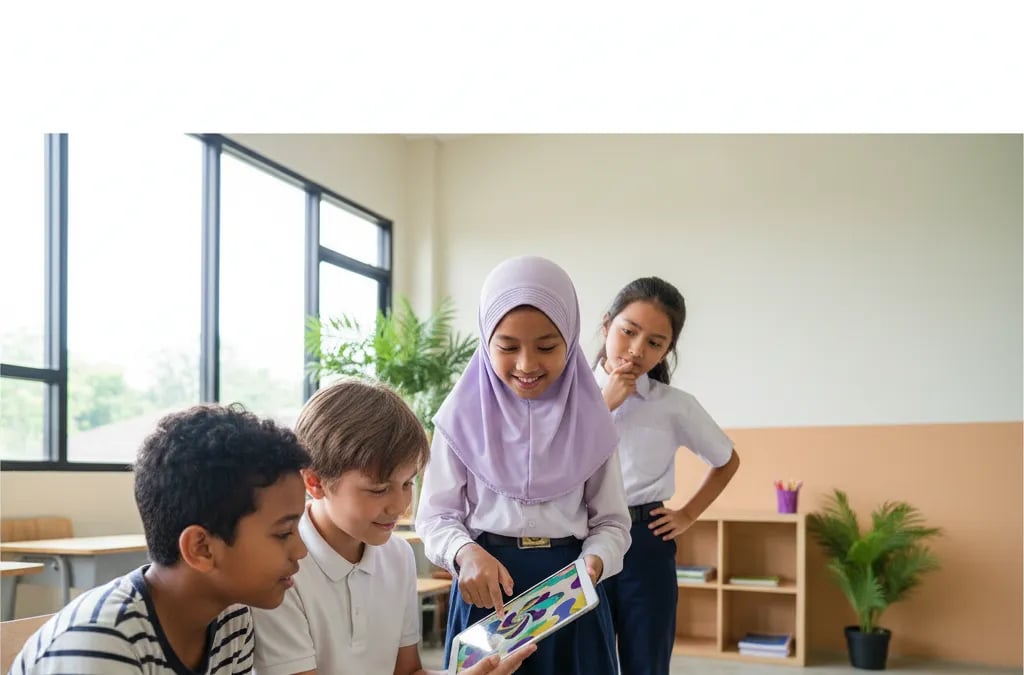
On kids' platforms, commands look like colored blocks dragged like puzzle pieces. The child doesn't type code. The initial goal is not memorising syntax but training logic: what to do so a character moves forward, turns right, or jumps an obstacle. The feel is much closer to a game than to engineering school.
Not every parent knows the platform options available. The three most used in Indonesia.
Scratch is the most popular visual programming platform for kids. Designed by MIT, Scratch uses drag-and-drop colored blocks to make animations, interactive stories, or simple games. Children can add characters, sounds, and backgrounds. There are no intimidating buttons - just arranging blocks like Lego.
Tynker uses a concept similar to Scratch with drag-and-drop blocks but has an upgrade path to Python and JavaScript for children ready to move on. Good for a child who wants to graduate from Scratch without re-learning the whole curve.
Waterbear is also block-based with a very simple interface. Its popularity is smaller than Scratch and Tynker, so online learning resources are also more limited.
For a child just starting, Scratch is almost always the safe first choice. Its international community is large, free tutorials are abundant, and the transition to text-based languages like Python in Grades 5-6 happens naturally. If you want to know exactly which topics belong at each level, see the coding curriculum for grades 1 to 6, which sets out the order from basic logic through ScratchJr and Scratch to Python.
1. Trains logic and problem solving. In coding, children face challenges that demand layered thinking. They learn to break a big problem into small executable steps. The same skill is needed in maths word problems - and in real life when facing complex challenges.
2. Encourages structured creativity. In a coding class, a child is free to build projects from their own imagination: a game about Indonesian history, an animation of a space journey, or a small app they use themselves. The special part is that creativity meets structure - the child doesn't just imagine, but makes it real and concrete.
3. Builds digital literacy. Learning to code means understanding how technology is built from the inside, not just using it. The child learns to distinguish safe technology from unsafe, understands data privacy, and recognises dangers like online scams or digital predators. Today, this kind of literacy becomes a key safeguard for a child.
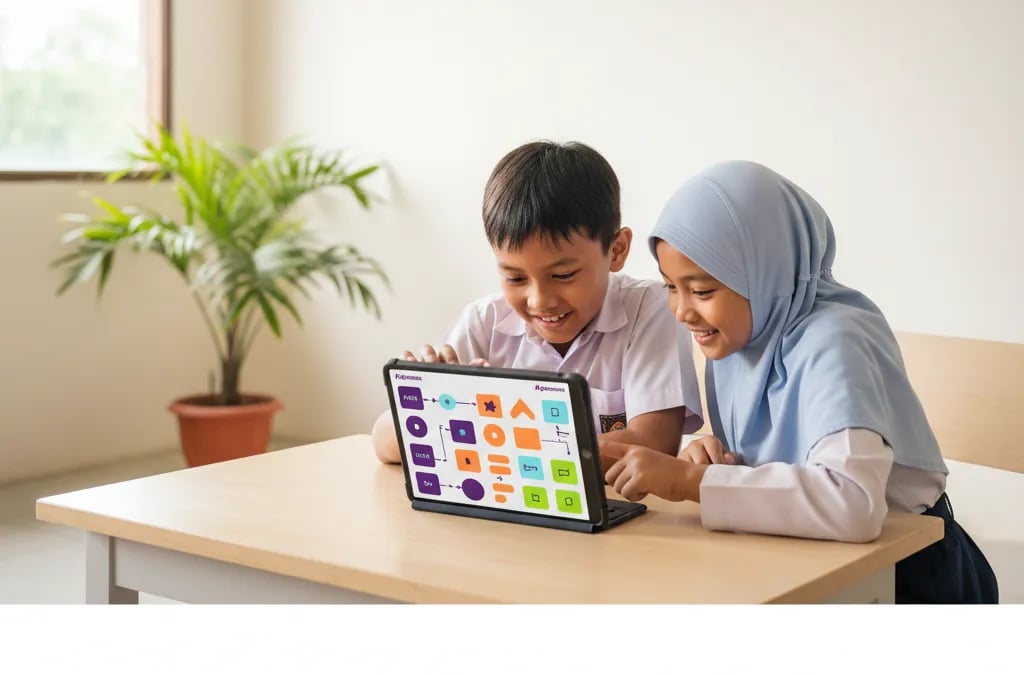
4. Practises teamwork and collaboration. Many coding projects are finished in groups. In the process the child learns to exchange ideas, listen to friends' opinions, and split tasks. This skill carries into group work at school and later into team projects at work.
5. Sharpens communication. Working in teams teaches a child to convey ideas clearly. On platforms like Algonova, children can also share their projects with peers from many countries, receive comments, and exchange likes. When presenting projects in class, they practice speaking with confidence.
6. Builds persistence and patience. Coding is full of errors. That is a fact every programmer faces from beginner to expert. The child learns that errors are not failure - they are information for improvement. This teaches not giving up, keep trying, and staying focused on a goal - a skill valuable in every school subject and every aspect of life.
The coding-course market in Indonesia is growing fast, but quality varies. Five things parents should check before deciding.
Credibility of the school. Check reviews from other parents on social media. Find out how long the school has been operating, awards earned, and the background of the teachers. Algonova has been teaching over 1,000,000+ alumni in 97 countries across 9 years, with a curriculum built by experts in education and technology.
Up-to-date curriculum. Technology evolves quickly. Make sure the school refreshes its material periodically, not running the same syllabus for years. Ask directly when the curriculum was last revised.
A learning format that fits. Some children focus better one-on-one, others are more motivated with classmates around. Make sure the format matches the child's temperament.
Facilities and certificates. Ask whether there's home access to the learning platform, how long that access lasts, and whether there's a certificate after completion. At Algonova children receive internationally standardised certificates, even after the free trial class.
A free trial class. This is the most honest way to confirm a child fits the course's approach. In a 60-minute master class, the child tries it directly, and the teacher can assess actual level and interest.
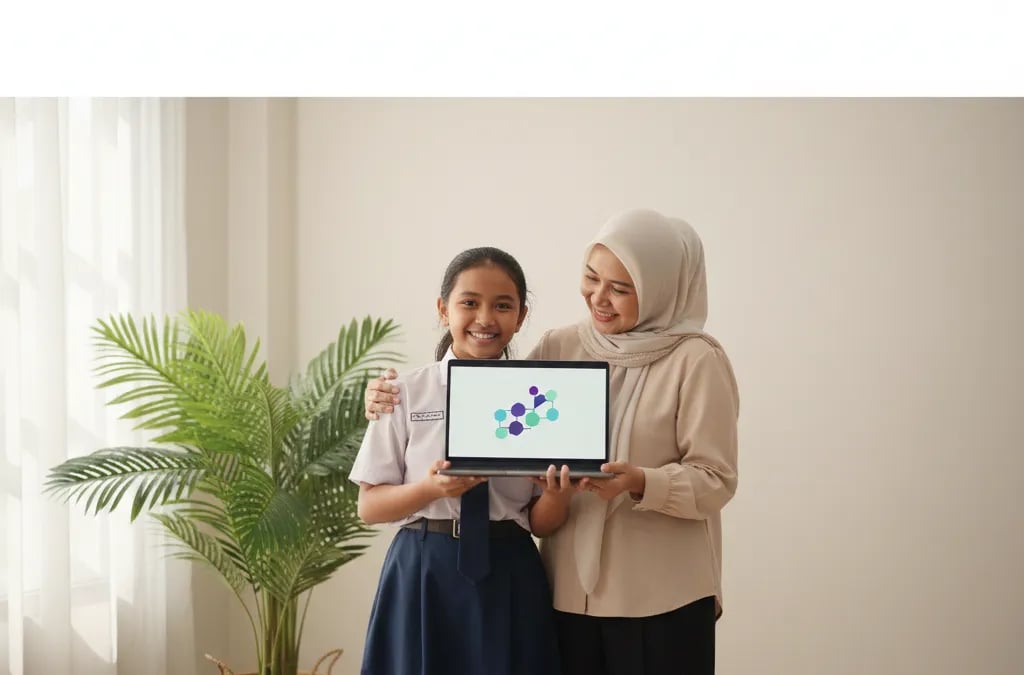
Our philosophy is simple: discover, develop, master. Holidays and small moments at home are the golden window for discovering what genuinely interests a child. Our job is to grow that into real skill.
Private (1 student), Mini (2-4 students), and Group (up to 10 students) formats are available, so every child still gets personal attention. Live 90-minute sessions with certified teachers replace recorded videos that cannot answer "why is my code broken?". The learning path is built from a Talent Map - a child who picks things up faster moves ahead faster, while one who needs more time gets extra support, without comparing themselves to classmates.
For a full guide on starting coding for a primary school child from zero, read our article Coding for Primary School Kids: A Complete Parent's Guide. If what you need is the topic breakdown by year instead, the coding material for primary grades 1 to 6 answers it grade by grade. Or directly explore the Primary School Coding (8-12) program. For younger children we have Coding for kindergarten (5-7), and for teens the path continues to Teen Coding (13-17) with Python and AI.
To test it directly, sign up for a free Master Class - no credit card, no commitment. One session is enough to see whether your child enjoys the process.
The benefits above look more concrete from an economic angle. Projections by Google, Temasek, and Bain & Company put Indonesia's digital economy at up to roughly $360 billion by 2030, driven by e-commerce, fintech, and digital media. Growth of that size needs people: the government estimates Indonesia will need around 9 million digital professionals by 2030. A primary school child today will enter the workforce right in that period.
And employers are not only looking for programmers. Breaking problems down, thinking logically, and understanding how technology works are used in almost every profession, from business to healthcare. A child who builds their own games or animations from primary school has years to build that way of thinking without pressure. See the programs by age group on the Algonova coding courses page.
Most children are ready from age 5-6 with visual platforms like Scratch Jr. For primary school children ages 7-12, the full Scratch is the most common choice and best fits how children think at this age.
Scratch from MIT is the best choice for beginners. Visual drag-and-drop block interface, large international community, lots of free tutorials, and a natural transition to Python in Grades 5-6.
Quite the opposite. Many coding projects are done in groups, and children learn to exchange ideas and present their projects to peers. Platforms like Algonova also let children share projects with peers from many countries.
After 4-6 weeks of regular classes, children can usually build simple games or animations to share with friends and parents. Logical thinking gains typically become visible after 2-3 months.
The most honest way is a free trial class. In a 60-minute master class the child tries it directly, and a professional teacher can assess interest and natural ability. The trial certificate is also a bonus for the child's portfolio.
Want to understand the concepts behind kids' coding? Explore these key terms:
Learning to code at primary age builds six life skills: logical thinking, problem solving, persistence through mistakes, creativity, focus, and digital confidence. These carry far beyond computer lessons.
Does coding get in the way of other school subjects? The opposite. Coding strengthens maths and general problem solving.
When is the best time to start? Primary age works well, because children absorb logic quickly while playing. See Algonova's coding classes for ages 5–17, or try a free coding class to begin.
Blog

Algonova worldwide
Contact
Whatsapp: +62 21 50996971
Email: info@algonova.id
Address
Coworking Area, Gedung IT 6 Lantai Dasar, Nongsa Digital Park, Jalan Hang Lekiu, Kelurahan Sambau, Kecamatan Nongsa, Batam, Indonesia Directorate General of Consumer Protection and Trade Compliance – Ministry of Trade of the Republic of Indonesia. WhatsApp Ditjen PKTN: 0853-1111-1010.
PT Algonova Indonesia Cerdas All rights reserved 2026
