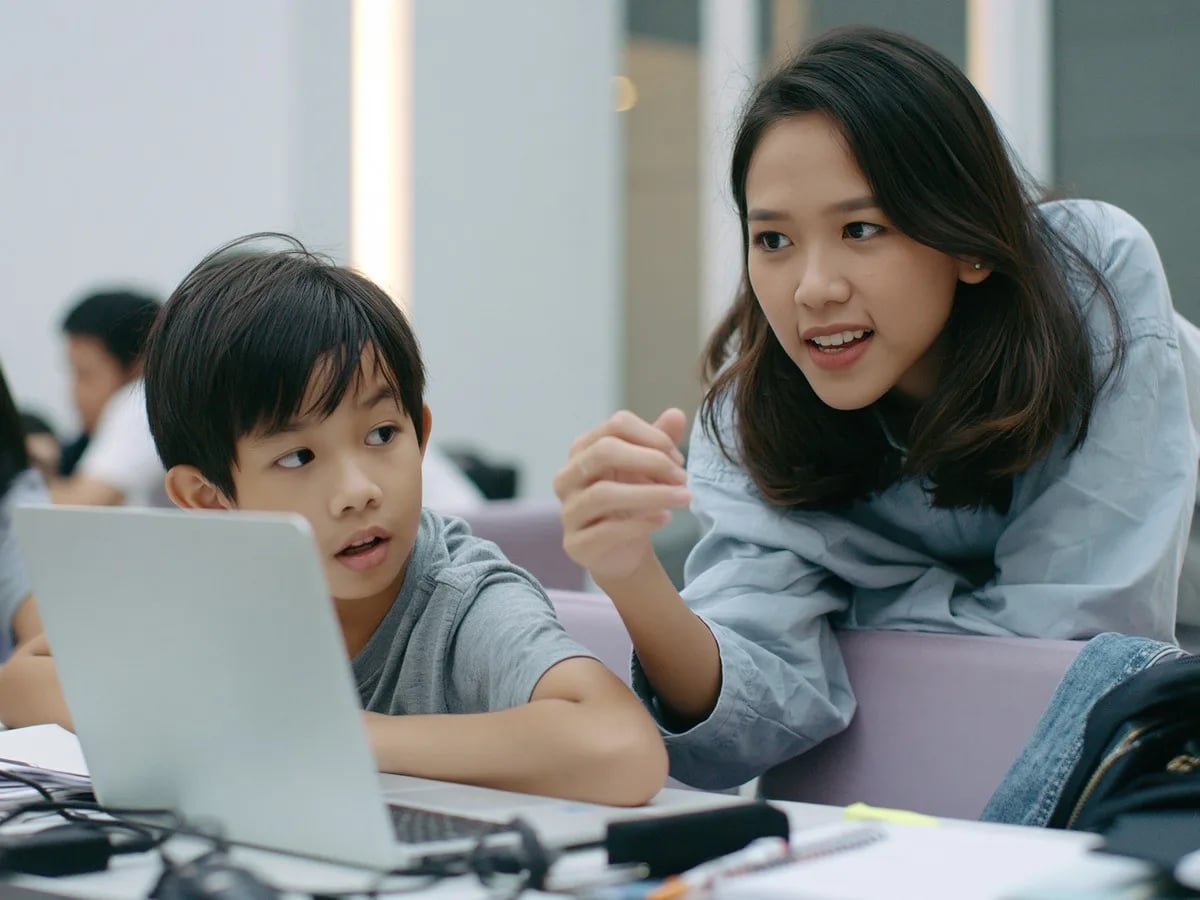
My daughter was stuck on multiplication for a year. After the AI diagnostic we found gaps from kelas 1 we didn't know about. 6 weeks of weekly lessons closed them — now she's ahead in school math.

Ratna Suryani
Mother of Ayu, 9 · Surabaya
MATHS FOR AGES 6–17
Live online maths tutoring for Indonesian children and teenagers. Three tracks: Math Starters (ages 6–7), Math Explorers (ages 8–12) and Math Masters (ages 13–17) — primary school through SMA and UTBK preparation. Small groups, certified teachers, curriculum-aligned. From Rp 102,000 per lesson. 1,000,000+ alumni · 97 countries · since 2016 · 4.9★ · Bett MEA Awards winner
11,000+
students in Indonesia
160,000
individual classes done
4.9★
parent rating
2–3 of 100
tutors qualify
How it works
01
Free diagnostic
Online test to find your child's exact level and gaps.
02
Personalised plan
A learning plan built around your child's real needs and school curriculum.
03
Weekly live classes
Live sessions with the same tutor — private, a small group, or a regular group.
04
Monthly progress report
Parents receive a detailed report every 4 weeks.
Free diagnostic · No commitment
Three tracks by age
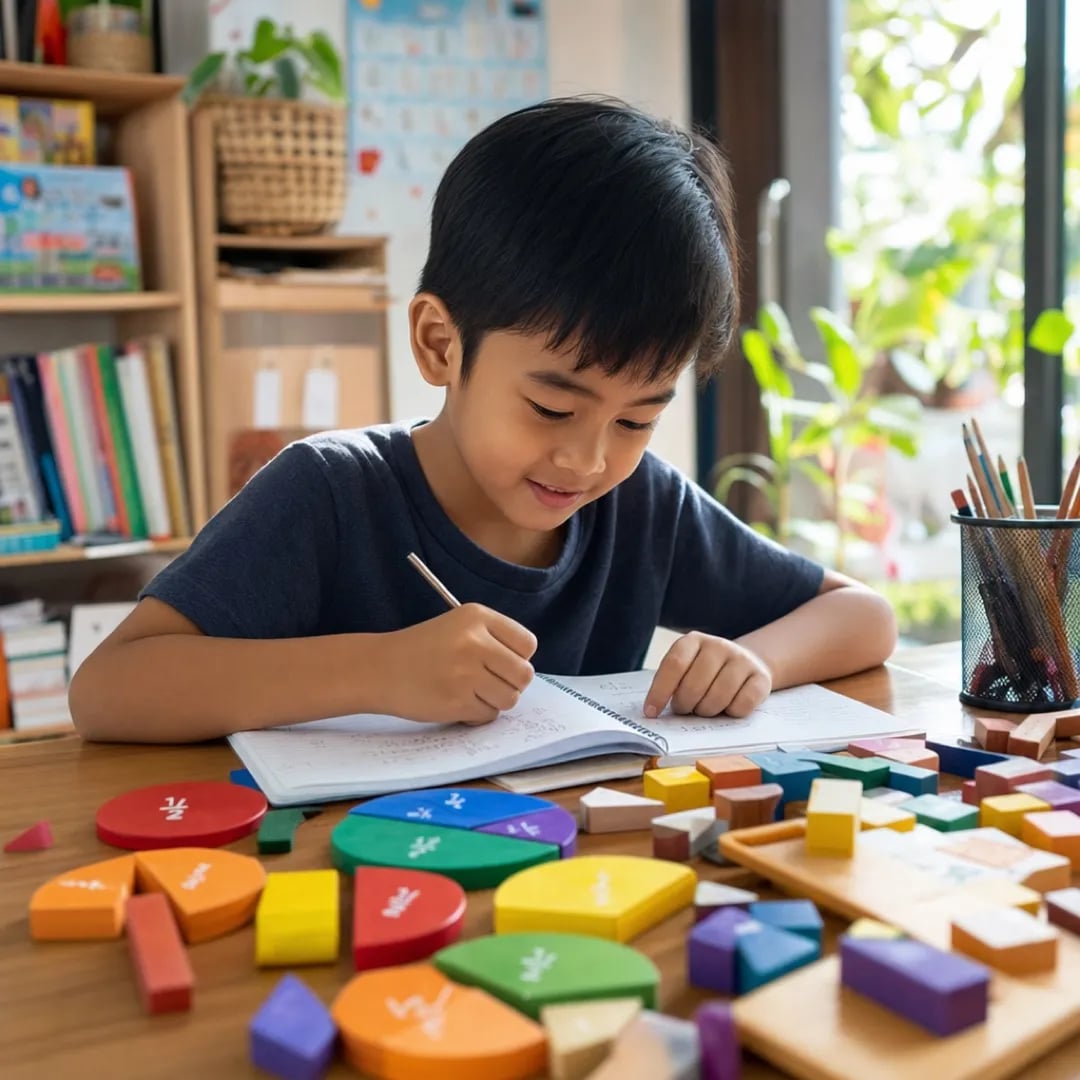
Every Algonova maths class, from Math Starters (ages 6-7) through Math Explorers (ages 8-12) to Math Masters (ages 13-17), runs on the Algonova Diagnostic Method: a free diagnostic first, then a personal learning plan built from the diagnostic results, then live 90-minute classes with the same certified teacher every week, in a private format of 1 student, a small group, or a regular group.
What separates it from other approaches is the starting point. Sempoa trains mental calculation speed through an abacus and repetitive drills. Kumon works through graded worksheets a child completes independently every day. We start from the diagnostic to find the child's understanding gaps, build the concept visually, and only then drill it. The learning plan is aligned with the child's school material, including schools running Kurikulum Merdeka.
Topics by track
Three tracks — Math Starters, Math Explorers and Math Masters — from foundational numeracy to advanced topics, aligned with the Indonesian curriculum and international standards.
Math Starters (ages 6–7)
Numbers 1–100, addition and subtraction, shapes and basic geometry, simple measurement. Patterns and logical thinking through real objects and games.
Math Explorers (ages 8–12)
Multiplication and division, fractions, decimals, percentages, perimeter and area, basic statistics. Word problems and the foundation for SMP.
Math Masters (ages 13–17)
Algebra, functions, geometry, statistics, probability (SMP). Trigonometry, calculus, matrices, advanced statistics (SMA). Intensive UTBK / SNBT preparation.
COMPARISON
Real results from Indonesian families
My daughter was stuck on multiplication for a year. After the AI diagnostic we found gaps from kelas 1 we didn't know about. 6 weeks of weekly lessons closed them — now she's ahead in school math.
Ratna Suryani
Mother of Ayu, 9 · Surabaya
We didn't want another bimbel. Algonova is different — the teacher explained algebra to my son using a real example from a game he plays. He got it in 20 minutes.

Andi Kurniawan
Father of Bima, 13 · Jakarta
Daughter prep for UTBK. Her latihan score went from 480 to 680 in three months. Tutor knew the SNBT format and paced it right.

Hendra Susanto
Father of Tania, 17 · Bandung
FAQ
The Algonova Indonesia math program runs for kids aged 6 to 17 and is split into three tracks: Math Starters (ages 6–7), Math Explorers (ages 8–12) and Math Masters (ages 13–17). Math Starters (ages 6–7) is for kelas 1–2 SD: numbers 1–100, addition and subtraction, shapes and basic geometry, patterns and logical thinking — taught visually and through games. Math Explorers (ages 8–12) is for kelas 3–6 SD: multiplication and division, fractions, decimals, percentages, perimeter and area, word problems, and the transition to SMP math. Math Masters (ages 13–17) is for SMP and SMA students: algebra, functions, geometry, probability, trigonometry, calculus, matrices, statistics and UTBK SNBT preparation. Math at Algonova starts at age 6. Every track is designed by certified teachers, and a free diagnostic sets the right starting point.
Yes, Algonova's online math tutoring is especially effective for kids who initially dislike math. Our teaching method focuses on shifting a child's perspective from "math is hard and boring" to "math is interesting and I can master it". We use visual approaches, real-life examples, and gamification to make abstract concepts feel concrete. Kids learn 1-on-1 with a private teacher, in a small group, or in a regular group, always with patient certified teachers who guide step by step, without pressure or comparison with peers. Many parents report children who previously cried at the sight of math problems start doing homework happily after a few sessions. Try a free trial class to see your own child's reaction to the Algonova method firsthand.
The best way to teach math to kids combines three principles: visual approach, gradual learning, and connection to real life. Children learn more effectively when they see math concepts in pictures, manipulatives, or games before moving to abstract symbols. Learning must be gradual — a solid foundation in basic operations (addition, multiplication, fractions) is essential before moving to more complex topics like algebra or geometry. Skipping ahead too fast often leaves children behind and erodes their confidence. Just as important: connecting math to daily life (shopping, cooking, measuring rooms) so kids see practical use. Algonova's method combines all three principles in small group classes with certified teachers who can adjust pace to each child.
Kids math tutoring at Algonova Indonesia starts from Rp 102,000 per lesson. The price includes a 90-minute live session with a certified teacher, digital learning materials, access to the online learning platform, and an official certificate upon completing each level. Final pricing depends on the child's school level (primary, junior high, or senior high), program type (general or UTBK SNBT preparation), and class format — 1-on-1 private, a small group, or a regular group. Full pricing details are shared transparently after the free trial class, based on the track recommended for your child. No surprise fees — every component is explained before formal enrolment.
Yes, all Algonova Indonesia math programs are fully available online with live sessions taught by certified teachers — not recorded videos. Kids learn in real time 1-on-1, in a small group, or in a regular group, with two-way interaction, live Q&A, and problems worked on alongside the teacher throughout the class. To join an online class, a child only needs a computer or laptop with a camera, a stable internet connection, and a headset. The Algonova platform runs directly in the browser so no special software installation is required. Kids can write on a tablet or notebook beside the laptop. Algonova is a fully online school — we have no physical office or classroom. Every lesson, diagnostic and conversation with the teacher happens through the online platform, so your child can learn from home wherever you live.
Yes, there is light homework after each Algonova Indonesia math class, designed to reinforce the concepts learned during the live virtual session. Homework load is measured: about 20–30 minutes per day for primary school kids, 30–45 minutes for junior high, and 45–60 minutes for senior high. Homework is not just repetitive practice. Every task is designed with one goal: ensuring the child genuinely understands the concept, not just memorises the procedure. Problems range from basic drills to challenging real-life application problems. Kids can do homework on the Algonova platform with automatic correction and explanations, or in a notebook with photos sent to the teacher. If a child gets stuck, the teacher provides personal help outside class hours through the platform.
Online math tutoring at Algonova offers three main benefits hard to find from offline tutoring or traditional bimbel. First, schedule flexibility: kids can learn from home without commute, saving 1–2 hours per day typically spent in major Indonesian city traffic. Second, personal attention: 1-on-1 private lessons, small groups, and regular groups give every child the teacher's attention, very different from offline bimbel typically of 20–40 students per class. Shy kids are braver to ask questions, and fast learners don't wait for slower classmates. Third, measurable results: the Algonova platform tracks every child's progress in detail, so parents know exactly which topics are mastered and which still need practice. School math grades typically improve within 2–3 months.
Algonova Indonesia is specifically designed to help children behind catch up in a way that doesn't make them feel defeated or ashamed. Every new student starts with a free diagnostic to identify exactly where the gap occurred — basic operations, fractions, or other topics. Based on the diagnostic, the teacher builds a personal learning path that closes the gap from the most basic foundation, then gradually progresses until the child is level with or even ahead of classmates. There is no comparison with other students — full focus on each child's own progress. Many Algonova students who started 1–2 grade levels behind successfully caught up within 3–6 months with weekly class commitment and short homework. It is never too late to start. Try a free trial class for diagnosis and recommendation.
Yes, a free trial class is available for all Algonova Indonesia math programs — primary, junior high, and senior high. The free trial session runs with no commitment. Parents and children can experience our teaching method firsthand before deciding to enrol. During the trial, your child interacts directly with a certified teacher, tries the online learning platform, and works on the first problem matched to their school level. The teacher also performs a quick diagnostic to identify topics already mastered and those still needing practice. After the session, the Algonova team provides a recommended learning track suited to your child's level and needs, plus a transparent explanation of program, schedule, and pricing. To book, fill the form on this page. No credit card required.
As a market benchmark, online math tutoring for kids in Indonesia generally ranges from Rp 100,000 to Rp 300,000 per session. That range is the Indonesian market average, not Algonova's pricing. It varies with school level, class format, teacher qualifications, and the length of each session. For example, Bu Sari's family in Surabaya chose a small-group class for their 5th-grade daughter because it was more affordable than private lessons while still giving her teacher attention. A small group or a regular group is usually more budget-friendly without sacrificing live interaction with a certified teacher. When comparing costs, check what is included: learning materials, platform access, homework correction, and certificates. Algonova's own pricing starts from Rp 102,000 per lesson — at the bottom end of the market range above. Every session is taught live by certified teachers in a 1-on-1 private format, a small group, or a regular group for kids aged 6–17, not recorded videos. Full pricing details are shared after the free trial class.
You can make a child enjoy math by removing the fear of being wrong, presenting concepts visually and playfully, and celebrating every small bit of progress. Children like what makes them feel capable, so building confidence matters more than chasing high grades early on. For example, Dimas, who used to avoid arithmetic, became interested after his teacher turned problems into game-like challenges and praised his effort rather than just his answers. A low-pressure atmosphere makes a child willing to try. Parents can also link math to things the child loves, like counting game scores or sharing a cake. At Algonova, kids learn live with certified teachers in a 1-on-1 private format, a small group, or a regular group, so every child aged 6–17 gets personal attention and a safe space to ask questions without embarrassment.
Children can begin meeting basic math as early as age 5 through counting, recognising shapes, and comparing sizes. That is about general child development at home and at school — not about the age of enrolment at Algonova. At this age the focus is not on numbers in a book, but on understanding concepts through real objects and everyday play. For example, 5-year-old Kayla learned the idea of addition by counting toys and fruit while helping her mother prepare snacks. Concrete experiences like these build the foundation before a child meets formal math symbols at school. For Algonova math classes, the minimum age is 6. The programme is organised into three tracks: Math Starters (ages 6–7), Math Explorers (ages 8–12) and Math Masters (ages 13–17), all taught live by certified teachers in a 1-on-1 private format, a small group, or a regular group. A free diagnostic helps determine the right starting point. Five-year-olds can start with Algonova's coding track and move into math at six.
You choose the right math tutoring by looking at class size, teacher qualifications, teaching method, and whether a trial session is offered before enrolling. Classes that are too large make it hard for a child to ask questions, while teachers without experience with kids may lack the patience to guide them. For example, Pak Anton's family tried two places before deciding: the first had 30 kids per class so his child stayed passive, the second was a small group where he became more active. A trial session greatly helps assess the fit. Also check whether lessons are live or only recorded videos, since two-way interaction matters for children. Algonova offers live classes with certified teachers in a 1-on-1 private format, a small group, or a regular group for kids aged 6–17, with a free trial class so parents can evaluate the method before committing.
Neither online nor offline math tutoring is absolutely better; the choice depends on your child's needs, schedule, and learning style. Online excels at flexibility and saving commute time, while offline offers physical interaction and a direct social atmosphere. For example, families in big cities like Jakarta often choose online to avoid traffic, while families who want their child to meet peers in person prefer offline. Many also combine both according to their weekly needs. What matters most is not the format but teaching quality: small classes, experienced teachers, and two-way interaction. At Algonova, all online classes are taught live by certified teachers in a 1-on-1 private format, a small group, or a regular group for kids aged 6–17, not recordings, so children still get personal attention like an in-person class. Try a free trial class to see what fits.
For stable results, a child should take math tutoring 1 to 2 times a week, paired with short practice on other days so concepts are not easily forgotten. A frequency that is too sparse lets material fade, while one that is too packed can make a child burn out. For example, Nadia, a 7th grader, attends two sessions a week plus 30 minutes of light homework on in-between days, and her math grades improved within a few months without feeling overwhelmed. Consistency matters more than one long session. The ideal frequency also depends on goals; exam preparation, for instance, needs a more intensive schedule. At Algonova, class schedules are flexible and adjustable, with live classes taught by certified teachers in a 1-on-1 private format, a small group, or a regular group for kids aged 6–17. Our team helps set the right frequency after a free diagnostic.
Not every child must take math tutoring, but it helps greatly when a child struggles to keep up at school, loses confidence, or wants to go deeper into the material. Tutoring is also useful for already-strong students who need a more fitting challenge. For example, Rian's parents were hesitant at first, but after seeing test scores drop and their son avoiding homework, they tried tutoring and his confidence returned. Signs that a child needs extra help usually show in attitude, not just grades. Good tutoring is not merely adding study hours, but filling comprehension gaps with personal guidance. Algonova provides live classes with certified teachers in a 1-on-1 private format, a small group, or a regular group for kids aged 6–17, with a free diagnostic to assess whether a child genuinely needs extra support.
You help a child who struggles with math by first finding the root of the problem, then strengthening the foundation from the most basic concept without rushing. Often a child struggles with a new topic because an earlier concept was never truly mastered. For example, Bagas, who struggled with fractions, turned out to be shaky at multiplication; once that base was reinforced, fractions became far easier for him to grasp. So it is important not to keep repeating the hard topic, but to return to the missing foundation. Emotional support matters too: avoid comparing the child with siblings or friends, and praise effort. At Algonova, every child starts with a free diagnostic to find comprehension gaps, then is guided live by certified teachers in a 1-on-1 private format, a small group, or a regular group for kids aged 6–17, with a personal learning path.
The main benefit of online math tutoring over self-study is having live guidance, fast feedback, and a structured routine so a child does not give up easily when facing difficulty. When studying alone, a child often gets stuck on one problem without knowing where the mistake lies. For example, Fitri, who self-taught from videos, was often confused because she could not ask questions, whereas after joining an online class she could get an explanation the moment she went wrong. This two-way interaction is hard to get from studying alone. Online tutoring also brings accountability: there is a schedule, homework, and progress tracking that keep a child consistent. At Algonova, children learn live with certified teachers in a 1-on-1 private format, a small group, or a regular group for kids aged 6–17, not recorded videos, so every difficulty is addressed right then and there.
Free Class · No card · No commitment
Book a free trial maths class. Your child meets the teacher, sees the format, gets a taste of Algonova Maths. No obligation.

Algonova worldwide
Contact
Whatsapp: +62 21 50996971
Email: info@algonova.id
Address
Coworking Area, Gedung IT 6 Lantai Dasar, Nongsa Digital Park, Jalan Hang Lekiu, Kelurahan Sambau, Kecamatan Nongsa, Batam, Indonesia Directorate General of Consumer Protection and Trade Compliance – Ministry of Trade of the Republic of Indonesia. WhatsApp Ditjen PKTN: 0853-1111-1010.
PT Algonova Indonesia Cerdas All rights reserved 2026