








When Should Primary School Kids Start Coding: A Readiness Guide
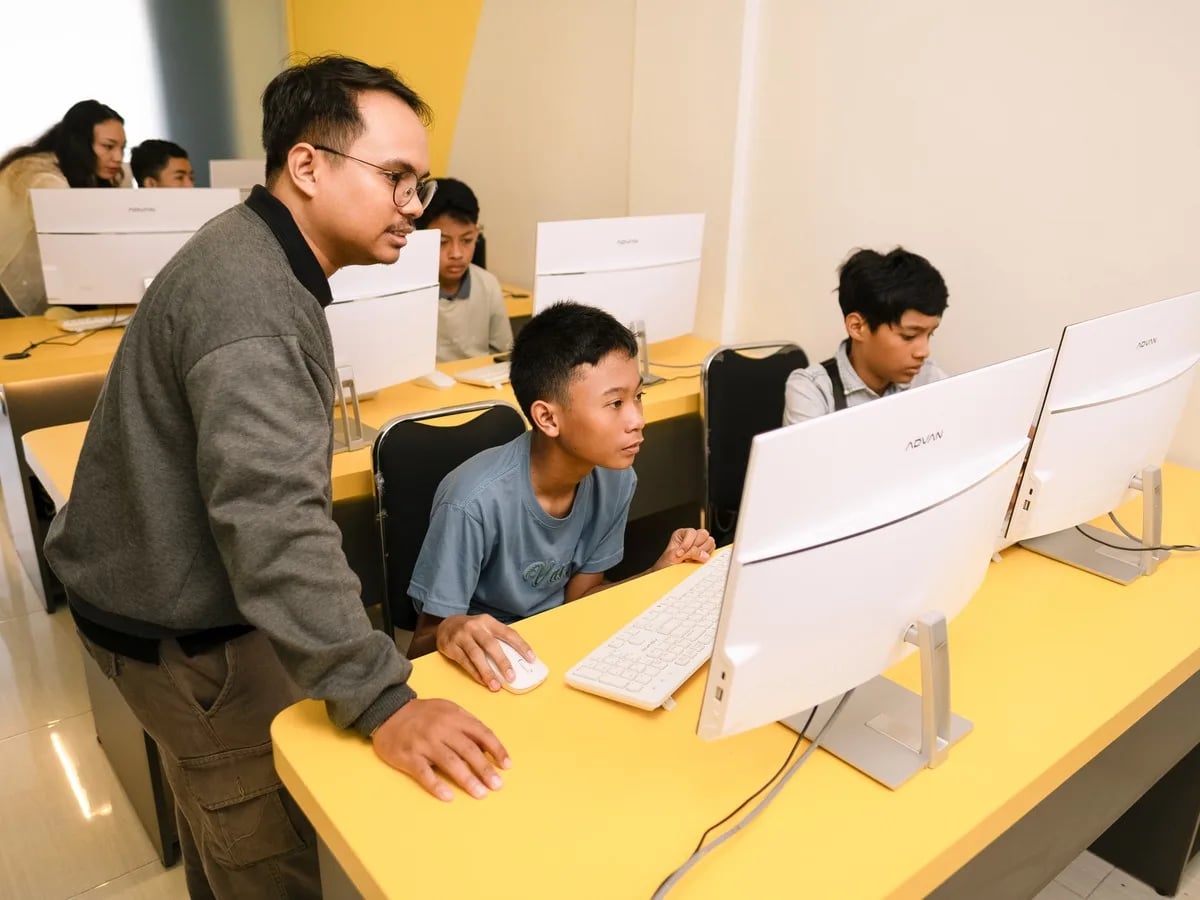
Learn Coding8 min read
CODING FOR SD STUDENTS
Live online coding classes for Indonesian SD students in grades 3, 4, 5, and 6, ages 8-12. A staged path from Scratch to Roblox, then Python. Small groups, certified teachers, real projects. 1,000,000+ alumni · 97 countries · since 2016 · 4.9★ · Bett MEA Awards winner
Why this age
Old enough for real tools
Scratch · Roblox Studio · Lua
8–12 year-olds can handle the same game design software real developers use: Roblox Studio with Lua scripting and the full Scratch programming environment. Kids work from a laptop, computer, or tablet; the class cannot be followed on a phone.
Young enough to fall in love with it
Discover, then develop
By 13, kids usually have a strong sense of 'I'm good at this' or 'I'm not.' We use the 8–12 window to help them discover whether tech is their thing — before that self-assessment hardens.
Built around their interests
Games, not theory
Most kids this age love games. We turn that love into skill. They build games — platformers, RPGs, multiplayer worlds — not just play them.
Program
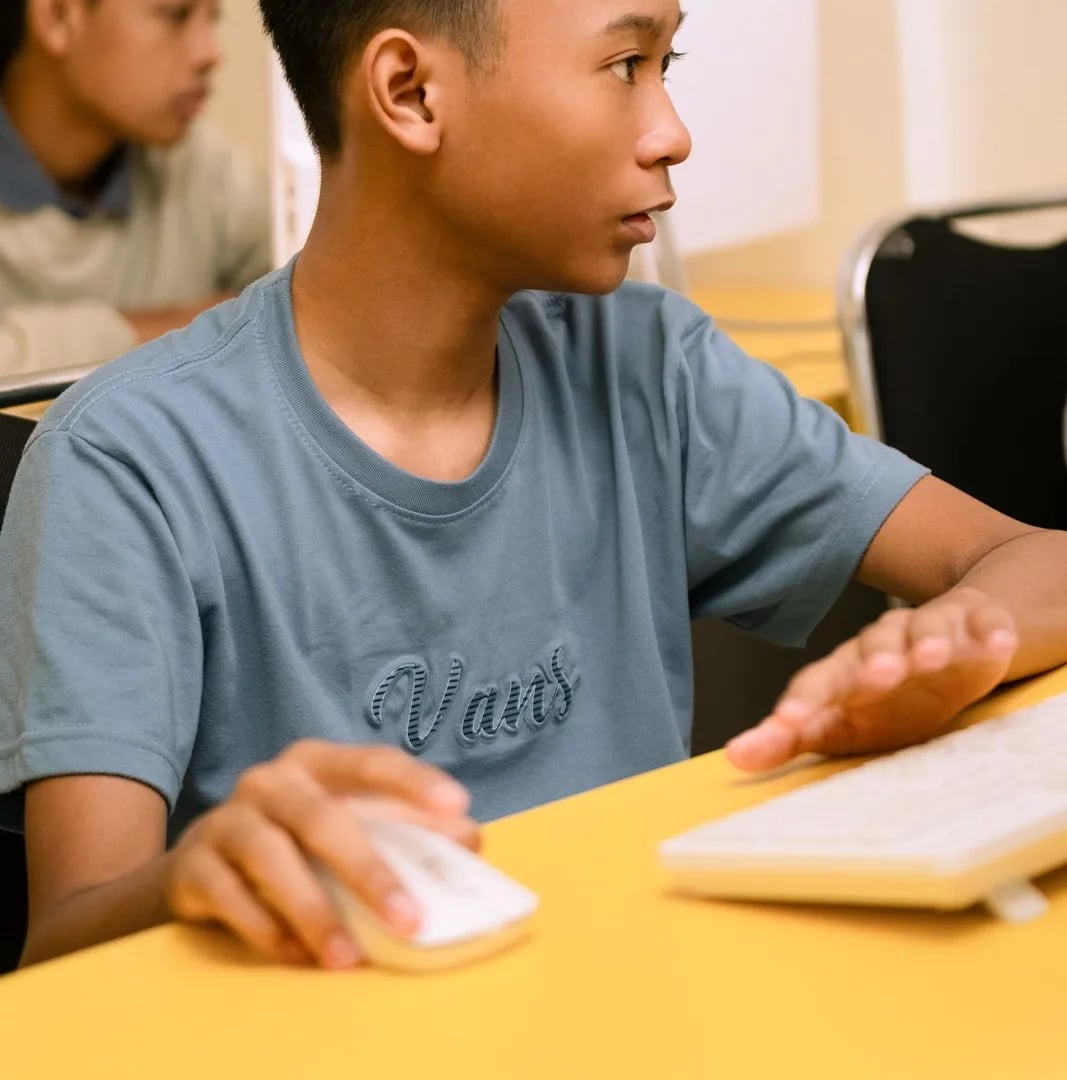
Free masterclass · 60 min · ages 8-12
Your child builds a first game in Scratch or Roblox with a live teacher. You see how the teacher works before you choose a course.
Algonova Teaching Team
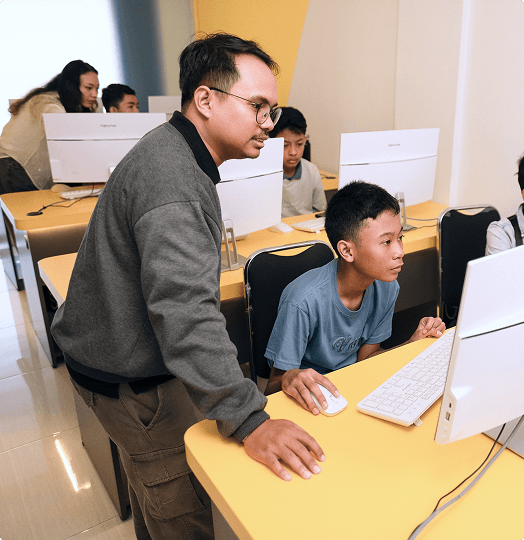
Dimas stayed with me even when I was struggling with my project. Without him, I wouldn’t have been able to finish it. I want to keep getting better with him.

Satria Wiguna
Python student
How it works
01
Free Trial Class
A free 60-minute master class with a teacher, no commitment. Your child joins a real Algonova class, meets the teacher, and builds something in the first session.
02
Skills Assessment
After the trial, we assess your child's current level and learning style to personalise the programme.
03
Weekly Live Classes
Live sessions with the same teacher: private, a small group, or a regular group. Theory plus hands-on projects every week.
04
Progress Reports
Monthly progress reports for parents. See exactly what your child has learned and what comes next.
Trial class always free · No card required
From parents of 8–11 year-olds
My son Adit (kelas 4 SD) used to only play games on the tablet. After 3 months at Algonova, he's building his own Roblox games and playing them with his friends. Most importantly, Adit is more confident at school, especially in math. I recommend Algonova to parents who want their kids to be creators, not just consumers.

Ibu Sari
Mother of Adit, 10, grade 4 SD · Jakarta
Bagas was the kid who couldn't sit through homework. Now he sits through 90 minutes of coding because the teacher actually engages him. The school benefit is real — focus transferred.

Mira Anjani
Mother of Bagas, 9 · Surabaya
We tried a self-paced coding app first. He quit in 2 weeks. With live teachers in a small group, he stuck with it — now he's six months in and building his own game.

Heru Pranoto
Father of Damar, 11 · Bandung
Free · groups of up to 10
One 60-minute online masterclass for ages 8-12. Afterwards the teacher suggests the right path: Scratch, Roblox or Python.
FAQ
Algonova's primary school coding program is designed for grades 3–6, ages 8–12. This is the sweet spot for starting coding seriously: kids can focus for longer stretches and read simple written instructions. For this age group, the Junior Coders program has two main tracks. Visual Programming with Scratch suits kids who are new to coding. Game Design with Roblox Studio and the Lua language suits kids already comfortable with computers and games. Both tracks lead into Python Junior once a child is ready. Kids in grades 1–2, ages 6–7, have different learning needs. Algonova runs a separate program called Little Coders, using ScratchJr and digital literacy material built specifically for that age. No prior experience is required; certified teachers assess each child's level during the free trial class and recommend the right starting point.
Primary school coding courses at Algonova Indonesia start from Rp 102,000 per lesson. The price includes a 90-minute live session with a certified teacher, digital learning materials, access to the Algonova online platform, and an official certificate upon completing each level. Final pricing depends on the chosen program: basic Scratch, Visual Programming with Roblox, or advanced Game Design. Class format also affects the cost: we offer 1-on-1 private classes, small groups, and regular groups. Payment can be arranged monthly. Full pricing details are shared transparently after the free trial class. No surprise fees, every cost component is explained before formal enrolment.
Although they look like play, behind Scratch and Roblox primary school kids learn real coding concepts identical to those used by professional software engineers. When a child builds a Roblox game, they write logic in the Lua language, manage variables, loops, and if-else conditions — the foundation of every programming language. In Scratch, kids assemble command blocks to control characters, create animations, and build interactive games. They learn concepts they will meet again later in Python: sequence, loops, functions, and simple data structures. Beyond technical concepts, kids also learn problem-solving, iterative work (try — fail — fix), and digital creativity. The games they create become a tangible portfolio that demonstrates their coding ability concretely to parents, teachers, or friends.
For primary school kids aged 8–12, the best coding languages are Scratch (from MIT) and Lua (used in Roblox Studio). Scratch uses visual drag-and-drop blocks so kids focus on program logic without the burden of text syntax — perfect for beginners. Once a child is comfortable with Scratch, Lua in Roblox is a natural bridge to text-based coding. The child writes simple code to build multiplayer games that friends can actually play — an incredibly powerful motivation for primary school kids. For older primary school kids (10–12) who are ready, Python Basics is the next step: clean syntax, widely used in schools and industry. Algonova guides a gradual transition from Scratch to Lua to Python at each child's own pace.
On the contrary, many parents report their child's school grades actually improved after learning coding at Algonova. Coding trains structured thinking — breaking a big problem into small steps — which transfers directly to mathematics, science, and logic. Coding classes are scheduled outside school hours (afternoons or weekends) with one 90-minute session per week. The time commitment stays light: about 2 hours per week including independent practice at home, so it does not eat into time for homework or other school activities. Coding ability often becomes a plus at school: some Indonesian primary schools accept Algonova certificates as evidence of digital extracurricular activity or supporting input for ICT subject assessment. Kids who code from primary school feel more confident with logic and IT subjects in junior high.
Yes, the Algonova primary school coding curriculum is designed as a bridge to Python. After a child completes Advanced Scratch or Game Design with Lua, they already have the foundation needed to graduate to Python: understanding of variables, loops, conditions, functions, and basic data structures. The transition happens gradually. Before full Python, kids usually take "Python Start" — an introduction to Python with Scratch-like visualisation to ease the transition from blocks to text. After that, Python Basics for ages 10 and up can be taken comfortably. Many Algonova students who start with Scratch in grade 3 successfully build simple Python applications before graduating primary school. Free consultation is available to plan a long-term path from Scratch through advanced Python or AI.
Many primary school kids enter Algonova interested only in playing games, and that's actually an excellent starting point. When a child joins the Game Design course, they realise that building games is far more fun than just playing — because they can change the rules, create their own worlds, and share with friends. Algonova teachers are experts at converting "play games" motivation into "build games" motivation. The first lesson typically produces a simple game the child can immediately play — that "I made this myself" experience usually shifts the child's perspective permanently. Even if a child still prefers playing at first, they still gain logic and problem-solving skills. But in our experience: almost all primary school kids move from consumer to creator of games within the first 4–6 sessions.
No, primary school kids do not need a gaming or high-end laptop to learn coding at Algonova. Our learning platform runs directly in the web browser — kids only need a standard computer or laptop with a stable internet connection and a camera. Comfortable minimum specs: dual-core processor, 4GB RAM, a modern browser like Chrome or Firefox, and around 5GB free disk space. An entry-level laptop priced at Rp 4–6 million is more than enough for all primary school coding programs, including Scratch, Roblox, and Python Basics. For heavier Roblox Studio sessions, we recommend 8GB RAM for a smoother experience — but this is optional, not mandatory. A headset with microphone is recommended for comfortable interaction with the teacher. No special hardware purchase needed.
Yes, all primary school coding courses at Algonova Indonesia are fully available online with live sessions taught by certified teachers, not recorded videos. Kids learn in real time in a 1-on-1 private class, a small group, or a regular group, with two-way interaction, live Q&A, and tasks worked on alongside the teacher throughout each class. To join an online class, a child only needs a laptop with a camera, a stable internet connection, and a headset. The Algonova platform runs directly in the browser so no special software installation is required. Every Algonova class in Indonesia runs online, with no face-to-face learning centres. That is exactly the advantage: a child in any city studies with the same certified teachers, without travel time or cost. Schedules can be taken in the afternoon or at the weekend to fit around school hours.
Yes, both are available. An official Algonova certificate is awarded after a primary school child completes each program level — Basic Scratch, Visual Programming with Roblox, or Advanced Game Design. The certificate lists the child's name, program completed, completion date, and can be attached to a school portfolio or coding competition application. A free trial class is available for every primary school coding program, lasting 60 minutes with no commitment. The child will interact directly with a certified teacher, try the Algonova platform, and complete a first task suited to their age — typically building a simple game or animation they can show off to parents. After the trial, the Algonova team recommends a learning path suited to your primary school child's interests and level. To book, fill the form on this page. No credit card required.
Algonova structures primary school coding material grade by grade. Grades 3 and 4 start with Scratch: visual blocks, command sequences, loops, and simple animation. Grade 5 moves into Game Design with Roblox Studio and the Lua language. Grade 6 can progress to Python Junior with text syntax, variables, and functions. The split follows a child's reading readiness and attention span rather than calendar age. A grade 3 child who has never coded starts with Visual Programming in Scratch, learning program logic without having to type syntax. Once loops and conditions are solid, the child moves to Lua in Roblox, where code is written as text but the result appears immediately as a playable 3D game friends can join. A certified teacher assesses the child's level during the 60-minute free trial class and then recommends the right entry point. A grade 3 child who has coded before does not repeat the basics, and a grade 6 child starting from zero still gets a proper foundation. One session runs 90 minutes, once a week, from Rp 102,000 per lesson.
Yes. A grade 3 child, around 8 years old, enters the Visual Programming program built on Scratch. Classes run online and live with a certified teacher, not as recorded video. Three formats are available: private with 1 student, a mini group of 2-4 kids, or a group of 6-10, so a grade 3 child still receives personal attention. Grade 3 is the most common entry point at Algonova. At this age a child can read simple written instructions and stay focused through a 90-minute session, yet is still young enough to absorb programming logic through play. The first project is usually an animation or simple game finished within one or two sessions that the child can show parents straight away. For younger children in grades 1 and 2, Algonova runs a separate program called Little Coders using ScratchJr. If you are unsure which track suits your grade 3 child, the 60-minute free trial class is where the teacher assesses their level and gives a recommendation before you enrol.
Algonova's main difference is that classes are taught live by certified teachers in a 1-on-1 private format, a mini group of 2–4 kids, or a group of up to 10 students — not recorded videos or large classes of dozens of children. Each child gets personal attention and real feedback every session. Algonova also blends coding, math, AI, and design into one integrated curriculum, so children build logic and creativity together. Learning is project-based: kids complete real games or animations, not just theory. This approach is industry-recognized through a BETT Award, with a 4.9 rating and 1,000,000+ alumni across 97 countries since 2016. For example, Mrs. Rina compared several options and chose Algonova after finding that cheaper classes were just recorded videos with no interaction. Starting from Rp 102,000 per lesson, with a free trial class before enrolling so you can judge the quality yourself.
Free Class · No card · No commitment
Book a free trial class. Your child meets the teacher, tries the format, builds something real. No obligation.

Algonova worldwide
Contact
Whatsapp: +62 21 50996971
Email: info@algonova.id
Address
Coworking Area, Gedung IT 6 Lantai Dasar, Nongsa Digital Park, Jalan Hang Lekiu, Kelurahan Sambau, Kecamatan Nongsa, Batam, Indonesia Directorate General of Consumer Protection and Trade Compliance – Ministry of Trade of the Republic of Indonesia. WhatsApp Ditjen PKTN: 0853-1111-1010.