12 Scratch Project Ideas for Primary School Kids: From Simple Animations to Games

Coding Education8 min
Coding Education

Bayu Nugraha
Children's Coding Specialist
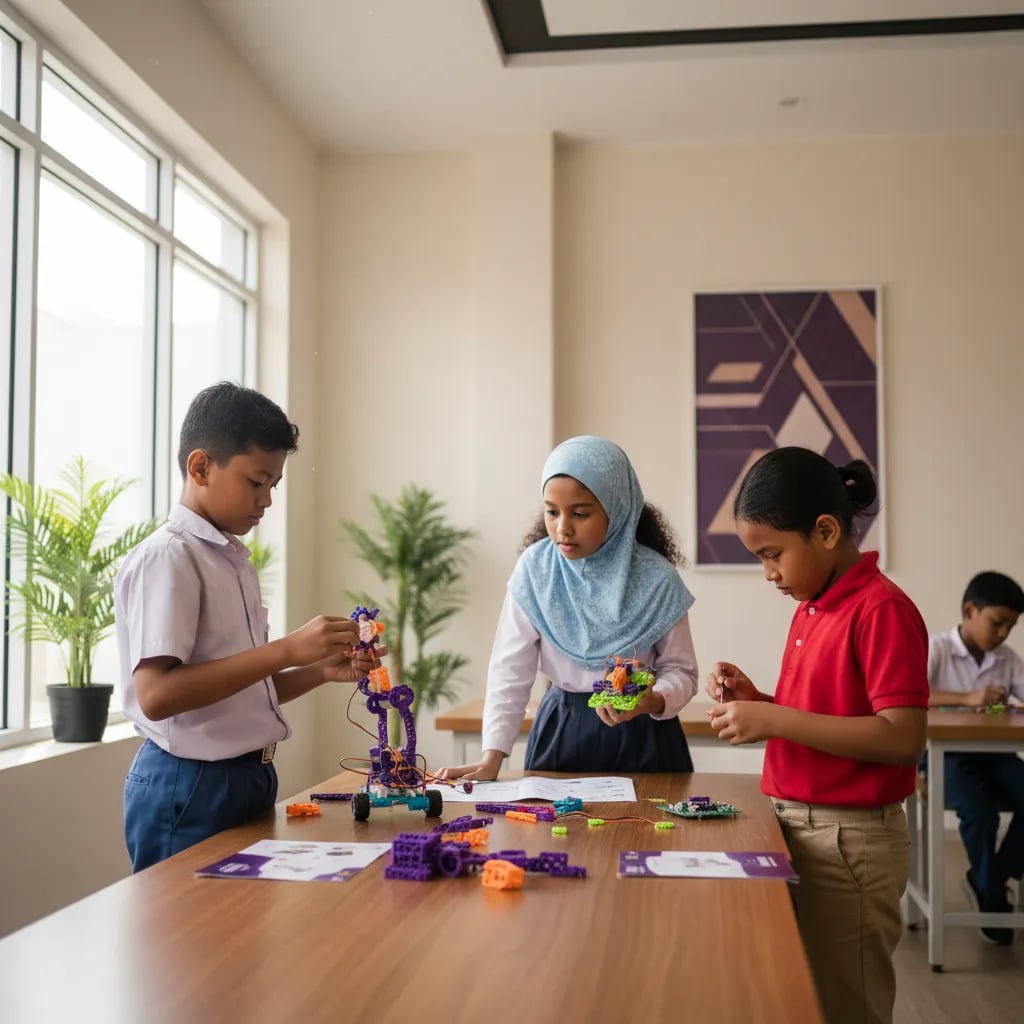
Debugging is the process of finding, understanding, and fixing bugs — errors in program code — so the program runs the way it should. The term is used whenever a programmer, including a child, works out why code isn't working and then corrects it.
Table of Contents
The word "bug" means insect. It became famous in 1947, when a moth actually got stuck inside the Harvard Mark II computer and stopped it from working; the engineers taped the insect into their logbook and called it the first "bug." Ever since, a bug has meant a mistake inside a program.
Debugging usually happens step by step: spot the symptom, guess the cause, fix one part, then test again until everything works. For example, in Scratch a child makes a cat that should move when the arrow key is pressed, but the cat stays still. On checking, it turns out the "move 10 steps" block was never placed under the "when arrow key pressed" block. Adding that one missing block fixes the bug instantly. Debugging is a programmer's daily work — professionals can spend up to half their time just finding and fixing bugs.
Programmers lean on a handful of debugging techniques, from the simplest upward:
For a child in Scratch, debugging simply means running the program slowly and checking the blocks one by one until the wrong part turns up. Kids practice this in a free Algonova coding class.
Debugging teaches children to think logically, stay patient, and not give up when something doesn't work — a skill useful far beyond the screen. In the Algonova coding course, children learn to find and fix their own mistakes, step by step, while building real projects.
Want your child to try? Join a free coding class and watch them fix their very first bug.
Debugging is the process of finding and fixing bugs (errors) in code so a program runs correctly. Programmers do it whenever code doesn't produce the expected result.
A bug is the error itself, while debugging is the activity of finding and fixing that bug. One is the problem, the other is the solution.
Yes. On platforms like Scratch, kids aged 7 and up can already spot the wrong block and fix it. Debugging actually builds their patience and logical thinking.
Because almost every first attempt at code has bugs, and being able to fix them keeps children from giving up. The skill is useful at school and in everyday life.
Blog

Algonova worldwide
Contact
Whatsapp: +62 21 50996971
Email: info@algonova.id
Address
Coworking Area, Gedung IT 6 Lantai Dasar, Nongsa Digital Park, Jalan Hang Lekiu, Kelurahan Sambau, Kecamatan Nongsa, Batam, Indonesia Directorate General of Consumer Protection and Trade Compliance – Ministry of Trade of the Republic of Indonesia. WhatsApp Ditjen PKTN: 0853-1111-1010.
PT Algonova Indonesia Cerdas All rights reserved 2026