How to Teach Multiplication Tables to Kids: 5 Proven Methods
Learn Math8 min
Checklists & Calendar

Intan Permata
Education Calendar Editor, Algonova
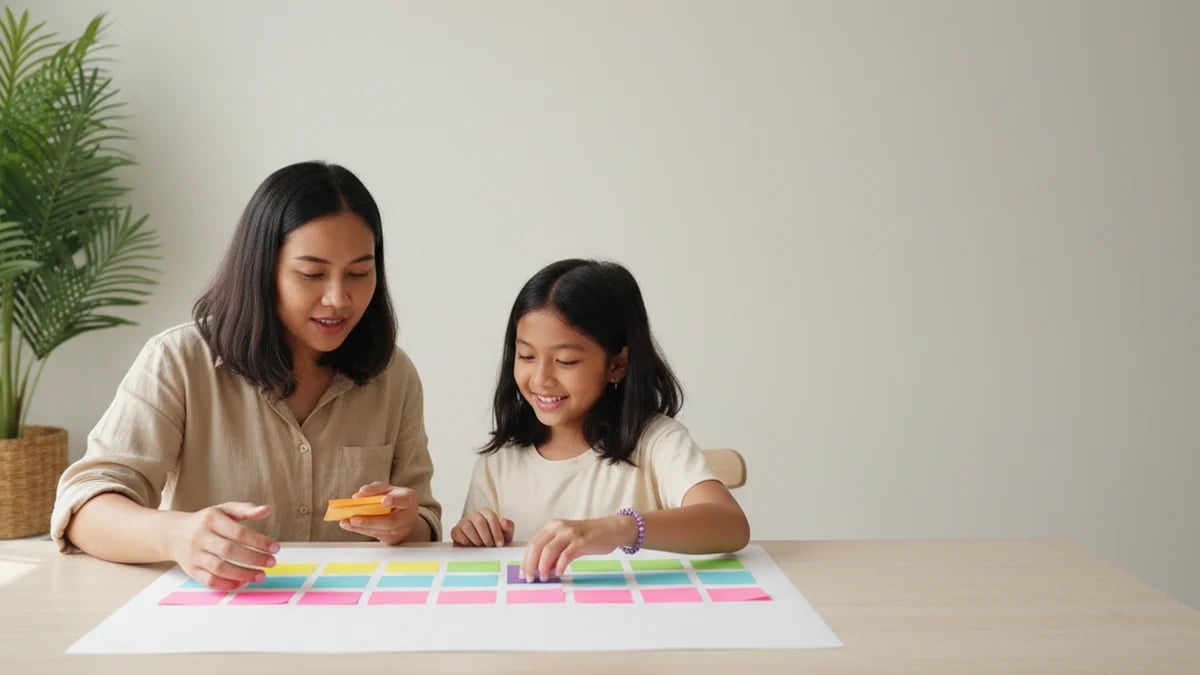
The December school holiday in Indonesia lasts about 2 weeks in 2026 for most primary schools, starting between 19 and 21 December and ending between 1 and 3 January 2027. In Central Java, the provincial education office's guideline sets the odd-semester break at 21 December 2026 to 1 January 2027. The 3-week checklist below helps parents of primary school children review first-semester math, finish one small project and start semester 2 rested.
The 2026/2027 odd-semester break begins after report cards come home on 18 or 19 December 2026, and schools reopen on Monday 4 January 2027 in the provinces whose official calendars we could read. Each province publishes its own education calendar (kalender pendidikan), and for primary schools the district or city office often adjusts it again.
| Province | Report cards | Odd-semester break | Semester 2 starts | Official source |
|---|---|---|---|---|
| Central Java (SD, SMP, SMA, SMK) | 18 Dec (5-day schools), 19 Dec (6-day schools) | 21 Dec 2026 to 1 Jan 2027 (5-day), to 2 Jan 2027 (6-day) | Monday 4 Jan 2027 | Central Java 2026/2027 calendar guideline |
| East Java (SMA, SMK, special schools) | last working day before the break | 24 Dec 2026 to 3 Jan 2027, including the collective leave day and public holidays | Monday 4 Jan 2027 | East Java education office decree 400.3/2876/101.1/2026 |
| Jakarta | check the official calendar | check the official calendar | check the official calendar | Jakarta education office calendar page |
| West Java and other provinces | check the official calendar | check the official calendar | check the official calendar | your provincial or district education office website |
In East Java, the provincial decree covers senior high, vocational and special schools only. Primary and junior high calendars there come from each district or city, so dates can move by a few days. For Jakarta and West Java we could not open an official 2026/2027 document, so check your provincial calendar or ask the homeroom teacher. International schools follow their own term dates.
Christmas and New Year land in the middle of the odd-semester break, so 3 of its 10 working days are public holidays or leave. The Central Java and East Java calendars list the same dates:
So any study plan has to give way to family trips and worship. Leave the days around 24, 25 and 31 December free of targets. Because 5 January is a holiday, the first school week of semester 2 has only 4 days, and children get a softer landing.
The plan starts one week before the official break, in report card week, because end-of-semester tests are usually finished by the first week of December. Central Java's guideline places the odd-semester summative assessment between the fourth week of November and the first week of December 2026.
| Week | Dates (Central Java example) | Focus | Study time per day | Done when |
|---|---|---|---|---|
| 1 | 14 to 20 December | read the report card, pick 2 math topics, rest | 15 minutes, 3 days | 2 topics written on paper |
| 2 | 21 to 27 December (Christmas) | review math, start 1 coding or design project | 20 minutes, 4 days | the project has a first version |
| 3 | 28 December to 3 January (New Year) | finish the project, prepare for semester 2 | 20 minutes, 3 days | project shown to family, school bag packed |
That adds up to about 3 hours of focused study across 3 weeks. The rest of the time is for play and family. If your school's dates differ, shift the table so week 1 lines up with report card day.
Use the first week to read the report card calmly and choose two math topics at most to review. More than two turns the holiday into extra school.
For example, a Grade 4 report card might say the child still struggles with equivalent fractions and the perimeter of flat shapes. Those are the two topics for weeks 2 and 3. The full chapter list is in our guide to Grade 4 math topics.

Week 2 holds just two things: 20 minutes of math on 4 days, and one small project your child picks. A project gives a reason to sit at the laptop for something other than videos.
For math, keep the same routine every day: 5 minutes going over a worked example, 10 minutes on 4 or 5 questions, 5 minutes talking through one mistake. Stop at minute 20 even if your child is on a roll. Ending while they still want more makes the next day easier.
For the project, choose something that fits into 3 to 5 sessions:
Picture a 9 year old building a 5-question fractions quiz in Scratch where every right answer makes the cat dance. In one project the child revises equivalent fractions and learns the "if" block.
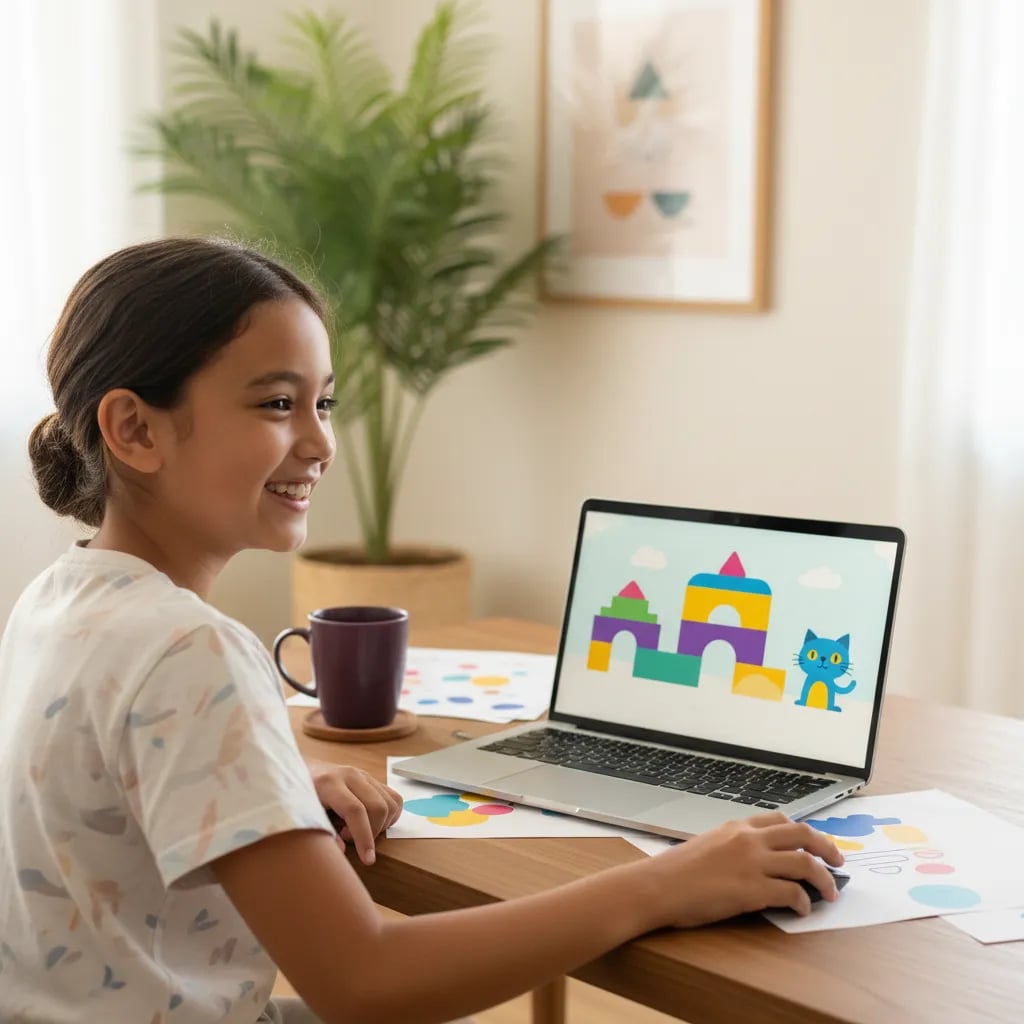
Week 3 is for finishing what was started and getting ready for the first day of semester 2. A finished project sends a child back to school feeling capable, and that does more than 10 worksheets.
Week 3 checklist:
If your child still gets stuck on the same topic after week 3, talk to the teacher or look for extra support. Algonova's online math classes for primary Grades 3 to 6 start with a diagnostic so the teacher knows where your child stands.
The safest screen rule for the year-end break is simple: screens for making things come first, screens for watching come later. We covered age-based screen limits in the daily schedule article, so here are three habits instead:
"A good holiday leaves a child missing school a little, not worn out before the semester starts." Intan Permata, Education Calendar Editor, Algonova
If you want a structured class during the break, compare formats and costs first in our guide to choosing a school holiday course. Algonova teaches coding, math and design fully online with live teachers, in groups of up to 10 children, from Rp 102,000 per lesson. More than 1,000,000 students in 97 countries have studied with Algonova. For primary school children, see coding classes for Grades 3 to 6.
In the provinces whose official calendars we read, the odd-semester break starts on 21 December 2026 for primary schools in Central Java and on 24 December 2026 for senior high, vocational and special schools in East Java. Report cards come one working day earlier, on 18 or 19 December in Central Java. Many provinces leave primary school calendars to districts and cities, so your child's school may break up a few days earlier or later. The quickest way to be sure is the education calendar on your district or city education office website, or a message to the homeroom teacher in the class group. Private and international schools often set their own dates, so read the school circular too. Put report card day in the family calendar, because week 1 of the checklist starts there.
The 2026/2027 odd-semester break lasts about 2 calendar weeks. In Central Java, 5-day schools are off from 21 December 2026 to 1 January 2027 and 6-day schools until 2 January 2027. In East Java, the provincial decree sets the break at 6 working days, plus the collective leave day, Christmas and New Year, so senior high and vocational students are off from 24 December 2026 to 3 January 2027. Two weeks feel long to a child but slip away quickly without a plan. That is why this checklist starts a week before the official break, in report card week. Your child then gets 3 clear weeks: rest, short practice, and preparation for semester 2. If your school's dates are different, keep the same order and adjust the length of each week.
In Central Java and East Java, the first day of semester 2 is Monday 4 January 2027. Central Java's break ends on 1 or 2 January, and East Java's table of school days lists 4 January as the first teaching day of the new semester. The next day, Tuesday 5 January 2027, is the Isra Mi'raj public holiday, so the first week has only 4 school days. For Jakarta, West Java and other provinces, check the official education office calendar because dates can differ. Start moving your child's bedtime back 4 to 5 days before school reopens. Pack the school bag and books on the weekend before, not on the last night of the holiday, so the first morning is calm.
Your child does not need to study every day, but short regular practice helps them keep what they learned in the first semester. The December break is only about 2 weeks, much shorter than the end-of-year holiday, so the target can stay light. About 3 hours of focused practice over 3 weeks is enough, split into sessions of 15 to 20 minutes. Focus on the two weakest topics from the report card instead of the whole textbook. Let the rest of the time go to play and to family over Christmas and New Year. A child who rests well usually takes in the new chapters of semester 2 more easily than one pushed to study through the whole break. If practice keeps ending in tears, drop it for a few days and try again.
Review the topics the report card flags as needing guidance, two at most. Grades 1 and 2 usually need addition and subtraction up to 100 or place value. Grades 3 and 4 often need multiplication, division and simple fractions again. Grades 5 and 6 tend to stumble on mixed fractions, decimals and solid shapes. To choose, give your child 3 questions from each topic you suspect and keep the two with the most mistakes. Don't race ahead into semester 2 chapters; reading the first page in week 3 is enough. For a detailed list, open the math topics by grade on the Algonova blog and match them with the chapters in your child's textbook. A free diagnostic of about 60 minutes with a teacher can also show the gaps by topic.
A good holiday project fits into 3 to 5 sessions and ends with something your child can show the family. For ages 8 to 12, Scratch is a safe choice: it is free, runs in a browser and uses blocks instead of typed code. Project ideas include an animated Christmas or New Year card, a 5-question math quiz with a score, or a simple game about catching fireworks. The math quiz works best because it mixes report card topics with coding logic. Children who prefer drawing can make a 4-panel comic about the holiday instead. Keep the project small enough to finish, since an unfinished game rarely gets picked up again after school starts. If your child wants to learn with a teacher, Algonova runs a free 60-minute online coding master class for ages 8 to 12.
Screen time over the holiday should follow your child's age and the rules you already use at home, not disappear because school is out. The Indonesian Pediatric Society (IDAI) gives age-based guidance, and we cover the numbers in our daily schedule article for school holidays. For the December break, the practical rule is to separate screens for making from screens for watching. Scratch or design projects come first, videos and games after. Travel days and family gatherings can be days with no target and only the screen time you really need. One screen-free day a week also makes it easier for your child to put the device down when school restarts on 4 January 2027. Agree on the rules before the break starts, not in the middle of it.
Preparing for semester 2 works best in the last week of the holiday, in three small steps. First, move bedtime and wake-up time back gradually, 15 to 20 minutes a day over 4 to 5 days. Second, open the semester 2 textbook and read the first page of the new chapter together, without any exercises. Third, check supplies: bag, exercise books, stationery and uniform, at least two days before school starts. It also helps to agree on one small goal for the semester, such as feeling more confident with fractions. Remember that the first week has only 4 school days because 5 January 2027 is the Isra Mi'raj holiday, so your child has time to settle back into the routine. Praise the first full week, whatever the marks.

Algonova worldwide
Contact
Whatsapp: +62 21 50996971
Email: info@algonova.id
Address
Coworking Area, Gedung IT 6 Lantai Dasar, Nongsa Digital Park, Jalan Hang Lekiu, Kelurahan Sambau, Kecamatan Nongsa, Batam, Indonesia Directorate General of Consumer Protection and Trade Compliance – Ministry of Trade of the Republic of Indonesia. WhatsApp Ditjen PKTN: 0853-1111-1010.
PT Algonova Indonesia Cerdas All rights reserved 2026