How to Make a Simple Comic for Primary School Kids: From Paper to Digital Comics
Learn Design8 min
Checklists & Calendar

Intan Permata
Education Calendar Editor, Algonova
School holiday activities for kids balance rest with developing new skills — not just filling time in front of a screen. For primary and middle school children in Indonesia, the best mix blends outdoor exploration, life skills, creative hobbies, and short trial classes that surface new interests. This article gathers 8 proven ideas that help kids grow physically, mentally, and socially — for parents in Jakarta, Bandung, and Surabaya who want two meaningful weeks.
The honest answer: a holiday does not have to be productive every minute, but it ideally stays balanced. Children need rest from academic pressure to come back ready for the next semester. But two weeks of full-screen rest often makes them return more tired, not more refreshed.
Our philosophy at Algonova is simple: discover, develop, master. The holiday is a golden window for the first stage - discovering what genuinely interests the child. Not to add more tutoring, but to give the child space to try a few new things without the pressure of grades.
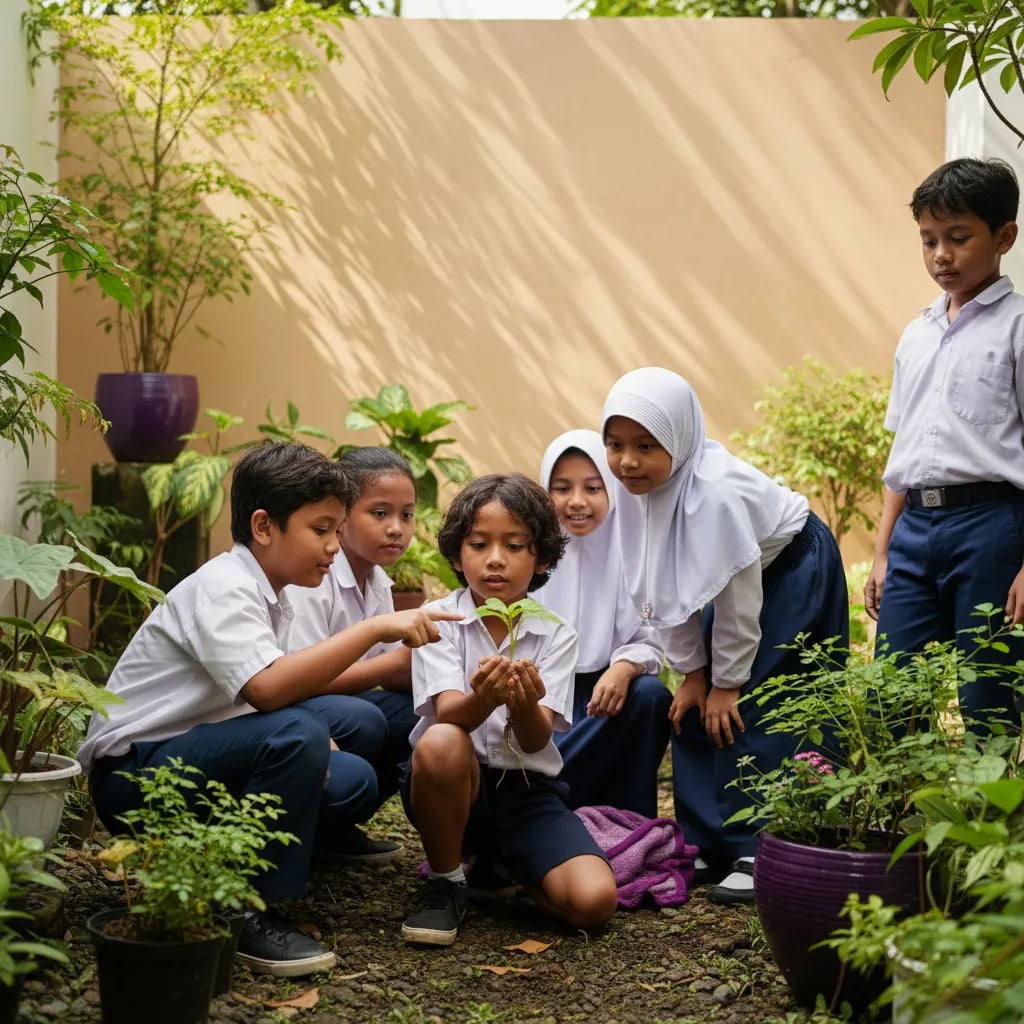
Gardening with a child is one of the simplest ways to turn a holiday into a meaningful experience. A child who plants a seed and waits for it to grow learns two things at once: patience, and a sense of responsibility for a living thing. A few pots on the terrace - tomatoes, chillies, spinach - is enough to give a sense of achievement at the first harvest.
For families who enjoy adventure, camping - including glamping around Bandung or Bogor - offers a different experience from city routine. The child learns to set up a tent, keep the camp clean, and prepare meals together. More importantly, away from Wi-Fi, family conversation comes alive again.
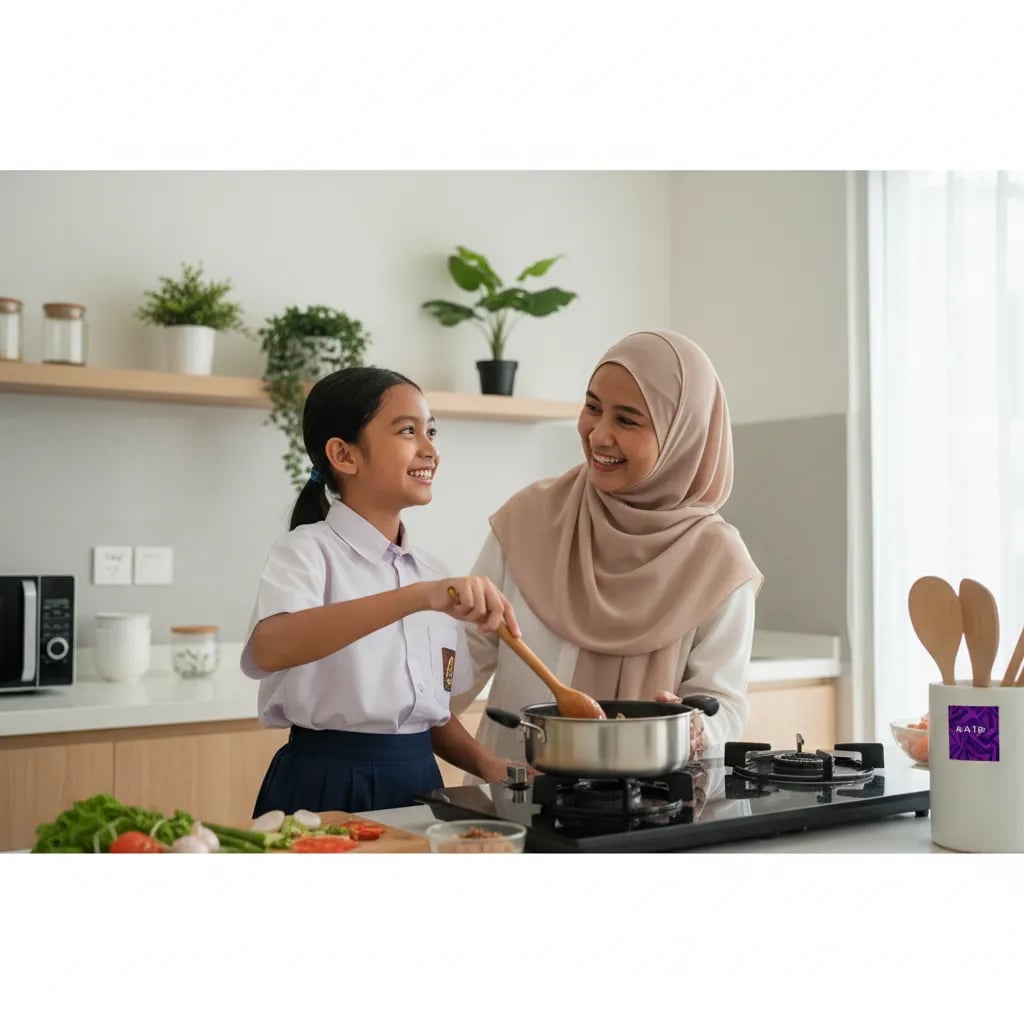
Kitchen skills are one of the best inheritances you can pass to a child. Start simple: an omelette, fried rice with prepared seasoning, or safely chopping vegetables. A child who can prepare one meal for themselves carries that confidence into the classroom and into adult life.
Cleaning the house together is more meaningful than it looks. A child who helps arrange their own room, sorts clothes they've outgrown, or organises a study cabinet absorbs one important lesson: a comfortable home does not come by itself. This is a responsibility lesson that never appears in any school curriculum.
Regular sport during the school year often gets squeezed out by classes and tutoring. The holiday is a good time to form the habit. Pick one activity that can be done together: swimming at the local pool, badminton in the yard, an early Sunday cycle around quieter Jakarta streets, or a light hike at Taman Hutan Raya Ir. H. Djuanda.
The benefits go beyond fitness. A child who exercises with their parents builds a positive association with movement - which is what makes the habit last after the holiday ends.
A holiday is one of the rare moments when a child has unscheduled time for a hobby. Set out a canvas and acrylic paints, or borrow a neighbour's keyboard. Some children turn out to have a real talent for short-story writing that only becomes visible when they have free time.
Don't expect finished work - the goal is not a portfolio, it is discovery. The holiday is a rare window to let a child explore without having to be excellent.
If budget doesn't allow far travel, your own city almost certainly has places you haven't yet visited. A few classic options:
A question that often comes up: when is a child ready for "heavier" sites like history museums? Usually from age 8 and up - below that, their attention is better suited to places with interactive elements.
A trial class - a single-session sample - is one of the most underrated tools for finding a child's interests. In a single session, the child tries something new without financial or long-term commitment.
At Algonova we run a free 60-minute Master Class with AI-assisted talent diagnostics - designed specifically to answer the question "what does my child actually enjoy" without making parents feel trapped in a sales funnel. After the session, we give an honest recommendation, including when the child might be better suited to a different program.
Beyond coding, there are plenty of trial-class options in Indonesia: painting studios around Kemang, music schools like Gilang Ramadhan Studio Band, archery classes, or pottery workshops in Bandung. A general rule: try two or three quite different fields. The child's interest shows up much more clearly through contrast.
For primary and middle school kids who spend a lot of time on screens, coding turns that time from passive consumption into active production. A child who only played games last holiday can finish this one with their own simple game built in Scratch.
Our curriculum has taught over 1,000,000 children in 97 countries across 9 years, with Private (1 student), Mini (2-4 students), and Group (up to 10 students) formats and individual learning paths. For SD kids in grades 3–6, we have a dedicated track — explore the coding programme for SD kids with Scratch, Roblox, and Python tailored by age. For a full guide on when a child is ready and where to begin, read our article Coding for Primary School Kids: A Complete Parent's Guide.
Not all play has to be productive. A child also needs space to be creatively bored - the kind of boredom that births ideas. Lay out a box with Lego, playing cards, drawing supplies, and just let it be. Child psychology research shows that structured boredom is one of the best triggers of creativity at this age.
If your child struggles with maths at school, the holiday is also a good time for a fresh approach - not with more worksheets, but with logic games and enjoyable practice. For more, see our piece on 5 Effective Approaches to Learning Math.
Once you've picked a few ideas from the list above, two companion articles cover the details. For a clear daily routine and reasonable screen-time limits, see our daily schedule for kids during school holidays, complete with sample schedules and how to reset sleep before school starts again. If you're weighing a day camp or an intensive class, school holiday courses for kids compares pricing and five criteria to check before you commit.
There is no single right formula for every family. But a few principles consistently work for parents in Indonesia.
Ask the child. Children often have their own holiday plans - sometimes as simple as "sleep more" or "learn origami". Listening first, before building a schedule, makes a child feel included rather than scheduled.
Balance rest with stimulation. A rough rule: if there are 14 days of holiday, around half for active things (classes, sport, sightseeing) and half for unstructured rest. A child whose every day is fully booked actually returns more tired.
Start with free or low-cost. Trial classes, gardening at home, and a visit to local sights are a good starting point. Once you see the child's response, then decide where to invest more.
Watch for signs of interest. If the child keeps asking about one thing for several days after trying it, that is usually a clue worth following.
The best school holiday activities for kids mix play, learning, and rest: reading, sport, creative projects, and one new skill such as coding. Holidays are the ideal time to try something new without the pressure of school grades, and a single trial session is often enough to reveal a genuine interest. To turn screen time into a fun digital skill, browse the programs on the coding classes page, or try a free class so your child runs the talent diagnostic and builds a first project.
Blog

Algonova worldwide
Contact
Whatsapp: +62 21 50996971
Email: info@algonova.id
Address
Coworking Area, Gedung IT 6 Lantai Dasar, Nongsa Digital Park, Jalan Hang Lekiu, Kelurahan Sambau, Kecamatan Nongsa, Batam, Indonesia Directorate General of Consumer Protection and Trade Compliance – Ministry of Trade of the Republic of Indonesia. WhatsApp Ditjen PKTN: 0853-1111-1010.
PT Algonova Indonesia Cerdas All rights reserved 2026