Future careers in the AI era: what to prepare now

AI Education8 min
Math Education

Dewi Lestari
Mathematics Specialist
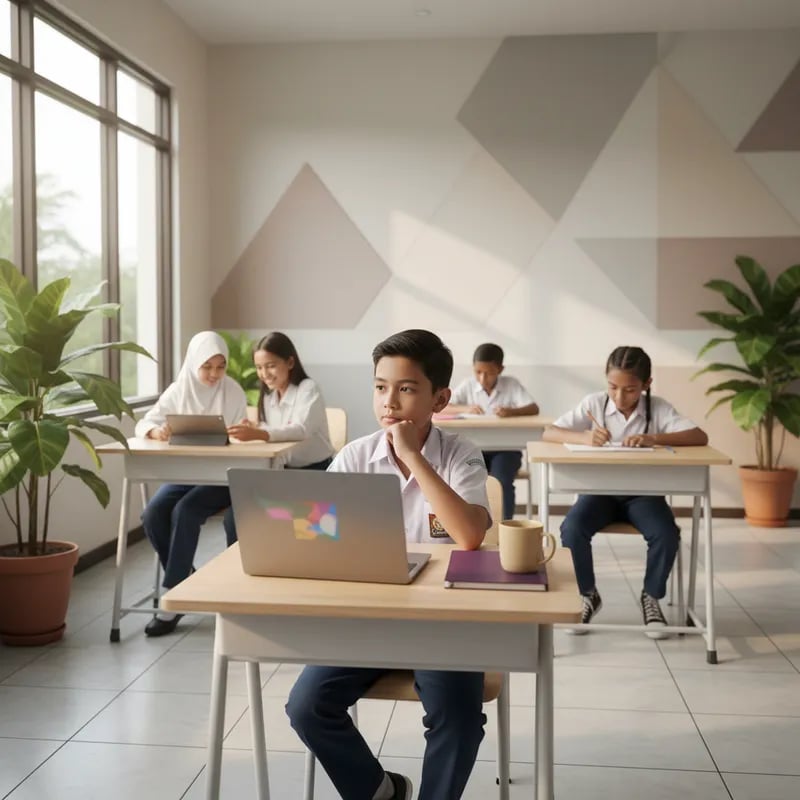
Why do children struggle with math? A small share of kids have dyscalculia (a specific learning disorder that requires professional diagnosis), but the majority of struggles come from 7 other causes that are all fixable: concept gaps from previous grades, math anxiety, mismatched learning style, over-emphasis on rote memorization, excessive parental pressure, lack of concrete visualization, and class formats unsuited to the child's age.
Every parent has seen it: a once-confident child suddenly crying over a math workbook, or a teenager who used to enjoy counting now calling it "the worst subject". That frustration is real, but it is not destiny. Most math struggles are not proof that a child "isn't smart", they are signals that something in the process has gone wrong, and those signals can be read.
Algonova is an international technology school for children ages 5-17: 1,000,000+ graduates across 97 countries, running since 2016, a 4.9 star rating, and a Bett MEA Awards win. Math is taught in three age tracks, Math Starters (6-7), Math Explorers (8-12), and Math Masters (13-17), in Private (1 student), Mini (2-4 students), and Group (6-10 students) formats from Rp 102,000 per session. This guide will help you recognize which cause matches your child, and give concrete steps you can take this week.
Before diving into causes, one prerequisite read: When to Start Math Tutoring. The ideal starting point differs per child, and early intervention is always lighter than late correction.
Most children who struggle with math have one of seven identifiable causes, and only one of them is a medical condition. Algonova has taught 1,000,000+ students across 97 countries since 2016, and the same seven patterns repeat in math classes: concept gaps, math anxiety, learning style mismatch, rote memorization, parental pressure, dyscalculia, and a class format that does not fit the child's age. Each has a different signature and a different fix.
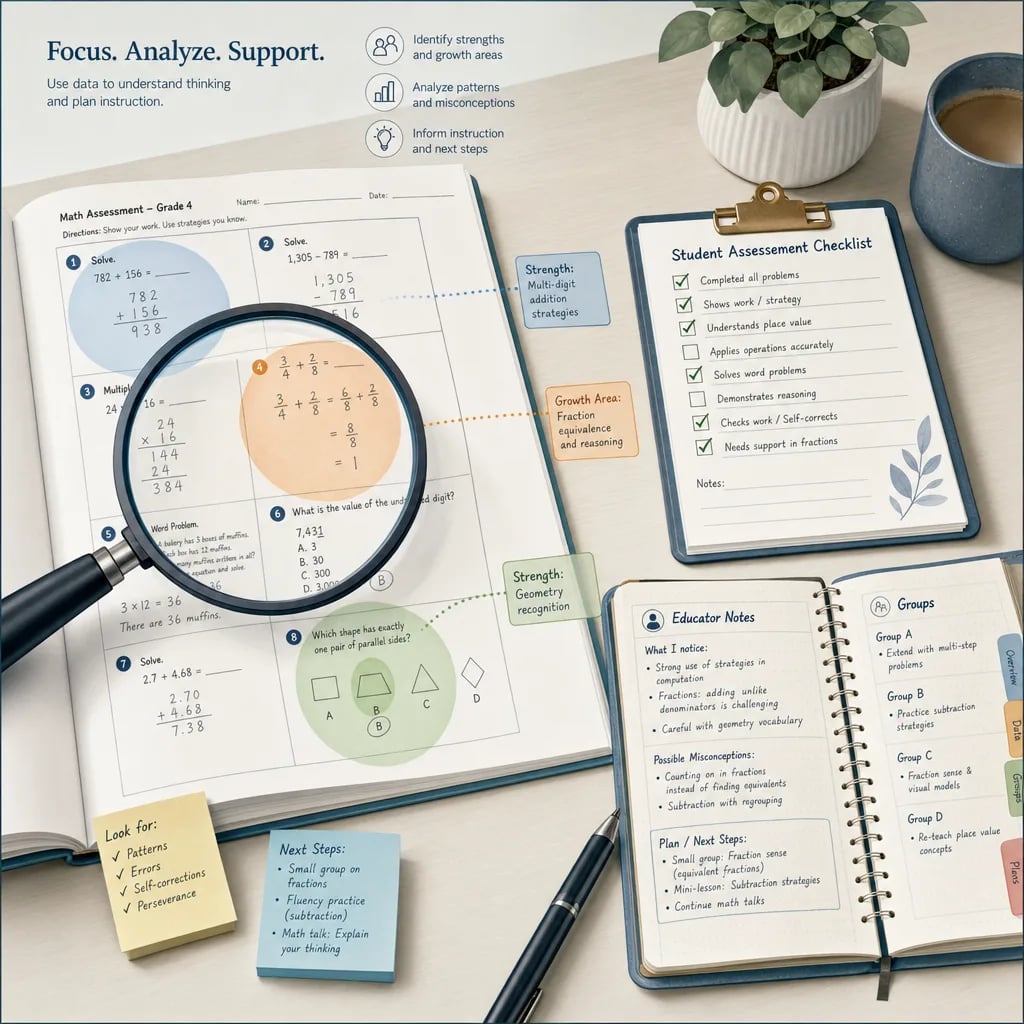
Math is cumulative: fractions rest on division, algebra rests on arithmetic, and so on. If a child misses or misunderstands one concept, say fractions in grade 4, then grade 5 material feels impossible even though the child is bright enough. This is the number one overlooked cause, because kids look like they get it on simple homework but collapse when concepts stack. The fix is not reviewing today's material, it is mapping backwards to locate the actual hole.
Math anxiety is common among primary school students, a physiological response (racing heart, cold sweat, mental blank) triggered by numbers. This is not laziness; it is a brain that has learned to associate math with threat. Smart kids can fail exams from anxiety alone, then get told to study harder, which worsens the loop. The fix is to lower the stakes, engineer small early wins, and move the child into a calmer setting, such as an Algonova Mini group of 2-4 students with a certified teacher.
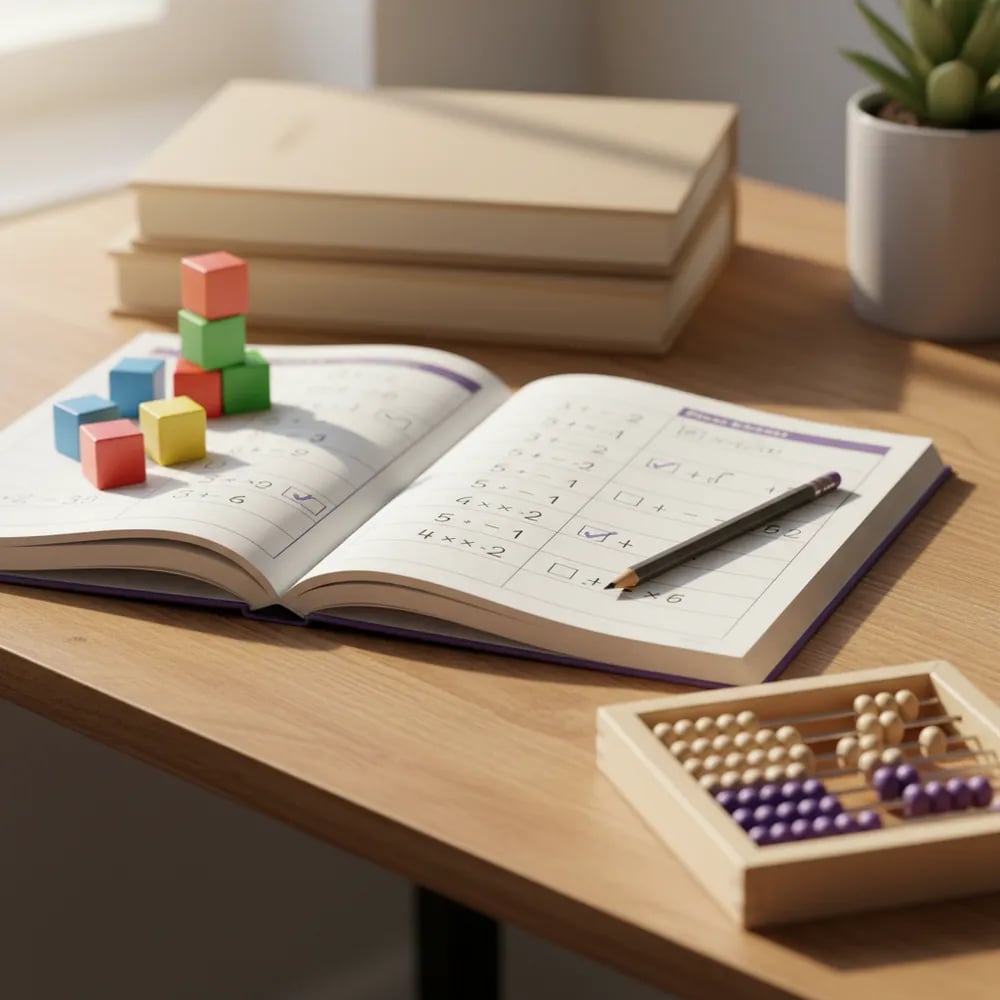
Some children learn best visually (diagrams, videos, drawings), some verbally (spoken explanation), some kinesthetically (movement, physical objects). If the classroom teacher is mostly verbal but your child is visual, the result looks like "doesn't understand", when the real problem is format. The fastest fix: try alternate media (video, interactive apps, physical manipulatives) on the same concept and watch which one clicks.
Endless drill worksheets (the Kumon-style trap) produce children who can compute fast but freeze when a word problem shifts slightly. The brain memorized procedures without understanding "why." Once a question deviates from the pattern, they stall. Fix: replace part of the drilling with open questions - "why does this work?", "how do you know?", "can you explain it to your younger sibling?".
A child who struggles with math is not a lazy child - they are sending a signal, and that signal can be read.
Rina Wijaya, Child Educational Psychologist
Ironic: the harder parents push math grades, the worse the result often becomes. The child learns to avoid punishment, not to understand; they memorize procedures to pass the test and forget them a week later. Worse, high pressure reinforces math anxiety (cause 2). Fix: shift focus from "what grade?" to "what did you learn?" and "which part was hardest?". Celebrate the process, not just the number.
A small share of children have dyscalculia, a specific learning disorder for numbers, analogous to dyslexia for reading. This is not laziness, not a choice, and cannot be fixed through extra tutoring alone. The signs are clear and consistent (see the specialist section below). If you suspect it, diagnosis must come from a child psychologist or educational specialist, not a tutor. Children with dyscalculia can still learn math, but they need a different approach and often specific accommodations.
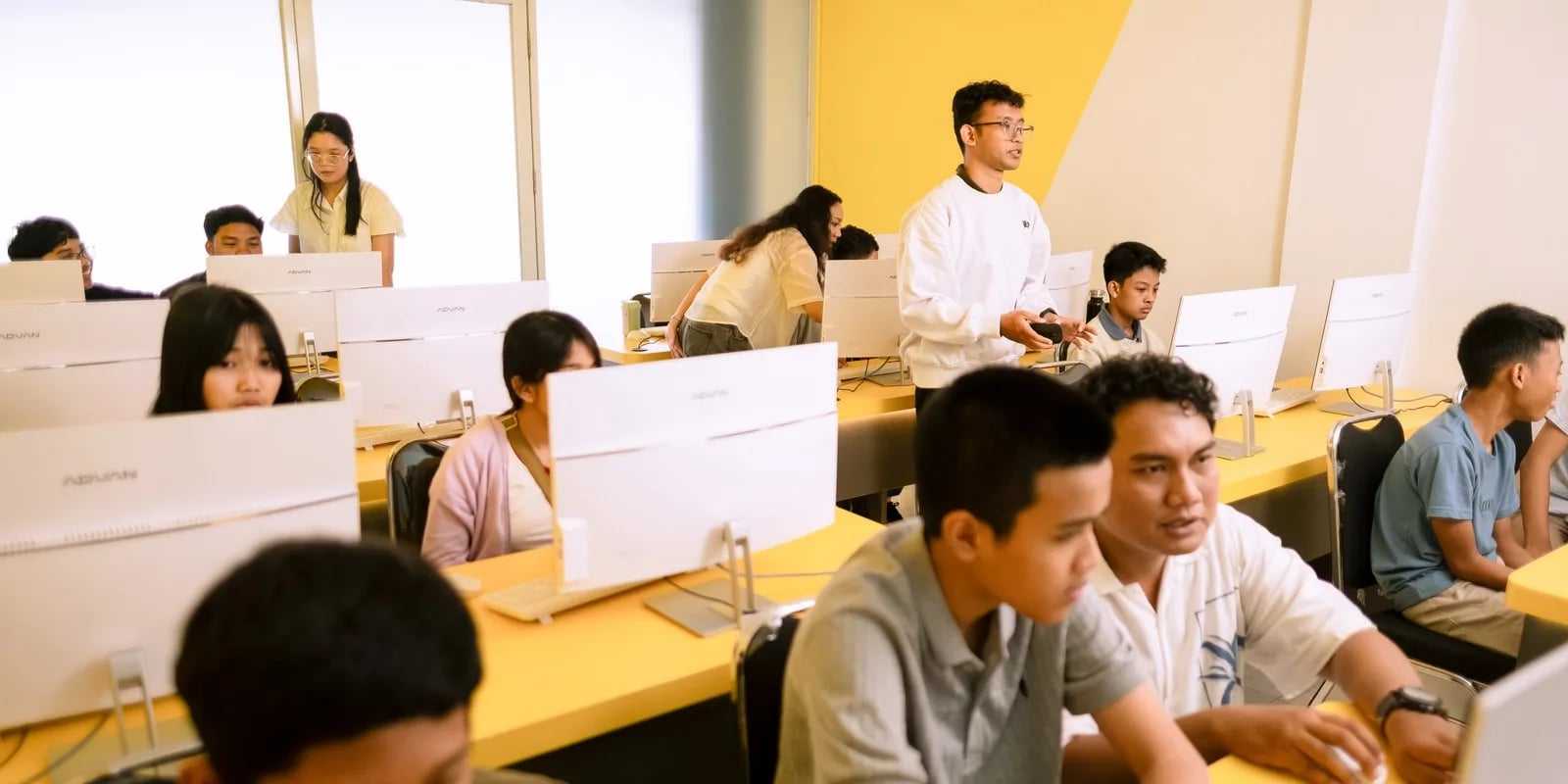
The primary to secondary transition can be jarring: bigger classes, rotating teachers, more abstract material, and a child used to personal attention suddenly lost in a room of 40. Conversely, a first grader in a rigidly formal class can also shut down. Fix: match the format to the developmental stage. Algonova splits math by age into Math Starters (6-7), Math Explorers (8-12), and Math Masters (13-17), and runs Private (1 student), Mini (2-4 students), and Group (6-10 students) formats, so younger children keep personal attention while teens work project by project.
Work through four steps in this order: a content assessment to locate concept gaps, a conversation with your child without judgment, a conversation with the school teacher, and only then a specialist consultation. Algonova runs this sequence as the Algonova Diagnostic Method, a free 45 minute diagnostic that identifies which of the seven causes is active before any course is booked.
Match the fix to the cause instead of buying more of the tutoring that already failed. A concept gap needs a backward assessment, math anxiety needs lower stakes, a style mismatch needs different media, and a wrong format needs a smaller class. Algonova math runs from Rp 102,000 per session in Private (1 student), Mini (2-4 students), and Group (6-10 students) formats, with 90 minute lessons.
| Cause | Concrete solution |
|---|---|
| 1. Concept gap | Backward assessment, then target the exact gap instead of the linear curriculum |
| 2. Math anxiety | Lower stakes (no punishment for mistakes), short sessions with small wins |
| 3. Mismatched learning style | Rotate media (video, apps, manipulatives) until it clicks |
| 4. Memorization without understanding | Replace part of the drill with "why" questions and open problems |
| 5. Excessive pressure | Focus on process, celebrate effort, see How to Make Kids Love Math |
| 6. Dyscalculia | Professional diagnosis, specific accommodations, experienced teacher |
| 7. Wrong format | Pick the fitting format: Private (1 student), Mini (2-4 students), or Group (6-10 students); project-based approach for teens |
For specific study methods, see the full guide on Effective Math Study Methods. For gamified approaches that reduce anxiety, Math Games for Kids offers concrete ideas. If you are weighing in-person tutoring, our guide to Best Math Tutoring in Jakarta, Bandung, Surabaya, Medan compares in-person and online formats.
See a child psychologist when three or more dyscalculia signs persist for six months, or when your child reacts with tears, nausea, or panic to math only and not to other subjects. A tutor, including an Algonova teacher, can map concept gaps and anxiety in a free 45 minute diagnostic, but only a psychologist or educational specialist can diagnose dyscalculia.
Dyscalculia is often diagnosed late because its signs look like "just doesn't like math". Five warning signs that warrant professional consultation:
If three or more of these appear consistently for six months, see a child psychologist. Early diagnosis unlocks fully legal accommodations (extended exam time, calculator, alternative formats) and prevents the child from blaming themselves for a condition that is not their fault.
The right diagnosis turns 'my child can't do math' into 'my child needs the right approach' - and that difference lasts a lifetime.
Rina Wijaya, Child Educational Psychologist
A child who "struggles with math" almost always has a readable, addressable reason. It is not fate or a verdict on ability. A small share have dyscalculia and need professional diagnosis; the rest face one of six other causes that respond to the right intervention. First key: stop asking "what did you score?" and start asking "what frustrated you?". Second key: match your approach to the cause, not more of the same tutoring that already failed.
To map the specific cause for your child, book the free 45 minute Algonova math diagnostic, the first step of the Algonova Diagnostic Method. Algonova is an international technology school for ages 5-17 with 1,000,000+ graduates in 97 countries, a 4.9 star rating, and Bett MEA Awards recognition. Classes run Private (1 student), Mini (2-4 students), and Group (6-10 students) from Rp 102,000 per session. Book the free diagnostic and leave with a clear picture of which cause is active, with no obligation to continue.
Math struggles most often come from unfinished gaps in basic concepts, anxiety about math, or a study method that does not suit the child - not from a lack of talent. Finding the root cause is the first step.
Can it be fixed? Yes. By filling the concept gaps from the ground up and lowering the pressure, most children can catch up.
When is specialist help needed? If the difficulty persists despite practice, consider an assessment for dyscalculia. Training logic through coding also helps rebuild a child's confidence with patterns and numbers. See the Algonova coding classes for ages 5-17, or try a free coding class.
A sudden shift is usually not about ability but about an event: an embarrassing failure, a teacher change, or a conceptual jump that wasn't fully explained. Ask gently and without judgment when exactly the dislike started, and what happened that week at school. The answer is often surprising. If the root is emotional, extra pressure only makes it worse. Rebuild confidence with small wins (problems just below current level) before pushing forward. Once the emotional block softens, real learning can resume.
Dyscalculia is a specific learning disorder for numbers, analogous to dyslexia for reading. A small share of children have it - it is not laziness, not a choice, and not curable through extra tutoring alone. Signs are consistent: still counting on fingers at age 9-10, confusing digits 6 and 9 past age 8, inability to estimate magnitude, extreme anxiety only for math. Diagnosis must come from a child psychologist or educational specialist, not a tutor. Early diagnosis unlocks specific accommodations that change the trajectory of a child's schooling.
Only a small share of children have true dyscalculia - a specific learning disorder requiring professional diagnosis and specific accommodations. A considerably larger group experiences math anxiety at a level that impairs exam performance, even when their underlying skills are normal. The rest - the majority who "look like they struggle" - actually face concept gaps, mismatched class formats, or excessive pressure. Good news: this largest group responds fastest to the right intervention, often needing only a few months to recover.
No. In fact, kids who struggle in primary school but receive targeted intervention before middle school often catch up and sometimes overtake their classmates. Math is cumulative, so a small gap in grade 3 can look like "can't do math" by grade 6. But once the gap closes, many advanced concepts suddenly make sense. What determines outcomes is not the starting condition but whether the gap is detected and addressed. Kids who "struggle in primary school" without intervention do tend to fall further behind in middle school - not because of ability, but because the gap widens.
Seek educational help (tutor, small class) as soon as you see three or more consistent struggle signs over several weeks - don't wait for a failing grade. Seek professional help (child psychologist, educational specialist) when dyscalculia signs appear consistently for six months or more, or when the child shows extreme emotional reactions only for math. A good tutor can map concept gaps and anxiety; they cannot diagnose dyscalculia. If six months of tutoring shows no progress, that is a signal to move to a professional consultation.
Yes, for most cases. A good tutor begins with a diagnostic - mapping concept gaps, learning style, and anxiety level - before designing a personalized plan. What separates effective tutors from ineffective ones: the effective ones change their approach based on the child's response; the ineffective ones repeat the school's method at higher volume (and usually make anxiety worse). For a child with dyscalculia, tutoring must be combined with specific accommodations and often psychological support. Tutoring alone is not enough - but it should not be dismissed as a part of the solution.
This is a classic math anxiety pattern. A brain conditioned to associate exams with threat releases stress hormones when facing a test paper - and stress hormones literally disable the working memory needed for math reasoning. Your child is not lying or being lazy; the ability is real at home and disappears in class due to a physiological reaction. Solution: lower stakes (not "you must get 90", but "show me what you know"), practice simulated exams with a timer, and in severe cases consider counseling. In extreme cases, request formal exam accommodations - it is the child's right.
Avoid these five things: first, comparing your child to siblings or classmates who are "good at math" - this destroys motivation. Second, punishing bad grades - it strengthens the association between math and threat. Third, adding more drill without changing the approach - if the same method isn't working, more of it won't either. Fourth, saying "I was bad at math too" - it grants permission to give up. Fifth, waiting too long to seek help. Every semester missed widens the concept gap. Earlier intervention is always lighter and more enjoyable than late correction.

Algonova worldwide
Contact
Whatsapp: +62 21 50996971
Email: info@algonova.id
Address
Coworking Area, Gedung IT 6 Lantai Dasar, Nongsa Digital Park, Jalan Hang Lekiu, Kelurahan Sambau, Kecamatan Nongsa, Batam, Indonesia Directorate General of Consumer Protection and Trade Compliance – Ministry of Trade of the Republic of Indonesia. WhatsApp Ditjen PKTN: 0853-1111-1010.
PT Algonova Indonesia Cerdas All rights reserved 2026