How to Teach Multiplication Tables to Kids: 5 Proven Methods
Learn Math8 min
Learn Math
Nadia Rahmawati
Math Curriculum Team, Algonova
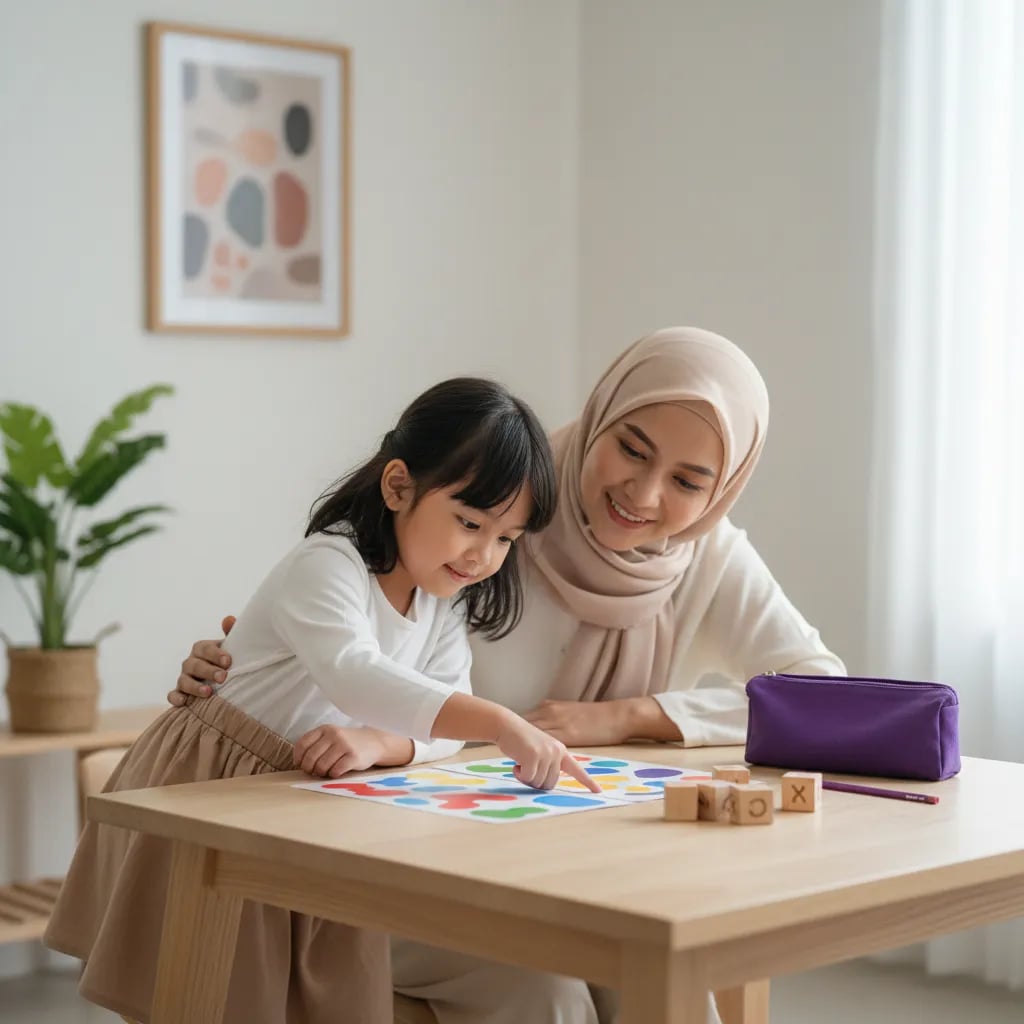
Reading, writing and math lessons for 5 year olds, known in Indonesia as les calistung, are optional: since SPMB 2025, Indonesian primary schools (SD) may not test reading, writing or counting when they admit Grade 1 pupils. Extra lessons make sense when a child of 6 or 7 still doesn't know most letters or can't count objects to 10, or when no adult at home can give it 15 minutes a day.
Calistung is short for membaca, menulis, berhitung: reading, writing and counting. A les calistung is an after-school class, usually for children aged 4 to 7, and many parents book one in the last year of TK (kindergarten) before Grade 1.
A typical class mixes three strands:
Under Kurikulum Merdeka, kindergarten is the Fase Fondasi (foundation phase), where early literacy and numeracy are built through play. Fluent reading and written sums belong to Fase A, which is Grades 1 and 2. So a good calistung class for a 5 year old looks more like guided play than a lesson at a whiteboard. If your family speaks English at home, keep in mind that school reading in SD starts in Bahasa Indonesia, which is spelled almost exactly as it sounds.
For the counting part of calistung, structured math classes fit from age 6, once a child can count 10 objects reliably. Before that, play with real objects at home is enough.
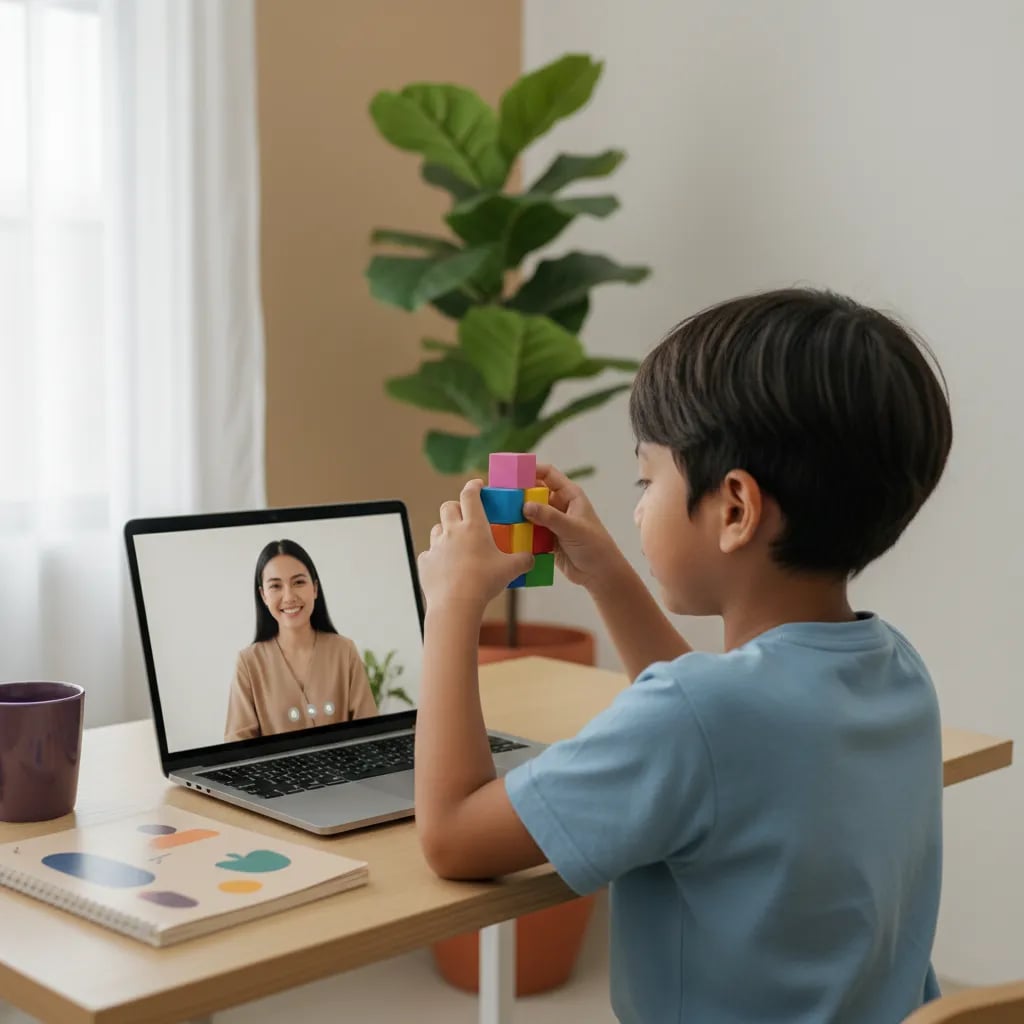
At Algonova the first math level is Math Starters, math classes for ages 6-7. Children work with numbers 1-100, addition and subtraction to 100, shapes, patterns and logic through pictures and games. Classes are live online with certified teachers, as private lessons, mini groups of 2-4 or groups of up to 10, from Rp 102,000 per session. Before the first class your child takes a free diagnostic of about 60 minutes so the teacher knows where to start. More than 1,000,000 students in 97 countries have studied with Algonova.
For 5 year olds we suggest starting with coding classes for kindergarten kids in ScratchJr. They don't require reading, and they train sequencing, patterns and logic that children later use in math. If you are unsure about timing, when to start math tutoring goes into more detail.
No. Permendikdasmen No. 3 of 2025 on the new student admission system (SPMB) says Grade 1 applicants are not required to sit a reading, writing, counting or any other test. On 21 May 2026, Kemendikdasmen Director General Gogot Suharwoto repeated that calistung tests are banned for SD admission in 2026, and added that a TK certificate is not required either.
Age rules for public SD admission:
| Age on 1 July | Status | Extra requirement |
|---|---|---|
| 7 | priority admission | none |
| 6 | may apply | none |
| 5 years 6 months | may apply as an exception | exceptional ability or talent, plus a written recommendation from a psychologist or the school's teachers |
Private and international schools set their own entry rules, so ask them directly. Even without a test, Grade 1 teachers notice children who can sit for 15-20 minutes, hold a pencil properly and know some letters. Take Raka, who started SD at 6 years 2 months unable to read. He knew the sounds of 15 letters and could count objects to 20, and he caught up with his class during the first semester without a tutor.
When you search for a class near you, judge it by how it teaches, not only by distance. Ask these six questions before you sign up:
To be clear about Algonova: we have no branches or classrooms anywhere in Indonesia. All our classes are live online with a teacher, so "near you" means your own home. We also don't teach reading or writing. For this age we teach the counting part through math from age 6, and visual coding for 5 year olds. If you still want an in-person class in your city, the six questions above apply, and our guide to math tutoring near me explains how to compare online and offline options.
Fifteen minutes a day, split into three short blocks, is enough for most 6 year olds:

Algonova worldwide
Contact
Whatsapp: +62 21 50996971
Email: info@algonova.id
Address
Set targets by age, not by what the neighbour's child can do. The table is the rough benchmark we use when talking to parents. It is not an official standard.
| Age | Reading | Writing | Math |
|---|---|---|---|
| 5 | knows most letters and their sounds, guesses words from pictures | traces lines, writes own name | counts objects to 10, recognises digits 1-10 |
| 6 | reads syllables and short words (ba-ju, ma-ma) | writes lower-case letters, copies 3-4 letter words | counts to 20, adds within 10 using objects |
| 7 | reads short sentences and understands them | writes a simple sentence unaided | numbers to 100, simple addition and subtraction |
The normal range at each age is wide. A child born in December can be months behind a classmate born in January, and that is fine. For the counting side before school, see our guide to preschool math for ages 4-6, and for Grade 1 there is a summary of Grade 1 math topics.
Lessons help when you have practised at home regularly for 4-6 weeks and progress has stalled. Check these signs first:
One sign usually means changing how you practise at home. Three or more, and a patient teacher will save the whole family a lot of energy.
If your child struggles to see print, still mixes up b and d after age 7, or doesn't turn when called, see a doctor or child psychologist before booking any class. Lessons can't replace a check-up.
Here is how it can look: Sari did this with her daughter Alya (6) every afternoon after her bath. In 5 weeks Alya could read 20 two-syllable words and add to 10 on her fingers. Same time every day, and stop before your child gets bored: that is what made it work.
For more number play, see our list of math games for kids. Once counting is solid, the next steps are in how to teach addition and subtraction.
"Children of 5 and 6 learn to count from things they can hold. Digits only mean something after they have counted spoons and stairs hundreds of times." Nadia Rahmawati, Algonova Math Curriculum Team
Prices vary a lot by city, format and session length, so compare the monthly total rather than the per-session rate. Private tutors who come to your home usually charge per session and are the most expensive option. Group classes at a bimbel (tutoring centre) are often paid monthly for about 8 sessions and cost less per session. When you ask about price, also ask about registration fees, workbooks and whether missed sessions are refunded or rescheduled. For the math part, Algonova's online classes start from Rp 102,000 per session, as private lessons, mini groups of 2-4 or groups of up to 10. Reading and writing are not part of our programme. If your budget is tight, a steady 15 minutes a day at home with letter cards and household objects is often enough for a 5 year old. Also check whether holidays cut sessions but not the fee.
No. Algonova has no in-person classrooms in any Indonesian city. All classes are live online with a teacher, so your child joins from home on a laptop or tablet with a stable internet connection. We also don't teach reading and writing. For children aged 6-7 we teach the counting part through Math Starters: numbers 1-100, addition and subtraction, shapes and patterns. For 5 year olds we recommend visual coding in ScratchJr, which needs no reading at all. If you are looking for an in-person reading class, use the six questions in this article to compare places near your home. For the math side, you can book a free online math diagnostic of about 60 minutes. The results show which topics your child already knows and which need practice, so you can decide whether math lessons are needed at all or home practice is enough for now.
Most children don't need calistung lessons before age 5, and many only need them at 6, or never. At 4-5, children learn best through play: counting stairs, guessing the first sound of a word, drawing lines and circles. Structured lessons start to make sense at 5-6, once a child can sit for 15-20 minutes and enjoys activities like colouring or puzzles. If your child struggles to focus for 5 minutes, waiting a few months usually works better than pushing. Remember that SD schools may not test calistung at admission, and fluent reading is a Grade 1-2 goal under Kurikulum Merdeka, not a kindergarten goal. A good next step is a 15-minute daily routine for 4 weeks, then a look at progress. If your child still can't recognise letters or count 10 objects after that, a class with a patient teacher becomes a sensible option.
No, reading is not required before Grade 1 at a public SD. Permendikdasmen No. 3 of 2025 on SPMB says Grade 1 applicants are not required to sit a reading, writing, counting or any other test. In May 2026 Kemendikdasmen repeated the rule for SPMB 2026 and confirmed that a TK certificate is not required. Fluent reading is a Grade 1-2 target in Kurikulum Merdeka. That said, children feel more confident in the first weeks if they know some letters, can hold a pencil and can count objects to 10. Private and international schools may run their own assessments, so check with the school. If a public school still tests calistung indirectly, for example in an interview, you can raise it with the local education office. The most useful preparation is a short daily learning habit, such as a bedtime story and counting spoons at dinner.
A private tutor suits children who are easily distracted, shy or well behind, while a small group suits children who enjoy learning alongside friends. With a private tutor the pace adjusts minute by minute, but the cost is highest. A small group of 3-6 children feels more like play, and children practise waiting their turn, a skill they need in Grade 1 anyway. Avoid big classes of 15 or more at age 5-6, because the teacher can't watch each child's pencil grip or letter sounds. Shy children often start with 1-2 months of private lessons and then move to a small group. For math, Algonova offers private lessons, mini groups of 2-4 and groups of up to 10, all with the same curriculum. A trial lesson is the quickest way to see which format your child is comfortable in and willing to ask questions.
For ages 5-6, a session of 30-45 minutes that switches activity every 10-15 minutes works best. Children this age can't sit still for long, so a good class mixes movement, songs or games between reading and writing practice. Two or three sessions a week are usually enough, plus 10-15 minutes at home on the other days. For example: class on Monday and Thursday, and on other days your child reads 3 syllable cards and counts objects at dinner. If a class runs 90 minutes, check that it includes breaks and changes of activity. Signs that sessions are too long: yawning, refusing to go, or coming home in a bad mood. If you see that, talk to the teacher before your child starts to dislike learning. A good teacher will shorten the session or add games after hearing from parents, without lowering the learning goals.
A child is usually ready to learn to read when they get curious about print, asking "what does that say?" or pretending to read a picture book. Other signs: they can name the first sound of a word (bola starts with "b"), enjoy songs and rhymes, recognise their own written name and can focus for 10-15 minutes. In Indonesia, the syllable method (ba-bi-bu-be-bo) works well because Bahasa Indonesia is written almost exactly as it sounds, which makes it easier to start with than English. If these signs haven't appeared by age 5, that is normal. Keep reading aloud every night, since it builds vocabulary and interest. If your child still struggles to recognise letters at 7 despite regular practice, talk to the class teacher or a child psychologist. An eye and hearing check is worth doing too, because small problems there often look like a reading difficulty.
Online lessons can work for 5-7 year olds if the class is small, interactive and timed for their age. What makes them work is a teacher who calls the child by name, asks them to show objects to the camera and switches activity before boredom sets in. Parents need a laptop or tablet and a quiet room, and should sit nearby for the first few sessions. Handwriting is easier to teach in person, because the teacher can correct pencil grip directly. For math, online is actually practical, since household items such as spoons and buttons become teaching tools straight away. At Algonova, math classes for ages 6-7 are live online with a teacher, and the free diagnostic of about 60 minutes shows whether the format suits your child. After the first session, notice whether your child talks happily about the class. If they do, the format fits.
Coworking Area, Gedung IT 6 Lantai Dasar, Nongsa Digital Park, Jalan Hang Lekiu, Kelurahan Sambau, Kecamatan Nongsa, Batam, Indonesia Directorate General of Consumer Protection and Trade Compliance – Ministry of Trade of the Republic of Indonesia. WhatsApp Ditjen PKTN: 0853-1111-1010.
PT Algonova Indonesia Cerdas All rights reserved 2026