
Online Math Tutoring for SMP Students: How to Choose and What to Check in the Trial Class

Learn Math10 min read
Q&A

Maya Putri
Early Childhood Education Specialist
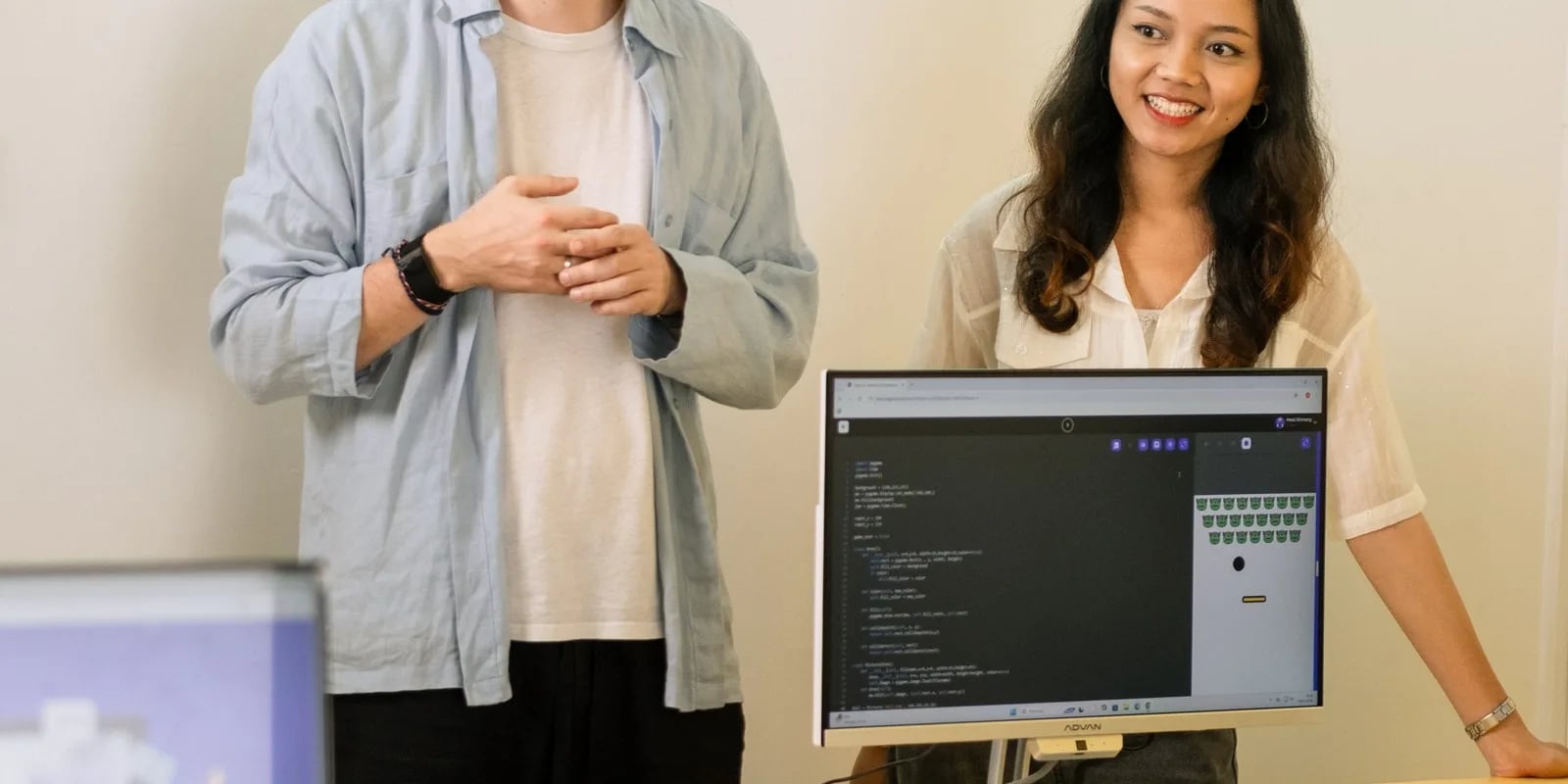
Maths tutoring for children is best started between the ages of 6 and 9 (Years 1-4 of SD), when the foundations of arithmetic and logic are formed - or earlier if signs of difficulty or a strong interest appear. The key is reading readiness, not waiting for a bad report card.
Algonova is an international technology school for children aged 5-17: 1,000,000+ graduates in 97 countries, 10+ years of experience, classes available in Private (1 student), Mini (2-4 students), and Group (up to 10 students) formats, rated 4.9 stars.
The best time to start maths tutoring is when you see repeated signs of difficulty or an interest with no outlet, usually between the ages of 6 and 9 (Years 1-4 of SD, when a child is building the foundations of arithmetic, number concepts, and logical patterns). Mathematics is cumulative: Year 3 concepts rest on Year 2, and one gap in understanding left unaddressed will widen until SMP material feels impossible. A child who stalls on multiplication in Year 3 and only gets help in Year 5 has to catch up two years of material at once, while a child whose signs are addressed early only has one small gap to close. The same applies to a child who is bored because the material is too easy: without new challenges, their interest gradually dies out. In short: do not wait for a bad report card, because early intervention is always lighter than a late repair.
The signs that a child needs maths tutoring are not only poor marks - they are patterns of frustration, avoidance, or indeed boredom because the material is too easy. Many parents in Jakarta and Batam report that a child who is "actually bright" still falls behind because the early signs were missed.
| Age / Year | Signs the child is ready for / needs tutoring | The right tutoring focus |
|---|---|---|
| 5-6 yrs (TK-Year 1 SD) | Does not yet grasp quantity, struggles to order numbers, but enjoys playing with patterns | Basic arithmetic through play, introducing patterns |
| 7-8 yrs (Years 2-3 SD) | Avoids maths homework, slow at multiplication, counts on fingers | Multiplication, division, basic logic |
| 9-10 yrs (Years 4-5 SD) | Confused by fractions & decimals, marks falling, anxious during tests | Fractions, basic geometry, word problems |
| 11-12 yrs (Year 6 SD) | Struggles with multi-step word problems, preparing for SMP | Pre-algebra, problem solving |
| 13-15 yrs (SMP) | Algebra feels alien, fear of maths, interest in logic/coding | Algebra, geometry, computational thinking |
If a child shows three or more of these signs consistently over several weeks, that is a strong signal to start. Conversely, a child who finishes problems too quickly and asks for more of a challenge also needs tutoring - to prevent the boredom that kills interest.
Do not wait for a bad report card. The signs that a child is ready for maths tutoring appear long before their marks fall.
Maya Putri, Child Education Specialist
Mathematics is not merely arithmetic - it trains the same logic and thinking patterns needed in coding, and a child who is strong at maths tends to grasp programming faster. At Algonova we teach mathematics as the foundation of computational thinking: breaking a big problem into small steps, recognising patterns, building logic in stages. For example, a student who understands variables in algebra finds variables in Python easier to understand - a connection that makes mathematics feel relevant rather than abstract. For parents who want to explore this path, see our guide to Coding for Primary School Children: From Scratch to Python. According to the curriculum framework drawn up by Kemendikbudristek, logical thinking and numeracy are core competencies from primary level onwards.
Online maths tutoring is now just as effective as face to face - provided the class is small, the teacher is certified, and the sessions are live (not recorded); the best format depends on your child's personality and schedule.
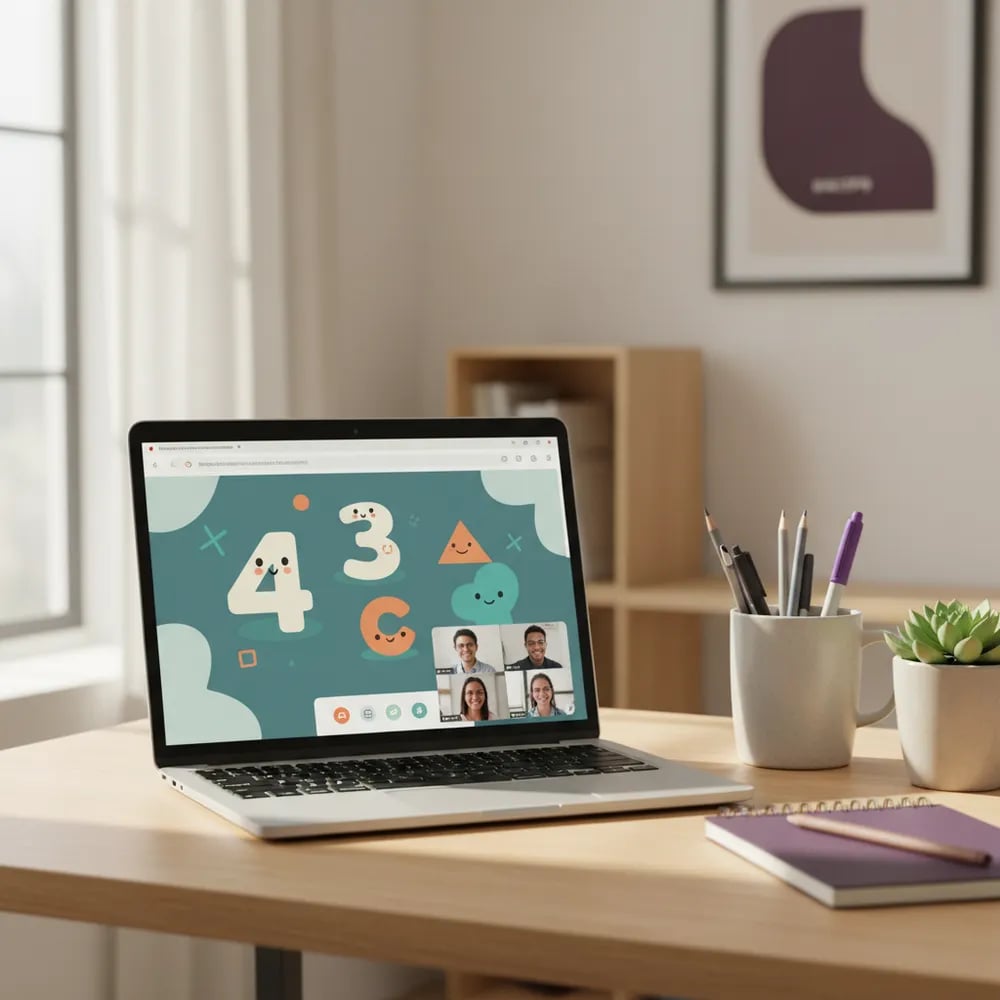
Online tutoring wins on flexibility and access to quality teachers without being limited by location - important for families in Jakarta worn down by traffic, or in Batam where tutoring options are limited. Time usually lost to travel can go into studying or resting instead, and a child can still be taught by the best teacher even if there is no comparable option near home. The key is not online versus offline but the quality of the interaction: small classes ensure every child gets attention.
The goal of maths tutoring is not simply good marks, but building confidence that lasts a lifetime.
Maya Putri, Child Education Specialist
The right maths tutoring adapts to your child's level and interests rather than forcing them through a rigid curriculum that is the same for everyone. Look at three things: class size, teacher qualifications, and whether there is an initial diagnostic to map out the child's ability. At Algonova, every child starts with a free Master Class - an AI-assisted diagnostic session that maps strengths and interests before deciding on a learning path, so a child is neither taught what they have already mastered nor thrown into material they are not ready for. Before you decide, measure your child's level first with our Maths Assessment for Children and explore enjoyable ways to learn through Maths Games for Children.
The goal of maths tutoring is not only good marks, but growing the confidence and love of problem-solving that lasts a lifetime. That love grows when mathematics feels relevant and successful - when a child sees real progress and applies it in projects, games, or competitions. Many of our students who were initially afraid of mathematics ended up brave enough to enter competitions; if your child has a talent for it, encourage them through Maths Olympiads for Children or explore all the paths at the Algonova Maths hub. In the end, the decision about when to start is yours as a parent - what is certain is that early intervention with the right approach turns mathematics from a source of anxiety into a source of confidence.
A child should start maths tutoring when they begin struggling to keep up, lose interest, or in fact need more of a challenge - not when you wait for their marks to fall. For many children, the early SD years are the ideal time to build a foundation of numbers and logic. At Algonova, children aged 6 to 7 (kelas 1 and 2 SD) join the Math Starters (ages 6-7) track, while children aged 8 to 12 move on to Math Explorers (ages 8-12). The right starting point is set by a free diagnostic of about 60 minutes rather than by guessing from age alone. This logic-based approach is also trained in coding. To start in a structured way, see the programme options on the Algonova classes page, or try a free maths diagnostic to find out your child's maths level.
Yes, Algonova Indonesia offers a complete math program for kids aged 6 to 17, covering all school levels from primary, junior high, to senior high. Each level has a dedicated curriculum aligned with the child's cognitive stage and the Indonesian school curriculum (Kurikulum Merdeka). For primary school (6-12): basic operations, fractions, simple geometry, and introduction to algebra. For junior and senior high (13-17): algebra, quadratic equations, basic trigonometry, advanced geometry, basic calculus, statistics, UTBK SNBT preparation, and advanced topics. All classes are online live with certified teachers in small groups of up to 10 students per class. Our method is built on visual conceptual understanding, not formula memorisation. Try a free trial class for a child's level diagnostic and recommended learning path.
Yes. For mathematics Algonova Indonesia offers a free diagnostic session of about 60 minutes with no commitment. The format is called Metode Diagnostik Algonova. No credit card is needed and there is no auto subscription afterwards. Note that these roughly 60 minutes are a diagnostic session, not a regular class. A regular math class runs 90 minutes, while the coding and design tracks have their own introductory format, a free 60 minute master class. During the diagnostic a certified teacher maps the child's level: which topics are already solid and where the gaps sit. The child also tries the online learning platform and works through first problems matched to their school level. After the session parents receive a personal learning plan based on the diagnostic result, plus a transparent explanation of program, schedule, and pricing from Rp 102,000 per lesson. To book, fill in the form on the website.
Algonova Indonesia math classes come in three formats: 1-on-1 private, a mini-group of 2–4 kids, and a group of up to 10 students with similar ability and school grade levels. This small group format is deliberately chosen because it provides the optimal balance between social interaction with peers and personal teacher attention. In a mini-group, every child averages about 10 minutes of direct teacher interaction in a single session. Compare with traditional offline bimbel typically of 20-40 students per class — direct interaction there is only 1-2 minutes per child, or none at all. For families wanting full attention, one-on-one private class format is also available with one student per teacher. This format is more intensive and suits competition preparation, catching up from severe gaps, or specific topic depth.
Kids math tutoring at Algonova Indonesia starts from Rp 102,000 per lesson. The price includes a live session with a certified teacher, digital learning materials, online platform access, and an official certificate upon completing each program level. The transparent 'starting from' rate is the same across all school levels — the final quote depends only on class format (private, mini-group, or group) and how many sessions per week you choose. Groups are the most affordable option; private classes are more intensive and suit competition prep or closing larger gaps. Full pricing details are shared transparently after the free trial class. No surprise fees — every cost component is explained before formal enrolment. To receive the latest pricing details, fill in the booking form on the website.
Yes, all Algonova Indonesia math programs are fully available online with live sessions taught by certified teachers — not recorded videos. Kids learn in real time in small groups of up to 10 students, with two-way interaction, live Q&A, and problems worked on alongside the teacher throughout the class. To join online class, a child only needs a computer or laptop with a camera, a stable internet connection, and a headset. The Algonova platform runs directly in the browser so no special software installation is required. Kids can write problems in a regular notebook or on a tablet with stylus. Because every class is fully online, families can join from anywhere in Indonesia and easily fit lessons around school and other activities.
Three main factors make Algonova math tutoring effective for Indonesian kids. First, the curriculum aligns with Kurikulum Merdeka used in national schools, so what is learned at Algonova directly helps with school lessons and exams. Second, the methodology is built on visual conceptual understanding (not formula memorisation). Kids learn to break big problems into small systematic steps — a thinking pattern transferable to other subjects like science and IT. Third, small groups of up to 10 students per class let teachers adjust pace to each child's ability. Slower kids get personal help, while faster kids don't get bored waiting. The result: most Algonova students see math grade improvements at school within the first 2-3 months.
Algonova Indonesia is specifically designed to help kids behind catch up in a way that doesn't make them feel defeated or ashamed. Every new student starts with a free diagnostic during the trial class to identify exactly where the gap occurred. Based on the diagnostic, the teacher builds a personal learning path that closes the gap from the most basic foundation. For example, a junior high student weak in algebra might actually be behind in primary school fraction operations. We go back to the foundation, then progress gradually without comparison with other peers. Many Algonova students who initially started 1-2 grade levels behind successfully caught up and even surpassed classmates within 3-6 months with weekly classes and consistent homework. It's never too late to start. Try a free trial class for diagnosis without commitment.
The most ideal age to start maths tutoring is generally between 6 and 9 years old, or Years 1 to 4 of SD, when a child is building the foundations of arithmetic, number concepts, and the logical patterns that support all later learning. Age is not an absolute yardstick, however; readiness and the child's needs matter more. A 5-year-old who is fascinated by numbers can start earlier through play, while a child who only shows signs of difficulty in Year 5 still deserves help. The key is to start when the signs appear, not to wait for marks to fall. Early intervention is always lighter and more enjoyable than a late repair.
The signs that a child needs maths tutoring go beyond poor marks. Watch behaviour patterns: avoiding maths homework, anxiety or tears during tests, frequently counting on fingers at an age when they should be fluent, or taking a very long time over simple problems. There is also an opposite but equally important sign: a child who finishes problems too quickly, is often bored, and asks for more of a challenge also needs tutoring so their interest does not die out. If a child shows three or more signs consistently over several weeks, that is a strong signal. Reading behaviour patterns is far more accurate than waiting for a report card, because the signs always appear before the numbers do.
Online maths tutoring can now be just as effective as face to face, as long as three conditions are met: the class has few students, the teacher is certified, and the sessions are live rather than recorded video. It is this real interaction that determines the result, not the medium. Online tutoring wins on flexibility and access to quality teachers with no limits of location. Families in Jakarta worn down by traffic, or in a city with limited options, benefit enormously. What needs checking is that the child feels comfortable and actively involved. Small classes ensure personal attention. Choose the format that makes your child brave enough to ask questions and unafraid of being wrong.
Mathematics and coding share the same thinking foundation, namely logic and pattern recognition. A child who is strong at maths usually grasps programming faster, and conversely learning to code strengthens mathematical ability. Both train computational thinking: breaking a big problem into small steps, recognising patterns, then building a solution in stages. Concepts such as variables in algebra are almost identical to variables in the Python language. For that reason, connecting mathematics with logic and technology makes it feel relevant and purposeful rather than mere memorisation. For a child who enjoys games or technology, this approach becomes a natural bridge that makes mathematics more meaningful.
The right maths tutoring adapts to the child's level and interests rather than forcing every child through a uniform curriculum. This individualisation is what separates tutoring that works from tutoring that makes a child hate mathematics even more. Look at three factors: class size (the smaller, the more personal), teacher qualifications and certification, and whether there is an initial diagnostic to map the child's ability before learning starts. A good programme always begins by understanding where the child is now, so they are neither taught what they have already mastered nor thrown into material they are not ready for. A free initial diagnostic session is the best way to judge the fit before committing.
Blog


Algonova worldwide
Contact
Whatsapp: +62 21 50996971
Email: info@algonova.id
Address
Coworking Area, Gedung IT 6 Lantai Dasar, Nongsa Digital Park, Jalan Hang Lekiu, Kelurahan Sambau, Kecamatan Nongsa, Batam, Indonesia Directorate General of Consumer Protection and Trade Compliance – Ministry of Trade of the Republic of Indonesia. WhatsApp Ditjen PKTN: 0853-1111-1010.
