How to Teach Multiplication Tables to Kids: 5 Proven Methods
Learn Math8 min
Parent Guides

Dimas Prasetyo
Education Analyst, Algonova
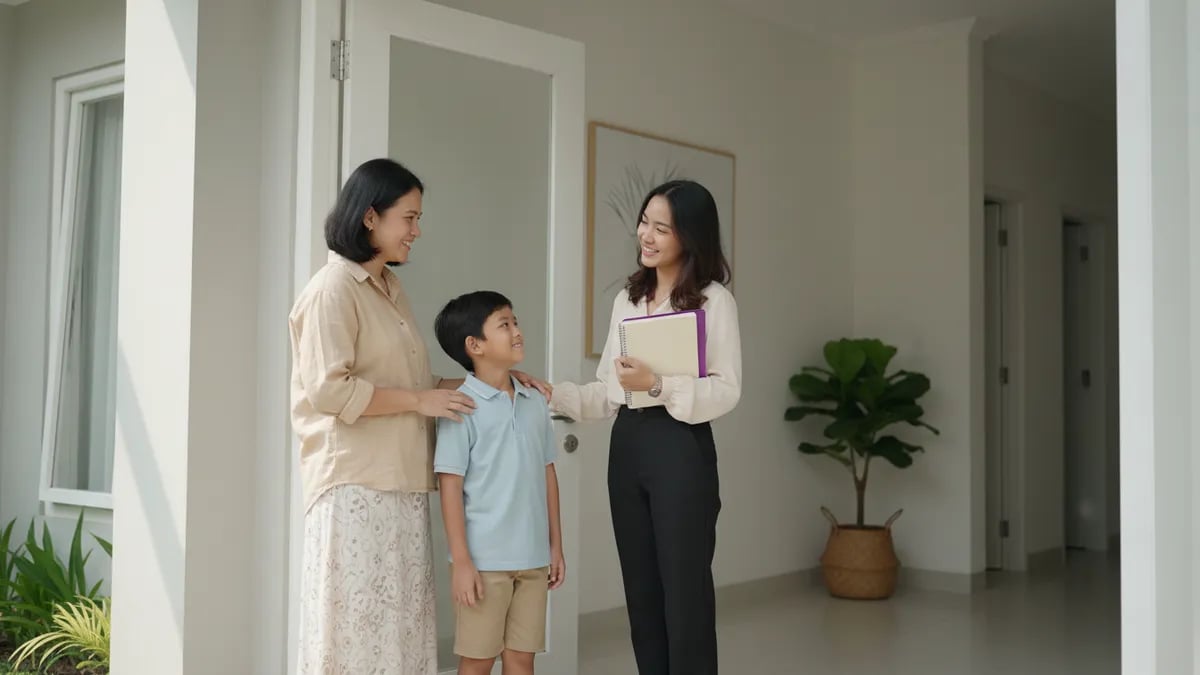
How to find a private tutor in Indonesia comes down to three moves: collect 3 candidates from parents or your child's school, ask all of them the same 12 questions, then run 1 or 2 trial lessons before committing. If the tutor comes to your home, check their ID and keep an adult in the house. If distance or schedules get in the way, small-group online classes are often easier to keep up.
The most reliable source is another parent whose child has actually studied with the tutor. Agencies and online searches come after that. The local search term is "guru les privat" plus your area, for example "guru les privat Bandung".
| Where to look | What works | What to check |
|---|---|---|
| Your child's teacher or a classmate's parent | you can ask about results directly | good tutors fill up fast |
| Parent chat groups at school or in your neighborhood | quick answers, rates are out in the open | quality is uneven, ask what changed for the child, not just "she is nice" |
| A tutoring agency ("jasa les privat") | tutors are screened and a substitute exists | how they screen, and whether you can switch tutors |
| Searching "guru les privat terdekat" online or on a map | the widest choice | anyone can post a listing, so ask for a parent you can call |
Do not stop at one candidate: with 3, you can compare answers to the same questions. Still deciding between a tutor and a class? See private tutoring or a bimbel.
A tutor who is ready answers these with examples, not promises. Ask by phone or in a short meeting and write down each answer per candidate.
About the tutor:
About how they teach:
About the ground rules:
Candidates tend to sound alike on questions 1 to 4. The difference shows up on 6 and 7. Ibu Sari asked question 6 to two tutors. One said "we follow the textbook". The other said "I look at the wrong answers first and find the missing concept". She chose the second.
Warning signs: a tutor who guarantees a grade by a certain date, refuses a trial lesson, or will not show ID.
A confident tutor does not mind being judged on one trial lesson. Dimas Prasetyo, Education Analyst, Algonova

Safety rests on a verified identity, an adult at home, and an open place to study. These are ordinary habits for anyone new in your home, not suspicion.
The checklist:
If something worries you, SAPA 129, run by Indonesia's Ministry of Women's Empowerment and Child Protection, takes reports of violence against children by phone on 129, as described by InfoPublik.
A trial lesson answers what a brochure cannot: does your child dare to ask questions, and leave relieved? Agree up front that the first 1 or 2 lessons are a test, then watch for the following.
| What to watch | Good sign | Warning sign |
|---|---|---|
| Start of the lesson | the tutor checks what your child can already do | jumps into a new chapter |
| How they explain | uses objects, drawings, everyday examples | reads formulas from the book |
| Reaction to a mistake | asks "why did you pick this method?" | gives the right answer at once |
| Your child afterwards | calm, can name one thing they learned | flat, or says "I'm just bad at math" |
| End of the lesson | a short summary and one small task | ends with no recap |
Example: in lesson A your child does 8 problems and is never asked a question. In lesson B they do 4, but twice the tutor asks them to explain how they solved it. Four problems with explanation beat 8 without understanding.
Timing is covered in when to start math tutoring, and weak spots in how to assess a child's math level.
A home tutor wins on face-to-face contact. Online lessons win on choice of teacher and travel time.
| Tutor at home | Live online lessons | |
|---|---|---|
| Choice of teacher | limited to your city or district | from anywhere, matched to what your child needs |
| Travel | falls on the tutor and shapes who is willing to come | none, your child studies from home |
| Scheduling | tied to the tutor's route | easier to move |
| Contact | in person, the tutor can point and guide | video and a digital whiteboard |
| Parent oversight | you see everything in the house | you can sit near the screen |
Example: a tutor 40 minutes away in Jakarta traffic spends 80 minutes on the road per lesson. Twice a week, that is nearly 11 hours a month that squeezes the schedule and often reaches the rate. Hourly rates are in the cost of private tutoring.
Algonova teaches online only and does not send tutors to homes. If you want someone to come to your house, use the 12 questions above on local tutors.
Online fits when good tutors live far away, your child's week is full, or nobody nearby teaches the right level. A child who gets tense alone with an adult may also settle better in a small group of peers.
For math, Algonova runs live online math classes with certified teachers. The formats are Private (1 student, 60 minutes), Mini (2 to 4 students), and Group (up to 10 students, 90 minutes once a week). According to our math page, 2 to 3 of every 100 tutor applicants pass selection. It starts with a free diagnostic of about 60 minutes that gives a report by topic, then a learning plan, then a progress report every 4 weeks. Lessons start from Rp 102,000, and the private format is explained on private math tutoring for kids. Primary school children can begin with math for primary school. A checklist for online classes is in how to choose an online bimbel.
Basic screening fits in a week:
If no candidate passes, widen the search to online with online math teachers for kids.
A fair trial is 1 or 2 lessons, or at most a month if your child needs time to settle in. Within the first 1 or 2 lessons you can already see whether the tutor checks what your child knows, explains in a way that clicks, and makes your child comfortable asking questions. Agree before you start that you may stop or switch tutors afterwards without a penalty. Sit close for the first lesson, then ask your child one thing they learned and one thing that confused them. Do not judge by a test score in week one, because grades move slowly. Attitude shows sooner: does your child look forward to the next lesson, shrug, or look for reasons to skip it? Also note whether the tutor arrives on time and gives a short recap.
No, but the ability to teach children has to be proven. A teaching degree gives a foundation in how to plan a lesson, yet university students and graduates from other fields can be excellent tutors if they are patient and can explain the same idea in a different way. What counts more than the diploma is experience at your child's grade level, how the person explains one concept, and results from earlier students that you can check with their parents. Ask the tutor to explain a topic your child is currently studying, such as fractions, in 3 minutes as if your child were sitting in front of them. You will hear whether they use child-friendly language, real objects, and questions, or simply repeat the book. University students are often cheaper and closer in age to your child, but their schedules follow their classes, so ask about exam weeks. Ask how they handled a child who struggled in the same way.
Start with your child's school, because class teachers and subject teachers usually know who tutors well in the area. Ask parents of classmates, the people who run local community groups, and neighborhood chat groups. In a small city there simply are not many tutors, so the candidates you can compare may be only 2, or even 1. The 12 questions and the trial lesson still apply, but keep a backup plan. If the trial is not convincing, live online lessons remove the distance limit, because your choice of teacher no longer depends on who lives close by. Begin with one trial class and compare it with the local tutor you tested. If nobody locally suits your child's grade level, the search has still told you something: local options are thin, so widen it.
Yes, at least for the first 2 or 3 sessions, and after that make sure an adult is in the house. Early presence does two jobs. First, you can judge the teaching style without relying on a child who may not yet be able to describe it. Second, your child sees that you know the tutor, so it is easier to speak up if something feels wrong. Sit a little way off, for example at the next table or in the kitchen with a view of the study area. Once the tutor and your child are used to each other you do not need to sit there, but still avoid lessons behind a closed bedroom door. Ask your child about the lesson each time, and ask the tutor for a short summary after every session or every week. Tell the tutor from the start that you will check in now and then.
The clearest sign is a change in how your child feels about lessons: putting them off, claiming to be sick on lesson day, or saying "I'm just bad at it". Other signs sit with the tutor: frequent cancellations with no substitute, handing over answers without explaining, no progress updates, or promises of fast grade gains. One bad lesson is not enough to decide, but if the pattern lasts 3 or 4 sessions, talk to the tutor plainly. Name what you saw and ask for a specific change, such as more examples or a slower pace. If nothing changes in 2 weeks, switching is a reasonable decision. Write down dates and what you saw, for example three cancellations in a month. Children who move to a better match usually settle within a few lessons, so do not wait until they have lost all interest in the subject.
No. Algonova only runs live online classes, so we do not send teachers to homes. For math there are three formats: Private (1 student, 60 minutes, up to twice a week), Mini (2 to 4 students), and Group (up to 10 students, 90 minutes once a week), with lessons from Rp 102,000. Every course starts with a free math diagnostic of about 60 minutes that produces a report by topic and a learning plan, and parents get a progress report every 4 weeks. According to our math page, 2 to 3 of every 100 tutor applicants pass selection. If you specifically want a teacher who comes to your house, use the 12 questions in this article to screen local tutors. If distance, schedules, or limited choice are the problem, our online classes are an alternative. If you want structured study from home with clear reports, one trial is worth trying.
They can, as long as the class is live, the group is small, and the teacher actively asks each child questions. The biggest difference is not the location but the attention a child gets. In a group of up to 10, the teacher can still notice who is drifting, and shy children often speak up more because their classmates are asking questions too. Private online lessons suit a child who needs their own pace, such as catching up before exams. A small group suits a child who is already fairly fluent and likes studying alongside others. The simplest test is one lesson: does your child speak up and leave relieved? Watch how often the teacher uses your child's name. If it is not a fit, going back to a local tutor costs you nothing, since a trial exists for exactly that.
Give your child a few lessons and keep the first ones relaxed. A child who resists is often afraid of being wrong in front of a stranger, not unwilling to learn. Ask the tutor to open with light conversation or a number game for 5 to 10 minutes before any problems. Sit near your child for the first 2 or 3 lessons, then step back slowly. Avoid scolding or comparing your child with a sibling. After class, ask about the fun part first, such as "what was the most fun?", and only then about what was hard. Praise effort, not results, so your child feels safe trying again. If your child cries or refuses, do not postpone and then cancel on your own, talk to the tutor first. If your child still refuses after 3 or 4 lessons, consider a tutor with a different style, or a more relaxed format such as a small group with peers.
Switch when 3 or 4 lessons bring no change on what you asked for, or at once when your child's safety or comfort is affected. For smaller issues, such as an explaining style that does not suit your child or a schedule that keeps moving, talk first and allow 2 weeks. For safety, for example when a tutor refuses an open-space rule, pushes for a closed room, or your child says something made them uncomfortable, stop the lessons right away and talk to your child calmly. Question 12 helps here: before you started, you already knew how to stop without drama. Tell the tutor politely but firmly, then put the same 12 questions to the next candidate so the comparison stays fair. Explain the change to your child in simple words, so they do not think they are the problem. If you prepaid, ask for the remaining lessons to be scheduled or refunded under your original agreement.

Algonova worldwide
Contact
Whatsapp: +62 21 50996971
Email: info@algonova.id
Address
Coworking Area, Gedung IT 6 Lantai Dasar, Nongsa Digital Park, Jalan Hang Lekiu, Kelurahan Sambau, Kecamatan Nongsa, Batam, Indonesia Directorate General of Consumer Protection and Trade Compliance – Ministry of Trade of the Republic of Indonesia. WhatsApp Ditjen PKTN: 0853-1111-1010.
PT Algonova Indonesia Cerdas All rights reserved 2026