Math Tutoring Near Me: A Parent's Guide to Choosing
Parent Guides8 min read
Which Is Better?

Dimas Prasetyo
Education Analyst, Algonova
A math tutor for your kid no longer has to be a private tutor who comes to your house. Structured online classes with a certified mentor often deliver more consistent results, with no travel costs and no commuting time. This guide is for parents of children aged 6-14 weighing a conventional private math tutor against online math classes.
Finding the right math tutor is exhausting. There are private tutors who visit your home, learning centers in the shophouse near school, and online learning platforms. Prices vary wildly, the promises sound alike, and as a parent you want just one thing: your child to understand math and stop crying over homework.
Algonova is an online math, coding, AI, and design platform for kids aged 5-17. Since 2016 we have taught 1,000,000+ students across 97 countries, with a 4.9-star rating from parents. Classes run live with certified teachers in Private (1 student), Mini (2-4 students), and Group (up to 10 students) formats, not recorded videos or automated drill apps.
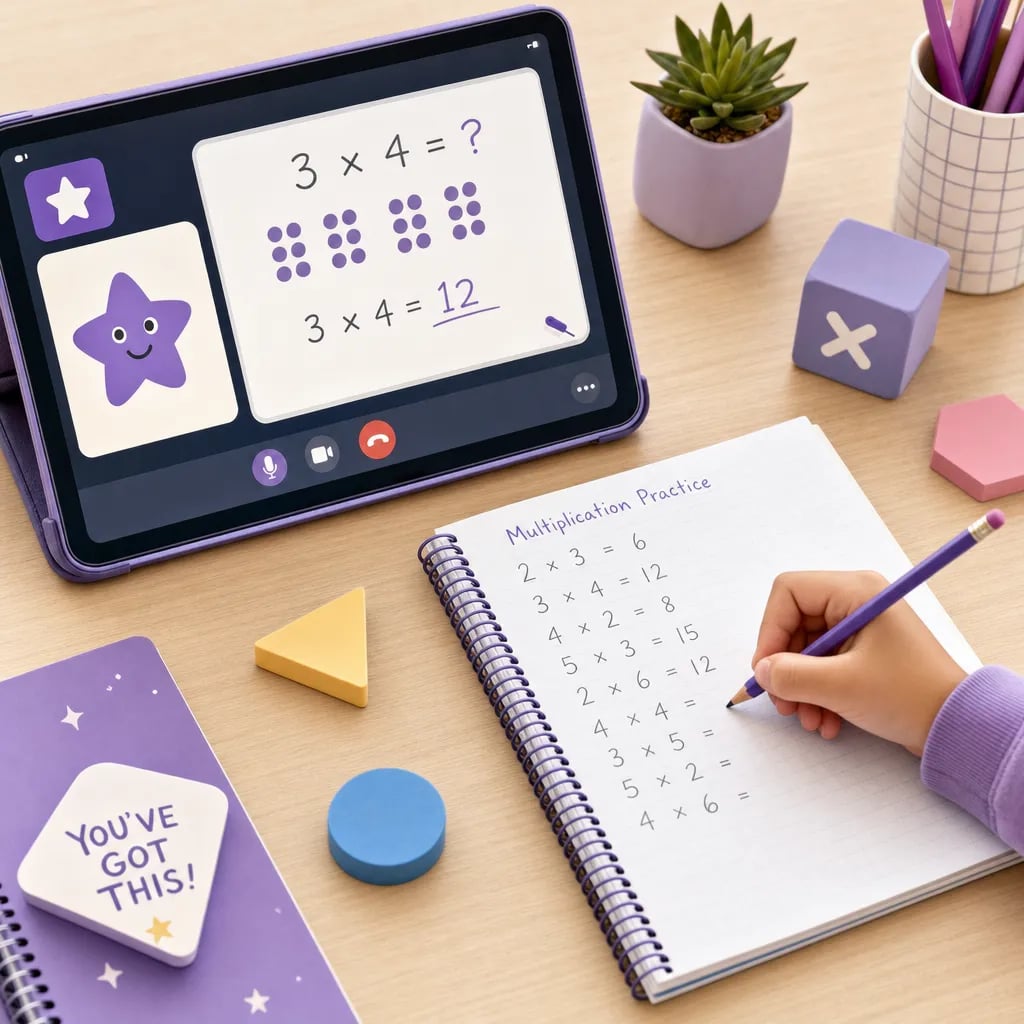
There are three main routes when parents look for a math tutor, and each asks something different of your family. Understanding the differences helps you choose with a clear head, not just follow the neighbors.
If you're still unsure which type fits best, our guide to choosing nearby math tutoring covers location and format considerations in more depth.
The biggest difference isn't screen versus face-to-face, it's the system behind the teacher. A private tutor works alone; a structured online platform embeds the teacher inside a curriculum, progress tracking, and quality control.
A private tutor wins on pure personalization. They can adjust an explanation the moment they see the child get confused. But the quality rests entirely on one person, and it's hard for parents to judge whether the material truly matches the child's Kurikulum Merdeka phase.
Structured online classes trade some personalization for consistency. The child follows a designed learning path, teachers can be swapped without breaking progress, and parents get regular reports. For primary schoolers building study habits, this consistency often matters more than irregular one-on-one attention.
One thing that's often overlooked is teacher reach. With a private tutor, your options are limited to teachers in the same city. Online, your child can learn with the best teacher from anywhere, and switch if the style isn't a good fit.
What moves a child forward in math isn't where the teacher sits, but schedule consistency, fast feedback, and the joy of cracking a problem.
Dewi Lestari, Mathematics Specialist, Algonova
For most kids, structured online mentoring outperforms an ordinary tutor because it pairs a human teacher with a system that keeps the child on track. It's not the technology that's magic, it's the combination of a live teacher plus structure.
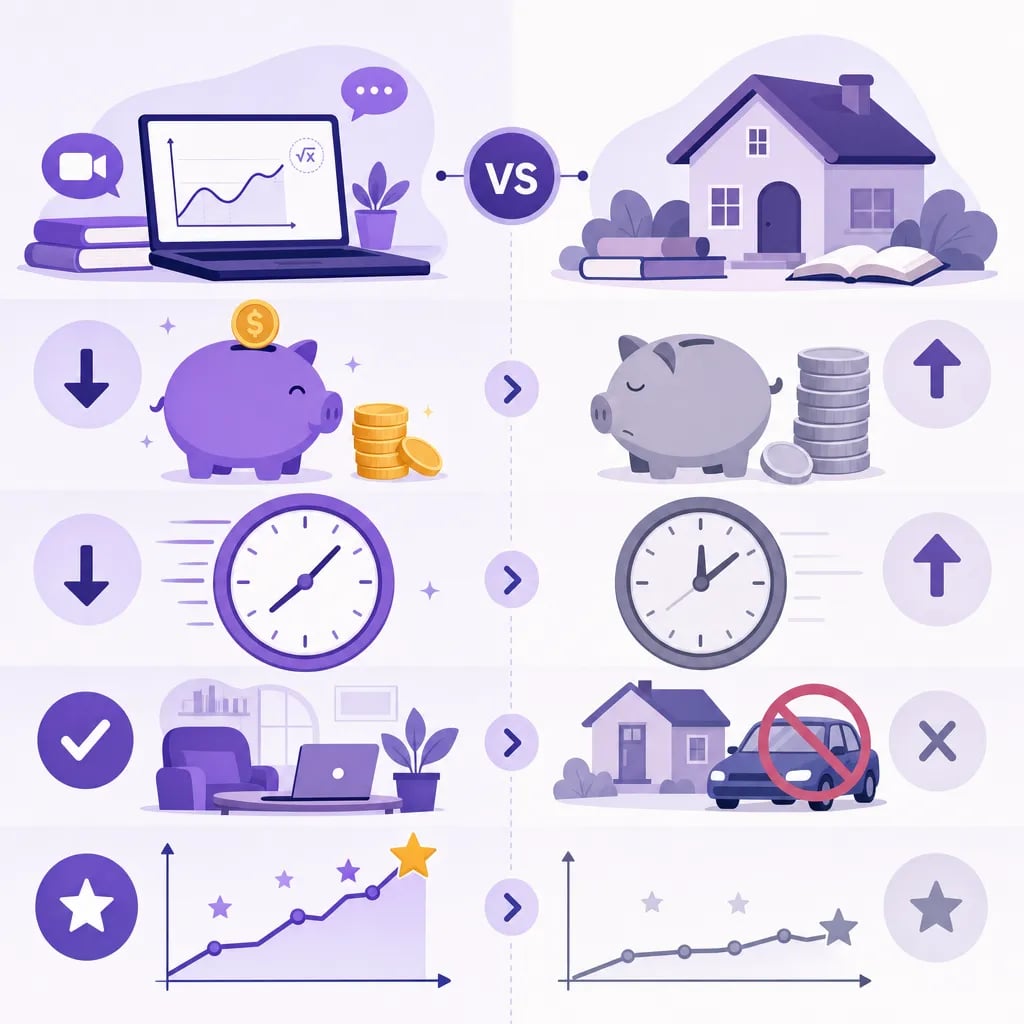
Four things make the difference show:
If your child tends to avoid math, building their interest matters as much as the tutoring itself. Practical ideas are in how to help your child enjoy math.
When you tally the cost of a math tutor, the hourly rate is only half the story; your family's time and energy are the other half. Here's a rough 2026 picture so you have a reference point, not a hard rule.
The private-tutor number looks reasonable until you add the hidden costs: the tutor's travel time that sometimes gets billed, plus your own hours spent supervising. For offline classes, add fuel and round-trip drop-off time. The online class fee usually already includes materials and reports, with no travel cost at all.
The point is to compare total cost and results, not just the hourly rate. For price ranges by city, see the best math tutoring in Jakarta, Bandung, Surabaya, Medan.
Parents often count the hourly tutoring fee but forget the travel time and work hours lost to drop-offs every week.
Putri Anggraini, Head of Math Program, Algonova
Before you pay, filter candidate tutors or platforms with these six criteria. Price matters, but the six things below actually decide whether your child improves.
Unsure whether now is the right time to start? Our guide on when a child should start math tutoring can help you decide.
There's no single best option for every child, but this table makes it easier to weigh them.
| Option | Strengths | Consider |
|---|---|---|
| Private tutor at home | Full personalization, flexible schedule | High hourly cost, depends on one teacher |
| Offline learning center | Learning community, clear routine | Rigid schedule, drop-off/pickup |
| Structured online classes (Algonova) | Live certified teachers, small classes, step-by-step curriculum, gamification | Needs a stable internet connection |
For most families, structured online classes offer the best balance of teacher quality, consistency, and cost. A private tutor still makes sense for a child with very specific needs who requires full attention every session.
Instead of guessing, the most honest way to choose is to try it. Try a free math diagnostic session and see for yourself how your child responds to an online class with a certified Algonova mentor before you decide.
The best online math tutor for a child is one who teaches live (not recorded video), is patient, and can adapt explanations to the way the child thinks. Small classes and a free trial session help parents judge the fit before committing. At Algonova, teachers are trained to teach logic, for both math and coding. To get started, see the programs on the Algonova classes page, or try a free math diagnostic so your child is matched with the right teacher.
For most kids, yes, as long as the class runs live with a real teacher rather than just recorded videos or an automated app. What drives learning outcomes is live interaction, a small teacher-student ratio, and schedule consistency, not whether the teacher is on a screen or in your living room. Online classes actually have some advantages: the child can ask the teacher to re-explain a tricky step on the spot, schedules are more flexible, and you can pick the best teacher without a location limit. A private tutor still wins if the child needs full one-on-one attention for very specific struggles. The safest way to judge is to request a free trial from both and watch which one keeps your child focused and wanting to come back.
In 2026, a private tutor at home generally starts around Rp100,000-Rp250,000 per hour, depending on the teacher's experience and city. Offline learning centers usually sell monthly packages plus an upfront registration fee. For small-group online classes, Algonova starts from Rp 102,000 per session. What's often missed are the hidden costs. Private tutors and offline centers add time and travel expense, while the online class fee usually already covers materials and progress reports with no transport cost. Before comparing numbers, ask for a clear breakdown: how many sessions, what's included, and whether progress reports come with it. Compare total cost and results, not just the hourly rate.
There's no single required age, and the signals matter more than the number. Many kids start needing extra support in grades 2-3, when basics like multiplication and division begin to pile up. But a kindergartner or grade 1 child who enjoys counting can also join a light, play-based class. Start considering tutoring when concrete signs appear: grades drop for two consecutive semesters, the child avoids math homework, or they get stuck on one topic so the next topics stall too. On the other hand, if the child is keeping up fine, you don't need to force formal tutoring. Reinforce at home with number games first before adding to their study schedule.
Judge these six things before you pay. First, make sure the teacher is certified and experienced with kids your child's age, not just a freelance student. Second, check the class size: pick a small class or private so attention stays intact. Third, request a free trial to see whether the teaching style fits. Fourth, confirm the content aligns with Kurikulum Merdeka by asking for a sample syllabus. Fifth, ask whether there are regular progress reports so you're not waiting for a report card to know how things are going. Sixth, and often the most decisive, watch whether your child enjoys the class. Even a great teacher won't work if the child still resists after a few sessions.
It can be, depending on the class format. A child who gets distracted easily is often helped by interactive, gamified online classes, because challenges and points keep them engaged. Sessions broken into several short activities, rather than one long explanation, also help hold focus. By contrast, an online class that's just a one-way lecture or recorded video usually works poorly for this type of child. The key is a live teacher who actively draws the child into conversation and a small class ratio. For a child who struggles a lot to focus, combine an interactive online class with a distraction-free study space, and start with a free trial to confirm the format really holds their attention before subscribing.

Algonova worldwide
Contact
Whatsapp: +62 21 50996971
Email: info@algonova.id
Address
Coworking Area, Gedung IT 6 Lantai Dasar, Nongsa Digital Park, Jalan Hang Lekiu, Kelurahan Sambau, Kecamatan Nongsa, Batam, Indonesia Directorate General of Consumer Protection and Trade Compliance – Ministry of Trade of the Republic of Indonesia. WhatsApp Ditjen PKTN: 0853-1111-1010.
PT Algonova Indonesia Cerdas All rights reserved 2026