How to Teach Multiplication Tables to Kids: 5 Proven Methods
Learn Math8 min
Parent Guides

Maya Putri
Early Childhood Education Specialist
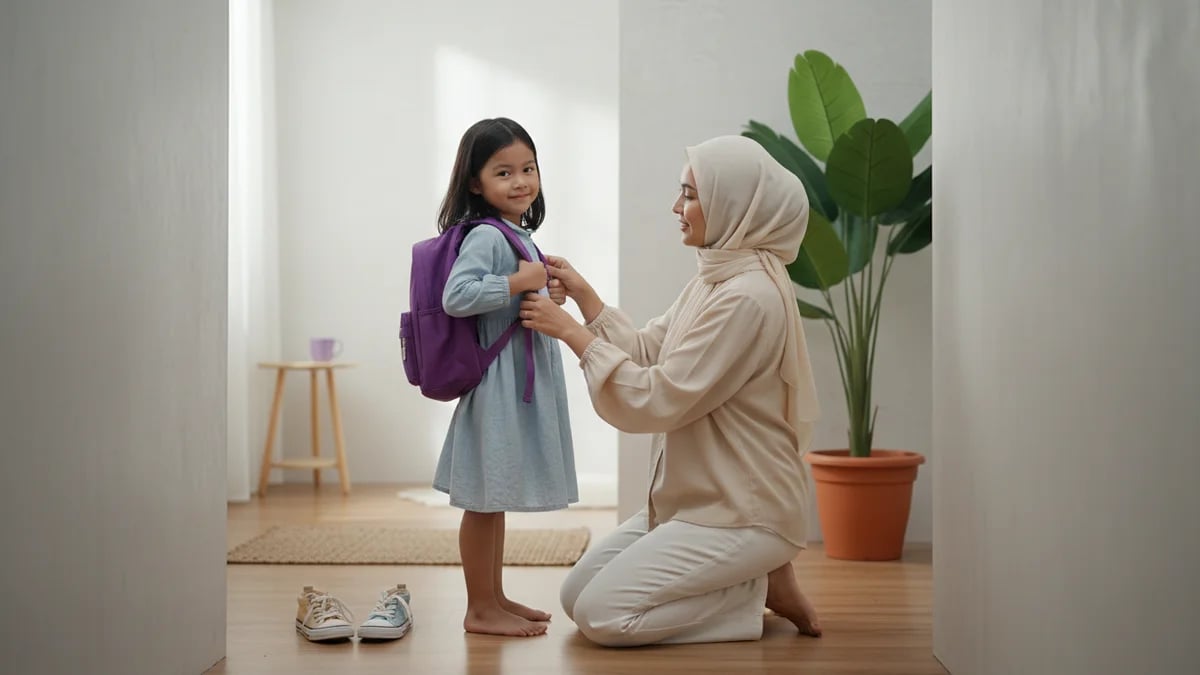
The primary school age in Indonesia is 7 on 1 July of the intake year, and 7-year-olds get priority in SPMB, the public school admission system. A child who is 6 on 1 July can still apply, and a child of 5 years 6 months needs a psychologist's written recommendation. For SPMB 2027, a child born on or before 1 July 2021 meets the minimum age. There is no reading or maths test.
The rule sits in Article 11 of Permendikdasmen No. 3 of 2025 on the New Student Admission System (Sistem Penerimaan Murid Baru, SPMB). It replaced the older PPDB rules and has been used for the 2025 and 2026 intakes. Age is counted on 1 July of the intake year and proved with a birth certificate.
| Age on 1 July | Status for Grade 1 (kelas 1 SD) | Extra requirement |
|---|---|---|
| 7 or older | standard age, priority | none |
| 6 to under 7 | may apply | none |
| 5 years 6 months to under 6 | exception | written recommendation from a professional psychologist |
| under 5 years 6 months | cannot apply for Grade 1 |
The priority matters most at popular public schools. When the domicile route (jalur domisili) is oversubscribed, the school ranks applicants by age first and by distance from home second (Article 43). A child of 6 years 2 months can lose a place to a 7-year-old who lives further away.
The age rule does not apply to children with disabilities, special education schools, or schools in remote 3T regions (Article 15).
The fastest way to check is your child's date of birth. We calculated the table below from Article 11, assuming the same rule still applies in those years.
| Intake | Age 7 (priority) | Minimum age 6 | 5.5-year exception limit |
|---|---|---|---|
| SPMB 2027 (school year 2027/2028) | born on or before 1 July 2020 | born on or before 1 July 2021 | born on or before 1 January 2022 |
| SPMB 2028 (school year 2028/2029) | born on or before 1 July 2021 | born on or before 1 July 2022 | born on or before 1 January 2023 |
Take Kirana, born on 15 September 2021. On 1 July 2027 she is 5 years 9 months old, below the minimum of 6. She can join SPMB 2027 only through the exception with a psychologist's letter. Otherwise she applies in SPMB 2028 at 6 years 9 months.
The 2026/2027 school year started in July 2026, so this table is for families planning the next intake. Local governments must announce registration by the first week of May at the latest (Article 38), and each regency or city publishes its own technical guide (juknis) with exact dates.
A child aged 5 years 6 months to under 6 on 1 July may enter Grade 1 if they show exceptional intelligence or talent and are psychologically ready. The proof is a written recommendation from a professional psychologist. Where no psychologist is available, the teachers' council of the target school can write it instead (Article 11, paragraphs 6 and 7).
On 21 May 2026, Gogot Suharwoto, a director general at the Ministry of Primary and Secondary Education (Kemendikdasmen), repeated that the deciding factor is whether the child is ready to learn in primary school, as reported by BBPMP East Java, a ministry unit.
Before you book an assessment, ask yourself who wants the early start: your child or you. The letter covers emotional readiness, so a 5-year-old who reads well but still cries for an hour when left at a new place may not pass.
There is no entrance test. Article 11 paragraph 5 says Grade 1 applicants may not be required to take a reading, writing, arithmetic, or any other test, and Article 42 bans selection based on such tests. A kindergarten (TK) certificate is not required either.
What to prepare for a public SD:
SD admission has three routes: domicile with at least 70% of places, affirmation for low-income families and children with disabilities with at least 15%, and transfer for families relocated by work with at most 5% (Article 30). There is no merit route for SD (Article 7). If your KK was reissued after a recent move, check its issue date now rather than in May.
Private and international schools usually run their own admissions with their own dates and age cut-offs, so ask each school directly.
School readiness is wider than reading. Through its programme for a smooth move from kindergarten to primary school (Gerakan Transisi PAUD ke SD yang Menyenangkan), Kemendikdasmen uses six foundation skills: religious and moral values, social and language skills, emotional maturity, cognitive maturity, motor skills and self-care, and seeing learning as enjoyable (Kemendikdasmen).
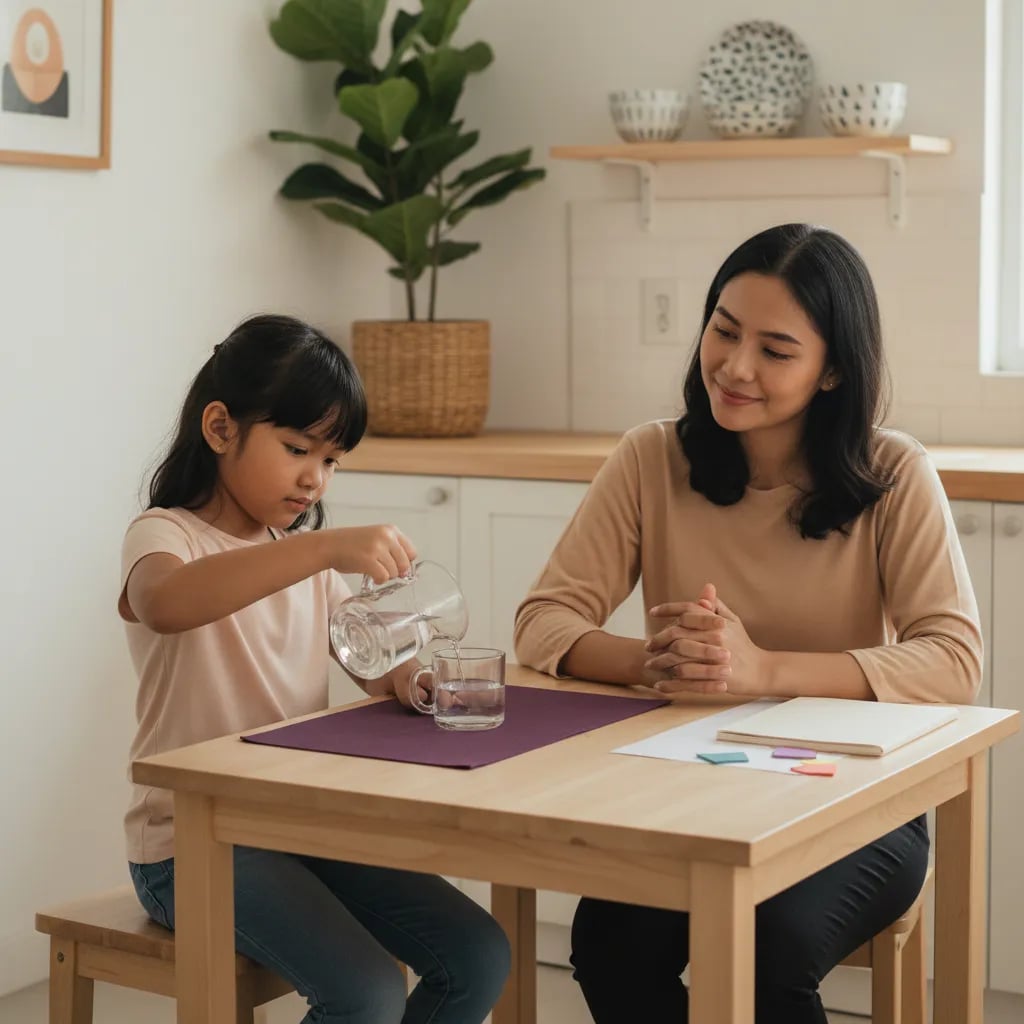
The checklist below turns those six foundations into things you can watch for at home. It comes from what our teachers see, not from an official requirement:
If you see 7 of the 10, your child will most likely settle in quickly. If the gaps are in points 2 to 5, the thing to work on is independence and emotions, and a reading tutor will not fix that.
You can introduce reading, writing, and counting before primary school as long as it is short play rather than long worksheets. In a ministry briefing on the kindergarten to SD transition, the belief that reading, writing, and arithmetic are the only measure of learning was called a misconception that knocks children's confidence.
Ten to fifteen minutes a day is enough:
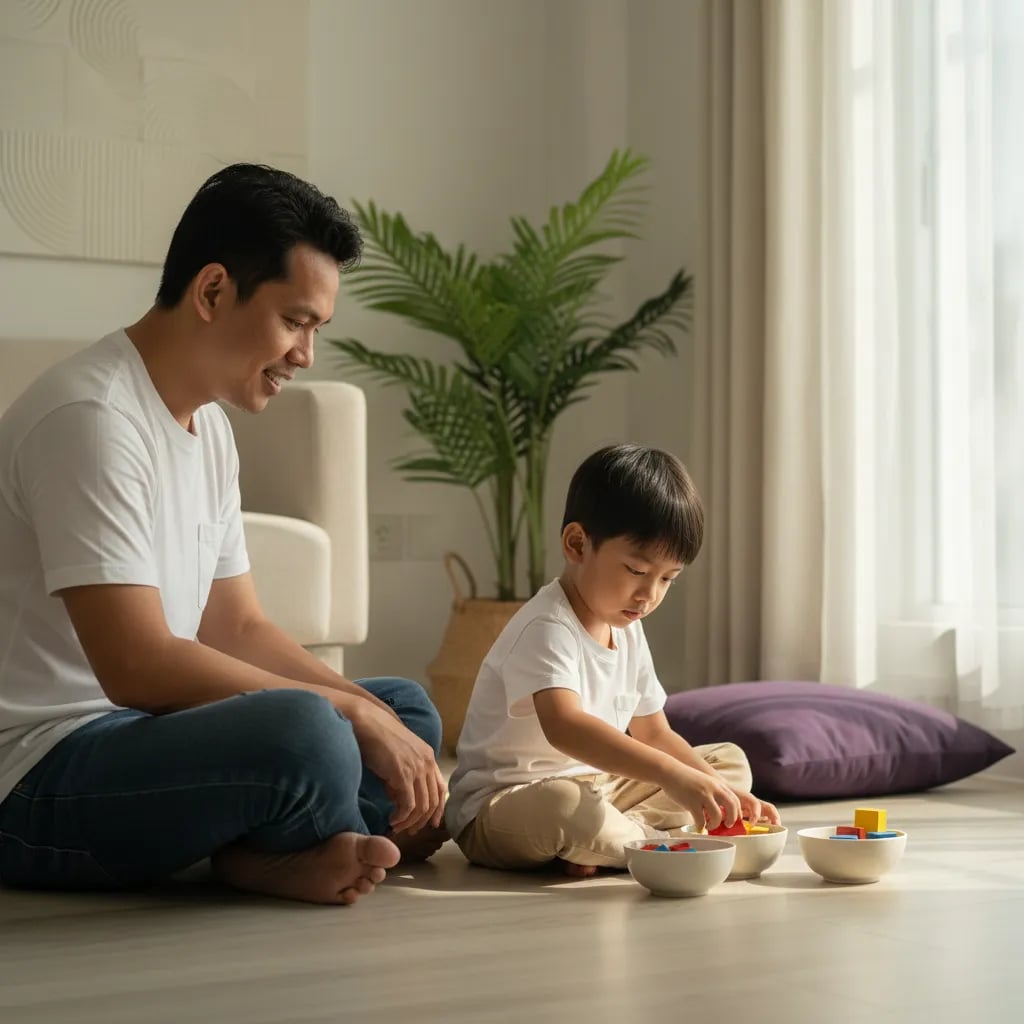
Stop before your child gets bored. Sensible targets for a 6-year-old are in our guide to early reading, writing and maths lessons for ages 5 to 7, and number games for kindergarten age are in maths for TK and PAUD children. A 5 or 6-year-old who loves screens can put that time into logic practice instead, for example coding for kindergarten kids with picture blocks that need no reading.
"Parents often ask me whether their child can read yet. A more useful question is whether the child will ask the teacher for help." Maya Putri, Early Childhood Education Specialist, Algonova
Starting at 6 makes sense when most of the checklist is in place and your child is keen. Waiting a year is safer if they were born close to the July cut-off, still have frequent tantrums, or find it hard to separate from you.
| Your child | What we would suggest |
|---|---|
| 6 years 8 months, independent, asks lots of questions | apply in SPMB, good chance of settling in |
| 6 years 1 month, independent but very shy | apply, and practise talking to other adults from now |
| 6 years 2 months, often cries when left | consider one more year in TK B |
| 5 years 8 months, reads well | check emotional readiness first, not just academic skills |
Keep the age priority in mind at busy public schools: a 6-year-old is more likely to miss out on the domicile route. Have a private school or a second public school as a backup. If your child has already started and struggles in the first term, the signs that they need help are in does a Grade 1 child need tutoring.
The most useful preparation starts 6 to 8 months before registration:
Once your child is in Grade 1, the maths chapters they will meet are listed in Grade 1 maths topics, and calm ways to practise sums are in teaching addition and subtraction. For children who need firmer footing with numbers, Algonova runs online maths lessons for ages 6 to 7 and maths classes for primary school kids, from Rp 102,000 per lesson.
The minimum age for a public primary school (SD negeri) in SPMB 2027 is 6 on 1 July 2027, with priority for children who are 7. The rule comes from Article 11 of Permendikdasmen No. 3 of 2025 and applies until a new regulation replaces it. In practice, a child born on or before 1 July 2021 can apply, and a child born on or before 1 July 2020 is in the priority group. At schools with few applicants the difference barely matters. At popular public schools in big cities, age order can decide who gets a place, because the domicile route ranks applicants by age before distance from home. Your regency or city education office must publish its SPMB announcement by the first week of May 2027, and the local juknis sets the details.
A child born in August will be 6 years 10 months, not 7, on 1 July of the year they first meet the minimum age. For example, a child born on 10 August 2020 is 6 years 10 months old on 1 July 2027. They can apply in SPMB 2027 because they are over 6, but they are not in the age-7 priority group. If you wait for SPMB 2028, they will be 7 years 10 months and among the oldest in the class. Both options are allowed. Let readiness decide: toilet independence, sitting still for 15 to 20 minutes, and being willing to speak to a teacher. A ready child who starts at 6 years 10 months usually has no trouble in Grade 1, and many children in the same class will be the same age.
A 5-year-old can start Grade 1 only if they are at least 5 years 6 months old on 1 July and have a written recommendation from a professional psychologist. The letter must state that the child has exceptional intelligence or talent and is psychologically ready. If no psychologist is available in your area, the teachers' council at the target school may write the recommendation. Children younger than 5 years 6 months cannot apply for Grade 1 at all. Before booking an assessment, think about whether an early start really helps. Your child will be the youngest in the class for all 6 years of primary school, and emotional readiness changes quickly at this age. Another year in TK B often gives a child the time they need to become more independent.
No. Permendikdasmen No. 3 of 2025 bars primary schools from requiring a reading, writing, arithmetic, or any other test for Grade 1 applicants. Grade 1 selection is based only on age and admission route, and the ministry repeated this rule before SPMB 2026. That said, a child who knows some letters and can count objects to 10 usually feels more confident in the first month. Build these skills through 10 to 15 minutes of play a day, such as counting spoons or guessing the first letter of household objects, rather than long worksheets. If a school still asks for a reading or maths test at registration, you can raise it with the local education office, since the practice goes against Articles 11 and 42 of the regulation.
The main documents for SD registration through SPMB are your child's birth certificate and your family card (KK). The birth certificate proves age; if you do not have one yet, a birth statement legalised by the village or ward head is also accepted. For the domicile route, the KK must have been issued at least 1 year before the registration date, and the parents' names on it must match the birth certificate. The affirmation route needs a card from a government support programme for low-income families or a disability document. The transfer route needs a work assignment letter for the parent. A child applying at 5 years 6 months also needs a psychologist's recommendation. A TK certificate is not required. Exact lists and upload formats vary by region, so check your local juknis.
SPMB (Sistem Penerimaan Murid Baru) is the name of Indonesia's school admission system from 2025, replacing PPDB, which was governed by Permendikbud No. 1 of 2021. Its legal basis is Permendikdasmen No. 3 of 2025. For SD, the biggest changes are in the route names and quotas: zoning became the domicile route with at least 70% of places, affirmation has at least 15%, and transfer has at most 5%. There is no merit route for primary school. The age rule is also clearer: 7 gets priority, 6 may apply, and 5 years 6 months can enter through the exception. Many older articles still use PPDB and the old rules, so check that what you read refers to SPMB and the right year before you plan around it.
Signs that a child is not ready for primary school usually show up in independence and emotions rather than in reading. Watch whether your child still cries for a long time whenever you leave, cannot use the toilet alone, refuses to queue or take turns with other children, or cannot listen to a story for more than 5 to 10 minutes. One sign alone is not a reason to delay. It is worth a second look when several appear together and do not improve after 2 to 3 months of practice. Try simple tests: leave your child with a relative for 2 hours, let them order for themselves at a shop, or sign them up for a group activity. If you are unsure, the TK teacher who sees your child every day can often give the most honest view.
Each local government sets the exact SPMB 2027 dates for SD, but the announcement must come out by the first week of May 2027 at the latest. This deadline is in Article 38 of Permendikdasmen No. 3 of 2025. The announcement has to list requirements, registration dates, routes, the number of places, and the date results are published. In past years, public SD registration in many regions ran between May and July, and the new school year began in mid-July. Private schools often open earlier on their own timetable, so contact the schools you are considering early in the year. Start on your documents now, especially the KK issue date, because a family card used for the domicile route must be at least 1 year old.

Algonova worldwide
Contact
Whatsapp: +62 21 50996971
Email: info@algonova.id
Address
Coworking Area, Gedung IT 6 Lantai Dasar, Nongsa Digital Park, Jalan Hang Lekiu, Kelurahan Sambau, Kecamatan Nongsa, Batam, Indonesia Directorate General of Consumer Protection and Trade Compliance – Ministry of Trade of the Republic of Indonesia. WhatsApp Ditjen PKTN: 0853-1111-1010.
PT Algonova Indonesia Cerdas All rights reserved 2026