How to Teach Multiplication Tables to Kids: 5 Proven Methods
Learn Math8 min
Q&A

Nadia Rahmawati
Math Curriculum Team, Algonova
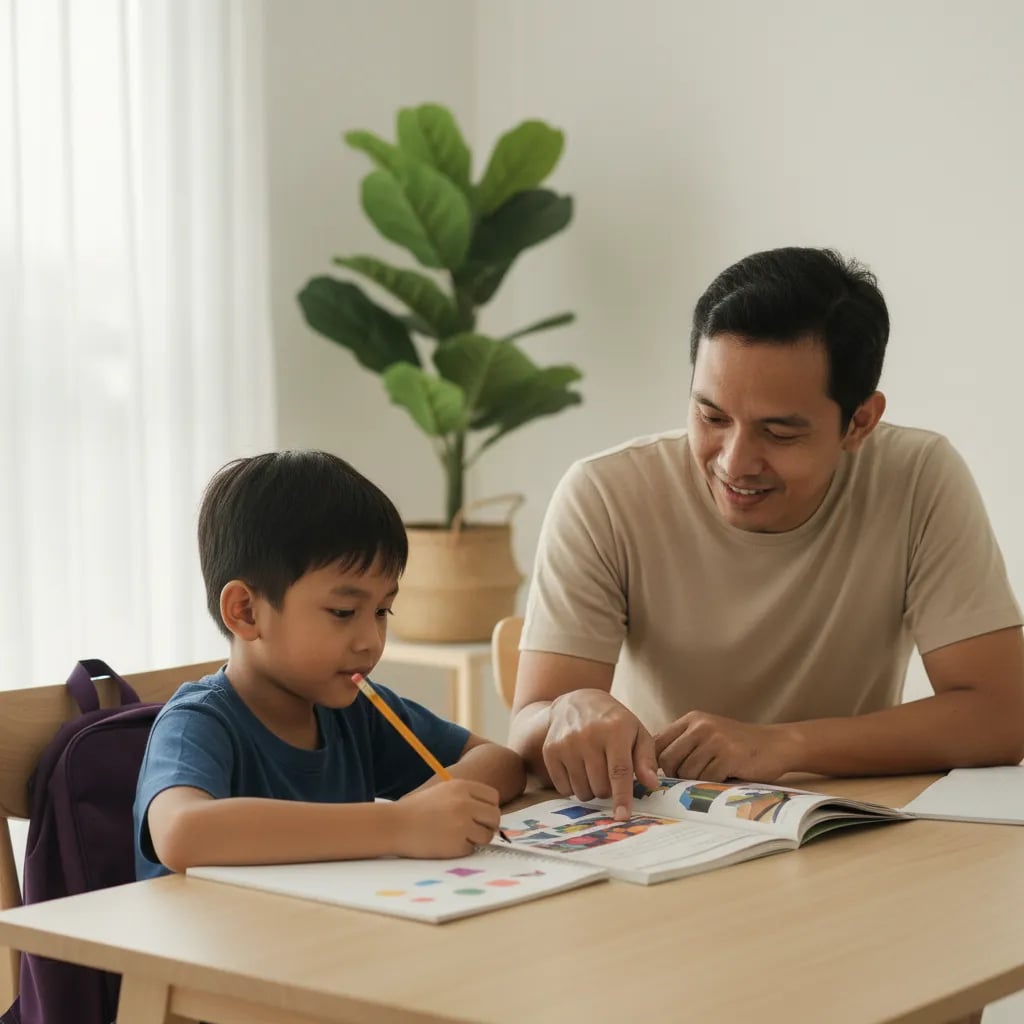
Grade 1 tutoring (les kelas 1 SD in Indonesian) is not needed by most children: 15 minutes of daily help at home for the first 4-6 weeks is usually enough. Tutoring makes sense if your child still can't read simple words or count to 20 after one semester, has started to dread school, or no adult at home can sit with them regularly. Kurikulum Merdeka treats Grades 1 and 2 as one phase, so there are two years to catch up.
In Grade 1 of SD (sekolah dasar, Indonesian primary school), children learn to read, write and count while also getting used to school hours, class rules and a new teacher. For most 6 and 7 year olds the jump from play-based kindergarten (TK) to a structured classroom is the hardest part.
A typical year covers:
Under Kurikulum Merdeka, Grades 1 and 2 form Fase A, and learning outcomes are assessed across the two years together. A child who is not fluent in month three is not necessarily behind. The chapter list for math is in our guide to Grade 1 math topics.
Math tutoring is worth considering when your child reads well but stalls on numbers, especially addition and subtraction within 20. That chapter is where Grade 1 children most often stop, and the foundation is used through Grade 6. Our guide on when to start math tutoring goes into timing.
To be clear: Algonova has no classrooms or centres in Indonesia, and we don't teach reading or writing. We teach math, live online with a teacher. For ages 6-7 there is Math Starters, math classes for ages 6-7, covering numbers 1-100, addition and subtraction, shapes, patterns and logic through pictures and games.
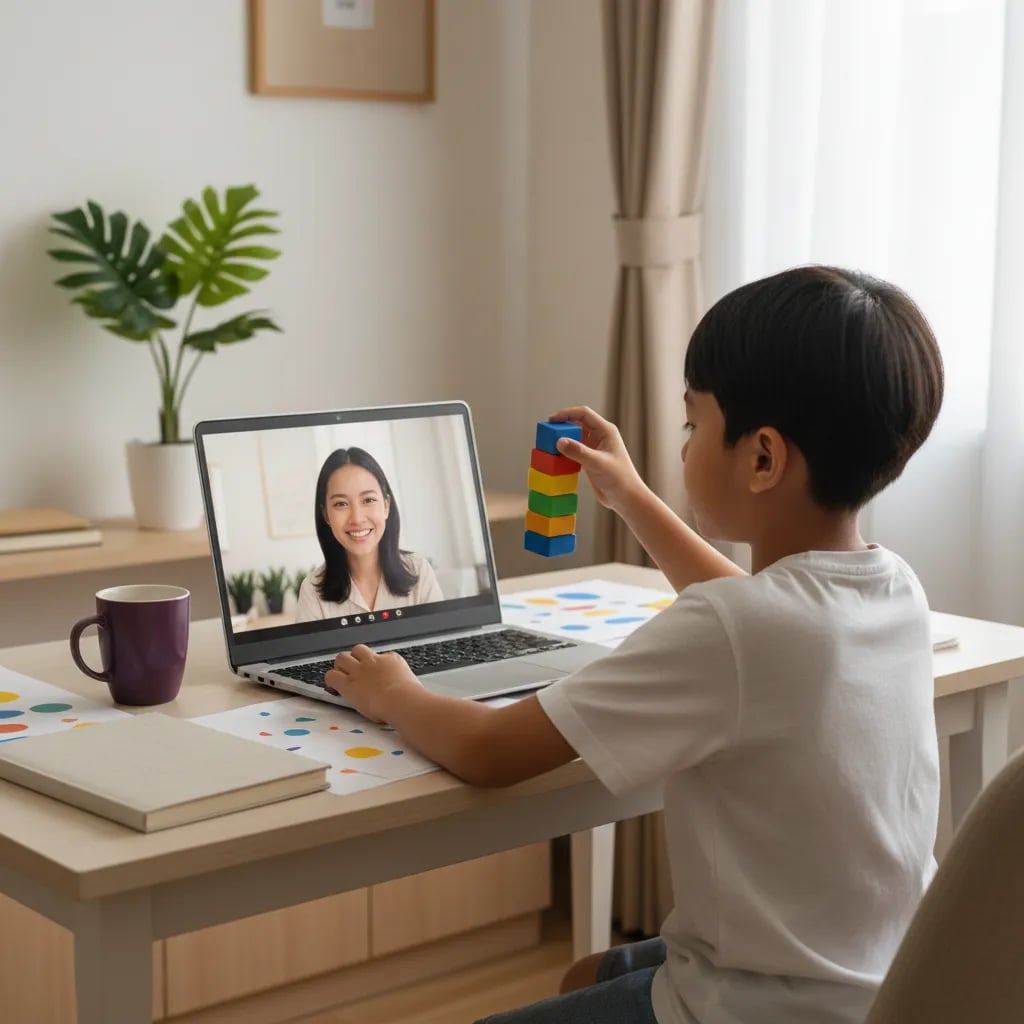
Lessons are private, in mini groups of 2-4 or in groups of up to 10, from Rp 102,000 per session. Before the first class your child takes a free diagnostic of about 60 minutes so the teacher knows where to start. More than 1,000,000 students in 97 countries have studied with Algonova. For Grade 2 and up, see math classes for SD children and all math programmes.
Fifteen minutes a day at a fixed time is enough, and stopping before your child gets bored matters more than the length. A simple split:
Praise effort, not results. "You tried three times" makes a child try again, while "why can't you do it yet?" makes them hide.
"A Grade 1 child who struggles rarely lacks ability. Usually they lack practice that doesn't make them feel like a failure." Nadia Rahmawati, Algonova Math Curriculum Team
No. Indonesian SD schools may not test reading, writing or counting at admission. Permendikdasmen No. 3 of 2025 on the new student admission system (SPMB) says Grade 1 applicants are not required to sit a calistung test, and Kemendikdasmen repeated this rule for SD admission in 2026.
So a Grade 1 class is a mix. Some children already read story books, others know a handful of letters, and both are normal. Compare your child with last month's version of themselves, not with the child at the next desk. The admission rules and pre-school targets are covered in our article on reading, writing and math lessons for ages 5-7.
A Grade 1 child needs tutoring when several of these signs appear even after steady help at home, not simply because their marks are lower than a classmate's:
Home practice is enough when your child improves bit by bit, even slowly, and still wants to go to school. Try this 4-week plan before you book anyone:
Picture a child who knew 10 letters at the start of the month and knows 22 after four weeks, and can now read "bola" and "buku". That is clear progress and tutoring can wait. If the numbers barely move despite steady practice, it is time to bring in an outside teacher.
The best format for a Grade 1 child depends on temperament more than on the brand. A shy child needs a different room from one who loves groups. This table compares the four common options:
| Option | Best for | Strength | Check |
|---|---|---|---|

Algonova worldwide
Contact
Whatsapp: +62 21 50996971
Email: info@algonova.id
Address
One or two signs can usually be handled at home with the teacher's help. Three or more, or sign 4 on its own, deserve a serious conversation because confidence is at stake.
If your child still reverses b and d well after age 7, can't hold attention at all, or seems to struggle to see the board, see a doctor or child psychologist first. Tutoring does not replace a check-up.
| Private tutor at home |
| Shy or easily distracted children |
| Pace follows the child |
| Highest cost, quality varies |
| Bimbel (group tutoring centre) | Children who enjoy learning with friends | Lower price per session | Big classes suit 6-7 year olds poorly |
| Live online lessons | Busy families, no centre nearby | No commute | Child needs a parent nearby for the first sessions |
| One-subject lessons | Reads well but stumbles on numbers | Targets one weak spot | Other subjects still need home practice |
For a fuller comparison see private tutor or bimbel, and for price ranges see private tutoring costs for SD.
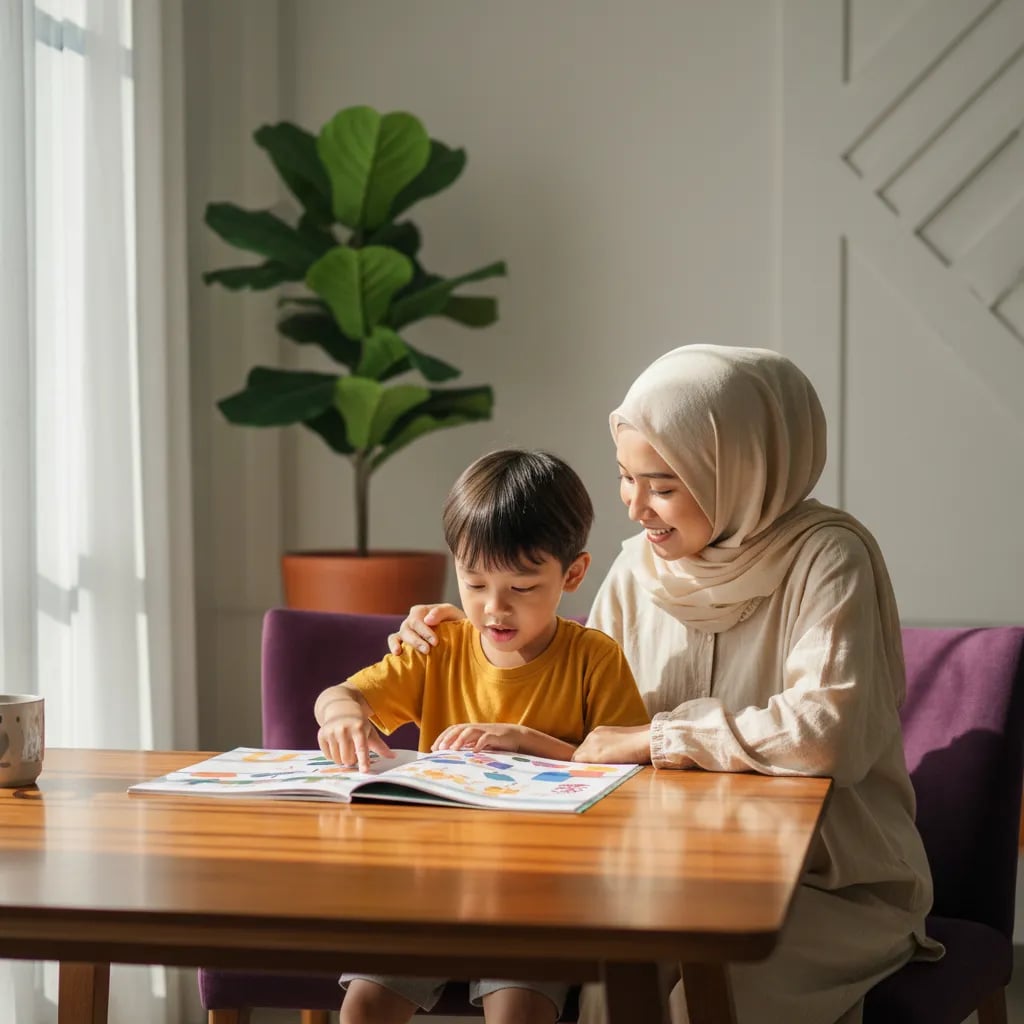
Prices vary a lot by city, format and session length, so compare the total per month, not only the price per session. A private tutor who comes to your home is usually charged per visit and is the most expensive option. Group bimbel is normally billed monthly and costs less per session. When you ask for a quote, also ask about registration fees, workbooks and what happens if your child is sick or a session falls on a public holiday. For math, Algonova online lessons start from Rp 102,000 per session, as a private lesson, a mini group of 2-4 or a group of up to 10. We don't teach reading or writing, so that price covers math only. If your budget is tight, 15 minutes of daily practice at home is often enough for a child who is only slightly behind. Count how many sessions actually run each month, because holidays can cut the number without cutting the fee.
A private tutor suits shy, easily distracted or far-behind children, while a small bimbel group suits children who like learning with friends. With a private tutor the pace can change minute by minute and pencil grip gets corrected on the spot, but the cost is highest. In a group of 3-6, children learn to wait for a turn and ask questions in front of others, habits they also need in class. Avoid classes of 15 or more for ages 6-7, because one teacher can't watch each child. For example, a shy child might start with 1-2 months of private lessons and then move to a small group once confident. For math, Algonova offers private, mini group and group formats with the same material, so you can try another format without changing the curriculum.
Not necessarily. Many children become fluent readers in the middle or at the end of Grade 1, and Kurikulum Merdeka assesses Grades 1 and 2 as one phase. Start with 10 minutes of reading a day for 4 weeks, using picture books with short sentences, and ask the teacher which letters or syllables are missing. If your child still doesn't know most letters after that, or has begun to refuse school out of embarrassment, a patient reading tutor is worth trying. If letters stay reversed well after age 7, talk to the class teacher or a child psychologist. Also check eyesight and hearing, because small problems with eyes or ears often look like reading difficulty. Algonova does not teach reading, so look for a specialist calistung class or a private tutor for this part.
Start with real objects, not worksheets. Ask your child to touch one spoon, button or stair for each number they say, because many children can recite numbers without understanding quantity. Then practise number pairs within 10, such as 6 and 4, and move on to addition within 20. If after 4 weeks your child still counts from one every time, math tutoring can help because a teacher can see exactly which step causes the trouble. At Algonova, children aged 6-7 take a free diagnostic of about 60 minutes that shows which topics are solid and which need work, so you decide with data. Avoid punishment and comparisons with classmates: fear of mistakes makes children avoid numbers. Give small tasks they can certainly finish, then raise the difficulty a little at a time.
One or two sessions of 30-45 minutes a week is usually enough for Grade 1, plus 10-15 minutes of practice at home on other days. Six and seven year olds are already tired after school, and a packed schedule lowers their interest. Pick a time when they are still fresh, such as late afternoon after a snack and a rest, not late evening. Signs the schedule is too heavy: yawning, refusing to go, or coming home gloomy. If that happens, ask the tutor to shorten sessions or add games without lowering the goals. For example, a 45 minute session can be split in two with a drink break in the middle. Keep free play every day, because play builds focus, language and social skills. One day in midweek with no lessons and no practice also helps your child recover.
Online tutoring can work for Grade 1 if the class is small, interactive and not too long. What makes it work is a teacher who uses the child's name, asks them to show objects to the camera and changes activity before boredom sets in. Parents need a laptop or tablet, a quiet room and some presence in the first few sessions. For handwriting, in-person is easier because the teacher can correct the pencil grip directly. For math, online is practical because spoons and buttons at home work as teaching aids. At Algonova, math classes are live online with a teacher, and the free diagnostic of about 60 minutes shows whether the format suits your child. After the first session, notice whether your child talks happily about the class. If they do and want to continue, the format probably fits.
Algonova has no in-person centres in any Indonesian city. All classes are live online with a teacher, so your child only needs a laptop or tablet and a stable internet connection at home. We don't teach reading or writing. For Grade 1 children we teach math through Math Starters for ages 6-7: numbers 1-100, addition and subtraction, shapes and patterns. If you want reading help or a home tutor for all subjects, use the signs and the comparison table in this article to judge options near you. For the math part, you can take the free diagnostic of about 60 minutes and decide after seeing the results by topic. The result is not binding: you can also use it to practise at home without enrolling in a class.
Small changes usually show within 4-6 weeks if your child attends regularly and practises briefly at home, but nobody can promise a big jump. The first good sign is attitude, not marks: your child opens the book more willingly, asks questions and talks about class. Ask the tutor for a short weekly note on what is mastered and what to practise. Track three simple things yourself: words read, the highest number counted correctly, and how long homework takes. If nothing has changed after 8 weeks, talk to the tutor about the method or try another format before concluding that your child can't benefit. Remember that every child has their own tempo, and the fairest comparison is with the same child a month earlier.
Coworking Area, Gedung IT 6 Lantai Dasar, Nongsa Digital Park, Jalan Hang Lekiu, Kelurahan Sambau, Kecamatan Nongsa, Batam, Indonesia Directorate General of Consumer Protection and Trade Compliance – Ministry of Trade of the Republic of Indonesia. WhatsApp Ditjen PKTN: 0853-1111-1010.
PT Algonova Indonesia Cerdas All rights reserved 2026