
Best Online Tutoring in Indonesia for Primary Kids: A 9-Point Checklist for Parents
Checklists & Calendar13 min
Parent Guides

Maya Putri
Early Childhood Education Specialist
How to find your child's talent in primary school: give them a few small projects and watch how they react over 2 to 4 weeks. Fingerprint tests and online quizzes can't replace that kind of observation. This guide is for parents of children aged 8 to 12. It covers the signs of talent in technology, design and math, plus a checklist you can start using this week.
Interest is the pull that makes a child want to try something. Talent is an ability that grows faster than in other kids the same age once the child practises.
The two often show up together, but not always. A child can love drawing even though the results are ordinary, and that interest is still worth supporting.
Some children pick up number patterns very quickly yet never choose math as a favourite activity, because they've never seen the fun side of it.
For parents of primary school kids, interest is the more practical place to start. Talent only becomes visible after a child has practised for a while, and children only keep practising at things they're interested in.
There's no fixed age. Some children stand out in kindergarten, for example by counting fast or drawing in great detail. For many others, a direction only appears around ages 9 to 12, when they can handle more complex projects on their own.
Interests at primary school age also change often, and that's normal. So hold off on the label "my child is gifted at X". It's more useful to note which activities your child keeps choosing over a few months.
The way to discover a primary school child's talent at home is to give three short projects of 30 to 45 minutes, each with a different kind of challenge: logic, visual and numbers.
Everyday observation is usually too random. A child who plays games every afternoon isn't necessarily drawn to technology. Maybe there's simply nothing else to do. Projects you choose on purpose give you clearer material to watch.
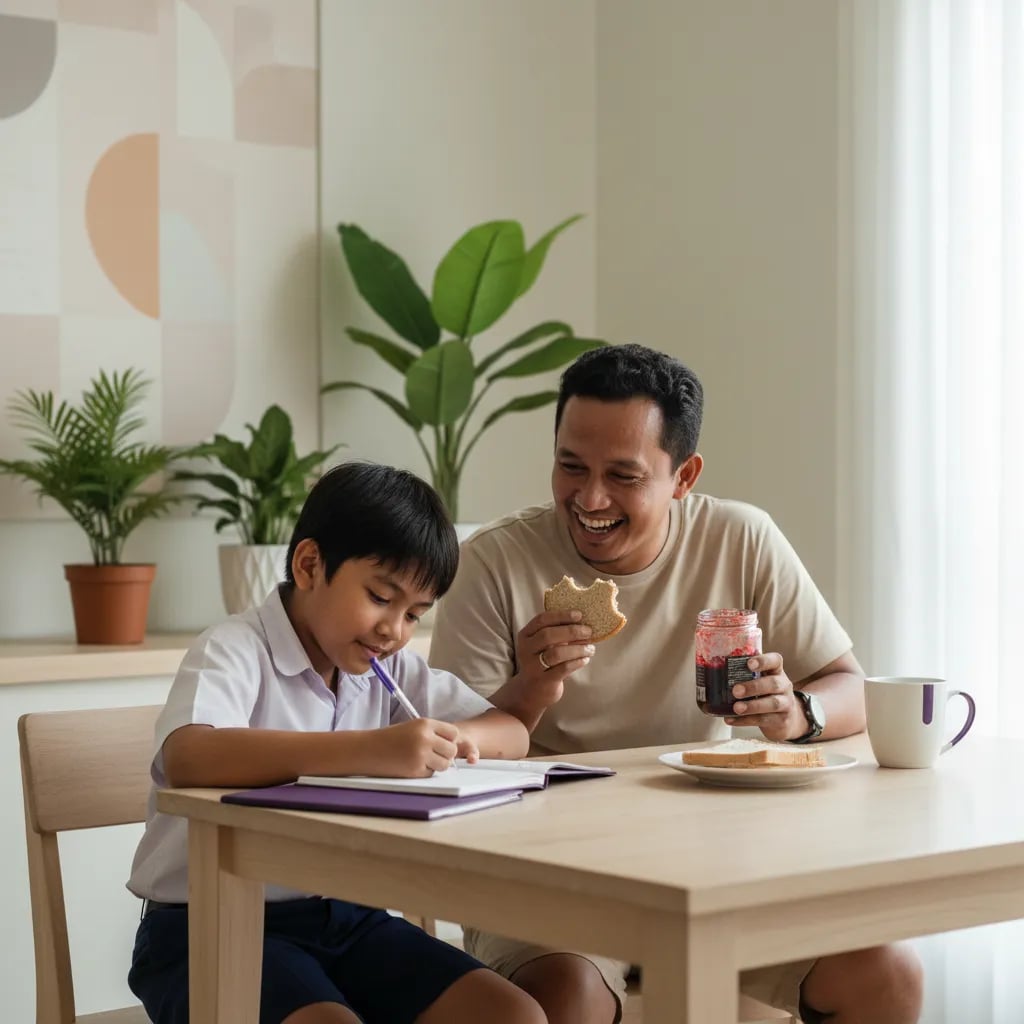
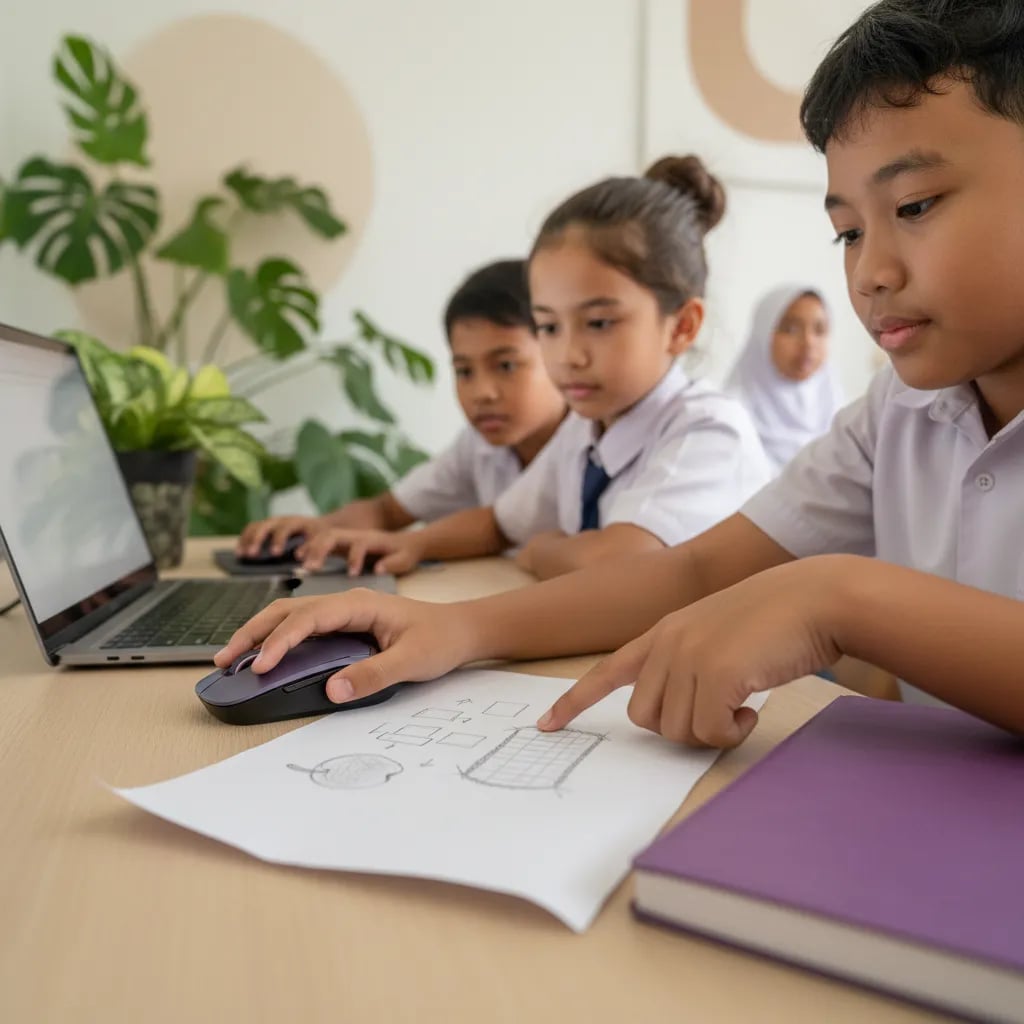
Ask your child to write instructions for making a jam sandwich, then follow them exactly as written. If the instructions say "spread the jam" without "open the jar", you stop and wait. A child who enjoys fixing the instructions until they work is using the way a programmer thinks.
The digital version is Scratch, a free platform made by the MIT Media Lab. In one afternoon a child can make a moving character or a simple number-guessing game.
Ask your child to design a cover for a favourite storybook, a poster for a family event, or a four-panel comic. Paper is fine, and so is a free drawing app on a tablet. Notice whether they think about colour, where the text goes and the layout, or stop as soon as the character is drawn.
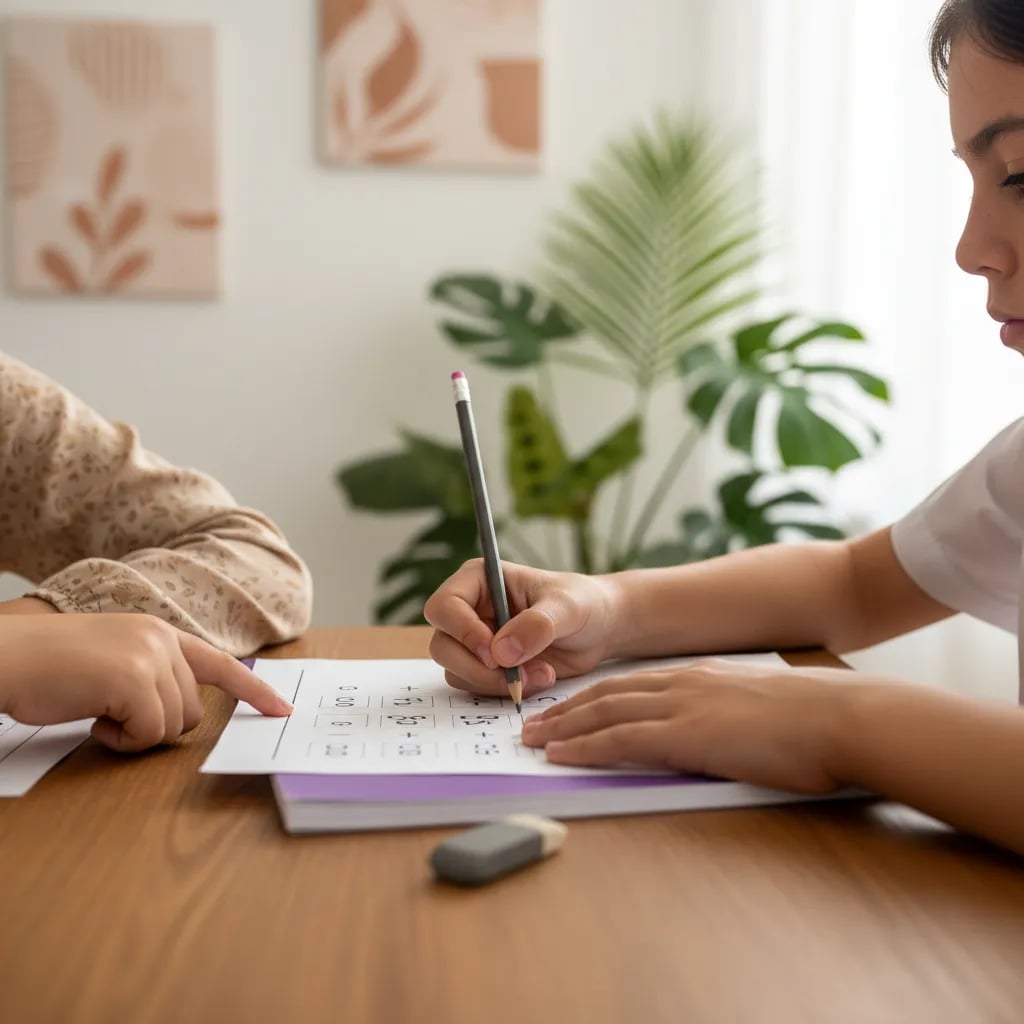
Give your child a Rp 50,000 budget to plan a family picnic, with a shopping list and the change left over. Other options are a 4x4 sudoku or a word problem they write for you to solve. Children who like math usually aren't satisfied with an answer that is merely correct, and start looking for the cheapest way.
Over 4 weeks of watching, an area that shows at least 4 of the 6 signs below, such as coming back to a project unprompted, deserves a closer look.
One project isn't enough. Repeat the project your child enjoyed most at a slightly harder level, and note these signs each week.
| Sign | What it looks like | Examples in coding, design, math |
|---|---|---|
| Comes back alone | Opens the project again without being told, for example at the weekend | Coding: improving a Scratch game; Design: continuing a comic; Math: redoing a sudoku |
| Sticks with it when stuck | Tries two or three ways before asking for help | Coding: hunting for the wrong block; Design: moving the layout around; Math: trying another way to calculate |
| Asks further | Questions go beyond the task | Coding: "can the character jump?"; Math: "if we had Rp 70,000, what else could we buy?" |
| Makes their own version | Changes the rules or adds something unasked | Coding: adding a level; Design: changing the colours; Math: writing their own word problem |
| Loses track of time | A 30-minute session turns into an hour because they want to finish | Note which area most often makes sessions run over |
| Wants to show it off | Shows the work to a sibling, a grandparent or classmates | Coding: asking grandpa to try the game; Design: putting up the poster; Math: challenging you with a puzzle |
A schedule could look like this: week one to try all three projects, week two to repeat the two favourites, weeks three and four to focus on one area with a harder challenge. The 4-out-of-6 cut-off is a practical rule of thumb, not a scientific score.
Talent in primary school kids can show up in many areas, from music to sport. Technology, design and math are among the easiest to observe at home.
They're easy to watch because the child makes something you can see straight away, and the three areas are connected. If you want to know how, read what STEM is and why it helps kids.
A longer list is in our article on signs a child is ready to learn coding. If you're unsure about age, what age kids can start coding covers it stage by stage. A child who loves technology but has no clear direction yet can compare coding vs robotics vs game design.
The quickest way to check the interest is one free 60-minute coding class with a tutor. Your child builds a simple project there, and you can see the reaction for yourself.
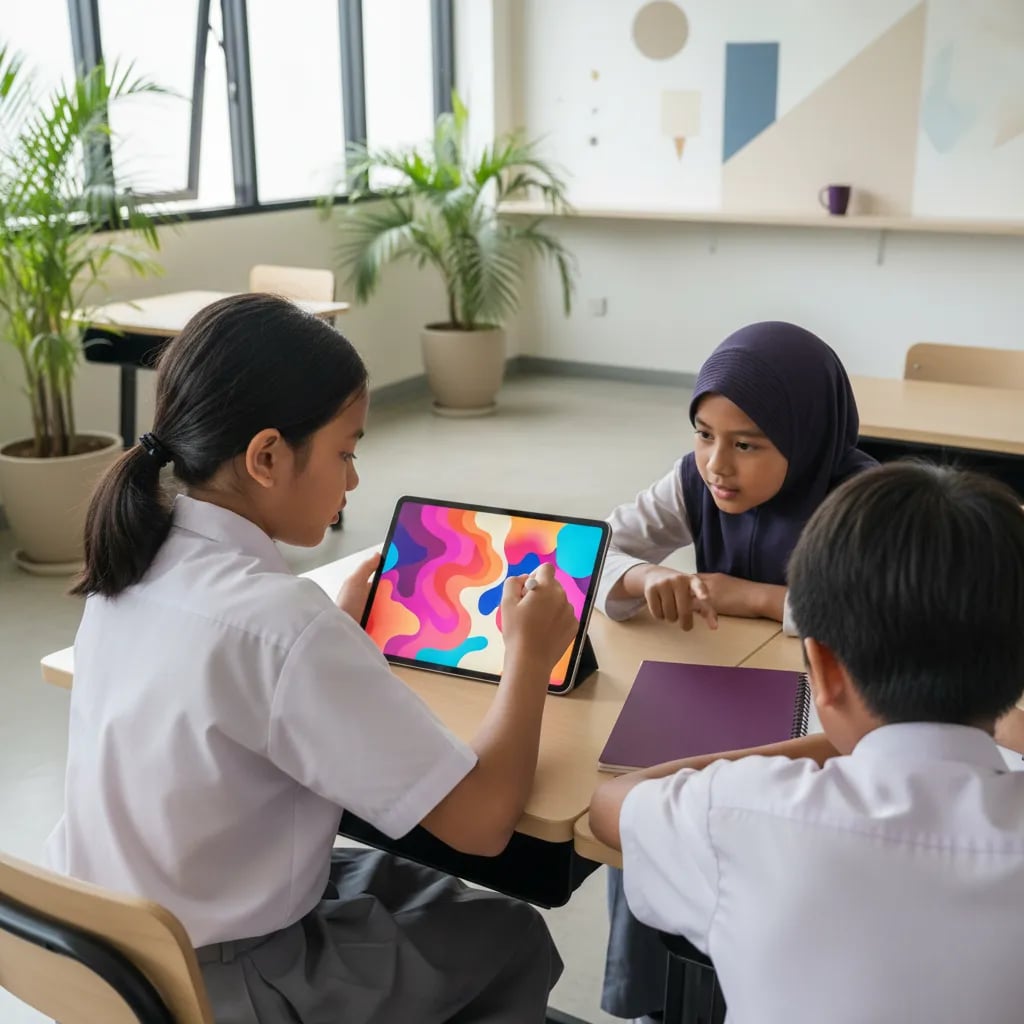
Children like this often take to graphic design, where pictures are used to get a message across. In the digital drawing course for primary school kids, children make digital drawings, simple 3D objects and short animations. The first class is a free 60-minute trial.
School report grades alone aren't enough to judge. Some kids with average grades have strong logic but are scared of making mistakes in tests.
In Algonova's online math classes for primary school kids, the first session is a free diagnostic of about 60 minutes that shows your child's strengths and gaps. How it works is explained on the Algonova diagnostic method page. If your child tends to avoid numbers, start with these tips on how to help a child enjoy math.
Loving Lego doesn't point to one particular talent. How your child plays matters more. A child who follows the instruction booklet to the end shows persistence and the ability to read diagrams, while a child who builds their own creations leans more towards design and engineering.
A 2015 study by Jirout and Newcombe of 847 children aged 4 to 7 found that kids who often played with blocks, puzzles and board games tended to have better spatial skills. The link is a correlation, not proof of cause and effect, but it's reason enough to invite a Lego fan to try the logic and visual projects above.
A talent and aptitude test for primary school kids is useful when a licensed psychologist runs it. Online quizzes are mostly unvalidated, and fingerprint tests have no scientific basis.
Many parents look for a free online talent test for kids, hoping for a quick answer. Quizzes like these are fine for starting a conversation with your child, but don't base decisions on them, because the results shift easily with your child's mood on the day.
A psychological assessment by a licensed psychologist helps with specific questions, such as school readiness or a suspected learning difficulty. The psychologist combines test results with interviews and observation, so no score is read on its own.
Fingerprint test providers often claim to use the theory of multiple intelligences by Howard Gardner, the Harvard psychologist who introduced it in 1983. Gardner himself wrote that the idea that intelligence can be read from fingerprints has no basis.
The Indian Psychiatric Society has also formally rejected DMIT tests for lack of scientific evidence, and psychologists still debate Gardner's theory itself. The money for a fingerprint test is better spent on activities your child can actually try.
The low-cost way to develop a child's talent is to go step by step: projects at home, free resources, a free trial class, and a regular course only once the interest has lasted.
You don't need to sign your child up for months of classes straight away. Here's how the steps look:
At Algonova, the coding and design trials are free 60-minute classes, and math starts with a free diagnostic of about 60 minutes. All classes run live online with a tutor in groups of up to 10 children. More than 1,000,000 students in 97 countries have studied with us, and parents rate us 4.9. If you continue, prices start from Rp 102,000 per lesson, in 45, 60 or 90 minute lessons.
A trial class doesn't decide your child's talent. It shows whether your child is interested and comfortable, and it gives you extra notes from a teacher.
Talent doesn't appear at the same age for every child, but for many kids a direction becomes clearer around 9 to 12, when they can handle more complex projects on their own. Some children stand out in kindergarten, for example by counting fast or drawing in detail. Others only show it after trying the right activity. A Grade 4 child who is ordinary in art class can turn out to be very persistent when making a simple game in Scratch, because there they can combine a story with logic. Interests at primary school age also change often, so a change of direction within a year is normal. A child obsessed with dinosaurs this year may be busy making comics or building cardboard robots next year, and both are useful things to watch. Instead of looking for an exact age, note which activities your child keeps choosing over a few months and support the one that comes up most.
Interest is the pull that makes a child want to try something. Talent is an ability that develops faster than in other kids the same age when the child practises. The two can come apart. A 10-year-old can love drawing even though their progress is ordinary, and that still deserves support, because interest is what keeps a child practising. On the other hand, some kids pick up number patterns quickly but dislike math because of stressful lessons at school. In that second case, changing how they learn often helps more than adding practice hours. Problems framed as a game, like working out change while playing shop, often get these kids to try again without feeling tested. For primary school kids, interest is the most practical starting point, because talent only grows through practice a child actually enjoys.
It depends on the type. An assessment by a licensed psychologist can help with specific questions, while a free online talent quiz can't be the basis for a decision. A psychologist combines standardised tests with interviews and observation, for example to assess school readiness or a suspected learning difficulty. Online quizzes usually have no validation data, and the result can change if the child takes them on a different day. A child who fills in a quiz tired after school might get "visual", then "logical" when repeating it at the weekend. If you have a specific worry, such as your child struggling to read or to focus in class, talking to a child psychologist is far better than trying quizzes on the internet. Watching projects at home for 2 to 4 weeks gives a steadier picture than a one-off test, and it costs almost nothing.
No. Fingerprint tests have no scientific basis for measuring a child's talent, intelligence or interests. Providers often link them to Howard Gardner's theory of multiple intelligences. Yet Gardner himself said that guessing intelligence from fingerprints has no basis, and the Indian Psychiatric Society formally rejected these tests for lack of evidence. Fingerprint patterns form before birth and never change, while a child's abilities keep developing through practice and environment. A child the test "rates weak at math" can still grow fast after meeting the right teacher. Results like these can also become a limiting label, because the child and parents stop trying an area that is supposedly not their talent. The money is better spent on activities or trial classes your child can actually try.
Loving Lego doesn't point to one specific talent, but it is often linked to spatial skills and an interest in building things. Watch how your child plays. Following the instruction booklet to the end shows persistence and the ability to read diagrams. Preferring their own creations, like a city or a vehicle they designed, leans more towards design and engineering. A 2015 study by Jirout and Newcombe of 847 children aged 4 to 7 found that kids who often played with blocks and puzzles tended to have better spatial skills, although the link is a correlation. Notice too whether your child likes telling stories about what they built, because children who build while storytelling often enjoy animation or game projects. A Lego fan is worth inviting to try a logic project like Scratch and a visual project like designing a poster.
A child with a talent for math usually calculates in their own way and enjoys finding patterns, even outside school lessons. A Grade 3 child who turns 48 + 37 into 50 + 35 without being taught is showing flexible thinking with numbers. Other signs: they notice patterns in a calendar or game scores, or ask why a formula works. School grades don't always reflect this. Some kids with average grades have strong logic but are afraid of mistakes in tests, so anxiety hides what they can do. A simple check at home: ask your child to explain how they answered one problem. A clear explanation shows understanding, even if the answer is sometimes still wrong. Algonova's free math diagnostic of about 60 minutes can help you see your child's strengths and gaps before you choose a class.
A child is suited to coding if they enjoy step-by-step puzzles and want to find out why something isn't working. Picture a child who asks "how does this game character jump?", or one who happily fixes the jam sandwich instructions until they work. Ages 8 to 12 are a good time to start with visual programming like Scratch, then move to a text language like Python once the basic logic is comfortable. Kids who love telling stories often enjoy coding too, because they can turn a story into an animation or a game. Fast typing or high math grades aren't required. What matters most at the start is curiosity and the patience to keep trying. A free 60-minute coding trial class lets your child build a small project with a tutor, so you can see whether they want to continue.
A child with a talent for design is usually sensitive to colour and layout and likes making things for other people to see. Think of a child who complains that a T-shirt's colours "don't go together", rearranges stickers in an exercise book until they look neat, or makes a birthday card complete with a title and decorations. Another important sign is being able to explain visual choices, like "I used blue so it looks calm". That ability separates a child who just likes drawing from one who is starting to think like a designer. You can test it by asking your child to make an invitation for a sibling's birthday, then asking which part they want guests to see first. At Algonova, a free 60-minute design trial class introduces your child to digital design basics with a tutor in a live online class, and you can see the reaction for yourself.
It's normal for a primary school child not to show a clear talent yet, especially if they haven't had many chances to try different activities. Talent grows from experience, so a child who rarely tries new things simply has nothing to show yet. Keep the 2 to 4 week trial pattern going with different activities, for example a month of visual projects, then a month of number projects. Watch for small things they repeat unprompted, like sorting a collection or inventing rules for a game. Sometimes a direction only appears after a child meets a teacher or friend who makes an area exciting. Write these small findings down in a notebook or on your phone, because patterns only become clear after several weeks. Avoid comparing your child with siblings or friends, because that kind of pressure often makes kids stop trying.
Give each new activity about 2 to 4 weeks, or at least 4 to 6 sessions, before deciding whether to continue or stop. The first week almost always feels hard because so much is new at once, so early resistance doesn't mean the activity is wrong for your child. A child who complains in the first two coding sessions can start enjoying it after finishing their first project. On the other hand, if after four weeks your child never goes back to the activity unprompted, it's reasonable to try another area. Use the observation checklist so the decision doesn't hang on one day's mood. Also tell the difference between a child who is bored with the material and one who doesn't get on with the teacher's style, because the fix is different. For courses, ask whether there's a free trial class before paying for months in advance, so you decide after your child has actually tried it.
Blog

Algonova worldwide
Contact
Whatsapp: +62 21 50996971
Email: info@algonova.id
Address
Coworking Area, Gedung IT 6 Lantai Dasar, Nongsa Digital Park, Jalan Hang Lekiu, Kelurahan Sambau, Kecamatan Nongsa, Batam, Indonesia Directorate General of Consumer Protection and Trade Compliance – Ministry of Trade of the Republic of Indonesia. WhatsApp Ditjen PKTN: 0853-1111-1010.
PT Algonova Indonesia Cerdas All rights reserved 2026
