How to Teach Multiplication Tables to Kids: 5 Proven Methods
Learn Math8 min
Q&A

Dimas Prasetyo
Education Analyst, Algonova
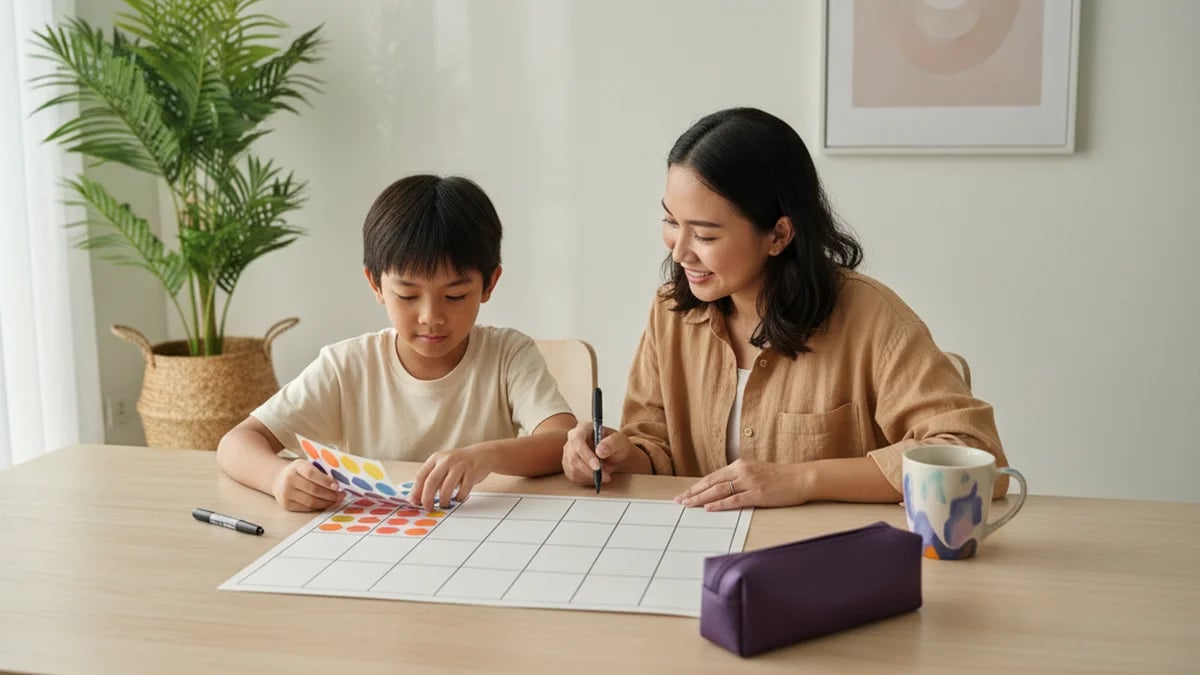
How often should kids have tutoring? For most primary school children (SD grades 1 to 6 in Indonesia), once or twice a week is enough, and total tutoring time should stay at or under 3 to 4 hours a week. Grade 1-2 children usually need just one session, while grade 5-6 children can handle two or three when there is a clear goal. The right number depends on grade, goal, and how much time is left for sleep, homework, and play.
The safest rule is simple: the younger the child, the fewer and shorter the sessions. A grade 1 child is still getting used to the school day, while a grade 6 child can concentrate for longer and often has an exam to prepare for.
| Grade (SD) | Age | Sessions a week | Length of one session | Total a week |
|---|---|---|---|---|
| Grades 1-2 | 6-8 | 1 | 30-60 minutes | up to 1 hour |
| Grades 3-4 | 8-10 | 1-2 | 60-90 minutes | 1.5-3 hours |
| Grades 5-6 | 10-12 | 2-3 | 60-90 minutes | 3-4 hours |
These numbers come from what Algonova teachers see in class, not from an official rule. Treat them as an upper limit and adjust for your child. A grade 1 child who is still settling in often gains more from 15 minutes of practice at home than from a tutor; we cover the signs in does a grade 1 child need tutoring.
Here is an example. Rafi is in grade 4 and has one 90-minute maths lesson plus one 90-minute coding class. That is 3 hours a week, inside the range for grades 3-4.
The reason for tutoring often matters more than the grade. Here are the four goals parents mention most often:
| Goal | Sessions a week | For how long | Note |
|---|---|---|---|
| Catching up | 2 | 6-8 weeks, then drop to 1 | focus on the one subject that causes the most trouble |
| Keeping grades steady | 1 | the whole semester | a place to review and ask questions |
| Grade 6 exam preparation | 2-3 | 2-3 months before the exam | keep one free day in the middle of the week |
| Hobby or coding | 1 | all year | 60-90 minute sessions, projects need unbroken time |
Catch-up tutoring is intense, but it is meant to be temporary. Once your child can follow lessons at school again, scale it back. Hobby classes work the other way round: they last longest when the pace is relaxed and the child turns up because they want to.
If your child has both an academic tutor and a hobby class, count them in one weekly time budget. The difference between a private tutor and a group class, which also affects frequency, is covered in private tutor or bimbel.
A reasonable amount of tutoring is whatever fits after sleep, school, homework, and play are covered. Work it out in this order:
A worked example for a grade 4 child who finishes school at 1 pm and sleeps at 8:30 pm: lunch and rest until 2:30, about 30 minutes of homework, 60 minutes of play, then dinner, bath, and family time of about 2 hours. That leaves roughly 2 hours a day. One 90-minute class on two different days fits, and the other three weekdays stay light.
Our teachers notice that children whose free time is completely filled with tutoring usually start refusing to go within 2 to 3 months. We look at balanced daily routines in a daily routine for kids during school holidays.
A schedule is too full when your child is tired all the time, not just reluctant now and then. Watch for these signs over 2 weeks:
Two or more signs mean the schedule needs trimming. Start by dropping the class furthest from your main goal, not the one your child enjoys most.
"A child makes faster progress with one class they look forward to than with three they sit through half asleep." Algonova teaching team
This example is for a grade 4 child who gets home at 1 pm and has two classes, maths and coding. That makes 3 hours of tutoring a week and two weekdays with no lessons at all.
| Day | After school | Afternoon (3:30-5:00 pm) | Evening |
|---|---|---|---|
| Monday | lunch, rest | maths lesson, 90 minutes | homework 30 minutes, bed 8:30 pm |
| Tuesday | lunch, rest | play outside | homework, reading |
| Wednesday | lunch, rest | free, no lessons | homework 30 minutes |
| Thursday | lunch, rest | coding class, 90 minutes | light homework |
| Friday | lunch, rest | sport or play | free |
| Saturday | family time | ||
| Sunday | full rest | pack the school bag |
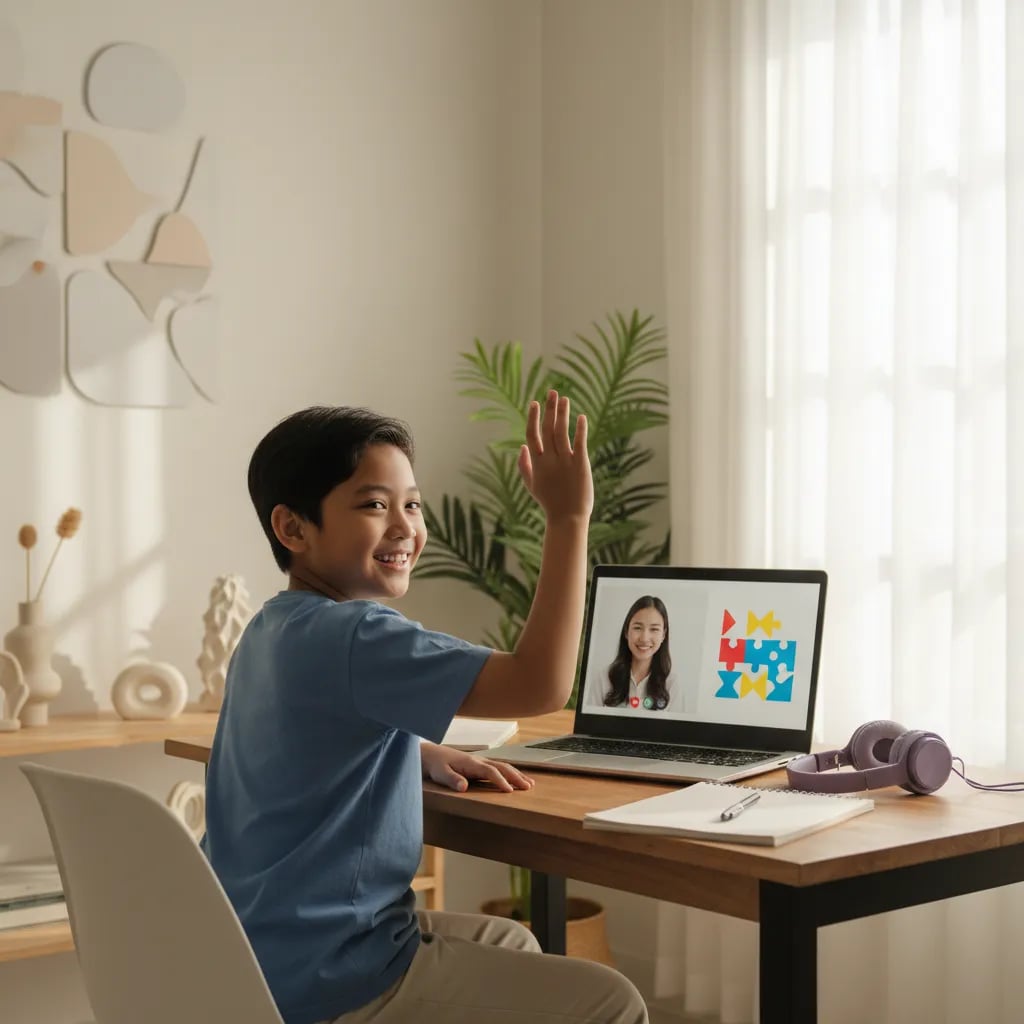
The two classes are never on back-to-back days. Tuesday and Wednesday stay open so your child can recover and do homework without rushing.
Two classes can work for children in grade 3 and above, as long as they are different types and the total stays inside the limits in the grade table. Here is how:
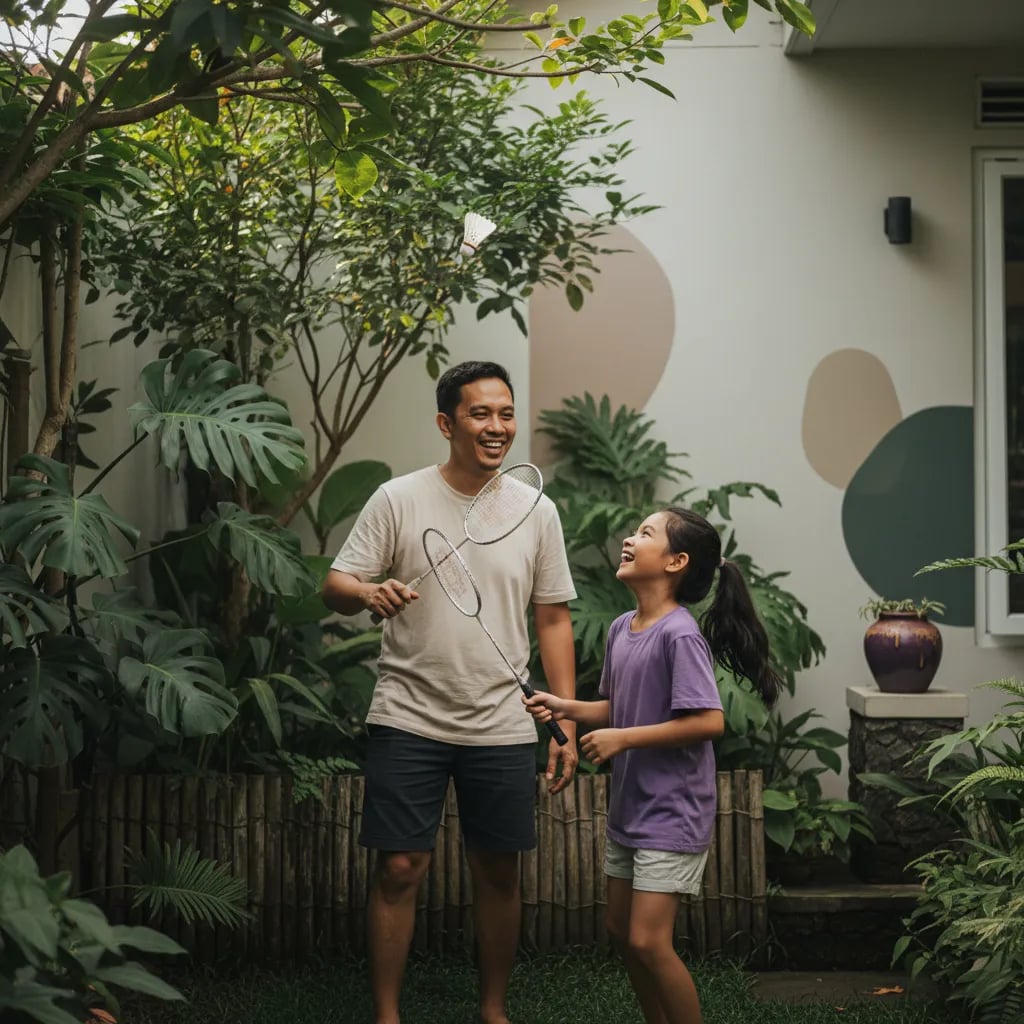
At Algonova, most primary school children study once a week, because one group session already lasts 90 minutes. Classes run online and live with a teacher, so there is no travel time to add to the week.
Prices start from Rp 102,000 per session. Before signing up, your child can join a free 60-minute coding master class or a free maths diagnostic of about 60 minutes. More than 1,000,000 students in 97 countries have studied with Algonova. If you are still comparing providers, use the checklist in how to choose online tutoring for a primary school child.
For most primary school children, daily tutoring is too much and rarely speeds up results. Your child already spends several hours at school and then has homework. If the afternoon also goes to tutoring, sleep and play are what get cut. Our teachers see that children with daily lessons often last 1 to 2 months before they start refusing to go. Daily sessions only make sense for a short stretch, such as 2 to 3 weeks before an exam, and they should be short, around 30 to 60 minutes. Outside that window, once or twice a week plus 15 minutes of practice at home usually gives steadier results. Make sure your child still gets the 9 to 12 hours of sleep the American Academy of Sleep Medicine recommends for ages 6 to 12. If sleep is already being cut, reduce lessons before adding new material.
For grades 1-2, a session of 30 to 60 minutes is enough; for grades 3-6, 60 to 90 minutes is comfortable as long as there are breaks and the activities change. Younger children lose focus quickly, so a long session with no variety mostly wastes the second half. A 90-minute session suits project work, such as building a game in a coding class, because children need time to plan, test, and fix. For practice problems, two 60-minute sessions on different days often work better than one 2-hour session. Watch for signs of boredom: yawning, frequent trips to the toilet, or checking the clock. If they appear early in the session, ask the teacher to split it into shorter parts. At Algonova, group classes last 90 minutes and private classes last 60 minutes.
Once a week is enough to keep grades steady, review material, or learn a new skill such as coding, as long as there is short practice at home between sessions. Without practice, a child can forget part of the material within seven days, and the next session goes on review. Ten to 15 minutes on two or three other days is enough to hold on to it. Once a week is not enough if your child is far behind, for example still unsure of multiplication in grade 4, or if an exam is only a few weeks away. In that case, move to twice a week for 6 to 8 weeks, then scale back. To check whether the frequency works, compare your child's homework or test results now with a month ago. If you see progress, the current schedule is fine.
Coding classes for primary school children work best once a week with 60 to 90 minute sessions, because projects such as games or animations need unbroken time. A weekly rhythm also gives children time to think about their ideas and come back with their own plan. A very keen child can take two sessions a week, ideally in a shorter private format. At Algonova, group classes of up to 10 children and small groups run for 90 minutes once a week, while 60-minute private classes can be taken up to twice a week. One program has 36 sessions, so at once a week a track takes roughly 9 months. Before signing up, your child can try a free 60-minute coding master class to see whether they enjoy the format.
Mid-afternoon, about 1 to 2 hours after your child gets home and eats, is usually the best time for primary school tutoring. By then children have rested but are not yet worn out. Evening lessons after 7 pm often clash with homework, dinner, and bedtime, especially for children who have to wake before 6 am. If the evening is the only free slot, choose a short session and make sure it ends at least 1.5 hours before bed. For children at full-day schools who get home late, the weekend may be a better option than squeezing lessons into school days. Online classes help here because there is no travel: your child joins straight from home. Notice your own child's rhythm too, since some children focus better in the afternoon than in the morning.
Yes, especially children who get home late or attend full-day schools, as long as one weekend day stays free for rest and family. Saturday morning is often a good slot because your child has slept well and no homework is waiting. Avoid filling both Saturday and Sunday, or your child ends up with no free day in the whole week. Hobby classes such as coding or drawing suit the weekend because the mood is more relaxed and children can work on a project for longer. For academic tutoring, one weekend session can replace one weekday session so that the weekly total does not grow. A balanced week looks a lot like a balanced school holiday routine: there is time to learn, to move, and to do nothing much, in clear proportions.
Start by finding out whether your child is tired because of the schedule, the material, or the atmosphere of the class. Ask calmly which day feels hardest and which part of the lesson they dislike. If the schedule is the problem, drop one session or move a class to a day with lighter homework. If the material is too hard or too easy, talk to the teacher about adjusting the level. If your child does not get along with the teacher or the group, a different format such as private lessons or a small group often helps. Avoid forcing the issue with threats, because your child may start linking learning with discomfort. Give any change about 4 weeks before judging it. If your child still refuses, pause tutoring for a week or two and see whether their energy comes back.
The monthly cost for once-a-week tutoring is roughly the price per session multiplied by 4, since a month has about 4 weeks. At twice a week, multiply by 8. When comparing providers, also ask about registration fees, books or modules, and what happens when your child is sick or there is a public holiday. At Algonova, coding and maths classes start from Rp 102,000 per session. For a once-a-week group maths class, that comes to about Rp 408,000 a month. Private and small-group classes have different rates, which are explained after the free trial class. Frequency is the easiest way to manage a budget: start once a week, then add sessions only for a clear reason, such as an exam or a topic your child has fallen behind on.
Increase sessions when your child is clearly behind or an exam is close, and reduce them when signs of fatigue last two weeks in a row. Reasons to add sessions include a note from the class teacher about one subject, or test scores dropping twice in a row even though your child is trying. Add sessions for a set period, such as 6 to 8 weeks, and then review. Reasons to cut back include trouble waking up, refusing to go to lessons, or homework finishing late at night. Once the exam is over or your child has caught up, return to once a week. Review the timetable at the start of each semester, because school hours, homework, and activities change. Write down what you decided and why, so the next review is easier.

Algonova worldwide
Contact
Whatsapp: +62 21 50996971
Email: info@algonova.id
Address
Coworking Area, Gedung IT 6 Lantai Dasar, Nongsa Digital Park, Jalan Hang Lekiu, Kelurahan Sambau, Kecamatan Nongsa, Batam, Indonesia Directorate General of Consumer Protection and Trade Compliance – Ministry of Trade of the Republic of Indonesia. WhatsApp Ditjen PKTN: 0853-1111-1010.
PT Algonova Indonesia Cerdas All rights reserved 2026