Minecraft vs Roblox for learning to code: which one to choose?
Published: 14.09.2026·Updated: 14.09.2026
Neftalí Cázares
Senior Coding Instructor
Between Minecraft and Roblox for learning to code, the difference is what your child builds: in Minecraft they build a world, in Roblox they build a game other people will play. Minecraft fits better between ages 7 and 10 and starts with blocks. Roblox pays off more from 10 upwards, because its editor uses Lua, a real text language. Both work, just not at the same age.
Minecraft and Roblox at a glance
Minecraft teaches logic before syntax. Roblox teaches syntax and also forces the child to think about the player. That is why the natural order is usually Minecraft first and Roblox after.
Minecraft
Roblox
What the child builds
A world, mechanisms, mods
A game published for others
How coding happens
Blocks and Python in Code Builder, Java in mods
Lua inside Roblox Studio
Comfortable age
7 to 10
10 to 15
First strong concept
Sequence and conditions, through redstone
Events, variables and objects
Visible result
A build that works
A link a friend can open
Learning curve
Gentle at the start
Steeper, closer to real code
Risk
Staying stuck on building only
Copying templates without understanding
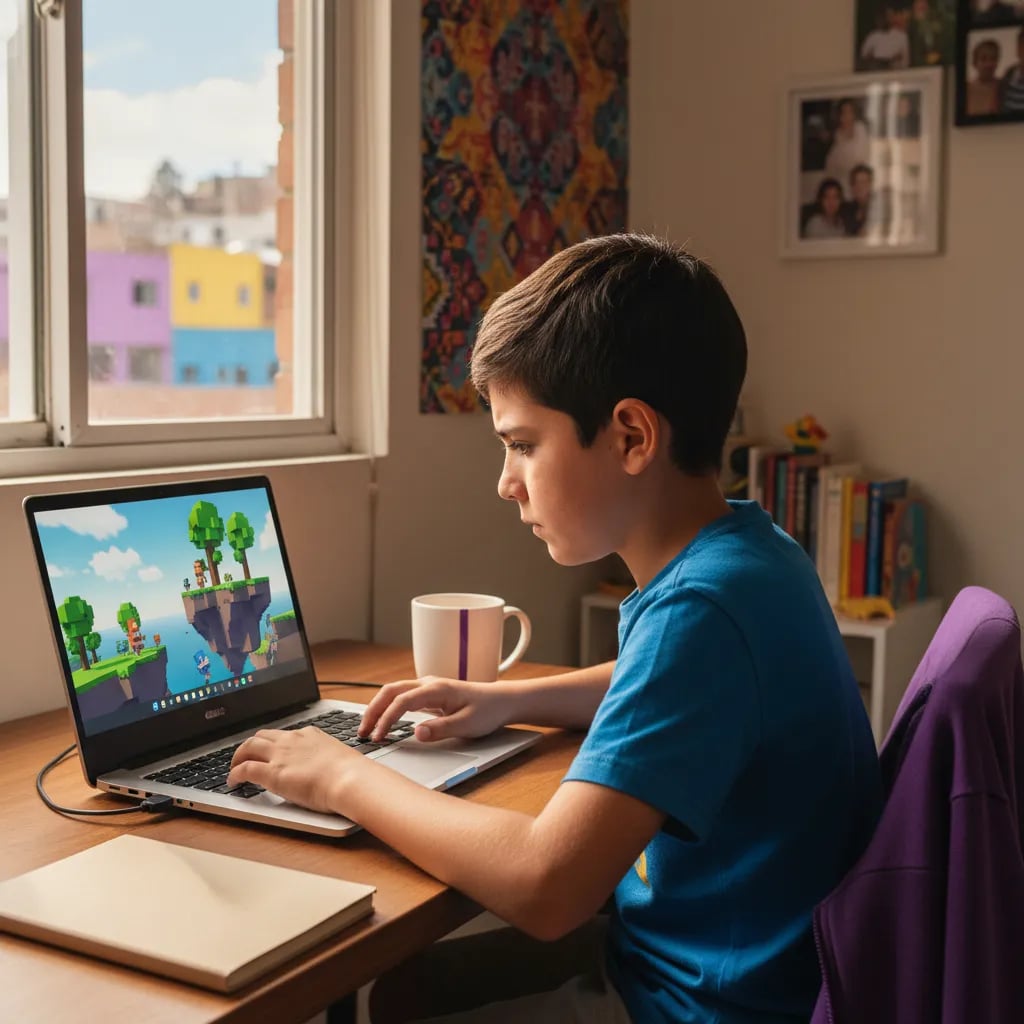
What your child actually programs in Minecraft
In Minecraft, coding shows up in two different places, and only one of them is actual code. Worth separating them before deciding.
Redstone: not programming, but pure logic. Circuits, conditions, cause and effect
Code Builder in Minecraft Education: Scratch-style blocks and also Python, running actions inside the world
Mods in the Java edition: real Java code, but it asks much more than an average 9-year-old can give
Most children enter through redstone and blocks. That route builds the habit of thinking in steps, which is exactly what later makes the jump to a text language easy. Our Minecraft Education guide for parents covers that version in detail.
What your child programs in Roblox
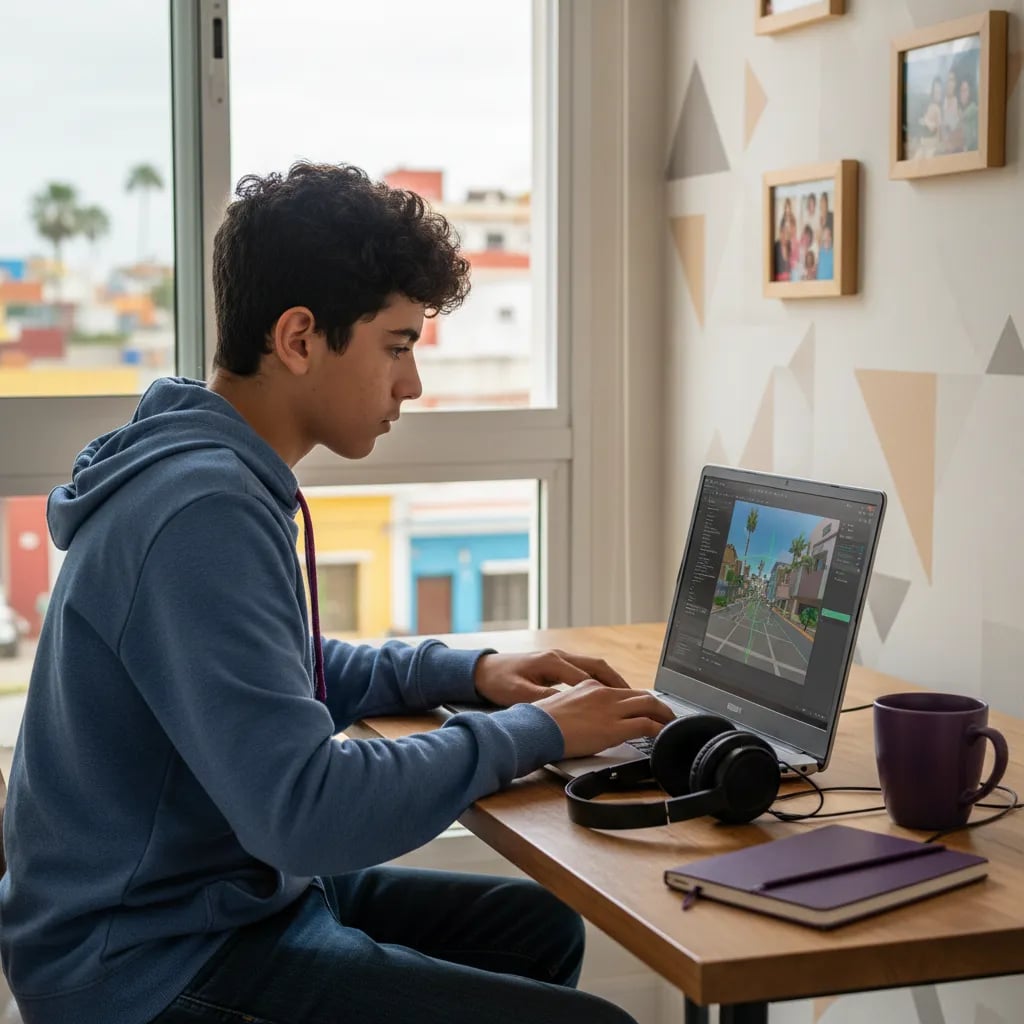
Roblox Studio uses Lua, a real text language, and that changes the level of demand. There are no blocks to drag: you have to type, and one extra bracket breaks everything.
Events: what happens when someone touches a part or presses a key
Variables and scores, the first time a child stores a state
Objects and properties, the basis of how larger code is organised
Publishing: the game goes online and other people try it
That last point is the strongest hook at this age. When a friend opens the game and complains that a level is impossible, the child gets their first real design lesson. Our piece on how to make a game in Roblox walks through the first steps.
Which teaches more real code
Roblox, without much argument, because Lua is text programming from day one. Minecraft teaches the concepts that come before, which are still essential.
Concept
Minecraft
Roblox
Sequence of steps
Yes, through blocks and redstone
Yes, by typing
Conditions
Yes, very visual
Yes, with syntax
Loops
Yes, in Code Builder
Yes, constantly
Variables and state
Limited
Central
Writing your own functions
Uncommon
Yes
Debugging syntax errors
Almost never
All the time
Thinking about the user
No
Yes, unavoidable
If your child already moves comfortably between blocks, the natural next step is a text language, whether Lua or Python. It is the same transition described in Scratch or Python first.
Which age fits which
Before 10, Minecraft. From 10 onwards, Roblox starts to genuinely pay off. The cut-off is not age itself but tolerance for typing code and being wrong about a comma.
Age
Minecraft
Roblox
6 to 8
Building and redstone, a very good fit
Playing yes, creating almost never
9 to 10
Code Builder with blocks and some Python
First scripts with an adult nearby
11 to 13
Still useful, though it starts to run short
Fits very well, Lua with their own projects
14 to 17
Java mods if the technical interest is there
Serious projects and a portfolio
An 8-year-old can open Roblox Studio, but usually ends up copying templates without understanding what each line does. That does not teach, it only simulates progress.
Where almost every child gets stuck
In Minecraft they get stuck when the game becomes building only. In Roblox, when the first syntax error appears. Both blockages are solvable, but someone has to notice them.
Minecraft without a goal turns into endless decoration and stops teaching
Roblox without guidance leads to copying scripts the child cannot modify
In both cases, publishing or showing the result to someone revives interest
A project with a deadline, however small, organises more than any tutorial
That is the difference between playing and learning: having a goal, and having someone who reviews the process.
How to turn play into learning
The shift happens when the child moves from consuming to publishing. Nothing needs to be banned; it is enough to move the goal once a week.
Ask for a project with a deadline: a mechanism that works, or a playable level by Sunday
Have them show it to someone and hear one concrete complaint
Have them fix that complaint in the next session, without starting something new
Once a month, have them explain how it works inside, not just how it looks
If your child can explain why something broke and how they fixed it, they are learning. If they can only repeat the steps from a tutorial, they are still copying, which is a normal stage but not the destination.
Five signs they are ready for a text language
When the child complains that blocks are slow, they are ready. Other, less obvious signs:
Looks up tutorials alone and follows them to the end
Asks why something works, not just how to repeat it
Modifies examples instead of copying them as-is
Gets annoyed that their game looks different from what they imagined
Wants other people to play it, not just to show it
With two of those five, it is worth trying Lua or Python with support. With none of them, stay in blocks a few more months.
What to do this week
If they are 7 to 9: Minecraft with a weekly goal, and Code Builder if it is available
If they are 10 or older and already building: open Roblox Studio and make one playable level, not an endless world
In both cases: have someone play the result and say what did not work
If they get stuck at the same point two weeks running, that is when a teacher is needed
The jump from playing to creating almost never happens on its own. It needs a goal, an audience, and someone who reviews the process when the first unreadable error appears.
Minecraft if your child is between 7 and 10, Roblox once they are past 10. The reason is not the game itself but how coding works in each. Minecraft enters through blocks and redstone, which teach sequence, conditions and cause and effect without asking for a single typed line. Roblox Studio uses Lua, a text language, where one extra comma breaks the whole program. That demand motivates an 11-year-old and frustrates an 8-year-old. If you are unsure about maturity, start with Minecraft: the path from blocks to text works far better than the reverse.
Is playing Minecraft already coding?
No, although it is much closer than it looks. Building houses does not teach programming, but redstone does teach logic: circuits with conditions, signals that trigger other things, chains of cause and effect. It is the same reasoning that later shows up in code, just in visual form. Coding proper arrives with Code Builder in Minecraft Education, which allows Scratch-style blocks and also Python to run actions inside the world. In the Java edition there are mods, which are real code, though they ask far more than an average child can give.
What language does Roblox Studio use?
Lua, in the variant Roblox calls Luau. It is a real text language, with variables, functions, conditions and loops, not a block system. For a child coming from Scratch the transition is recognisable but not automatic: the concepts are the same, the difference is that now they have to be typed correctly and error messages have to be read. That step usually takes several weeks. It is also the most valuable part, because debugging syntax errors is exactly what any programmer does day to day.
Can my 8-year-old use Roblox Studio?
They can open it, though they rarely learn much. What usually happens is that they copy templates and scripts found online without understanding what each line does, so the game moves forward and the learning does not. From the outside it looks like progress, but the child cannot modify anything or fix it when it breaks. At that age, Minecraft with a weekly goal, or straightforward Scratch-style blocks, pays off far more. If your child insists on Roblox, sit with them for the first scripts and ask them to explain each line before moving on.
Which teaches more real code?
Roblox, without much argument, because it is text programming from day one. In Roblox Studio the child handles events, variables, objects and their own functions, and constantly faces syntax errors they have to read and correct. Minecraft covers the concepts that come before, which are still essential: sequence, conditions and loops, but almost always visually. The fair comparison is not which teaches more, but which one fits right now. Jumping to Roblox without a block foundation usually ends in copy and paste.
They only play and never create. What do I do?
Change the goal, not the game. Most children do not move from playing to creating on their own, because playing gives an immediate reward and creating does not. What does work is asking for a project with a deadline and an audience: a mechanism that works by Sunday, or a playable level a cousin can try. Then have them hear one concrete complaint from whoever tested it and fix that in the next session, without starting something new. That cycle of build, show and correct is what turns screen time into learning.
How much time per week should they spend?
Two or three short sessions a week are enough when there is a clear goal. What matters is not the total hours but that each session ends with something more complete than when it started. Four hours straight on a Saturday deliver less than three forty-minute stretches with a goal in each. If you notice the child logging in and out without progressing, the problem is almost always a missing goal rather than missing time. Leave at least one day between sessions: coming back with a clear head solves blockages that persistence does not.
Do these games help with school?
They help step-by-step reasoning, which shows up in maths and science, though they replace no subject. A child used to building a mechanism that works learns to split a problem into parts and test each separately, which is exactly what a word problem asks for. Tolerance for error improves too, because in a game breaking something and fixing it is part of the process rather than a failure. What they do not do is cover curriculum. Treating them as habit training pays off more than expecting a direct jump in grades.
Do they need classes or can they learn from tutorials?
They can get by alone until the first error they cannot read. Tutorials show one exact path, and while the child follows it everything works; the problem appears when they want to change something and the program breaks in a way the video never explains. Most children quit there or go back to copying. A class solves precisely that: someone who watches the process and corrects the habit, not just the result. If your child gets stuck at the same point two weeks running, that is the concrete signal they need support.
How do I know they are ready for Python?
When they complain that blocks are slow, they are ready. Other equally reliable signs: they find tutorials on their own and finish them, they modify examples instead of copying them, they ask why something works rather than just how to repeat it, and they get annoyed that the result does not match what they imagined. With two of those four, it is worth trying a text language with support, whether Lua inside Roblox or Python in a course. With none of them, staying in blocks a few more months and forcing the jump less is the better call.