Online vs In-Person Coding Classes for Kids: Which Fits Better? (2026)
Which Is Better?9 min read
Parent Guides

Maya Putri
Early Childhood Education Specialist
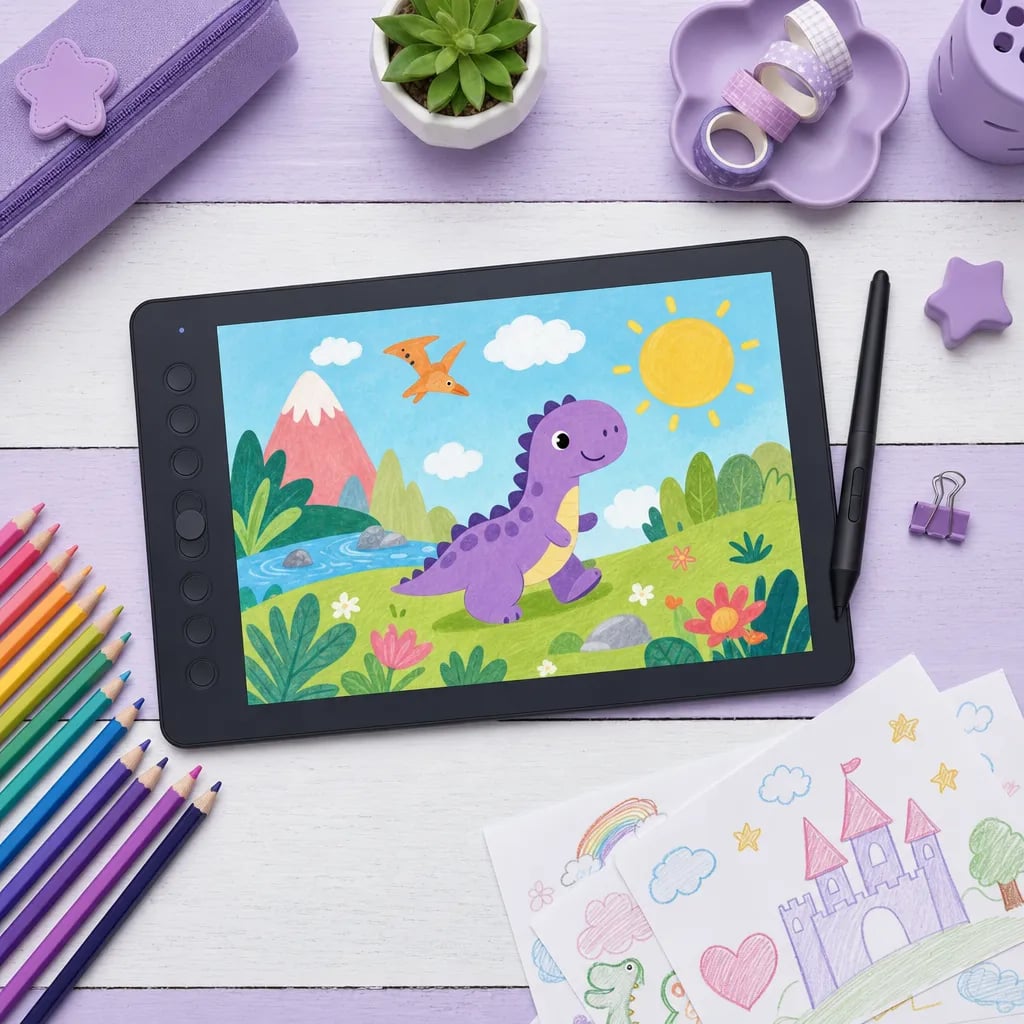
A kids' drawing class is a structured course that teaches children aged 5–17 how to draw — from their first pencil sketches on paper to digital illustration and design on a tablet. The best classes blend basic technique, creative freedom, and modern digital tools. At Algonova, your child can try one free trial session first, so you can judge the class quality before deciding to continue.
A kids' drawing class isn't just "coloring neatly". It builds how a child sees, thinks visually, and turns ideas into images — skills now used in illustration, animation, UI design, and social media content. Modern classes usually combine two worlds: traditional drawing with pencil and paper, then moving on to digital drawing using a tablet, stylus, and apps like Canva or Procreate.

Most quality kids' drawing classes cover four core areas:
| What they learn | Example skills |
|---|---|
| Drawing basics | Line, shape, proportion, color |
| Digital illustration | Drawing on a tablet, layers, color palettes |
| Design & composition | Layout, characters, simple posters |
| Creativity & storytelling | Turning their own ideas into pictures that tell a story |
For parents, the good news: a child doesn't need to be "talented" first. Drawing is a skill that can be built gradually, just like reading or arithmetic.
Drawing gives a child far more than a nice-looking picture. Here are some real benefits parents often notice:
Digital drawing adds one more layer: the child gets comfortable with the same creative tools professional illustrators and designers use.
Drawing isn't about talent, it's about habit. A child who draws regularly learns to think visually — a skill that lasts a lifetime, from school presentations to a creative career.
Many parents ask: is it better for a child to draw on paper first or go straight to digital? The honest answer is that the two complement each other. This table compares them:
| Aspect | Traditional Drawing | Digital Drawing |
|---|---|---|
| Tools | Pencil, paper, crayons | Tablet, stylus, apps |
| Strengths | Trains hand pressure, cheap, screen-free | Undo, many colors & effects, easy to share |
| Suitable age | 5 and up | Usually 7 and up |
| End result | Physical artwork | A file you can print or upload |
The general recommendation: younger kids start on paper to build the basics, then move to digital drawing once they're comfortable holding the tools. A good class doesn't force a choice — the child learns both gradually.

The right drawing class matches the material to the child's age. Algonova groups children into three age stages:
| Age | Learning focus |
|---|---|
| 5–7 | Basic shapes, color, drawing through play, first tablet use |
| 8–12 | Simple digital illustration, characters, basics of apps like Canva, composition, and posters |
| 13–17 | Graphic design, storytelling illustration, advanced digital art, UI/UX basics, game design, and building a portfolio |
An 8-year-old doesn't need the same class as a 15-year-old. Age-appropriate material is the main difference between a class that keeps a child engaged and one that bores them.
You don't need the most expensive class, just the best fit for your child. Use this checklist:
Don't forget to factor in convenience: online drawing classes save drop-off and pick-up time, and the child can learn from home with their own tools.
The fastest way to judge a class: try it live. Book a free trial drawing session — no cost, no commitment.
Algonova has taught more than 1,000,000 students worldwide and 13,000+ in Indonesia, operating in 97 countries with 10+ years of experience and a 4.9★ parent rating. Creative project-based classes with certified teachers in small groups, plus an interest diagnostic from day one, mean children learn to draw while building relevant digital skills.
To see the program that fits your child, start with a free trial session or explore Algonova programs for kids.
Go deeper with these related guides:
Want your child to start creating? Try a free class at Algonova.
The best kids' drawing course is chosen based on the child's age, the type of drawing (traditional or digital), a teacher who guides them live, and whether a trial class is available. For children drawn to the digital world, drawing often overlaps with game design and coding, so many families combine the two. To see Algonova's creative and technology programs, visit the coding classes page, or try a free coding class so a teacher can assess your child's interests and strengths in a short diagnostic session.
A child can start a drawing class from age 5. At ages 5–7 the focus is playing with shapes and color, usually on paper plus a first look at a tablet. Full digital drawing generally fits from age 7 and up, once a child is comfortable holding a stylus. Algonova's drawing program is designed for children aged 5–17 with material matched to each level.
Traditional drawing uses pencil, paper, and crayons; digital drawing uses a tablet, stylus, and apps like Canva or Procreate. Traditional trains hand pressure and needs no screen, while digital makes it easy to change colors, undo mistakes, and share work. The two complement each other, and a good class teaches a child both gradually.
Not always. Many kids start with a device already at home, such as a family tablet or laptop, before investing in dedicated gear. It's best to ask the class provider about the minimum tools required. During the free trial session, you can confirm that your child's device is enough to follow the class.
Yes. The first trial session at Algonova is free, with no commitment and no credit card. Your child creates live with a certified teacher while the team helps assess their interest and the right level. After the session you receive a recommended learning path matched to your child's age and interests, from Rp 102,000 per session.
Yes. Drawing is a trainable skill, not just an inborn talent, much like reading or arithmetic. A good class builds the basics gradually so any child can progress. Beyond the finished pictures, a child trains creativity, fine motor skills, focus, and confidence — benefits that carry into many other areas.

Algonova worldwide
Contact
Whatsapp: +62 21 50996971
Email: info@algonova.id
Address
Coworking Area, Gedung IT 6 Lantai Dasar, Nongsa Digital Park, Jalan Hang Lekiu, Kelurahan Sambau, Kecamatan Nongsa, Batam, Indonesia Directorate General of Consumer Protection and Trade Compliance – Ministry of Trade of the Republic of Indonesia. WhatsApp Ditjen PKTN: 0853-1111-1010.
PT Algonova Indonesia Cerdas All rights reserved 2026