Math Games for Kids in Grades 1-3: 20 Games Without Apps
Learn Math15 min
Learn Design

Salsabila Maharani
Design Curriculum Team, Algonova
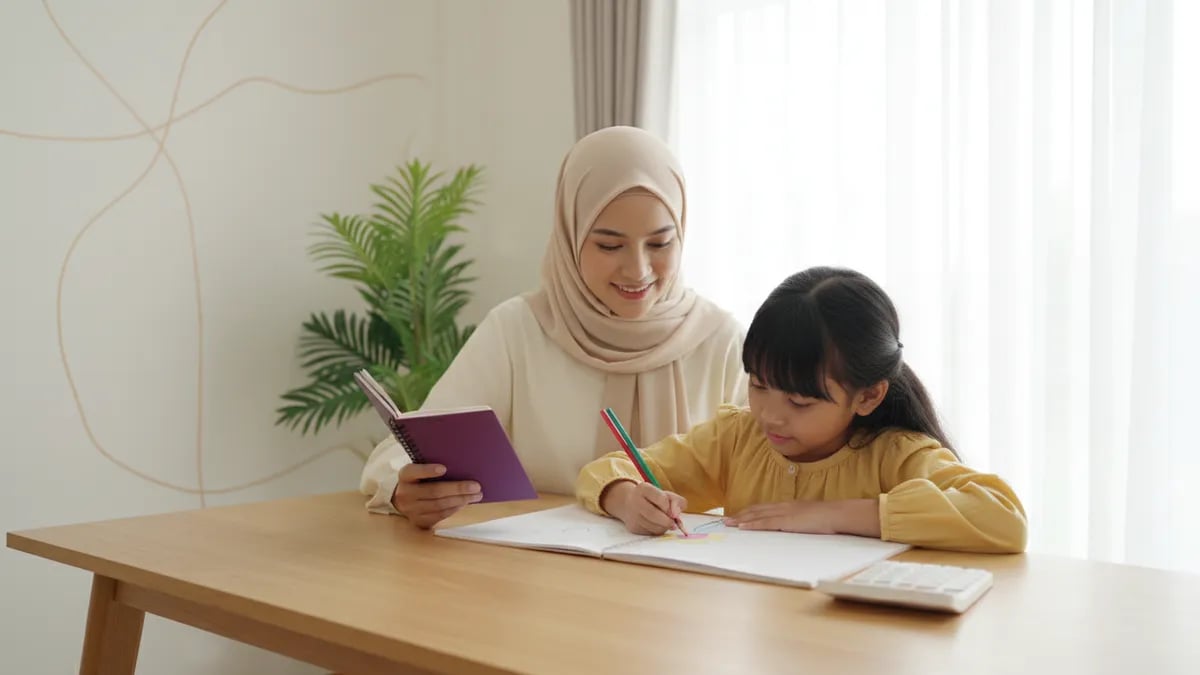
The drawing class for kids price in Indonesia in October 2026 runs about Rp 250,000 to Rp 500,000 a month for a group studio (4-8 sessions), and Rp 80,000 to Rp 200,000 an hour for a private teacher, at home or online. The numbers come from open articles and tutoring sites, not an official price list. Below are a price table by class type, a monthly and yearly estimate, and a checklist for primary-school children.
Group classes are the cheapest way to learn drawing, and a private teacher who comes to your home is the most expensive.
We read cost guides, private-tutoring pages and a teacher directory on 28 October 2026. No official price list exists, so each source is dated:
| Type of class | Price per session | Estimated per month | Source and date |
|---|---|---|---|
| Art studio (group) | Rp 75,000-150,000 (1-2 hours) | Rp 250,000-500,000 for 4-8 sessions | cost-guide article, 26 March 2025; studio roundup, 25 October 2025 (Rp 450,000 for 4 sessions) |
| Private teacher at home | Rp 80,000-200,000 per hour | Rp 320,000-800,000 for 4 hours | article of 26 March 2025; private-tutoring site, undated; teacher directory |
| Online private class | Rp 69,000-115,300 per 60-minute session | Rp 276,000-461,200 for 4 sessions | two tutoring sites, undated, 2026 rates |
| Online group class | about Rp 50,000 per live session | about Rp 100,000 | one course page: Rp 300,000 for 6 Zoom sessions over 3 months, year unclear |
| Drawing apps | Rp 0 | Rp 0 | free apps such as ibisPaint X, Sketchbook, Krita and Tux Paint; some others are a one-time purchase |
| Algonova digital design class (online, private 1-on-1) | from Rp 102,000 per lesson | Rp 408,000 for 4 lessons | Algonova, starting price, October 2026 |
The monthly column for private lessons is our own calculation from the per-session rate. Some services raise the per-session rate when you book fewer sessions, so read the private figures as a floor.
Five things set the price of a drawing class: group or private, length of one session, sessions per month, city, and whether materials are included.
One tutoring page says paper, paint and tools are brought by the student and are not part of the session rate. A studio that supplies canvas and brushes usually charges more. Sign-up fees are often billed on top of the monthly fee. A 1.5-hour group class at Rp 125,000 a session works out to Rp 450,000 for a four-session pack at one studio, not Rp 500,000.
Compare the hourly price, not the monthly one. Rp 300,000 for eight one-hour sessions and Rp 300,000 for three two-hour sessions are different offers.
At four sessions a month a child's drawing class costs roughly Rp 3 million to Rp 9.6 million a year, depending on the type.
The estimate below uses the rates in the table, four sessions a month, 12 months, and leaves out sign-up fees and materials:
A third-grader who takes private online lessons four times a month at Rp 115,300 pays Rp 461,200 a month, or Rp 5,534,400 over a year. A rate of Rp 102,000 per lesson sits inside the private online range, not below it.
An in-person class near home suits a child who wants the studio atmosphere and a full set of materials, while an online class suits a tight schedule or a city with no good studio.
Studios and art schools offer materials and classmates, but the child has to travel, follow a fixed timetable, and learn from teachers in one location. An online lesson with the camera pointed at the paper opens up teachers from other cities, and private rates are often lower.
Algonova teaches online only. We do not run in-person classes and have no branches. If you are looking for a drawing class near you with pencils and watercolors, a studio in your own city is the right choice. If your child already likes drawing and wants to try it on a screen, our online class is on the page for digital drawing courses for primary-school children. A full comparison is in our guide to kids drawing courses.
A child who is comfortable drawing on paper can start digital design around age 8, and according to the Algonova program page, the child does not need to draw well first.
The Algonova design class for ages 8-11 (roughly grades 2-6) is private 1-on-1 and online. Children use GIMP for digital drawing and coloring, Tinkercad for 3D objects, and Wick Editor for short animations. All of the software is free, runs on an ordinary computer, and a drawing tablet is not required. Lessons start from Rp 102,000, and a free 60-minute masterclass lets you see whether your child likes it before you pay.
How a digital class differs from an ordinary drawing lesson:
Terms are explained in what is graphic design. For a price picture of design courses, read graphic design course fees for kids.
Before paying for any drawing class, ask these six questions so the prices you compare are actually comparable:
The answer to question 5 sets your risk. A single trial class shows whether the child enjoys it and whether the teacher's style fits, before you commit to a monthly pack. To see your child's interest first, read how to spot your primary-schooler's talent, and if you hesitate between a private teacher and a class, see private tutor or tutoring center.
Starting at zero cost is possible too. Free drawing apps for kids on a phone or laptop are enough for the first month, while you see whether your child draws on their own.
In Jakarta and other big cities, the figures we found point to Rp 100,000 to Rp 200,000 an hour for a private teacher and Rp 250,000 to Rp 500,000 a month for a group studio. One tutoring service lists private painting lessons in Jakarta from Rp 164,100 an hour, and one cost guide mentions a nine-session intensive pack at a Jakarta art center for about Rp 1.3 million. We found no official city price list, so treat these as examples, not an average. One tutoring service charges the same rate online as at home, so a family outside Jakarta can book a teacher from the city without paying more. Whatever city you choose, ask for the price per hour and for the sign-up fee before you compare two offers, because that is where most of the difference hides.
Private online drawing classes are often cheaper per session than a private teacher at home, but not always cheaper than a group class at a studio. In our table, private online runs Rp 69,000-115,300 per 60-minute session, private at home Rp 80,000-200,000 an hour, and group studio classes Rp 75,000-150,000 a session, so a group studio can be equal or cheaper. The clear online saving is time and travel: no commute and no school-run, which adds up in a big city. The downside is physical materials, because the camera must point at the paper and the child needs a tidy, bright desk. Compare the full monthly cost, including your own time, not just the rate per session. If your child is outgoing and likes classmates, the group studio may also be worth a little extra, because a shared table keeps many children motivated longer.
Once a week is usually enough for a primary-school child who is just starting, with light practice at home between lessons. The four-session month in our table follows that pattern, and eight sessions means twice a week. Twice a week makes sense for a goal such as a competition, but the bill doubles: private online at Rp 115,300 a session becomes Rp 461,200 for four sessions and Rp 922,400 for eight. If your child is still trying things out, begin with one lesson a week for two or three months, then judge the result: does your child draw at home, and do they look forward to class day? Our article on how many times a week primary-school children should take lessons covers the general question. After three months, put the first drawing next to the latest one. The difference shows the value of the lessons better than the number of sessions you have paid for.
There is no official minimum age, but the services we read accept children from about 4 to 6 years old for drawing and painting classes. One private service starts at age 6, and one studio runs acrylic and clay classes for ages 4-8. The Algonova design class is for ages 8-11, roughly grades 2 to 6 of primary school. Younger children usually do better with pencil and crayon classes at a studio close to home, where the focus is fine motor skills and imagination. Age is not the only guide. Watch whether your child draws without being asked and whether they can sit for about an hour with one activity. If both are true, they are usually ready for a scheduled class of any kind. For a 6 or 7 year old, also ask whether a single session is too long, because younger children tire faster at the paper and at the screen.
No, a child does not need a drawing tablet to start a digital drawing class. The Algonova design program page says an ordinary computer or laptop is enough, and the software is free: GIMP, Tinkercad and Wick Editor. A tablet with a stylus feels more comfortable for detailed work, but it can wait until your child has shown they draw regularly. A family that buys a tablet worth a few million rupiah up front and then sees the child drop the hobby after two months spends far more than the lessons cost. For a Zoom lesson with the camera on the paper, a phone or laptop with a camera, a simple stand and decent lighting are enough. Add a desk that does not wobble, so the teacher can see the lines clearly.
There are free trial classes and free apps, but regular lessons with a teacher are not free. Some providers give one trial session at no charge, and Algonova offers a free 60-minute design masterclass with no credit card on the page for digital drawing courses for primary-school children. For practice on their own, apps such as ibisPaint X, Sketchbook, Krita and Tux Paint cost nothing, and our article on drawing apps for kids lists them. Regular lessons cost money because they pay for the teacher's time and feedback on your child's work. Use the free options for one or two months to test interest before you buy a pack. If your child is still drawing after that, you have a strong reason to start looking for a teacher. Keep an eye on how long your child stays with drawing at home, since that is the clearest sign that paid lessons will actually be used and not dropped in month two.
Search by your city or district, then compare at least three places using the six questions in the section above. Start with a map search for "kids art studio" or "drawing class for kids" in your area and ask for a price list by message or phone. A fair price is one you can explain: per hour, per session, and what is included. Suppose two studios both quote Rp 300,000 a month, but one gives four one-hour sessions and the other eight 1.5-hour sessions. The hourly cost differs by almost three times even though the brochure number is the same. Attend one trial class before paying a monthly pack, and count how many children share the room. Write every answer in a small table on your phone so the comparison does not rest on memory alone, then pick the place with the clearest details.
No, Algonova teaches online only and has no in-person classes. Children join from home on a computer or laptop with a mentor who teaches live. The design program for ages 8-11 is private 1-on-1, with lessons from Rp 102,000. Children make digital pictures, 3D objects and short animations, not paintings on paper or canvas. If you want pencils, watercolors and a studio atmosphere, a studio in your own city is the better fit. If you want your child to try drawing on a screen and build a first digital portfolio, start with the free 60-minute masterclass, then decide whether the format suits your child. You pay nothing to see how a class runs, and nobody needs a credit card. Class details, schedule and how to register are on the page for digital drawing courses for primary-school children, together with answers to the questions parents ask most.
A drawing class trains the hand and eye on paper, while a graphic design course trains a child to make work on a screen with software. In drawing, children learn sketching, color and proportion with pencils, crayons or watercolors. In graphic design they learn layers, digital color, shapes and layout, often with tools such as GIMP or Canva. A Heroes' Day poster on cardboard is made with crayons, while the digital version uses text and layers on a laptop. The two support each other, since a child with a good eye for color and shape usually picks up design faster, and many families run both side by side. A quick test: if the finished piece hangs on a wall, it is drawing, and if it is an editable file, it is design.

Algonova worldwide
Contact
Whatsapp: +62 21 50996971
Email: info@algonova.id
Address
Coworking Area, Gedung IT 6 Lantai Dasar, Nongsa Digital Park, Jalan Hang Lekiu, Kelurahan Sambau, Kecamatan Nongsa, Batam, Indonesia Directorate General of Consumer Protection and Trade Compliance – Ministry of Trade of the Republic of Indonesia. WhatsApp Ditjen PKTN: 0853-1111-1010.
PT Algonova Indonesia Cerdas All rights reserved 2026