A percentage is a way of expressing a part out of 100, and calculating percentages means multiplying the amount by the parts and dividing by 100. For example, 20% of 150 is 150 × 20 ÷ 100 = 30. Percentages are learned around 5th and 6th grade (ages 10-11) and show up in discounts, grades and statistics. This guide explains how to calculate percentages step by step, with worked examples and tables.
What is a percentage?
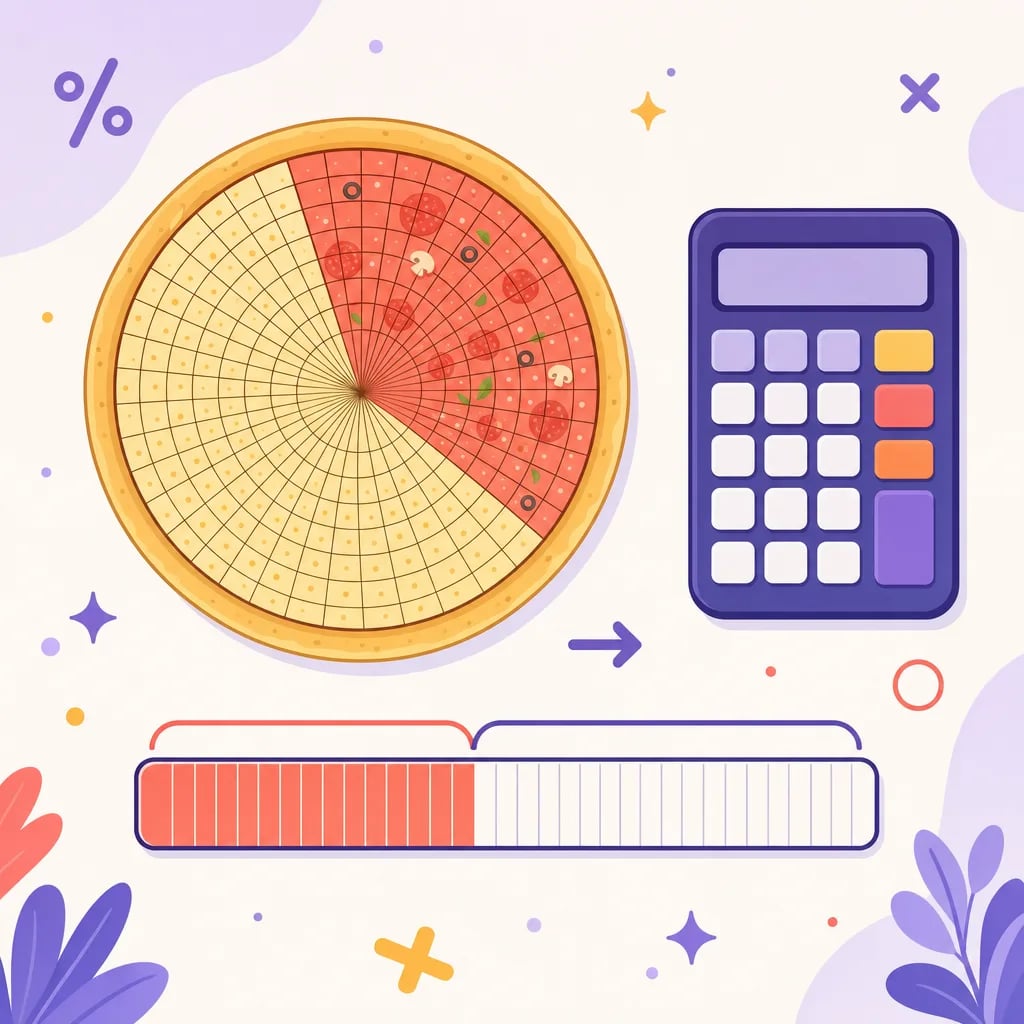
A percentage is a way of expressing an amount as a part of 100. The symbol % means “out of every 100”: when we say 25%, we mean 25 out of every 100 parts.
Think of a pizza cut into 100 equal slices. If you eat 25 slices, you ate 25% of the pizza. It's the same idea as a fraction (25/100) or a decimal number (0.25), just written differently.
Percentages are useful because they let us compare different amounts against the same reference. Saying “I got 18 out of 20 questions right” isn't the same as “I got 9 out of 10”: with percentages, both turn into 90% and can be compared instantly. Before calculating percentages it helps to understand fractions and decimal numbers well, because a percentage is just another way of writing them.
Tip: when your child understands that a percentage is “a part of 100”, they stop memorizing and start reasoning. In a video game, the health bar is a percentage: let them code it in a free class.