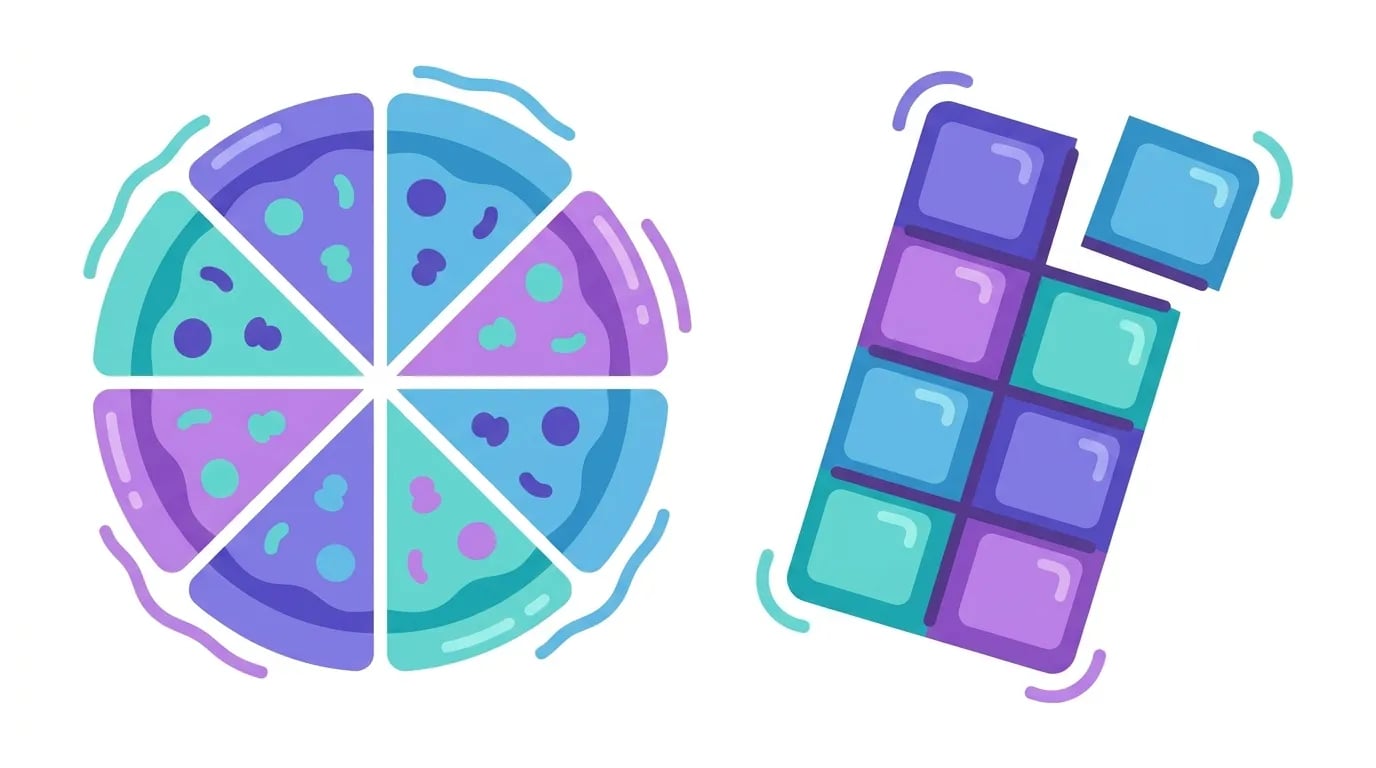
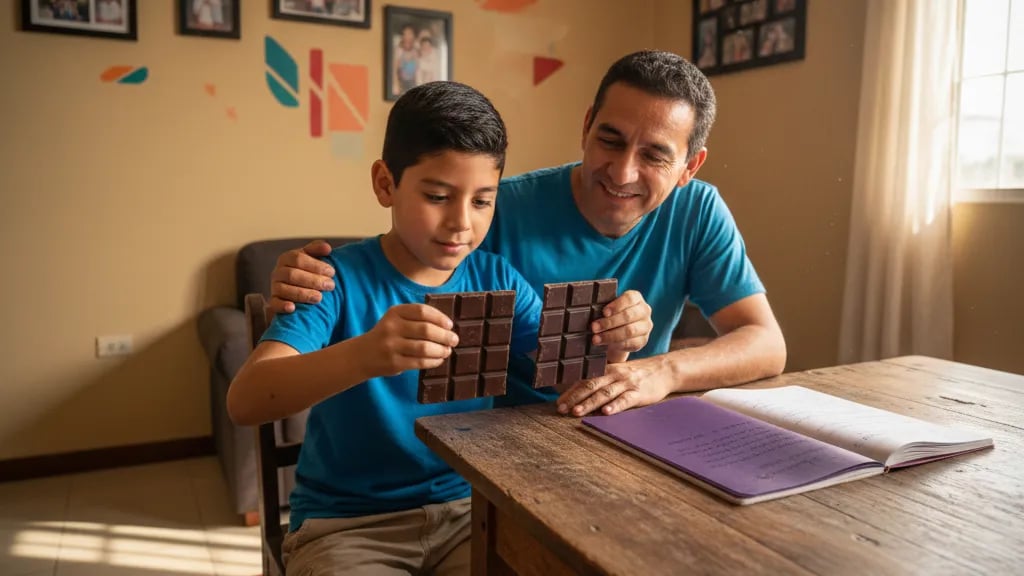
A fraction is a way to represent a part of a whole. It is written with two numbers separated by a line: the top number, called the numerator, tells how many parts we take, and the bottom number, called the denominator, tells how many equal parts the whole was divided into. For example, in the fraction 3/4 the whole was split into 4 equal parts and we take 3 of them.
An example with a pizza
Picture a pizza cut into 8 equal slices. If you eat 3 slices, you have eaten 3/8 of the pizza (3 parts out of the 8 total). The 5 slices left are 5/8. When the numerator and denominator are equal, like 8/8, the fraction equals one whole: you ate the entire pizza. And 1/2 is the most common fraction of all: it means half of something, like half an apple or half a glass of water.
Why do fractions matter for kids?
Fractions are introduced around 3rd grade (when children are about 8 years old) and are used throughout school: in decimals, percentages, ratios and even algebra. In daily life they show up when cooking (½ cup of sugar), sharing things equally, telling time or working out discounts at a store. Understanding fractions well from an early age makes almost all later math easier.
To keep learning, see also