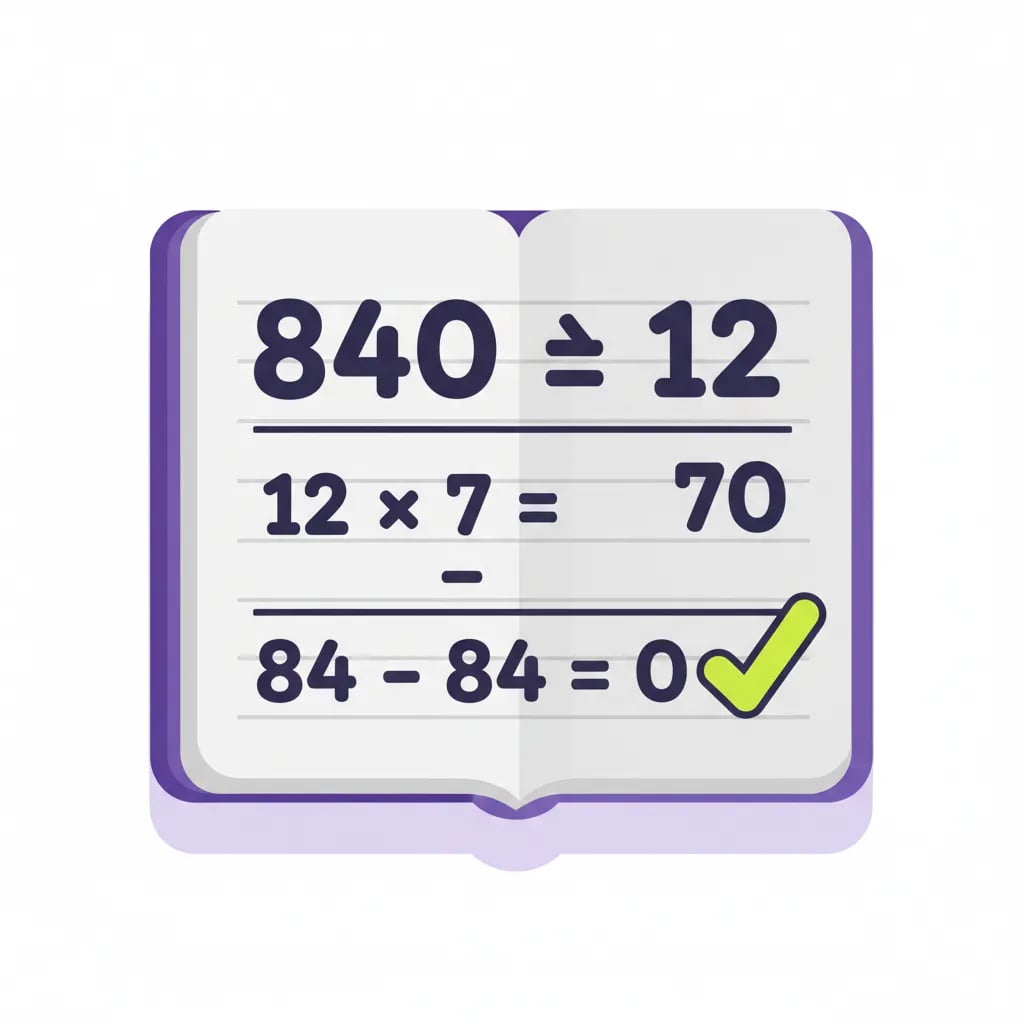

Dividing by a two-digit number means splitting a quantity using a divisor larger than 9, working out the quotient digit by digit through trial and adjustment. It's usually taught around 5th and 6th grade (ages 10-12), once a child already handles single-digit division and the multiplication tables. This guide walks through the method step by step, with worked examples and the most common mistakes.
What does dividing by two digits mean?
Dividing by two digits is the same kind of sharing as always, a dividend split by a divisor, except the divisor now has two digits, from 10 to 99. The extra difficulty is finding the right quotient digit: a single multiplication table isn't enough anymore, you need to try a digit and adjust it until it fits.
For example, in 936 ÷ 24 we're looking for how many times 24 fits into 936. The answer is 39, because 24 × 39 = 936.
Before tackling two-digit division it helps to have the multiplication tables and mental math solid, since the method leans on quick multiplication the whole way through.
Tip: if your child understands division as splitting something into equal parts, rather than just a mechanical routine, the two-digit method becomes much easier to reason through. Try a free class and watch them apply the method with a teacher.