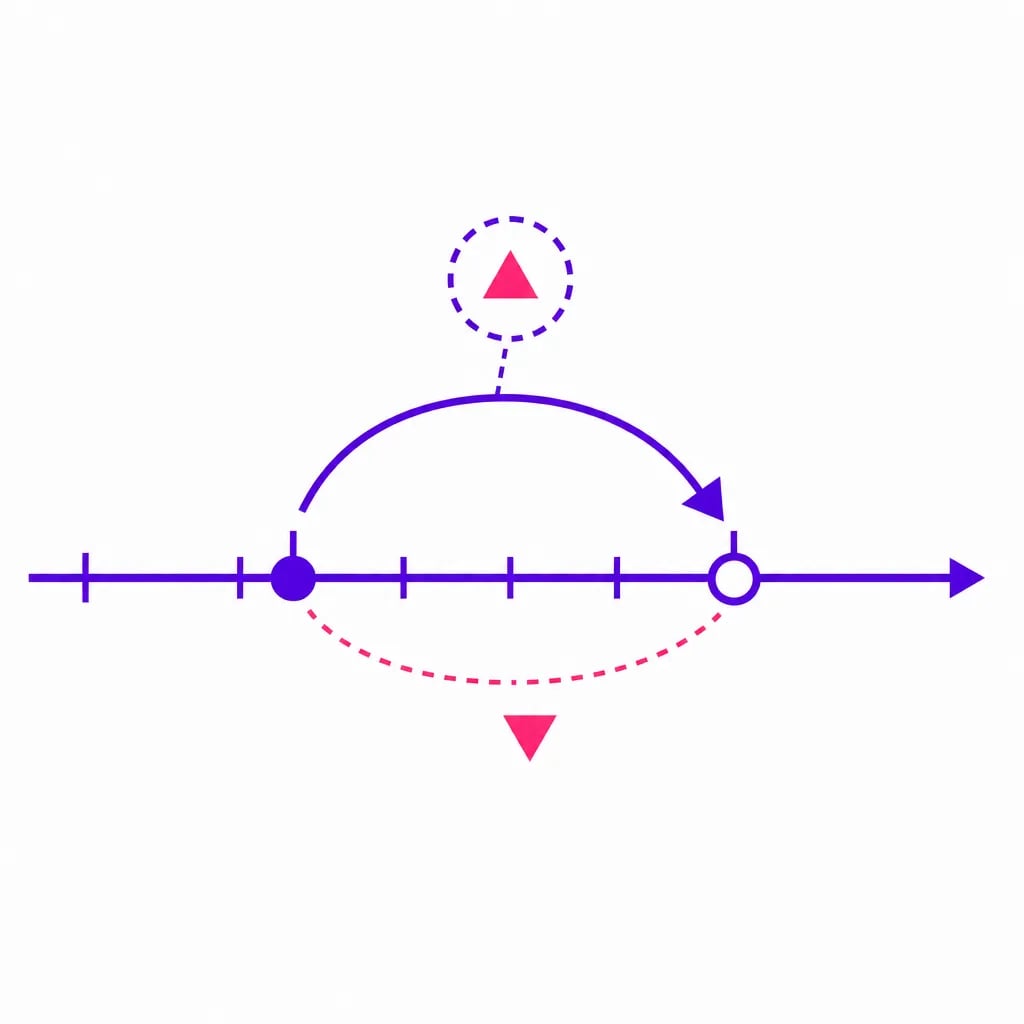
Mental math is the ability to solve addition, subtraction, multiplication and division without pencil, paper or a calculator, using strategies like rounding, decomposition and doubling. Kids start practicing it around age 6-7, and with regular practice it becomes faster and more automatic. This guide explains 4 concrete techniques, with step-by-step examples, for parents looking for practical exercises.
What is mental math?
Mental math means operating with numbers “in your head,” without relying on written algorithms or devices. It is not about guessing or memorizing random tables — it is a set of strategies that break a hard problem into simpler steps.
For example, adding 38 + 47 mentally does not mean lining up columns like on paper. It means seeing that 38 + 47 is the same as 40 + 45 (rounding and adjusting), which gives 85 in two steps instead of five.
These strategies rely on understanding place value (ones, tens, hundreds) and on already knowing the multiplication tables. The more automatic those basics are, the faster mental math becomes.