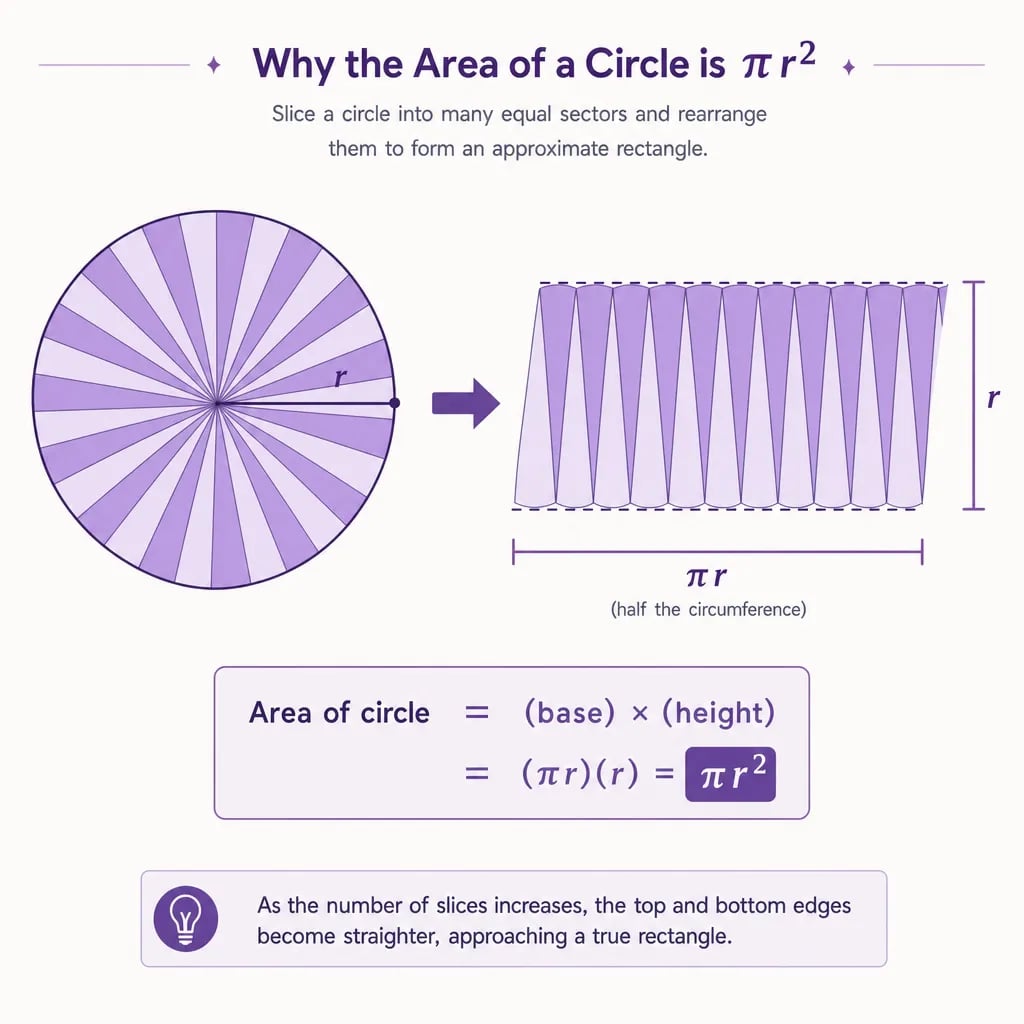
The area of a circle is the amount of surface that fits inside it, and it is found with the formula A = π × r², where r is the radius. You simply square the radius and multiply by π (≈ 3.14). It is learned around 6th grade (ages 11-12) and is a cornerstone of geometry. This guide explains the area-of-a-circle formula with worked, step-by-step examples.
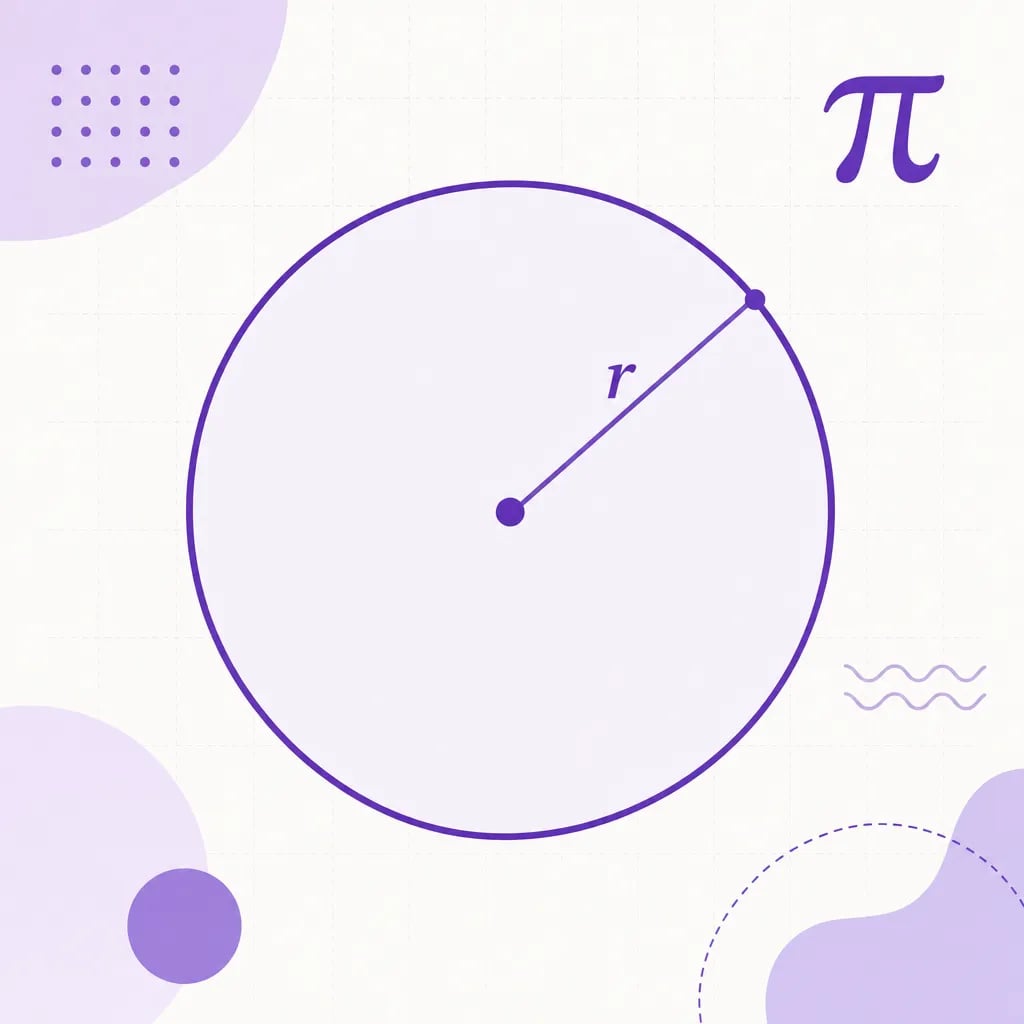
What is the area of a circle?
The area of a circle is the measure of the surface enclosed by the circumference. In other words, it is all the space «inside» the round edge. It is measured in square units: cm², m², and so on.
Two similar ideas shouldn't be confused:
- The circumference is the curved line of the edge; its length is the perimeter.
- The area is the surface that line encloses inside.
To find the area you need only one value: the radius (r), the distance from the center to any point on the edge. With the radius and the number π you can already apply the formula. In the next sections we go step by step, using the radius and also starting from the diameter.
Tip: if your child understands where the formula comes from, they'll stop memorizing it. Into shapes? Let them draw circles with code in a free coding class.