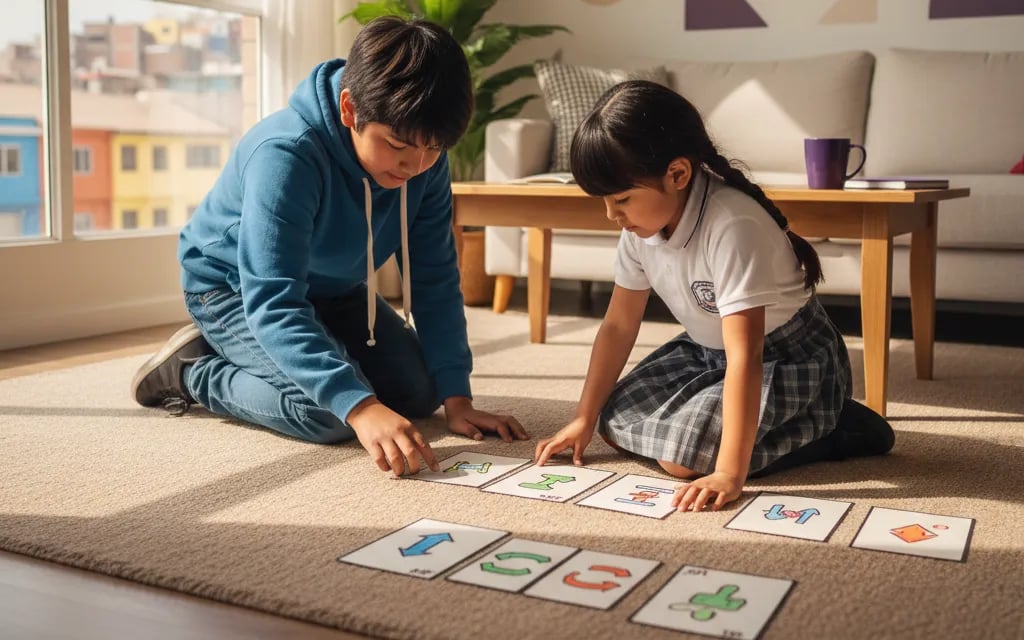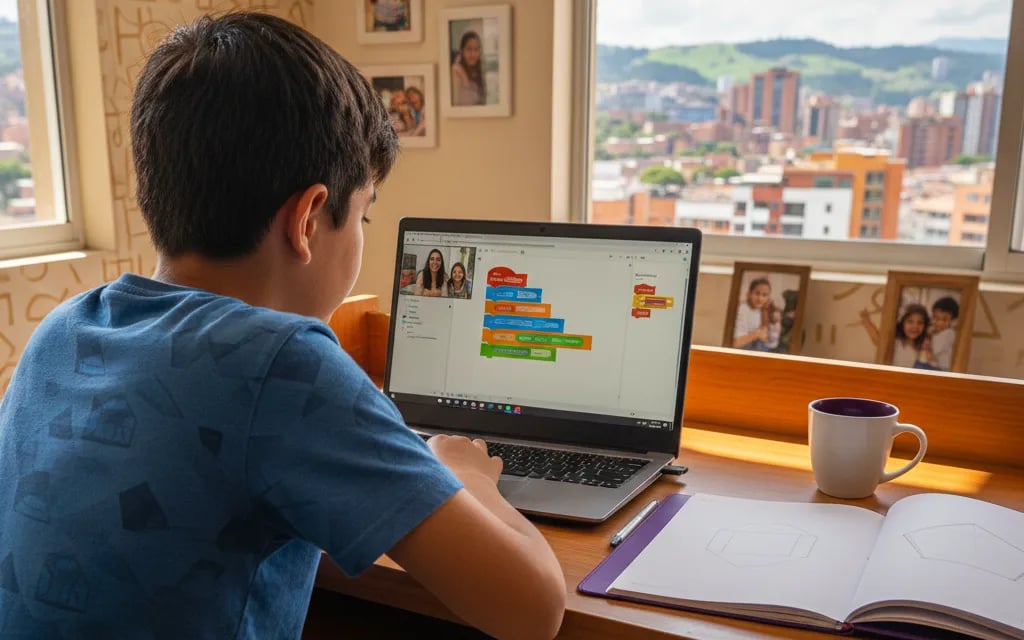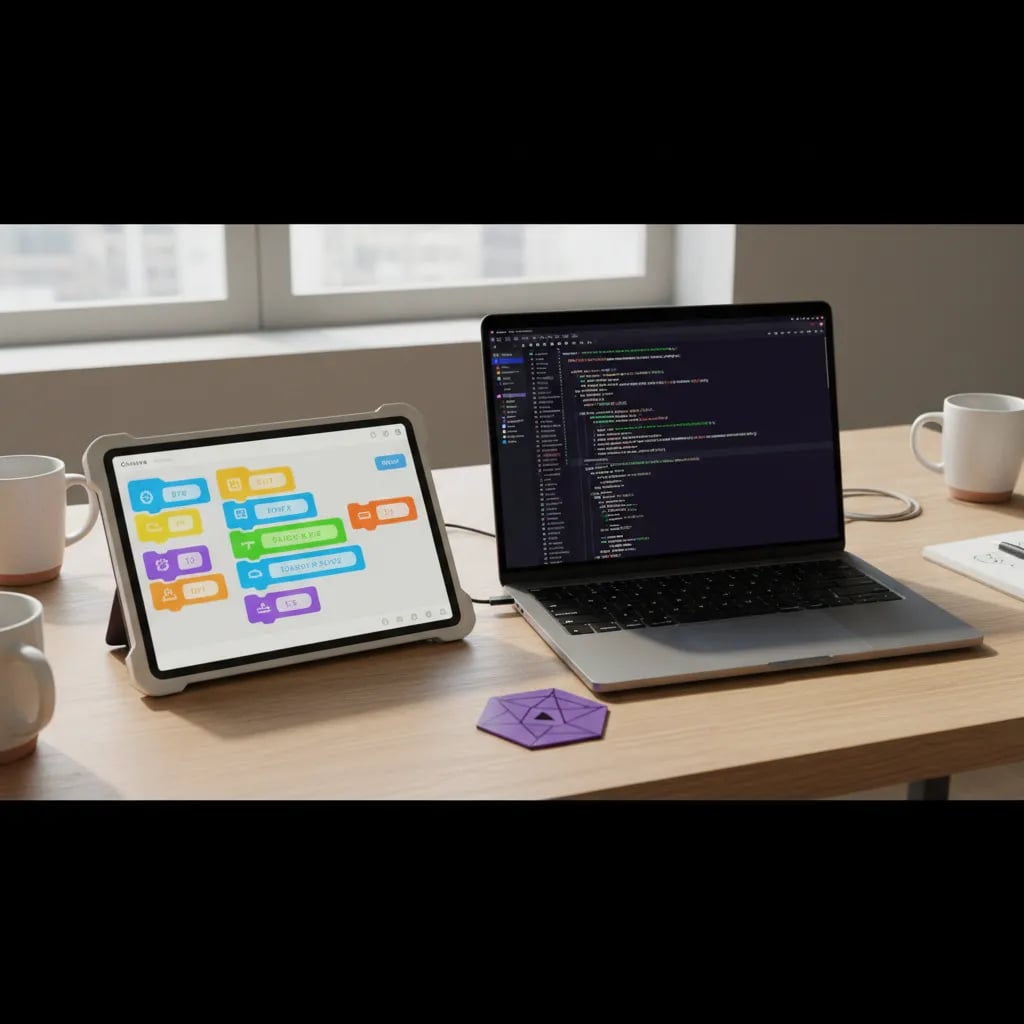

These 12 programming logic exercises for kids aged 6 to 13 are solved with pencil and paper, no computer needed, and each one comes with a step by step answer. They are split into 4 levels: ordering steps, choosing conditions, finding bugs and designing loops. Fifteen minutes a day is enough to practice them at home, and you can print the page as a worksheet.
Algonova is an online coding and design school for kids aged 5 to 17. More than 1,000,000 students from 97 countries have taken live classes with a teacher, in groups of up to 10 kids.
What programming logic is, with one example
Programming logic is the ability to break a task into exact steps in the right order, so clear that another person or a machine can follow them without guessing. If your child explains how to make a sandwich as "put the ham between the bread", the logic is still missing: nobody opened the bag or took out the slices. The full definition is in our glossary: what is programming logic.
The 4 building blocks every programmer uses
Every program, from a Scratch game to a banking app, is built from four pieces: sequence, condition, loop and variable.
| Piece | What it does | Everyday example |
|---|---|---|
| Sequence | Steps one after another, in a fixed order | Turn on the tap, soap up, rinse |
| Condition | Choose a path based on something true or false | If it rains, I take an umbrella; if not, a cap |
| Loop | Repeat something without writing it again | Run 4 laps around the field |
| Variable | A named box that holds a changing value | The score in a match |
To see how these pieces are taught by age and through projects, check the Algonova coding program for kids.