A loop is a programming instruction that automatically repeats a set of actions as many times as needed, without writing the same code over and over. Instead of repeating the same command ten times, you tell the computer “do this 10 times” in a single line.
Types of Loops
There are two main loops. The for loop repeats actions an exact number of times: for example, drawing the four sides of a square by turning four times. The while loop repeats actions as long as a condition is true: for example, “while the character hasn’t reached the goal, keep walking.”
In Scratch, the “repeat 10” block is a very visual for loop: a child can make their cat take ten steps using a single block instead of dragging ten identical blocks. One concrete fact: a three-line loop can replace hundreds of repeated instructions. That is how animations and video games work, redrawing the screen frame by frame many times per second.
Why It Matters for Kids
Loops teach children to spot patterns and solve problems efficiently, a core skill of computational thinking. When a child discovers that “repeating” saves work, they start thinking like a programmer. In Algonova coding courses kids practice loops by building games and animations from the very first lessons, often starting with what Scratch is.
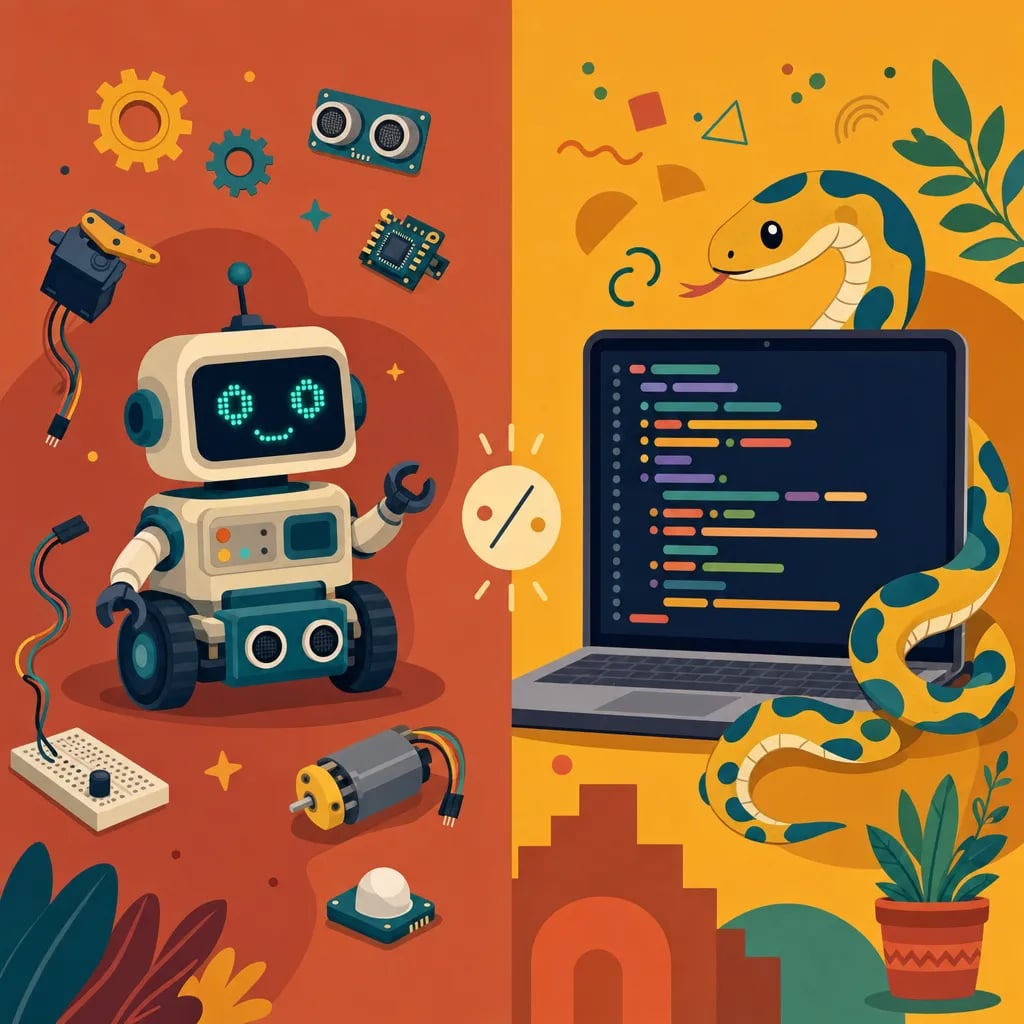
Younger children use loops by dragging blocks in the coding classes for kids aged 6 to 9; from age 10, in the classes for kids aged 10 to 13 they write them in Roblox Studio and Python. You can see it in action by booking a free trial class.
What's Next?
To keep moving forward in programming, here are the next steps:
- What is software?: the concept that connects everything your child codes.
- What is Scratch?: where they can try their first loops with blocks.
- Coding classes for kids: to practice loops with a teacher, not just read about them.