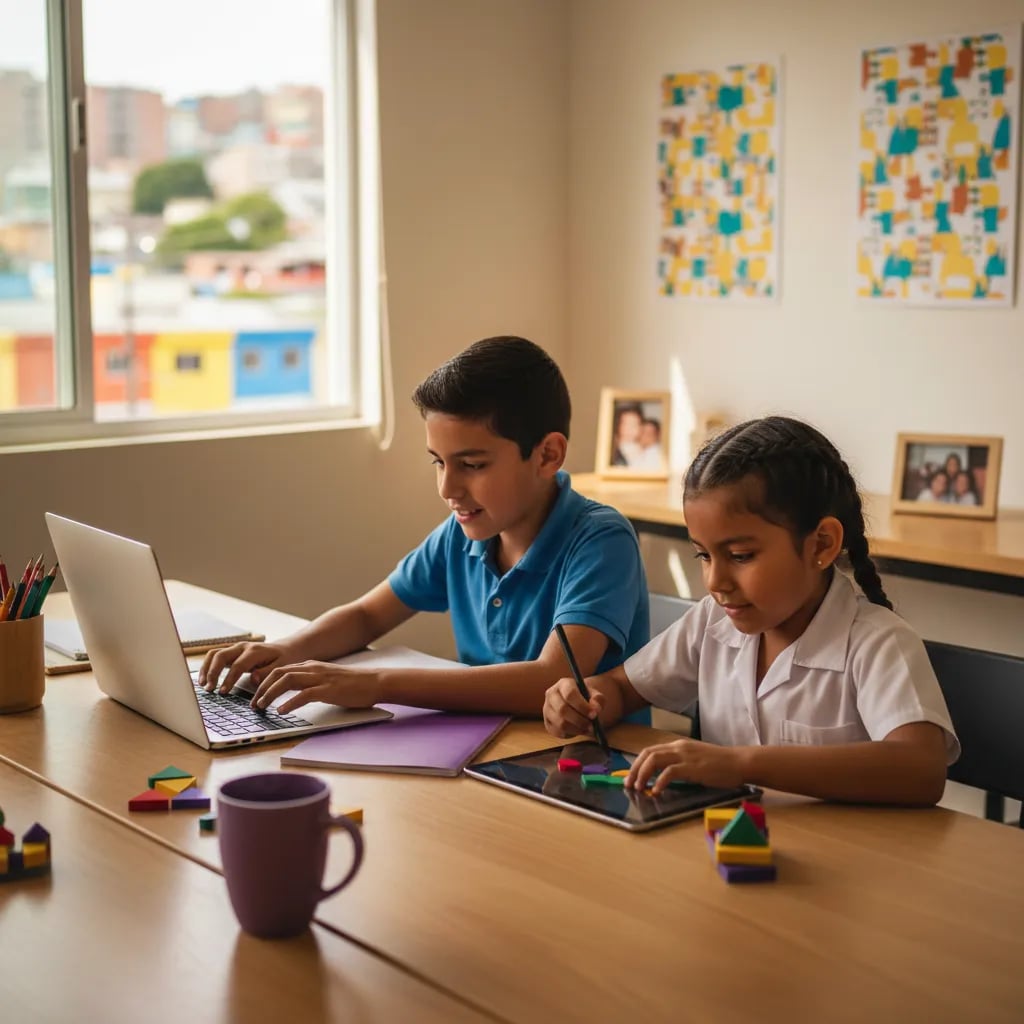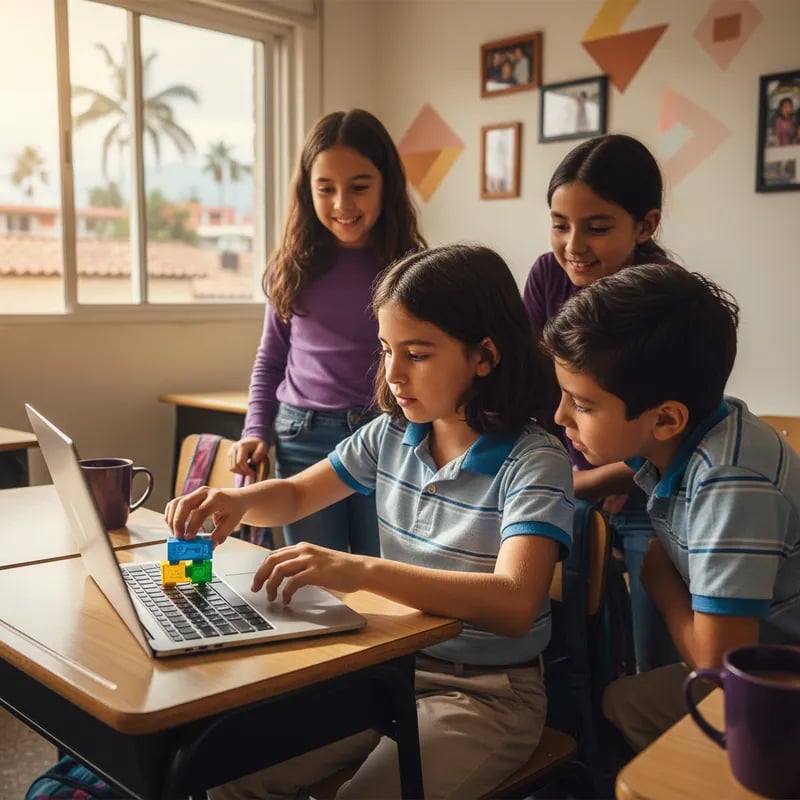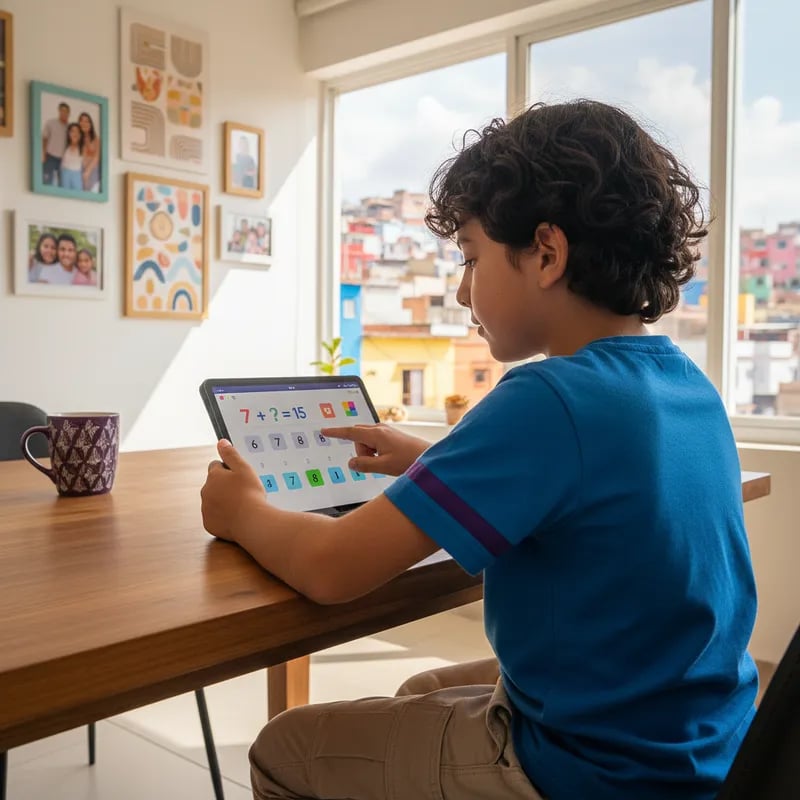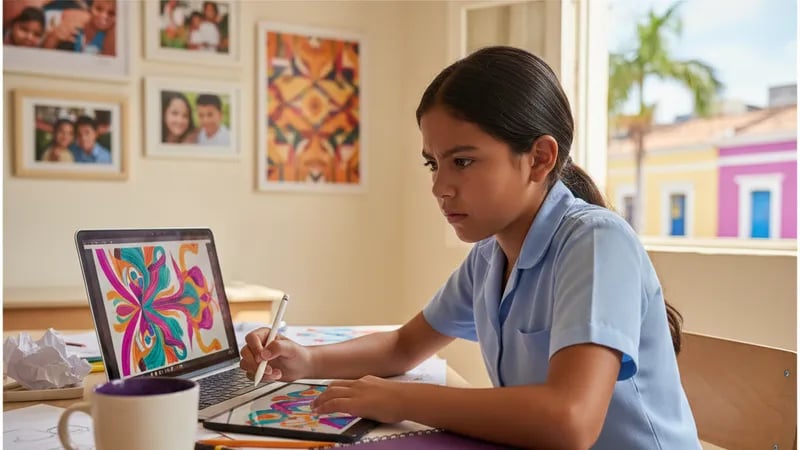
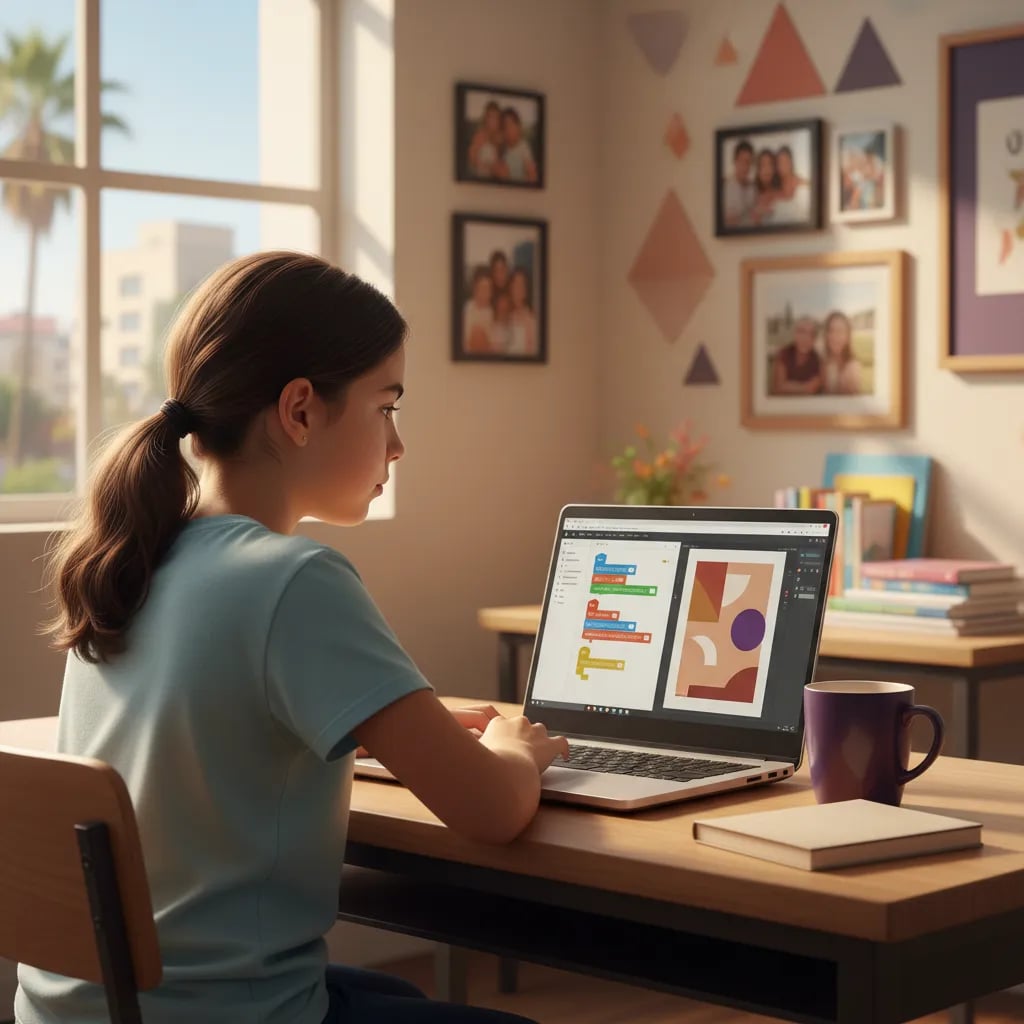
Choosing between graphic design vs coding for kids comes down to one question: does your child want to make things work, or make things look right? Coding trains logic, sequencing and debugging. Graphic design trains composition, colour and visual reading. Both start comfortably around age 7, both run about an hour a week, and both can be tested free before you pay for a term.
Graphic design and coding at a glance
Coding teaches a child to break a problem into steps. Design teaches a child to fit a whole idea into one image. They are closer than most parents assume, because in both the lesson ends with something the child can show you.
| Coding | Graphic design | |
|---|---|---|
| Core skill | Logic, sequencing, debugging | Composition, colour, typography |
| First tools | Scratch, then Python | Canva, Figma, Photoshop basics |
| Comfortable start age | 6 to 7 | 8 to 9 |
| What one lesson produces | A game or script that runs | A poster, logo or character |
| How feedback arrives | Instantly: it works or it doesn't | Slowly: it is judged, not tested |
| School subjects it touches | Maths, Science, ICT | Arts, presentations, projects |
| Suits the child who | Asks why something happened | Redraws until it looks right |
What a coding lesson actually looks like
A coding lesson is about an hour spent building one thing that runs. There is almost no theory block at the start. A typical session goes like this:
- The teacher shows a finished mini-project: a maze, a quiz, a simple chatbot
- Your child rebuilds it step by step, then changes one rule to make it theirs
- Something breaks, and your child finds the line that broke it
- The lesson ends with a link the child sends to their grandparents
That last point matters more than it looks. A visible result every week is the main reason live classes hold attention better.