Drawing with AI for kids: when it helps and when it holds them back
Published: 15.09.2026·Updated: 15.09.2026
Neftalí Cázares
Senior Coding Instructor
Drawing with AI for kids works with a single rule: whatever the machine generates is a draft, never the final submission. Under that condition the tool speeds up the boring part and leaves intact what design actually teaches, which is deciding what to remove. Below are the 4 exercises that build that judgement, what to allow by age, and how not to switch off drawing by hand.
The draft rule
If the image comes out of the AI and gets handed in as is, the child designed nothing. The useful version always has three steps.
The AI produces three or four quick variants from a clear brief
The child picks one and explains out loud why that one and not the others
The child genuinely edits it: crops, changes colour, adds or removes elements
Step two is what teaches. Choosing with reasons is exactly what a designer does, and it is the one thing the tool cannot do for them.
What to allow by age
Before age 10 almost all the value is in drawing by hand, with or without a screen.
Age
What makes sense
What to leave for later
6 to 8
Free drawing, painting apps without AI
Image generators
9 to 10
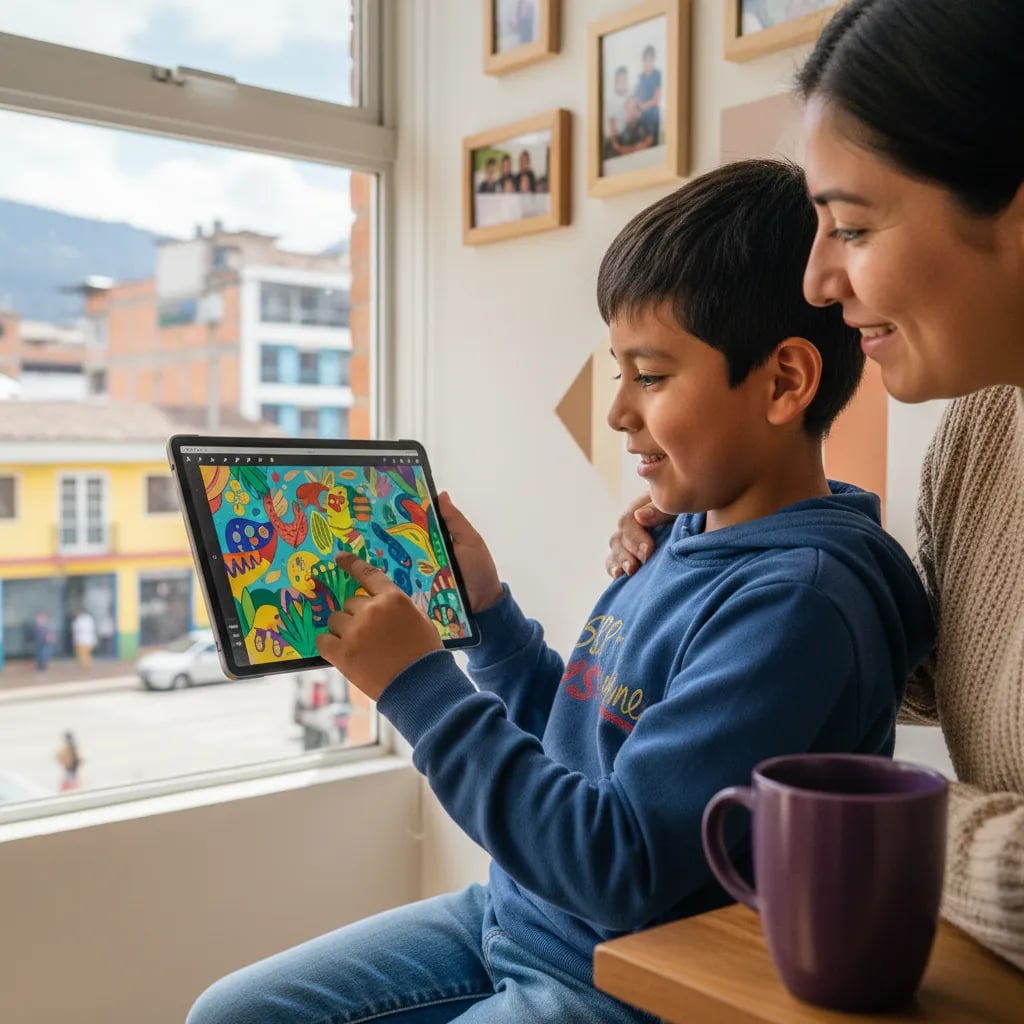
Watching an adult generate and choose between variants
Using it alone, unsupervised
11 to 13
Generating drafts from a brief and editing them
Submitting unedited images
14 to 17
AI inside a complete design process
Passing the image off as their own
The 9 to 10 row surprises many parents: watching an adult discard three variants and explain why teaches more than generating fifty images alone.
Four exercises that build judgement
All of them start with a concrete brief and end with an explained decision.
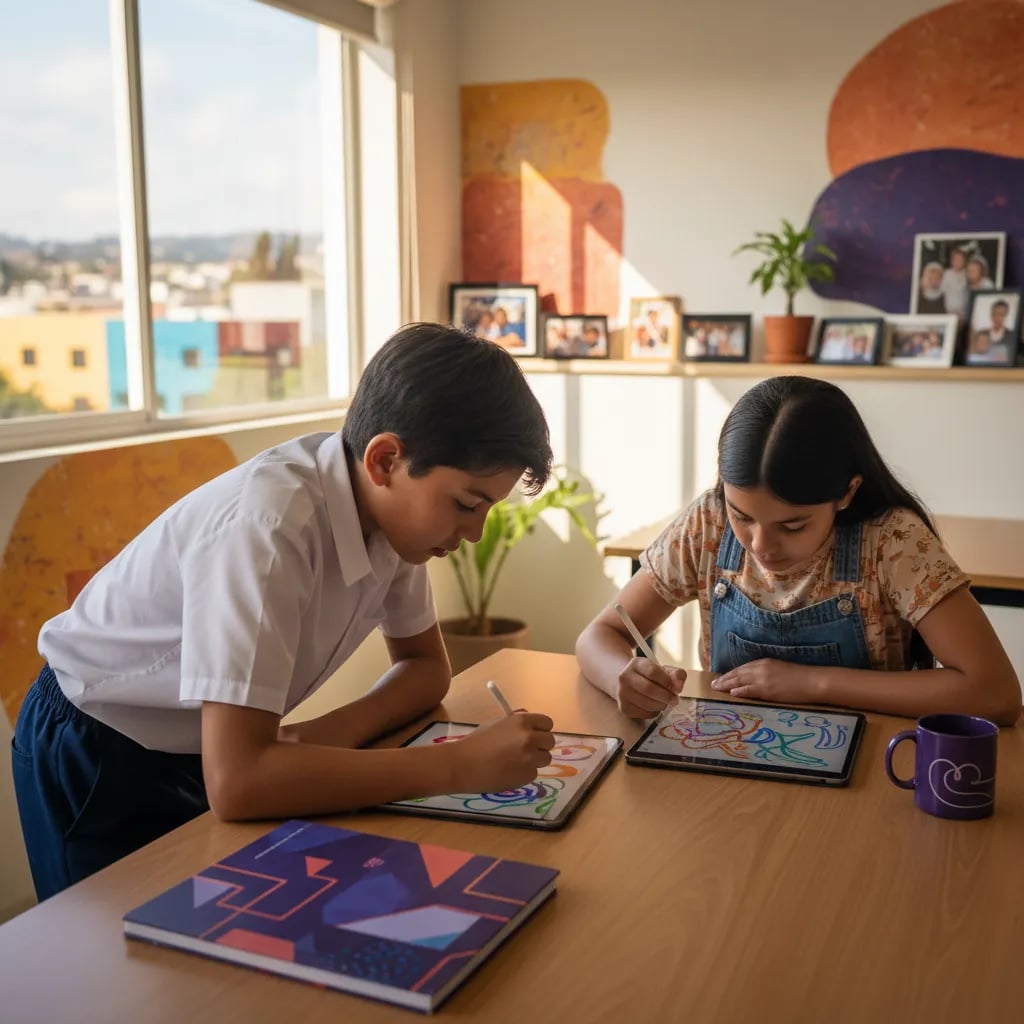
Three versions of the same poster changing only one thing: colour, typeface or framing. The child picks and argues for it
An AI-generated character the child redraws by hand, to see which parts do not read
An image that has to have elements removed until the message is clear
A written brief precise enough that another person gets something similar using the same tool
The fourth is the most revealing. When two children write the same brief and get different results, they work out for themselves that the problem was in the brief and not in the machine.
What AI does not teach
Generating images trains neither the hand nor the eye, and those two remain the basis of design.
Skill
Trained by AI
Trained by drawing and editing
Composition and hierarchy
A little
A lot
Choosing what to remove
Not at all
A lot
Colour and contrast
Somewhat
A lot
Proportions by hand
Not at all
A lot
Writing a clear brief
A lot
A little
Iterating on an idea
Somewhat
A lot
The fifth row is real and worth using: briefing a tool well is a transferable skill. The other five rows explain why that alone is not enough, and why drawing and editing stay at the centre of our graphic design classes for kids.
How not to switch off drawing by hand
The concrete risk is not that the child draws worse, it is that they stop trying. When a flawless image appears in ten seconds, their own first sketch feels poor by comparison.
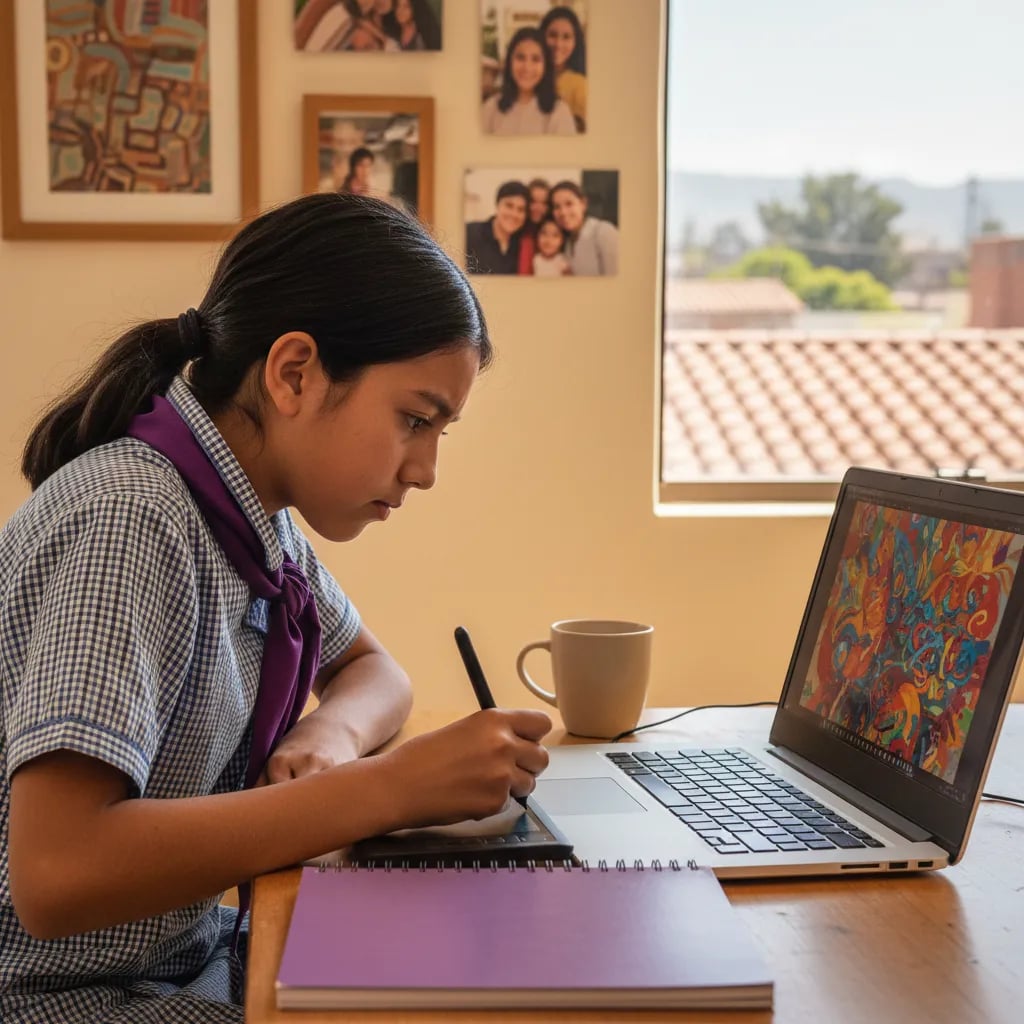
Always start with a sketch by hand, even a thirty-second one
Let the AI come after the idea, not before
Keep old sketches and compare them every two months, so they see progress
Praise decisions rather than results: why they chose that colour, not whether it looks nice
The third point is what sustains motivation. Progress by hand is slow and almost invisible day to day, and very obvious when two months are seen side by side.
Rights, credit and honesty
A generated image gets declared, the same way a quotation gets declared. It is the least discussed part and the one that prevents the most trouble later.
In school work, state which part was generated with AI
Do not use a living artist's style as though it were your own
Do not upload photos of other children to a generator
Check whether the tool has a minimum age before creating an account
That last point gets skipped often: several image generators require 13 or older in their own terms, just like the chatbots.
Tools more useful than a generator
For under 13s there are options that teach more and ask for less data.
Teachable Machine: the child trains a model with their own drawings and sees when it gets confused. Understanding how AI learns is worth more than using it
Scratch: animating their own character teaches movement, timing and composition at once
Any digital drawing app with layers, which is the real basis of design on a computer
Paper and pencil, still the fastest way to try ten ideas in ten minutes
If your child draws by hand and can also edit in layers, they will use any AI tool far better than a child who only knows how to request images.
A weekend to try it properly
Saturday: have them sketch their own idea by hand in thirty seconds, no screen
Saturday after: generate three variants of that same idea together, from a clear brief
Saturday at the end: have them pick one and explain why that one and not the others
Sunday: have them genuinely edit it, removing at least two elements
Sunday evening: have them compare the hand sketch with the final result
If they can explain what improved and what was lost along the way, the exercise worked. That comparison teaches more about design than any tutorial, and it makes clear what the tool is actually for.
When a class makes sense
AI speeds things up; judgement is learned with someone who gives it back. If your child generates a lot and edits little, or if their images all look alike, the gap is not in the tool. Our graphic design classes for kids work with real briefs and correction on the process, for ages 7 to 17 with the first class free.
With supervision from around 11, and several generators require 13 or older in their own terms, just like the chatbots. Before 10, almost all the value is in drawing by hand, with or without a screen. Between 9 and 10 there is a middle version that works well: the child watches an adult generate variants and discard three while explaining why. That teaches more than generating fifty images alone, because what is learned is the judgement to choose rather than the act of requesting.
Will AI ruin the way they draw?
The real risk is not that they draw worse but that they stop trying. When a flawless image appears in ten seconds, their own first sketch feels poor by comparison and many children give up there. The protection is simple: always start with a hand sketch even a thirty-second one, let the AI come after the idea rather than before, and keep old sketches to compare every two months. Progress by hand is almost invisible day to day and very obvious after two months.
How do you use a generated image well?
As a draft, never as the final submission. The useful version has three steps: the AI produces three or four variants from a clear brief, the child picks one and explains out loud why that one and not the others, then genuinely edits it by cropping, changing colour or removing elements. The second step is what teaches, because choosing with reasons is exactly what a designer does. If the image comes out of the machine and is handed in as is, the child designed nothing.
Which exercises actually help?
Four that start with a concrete brief and end with an explained decision. Three versions of the same poster changing only one thing, with the child choosing and arguing for it. A generated character the child redraws by hand to see which parts do not read. An image that has to have elements removed until the message is clear. And a written brief precise enough that another person gets something similar with the same tool. The last is the most revealing, because it shows the problem was in the brief.
What does generating images not teach?
Almost everything that holds design together: composition and hierarchy, choosing what to remove, proportions by hand, and iterating on the same idea. What it does train, and fairly well, is writing a clear brief, which turns out to be transferable to any job. That is why the combination works and the tool alone does not: a child who draws by hand and can edit in layers will use any generator far better than one who only learned to request images.
Should you state that an image was made with AI?
Yes, the same way you state a quotation. In school work it is worth indicating which part was generated with AI, and in almost every class that is enough to avoid trouble. Three more rules prevent problems later: do not use a living artist's style as though it were your own, do not upload photos of other children to a generator, and check the tool's minimum age before creating an account. That last one gets skipped often and is the easiest to follow.
Which tools suit under 13s?
There are options that teach more and ask for less data than a generator. Teachable Machine lets a child train a model with their own drawings and see when it gets confused, and understanding how AI learns is worth more than using it. Scratch teaches movement, timing and composition by animating their own character. Any drawing app with layers covers the real basis of design on a computer. And paper and pencil remains the fastest way to try ten ideas in ten minutes.
My child generates lots of images but they all look alike. Why?
It usually means they are always asking for the same thing and accepting the first result. It is the typical pattern when the judgement part is missing: generate, look, save, repeat. The way to break it is to add one constraint at a time, for example a single colour, a single object or a fixed format, and to require an explanation of what changed between versions. If that is not enough, the gap is no longer in the tool but in the absence of real briefs and someone giving corrections.
Is it useful for school or just entertainment?
It is useful in work with a visual component, as long as the image is a draft and not the submission. For a poster, a cover or a presentation, generating three options and then editing one saves time and leaves the design work intact. What is not advisable is using it to replace a task that asks for drawing, because the mark is precisely for the linework. The rule at home can be the usual one: if they cannot explain what they decided and why, it does not get handed in.
When does a design class make sense?
When the child generates a lot and edits little, or when their images all look alike. AI speeds things up, but judgement is learned with someone who gives it back and corrects the process. In class the work uses real briefs, constraints and critique on readability and composition, which is exactly what no tool does alone. It is for ages 7 to 17 and the first class is free, so an hour is enough to see whether it genuinely interests them.