
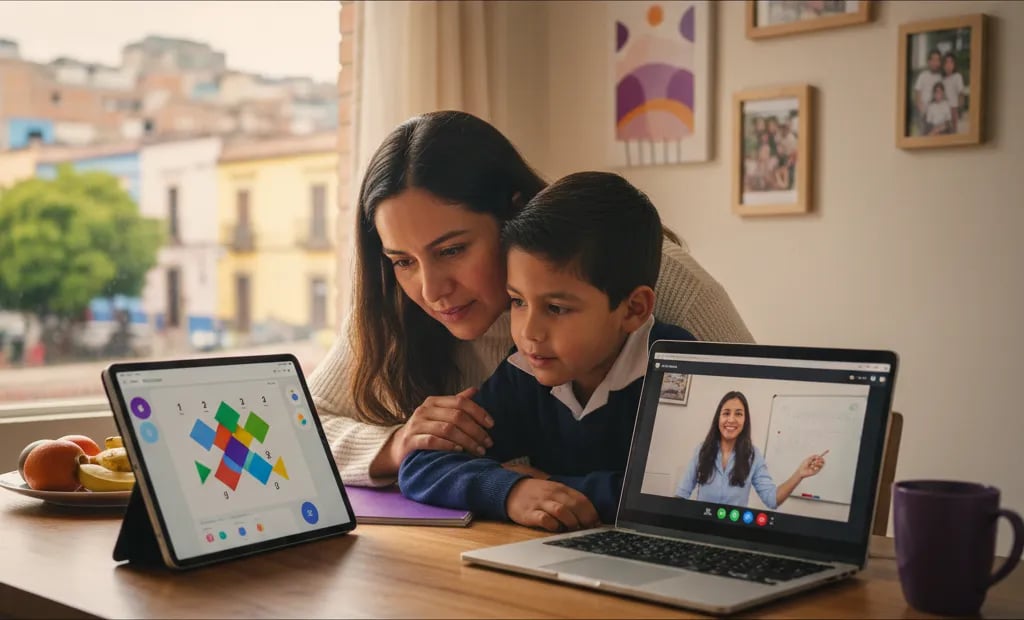
Between a coding app and a live class, the real difference is not the content but who holds the child up when they get stuck. Apps teach well in week one and lose most children somewhere around week four. A live class costs more per hour, but someone notices the blockage the same day. For children aged 7 to 12, the combination almost always wins.
App and live class at a glance
The app solves access; the live class solves consistency. That is the difference between having the material and finishing the project.
| App or platform | Live class | |
|---|---|---|
| When it is used | Any time | A fixed slot each week |
| Who corrects | The system, with closed answers | A teacher, watching the process |
| If the child gets stuck | Repeats the level or quits | Gets help on the spot |
| Their own project | Rarely, almost all guided | Yes, every session ends in something |
| Pace | Set by the child | Set by the course, with support |
| Cost per hour | Low | Higher |
| Main risk | Quiet drop-off | Timetable clashes |
What an app does well
An app is the cheapest way to find out whether your child is interested at all. Nothing to schedule, and the first exercise arrives in two minutes. It genuinely helps with three things:
- Testing interest without committing money or a time slot
- Practising in loose gaps, such as a trip or a wait
- Reviewing a concept that was already explained somewhere else
What almost no app achieves is a child building something of their own. The exercises are closed by design, because an automatic system needs one correct answer in order to mark it.