
Online Math Tutoring for SMP Students: How to Choose and What to Check in the Trial Class

Learn Math10 min read
Learn Coding

Bayu Nugraha
Children's Coding Specialist
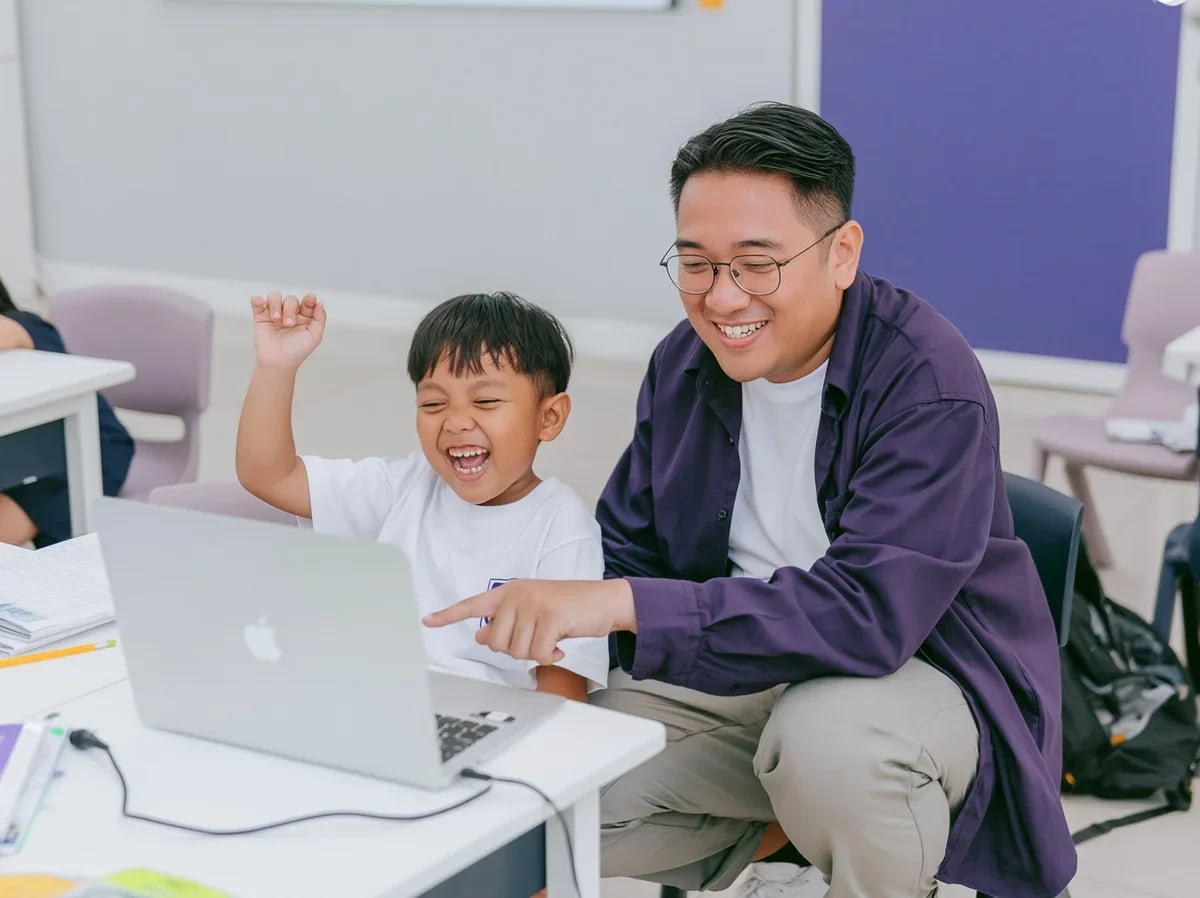
Online coding classes for kids in Semarang at Algonova are LIVE lessons with certified teachers (not recorded videos), available in Private (1 student), Mini (2-4 students), and Group (up to 10 students) formats, following a step-by-step ScratchJr → Scratch → Python curriculum. Children aged 5–17 from Tembalang, Banyumanik, Pedurungan, and the city center learn from home with just a laptop and internet. Algonova has been trusted for 10+ years by 1,000,000+ students across 97 countries.
For many parents in Semarang, the obstacle isn't a child's interest in tech — it's time and distance. Rush-hour traffic around Simpang Lima or Jalan Pemuda, packed school schedules, and other activities often make in-person classes unrealistic. Online coding removes all of that: your child learns from home, you skip the extra driving, and time saved on the road becomes time to rest or play.
The online format also fits where education is heading. Indonesia's Kurikulum Merdeka encourages project-based learning and digital literacy. Coding is a concrete way to build both: kids don't just use technology, they learn to create with it — games, animations, and simple apps.
At Algonova, kids aren't thrown into difficult material right away. The curriculum is structured by age and school level, so primary, junior, and senior students each follow the right path.
| Level | Age | Learning Focus | Example Projects |
|---|---|---|---|
| Early primary (SD) | 5–7 | ScratchJr, basic logic, sequencing | Simple animations & interactive stories |
| Upper primary (SD) | 8–12 | Scratch, loops & conditionals | 2D games and self-made quizzes |
| Junior–senior high (SMP–SMA) | 13–17 | Python, text-based programming, intro to AI & web | Calculator programs, app projects & simple automation |
The ScratchJr → Scratch → Python progression matters: kids first build logical thinking through playful visual blocks, then move to text-based code once they're ready. That keeps coding fun rather than intimidating.
Want the basics first? Read what coding is for kids and our guide to coding for primary-school kids.
Not sure if it's the right fit? The easiest way to find out is to try it. Try a free Master Class — a real 60-minute live lesson where your child joins an actual class and you see their reaction firsthand.
Many parents worry that "online" means a child watching videos alone. At Algonova it's the opposite. Every class is a LIVE session with a certified teacher who guides, asks questions, and gives feedback in real time.
This small-group format is what sets it apart from a YouTube tutorial: there's a teacher to answer when your child gets stuck, and peers that make learning feel alive.
The goal of coding for kids isn't to turn every child into a programmer. The more valuable outcome is a way of thinking that carries into every subject and into life.
For a fuller picture, see the benefits of coding for kids and meet Python for kids.
Classes at Algonova start from Rp 102,000 per session. Every child has a different level, learning pace, and schedule, so the first step is the free 60-minute Master Class: your child tries a real lesson, and the Algonova team then helps identify the right level and a schedule that fits your family.
What's always included in an Algonova program:
The smartest step before deciding: let your child try first. In one free 60-minute session, you'll see whether your child enjoys coding and clicks with Algonova's approach.
Try a free Master Class now — or explore the full Algonova coding program for kids in Semarang.
Every Algonova class for kids in Semarang — coding, math and design — is listed on one page: Algonova Semarang.
Want your child to start coding? Try a free Master Class.
Or go straight to a free coding class — a 60-minute online masterclass with a certified teacher. For ages 8-12, see the coding course for primary school kids.
Yes, Algonova Indonesia runs a full coding program for kids aged 5 to 17, covering kindergarten through senior high. It splits into three age tracks: Little Coders for ages 5 to 7 using visual block based coding, Junior Coders for ages 8 to 12 using Scratch and the fundamentals of programming logic, and Teen Coders for ages 13 to 17 using Python and game development. Every class is live online with certified teachers in small groups of up to 10 students. Kids build a real project from the first session rather than memorising syntax. Algonova has taught more than 1,000,000 students across 97 countries since 2016.
Yes. For the coding track Algonova Indonesia offers a free 60 minute master class with no commitment. No credit card is needed and there is no auto subscription afterwards. Note that these 60 minutes are an introductory master class, not a regular lesson. A regular coding class runs 90 minutes. During the master class the child works directly with a certified teacher, tries the online learning platform, and finishes a first small project matched to their age. After the session parents receive a personal learning track recommendation plus a transparent explanation of program, schedule, and pricing from Rp 102,000 per lesson. To book, fill in the form on the website.
Algonova Indonesia coding classes come in three formats: Private with one student per teacher, Mini group of 2 to 4 kids, and Group of 6 to 10 kids of similar age and level. The small group format exists because coding gets stuck on very specific lines of code, and a child needs a teacher who can look at their screen when it happens. In a Mini group the teacher checks each child's screen several times per session. The Private format is the most intensive and suits competition preparation, independent projects, or a child who wants to move faster than the group.
Kids coding at Algonova Indonesia starts from Rp 102,000 per lesson. The price covers the live session with a certified teacher, digital learning materials, online platform access, and an official certificate once the child completes each program level. The starting rate is the same across all age tracks. The final quote depends only on class format, meaning Private, Mini, or Group, and on how many sessions per week you choose. Group is the most affordable option and Private is the most intensive. Full pricing is shared after the free master class and before formal enrolment, with no surprise fees. To get a quote, fill in the form on the website.
Yes, every Algonova Indonesia coding program runs fully online with live sessions taught by certified teachers, not recorded videos. Kids learn in real time in small groups, with live Q&A and code written alongside the teacher during the class. To join, a child needs a computer or laptop with a camera, a stable internet connection, and a headset. The Algonova platform runs directly in the browser, so no special software installation is required and no expensive machine is needed. Because everything is online, families anywhere in Indonesia can join and easily fit lessons around school.
Three things make Algonova coding effective for Indonesian kids: project based learning, a staged track, and small groups. Every session produces something that runs and can be shown to a parent, which keeps motivation alive far longer than theory alone. The track climbs gradually from visual block based coding to Python, so a child never jumps into a text language before their logic is ready. Small groups of up to 10 students let the teacher adjust pace: faster kids get extra challenges and stuck kids get help inside the same session. The material also lines up with coding and artificial intelligence entering the Indonesian school curriculum.
That is fine, most Algonova students start from zero with no coding experience at all. Every new child begins with the free master class, where the teacher watches how they solve problems and picks the right starting point. Kids aged 5 to 7 start with visual block based coding and do not need to type fast yet. Older kids can start with Scratch and move up to Python once their logic is solid. All that is required is basic reading and curiosity. Parents do not need to understand programming to support the child, because every task is explained by the teacher during class.
Blog


Algonova worldwide
Contact
Whatsapp: +62 21 50996971
Email: info@algonova.id
Address
Coworking Area, Gedung IT 6 Lantai Dasar, Nongsa Digital Park, Jalan Hang Lekiu, Kelurahan Sambau, Kecamatan Nongsa, Batam, Indonesia Directorate General of Consumer Protection and Trade Compliance – Ministry of Trade of the Republic of Indonesia. WhatsApp Ditjen PKTN: 0853-1111-1010.
PT Algonova Indonesia Cerdas All rights reserved 2026
