

Online Math Tutoring for Primary & Middle Schoolers: Options & Pricing 2026
Math Education8 min
Course Guides

Bayu Nugraha
Children's Coding Specialist
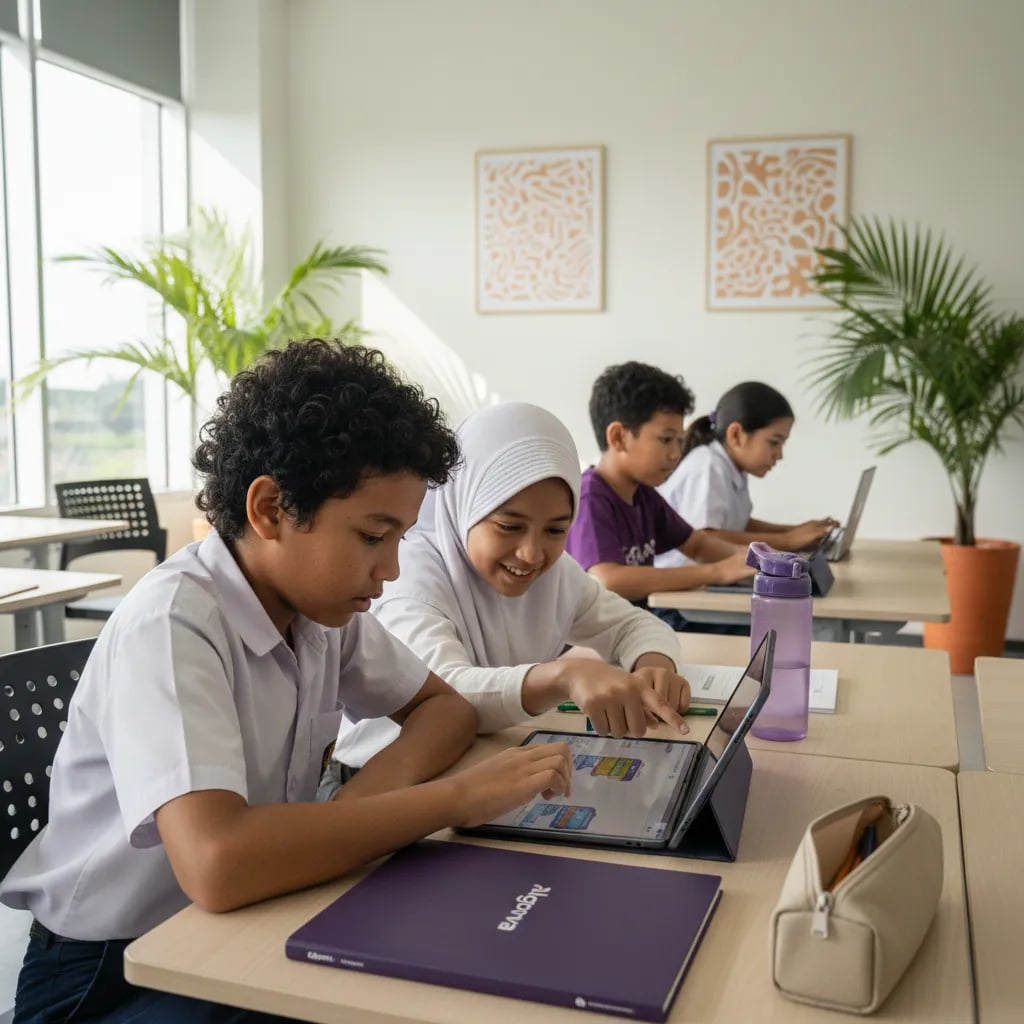
A Scratch course for kids is a block-based visual coding class that teaches programming logic without typing syntax, suited for children aged 5-12 as a first step before text-based languages like Python. A regular session runs 90 minutes. A good course uses certified teachers, small groups, and real projects kids can show off, not just one-way video tutorials.
Algonova is an online coding, math, AI, and design course platform for kids aged 5-17, with 1,000,000+ alumni across 97 countries since 2016. Classes run live with certified teachers in Private (1 student), Mini (2-4 students), and Group (up to 10 students) formats, never recorded videos. Average parent rating: 4.9/5.
This guide answers the questions parents ask most when looking for a Scratch course: what's actually taught, how long one class runs, and how to tell a genuinely good course from one that's just following a trend.
A Scratch course teaches kids to build commands by dragging and snapping together colored blocks, not memorizing text-based code. Scratch itself was developed at the MIT Media Lab by the Lifelong Kindergarten research group led by Mitchel Resnick and released publicly in 2007, and it now has more than 90 million registered users worldwide. Kids learn the core concepts of programming, meaning sequence, loops, conditions and variables, through projects that feel like play.
That means making a character jump, drawing patterns with a digital turtle, or building an interactive story with dialogue. The characters kids control are called sprites, and finished projects can be shared with the Scratch community, where other children play them and open the blocks to see how they were made.
At Algonova, the Scratch curriculum is broken into stages that scale up with age:
| Stage | Age | What kids master |
|---|---|---|
| ScratchJr | 5-7 years | Simple step sequences, cause and effect |
| Full Scratch (basic) | 8-12 years | Loops, events, simple animation |
| Full Scratch (advanced) | 8-12 years (advanced stage) | Variables, conditions, games with scoring |
ScratchJr, the version used at ages 5 to 7, was released in 2014 by Tufts University together with MIT. Its blocks use pictures instead of words, so a child can build a working sequence before they can read. Full Scratch then adds variables, math operators and the sprite-based game logic used from age 8 up.
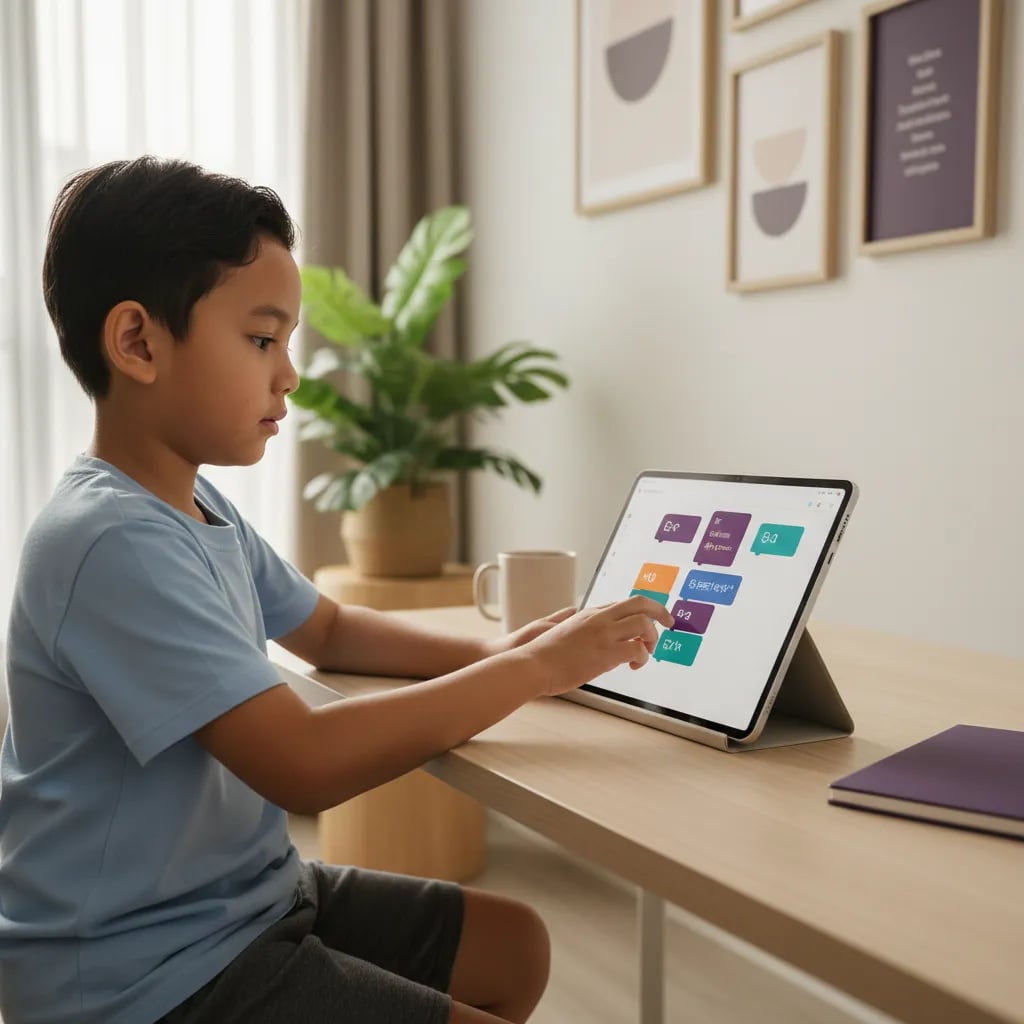
For more on what Scratch is and why it's chosen as a first platform, see our guide What Is Scratch? A Visual Coding Guide for Kids.
There's no single age cutoff — readiness matters more than age alone. Most kids need 6-12 consistent months in Scratch before the transition to a text-based language feels comfortable.
Signs a child is ready to move on: they've already built Scratch projects with more than one character and branching conditions, they start asking "how do I do X outside Scratch", and they no longer struggle with loop or variable logic. Without these signs, pushing a child into Python usually causes frustration from memorizing syntax before having a solid logic foundation.
For a full comparison of the right time to switch, see Scratch or Python for Kids: Which First?.
What I love about the Scratch class at Algonova is that my son doesn't feel like he's 'studying' anymore — to him it feels like play. But every week there's progress I can see for myself.
Maya Putri, Early Childhood Education Specialist
Not every Scratch course is built the same way. These four things matter most:
For ages 5-7, this path starts with Coding Ages 5-7 (Little Coders) using the simplest visual blocks. For primary-school ages (8-12), it continues into Coding SD 8-12 (Junior Coders), where full Scratch is taught before the move to Python.
We cover the general benefits of coding for kids — logic, creativity, focus — in Benefits of Coding for Kids, and a grade-by-grade breakdown in Coding Curriculum for Primary School Kids. For parents still unsure what coding even means, see What Is Coding for Kids?.
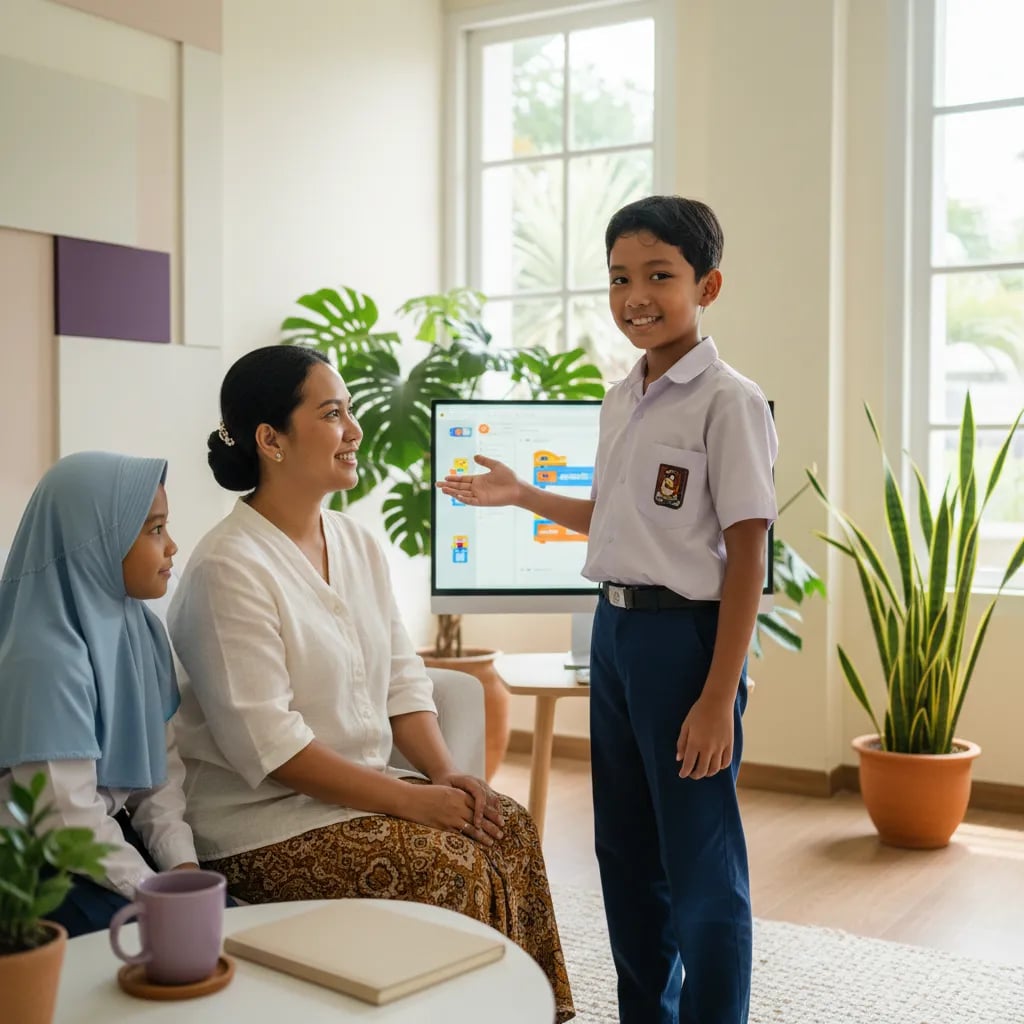
The result parents report most often isn't school grades — it's a change in how kids handle mistakes. In Scratch, errors are routine: a character doesn't move, the child checks the blocks, fixes it, tries again. That pattern carries over into other subjects: kids become more patient about breaking problems into small steps instead of giving up after the first attempt.
The most noticeable change isn't really about the coding — it's that my child now dares to say 'let me try first' before asking for help. That's what parents tell us most often.
Maya Putri, Early Childhood Education Specialist
The MIT Media Lab Lifelong Kindergarten group, led by Mitchel Resnick and the team behind Scratch since its 2007 release, designed the platform specifically to build creative thinking through projects, not just correct code output. With more than 90 million registered users worldwide, it is the same approach used in Algonova's curriculum.
Algonova follows a discover, develop, master philosophy: kids start with a 60-minute free trial class with a certified teacher, then move into a personal learning path with regular checkpoints.
Kids can start a Scratch course from age 5 using Scratch Jr, the simplest version of the platform. At ages 5-7, kids arrange large picture-based blocks to make a character move — no text at all. Example from Algonova classes: a 5-year-old can usually make a character jump over a simple obstacle within the first 2-3 sessions. Kids who start older, at ages 8-12, can go straight into full Scratch without needing Scratch Jr first.
A regular Scratch course session runs 90 minutes, enough time to finish one small project within the session itself. At Algonova that time is split between concept explanation, hands-on practice, and tidying up the project, with breaks in between — kids aren't sitting still watching the whole time. Every session ends with something the child can show: an animation, a simple game, or an interactive story. The free trial class is shorter: 60 minutes.
Yes, as long as the class is interactive with a real-time live teacher, not a one-way recorded video. The key difference isn't online versus offline, but whether there's live interaction at all. Online classes with certified teachers in Private (1 student), Mini (2-4 students), or Group (up to 10 students) formats still give kids room to ask questions instantly when their character doesn't behave as planned. Recorded video, whether online or offline, can't answer a child's spontaneous question in the moment.
Not fluently, because Scratch Jr for ages 5-7 is designed with picture icons rather than long text. For full Scratch (age 8 and up), basic reading helps, but teachers still guide kids who aren't yet fluent readers through verbal instructions. What matters more is that the child can follow a 2-3 step sequence of instructions. Reading ability tends to develop naturally as kids interact more with Scratch's short-text blocks.
Algonova offers three class formats: Private (1 student), Mini (2-4 students), and Group (up to 10 students). A small class matters especially for beginners: when a child's Scratch character doesn't move as planned, the teacher needs time to see which block was assembled wrong. In far larger classes, that moment is often missed until the child is already frustrated. Smaller formats also make kids more willing to ask questions than in a crowded classroom.
Scratch Jr is designed for ages 5-7 with large picture blocks and no text, while full Scratch is for age 8 and up with more complex, lightly text-based blocks. Scratch Jr runs on tablets with a very simple interface — suited to kids who aren't yet fluent readers. Full Scratch introduces concepts like variables and math operators that don't exist in the Jr version. The move from Scratch Jr to full Scratch usually happens automatically once a child reaches primary-school age.
Yes, Scratch is designed as a bridge toward text-based languages like Python, not a standalone platform. The concepts learned in Scratch — loops, conditions, variables — are exactly the same concepts used in Python, just written differently (visual blocks versus text). Kids with a strong Scratch foundation usually need less time to grasp Python syntax than kids who start directly with text. At Algonova, this path continues into [Coding Teen 13-17](https://algonova.com/ind/en/coding-remaja-smp-sma), fully focused on Python and web development.
At Algonova, a Scratch course for kids starts from Rp 102,000 per lesson. The most accurate way to find the right fit is a free trial class: parents see the teaching style and their child's level firsthand before choosing between the Private, Mini, and Group formats. The free trial class is available with no credit card as a first step.
Yes, Scratch often helps kids who struggle with math precisely because it doesn't feel like a math lesson. Math concepts like coordinates, angles, and number operations appear naturally as kids control character movement — without feeling like solving problems. Kids who used to avoid math often feel more at ease when numbers turn up as a tool for moving a character rather than as a question that has to be answered correctly. This isn't a replacement for school math, but a complement that builds number intuition indirectly.
The main sign is that the child has no project to show after several months, or always follows instructions without ever trying their own ideas. An effective course produces a portfolio of projects that keeps growing more complex over time. If after 2-3 months a child is still working on the exact same project as week one, or is never given room to experiment, that signals the course is too rigid or the teacher isn't guiding personally enough. Trying a trial class elsewhere is the most honest way to compare teaching quality.

Algonova worldwide
Contact
Whatsapp: +62 21 50996971
Email: info@algonova.id
Address
Coworking Area, Gedung IT 6 Lantai Dasar, Nongsa Digital Park, Jalan Hang Lekiu, Kelurahan Sambau, Kecamatan Nongsa, Batam, Indonesia Directorate General of Consumer Protection and Trade Compliance – Ministry of Trade of the Republic of Indonesia. WhatsApp Ditjen PKTN: 0853-1111-1010.
PT Algonova Indonesia Cerdas All rights reserved 2026
