
Abacus vs Kumon vs Conceptual Math: Which Is Right for Your Child?
Which Is Better?6 min read
Checklists & Calendar

Priya Nair
Education Calendar Editor, Algonova Malaysia
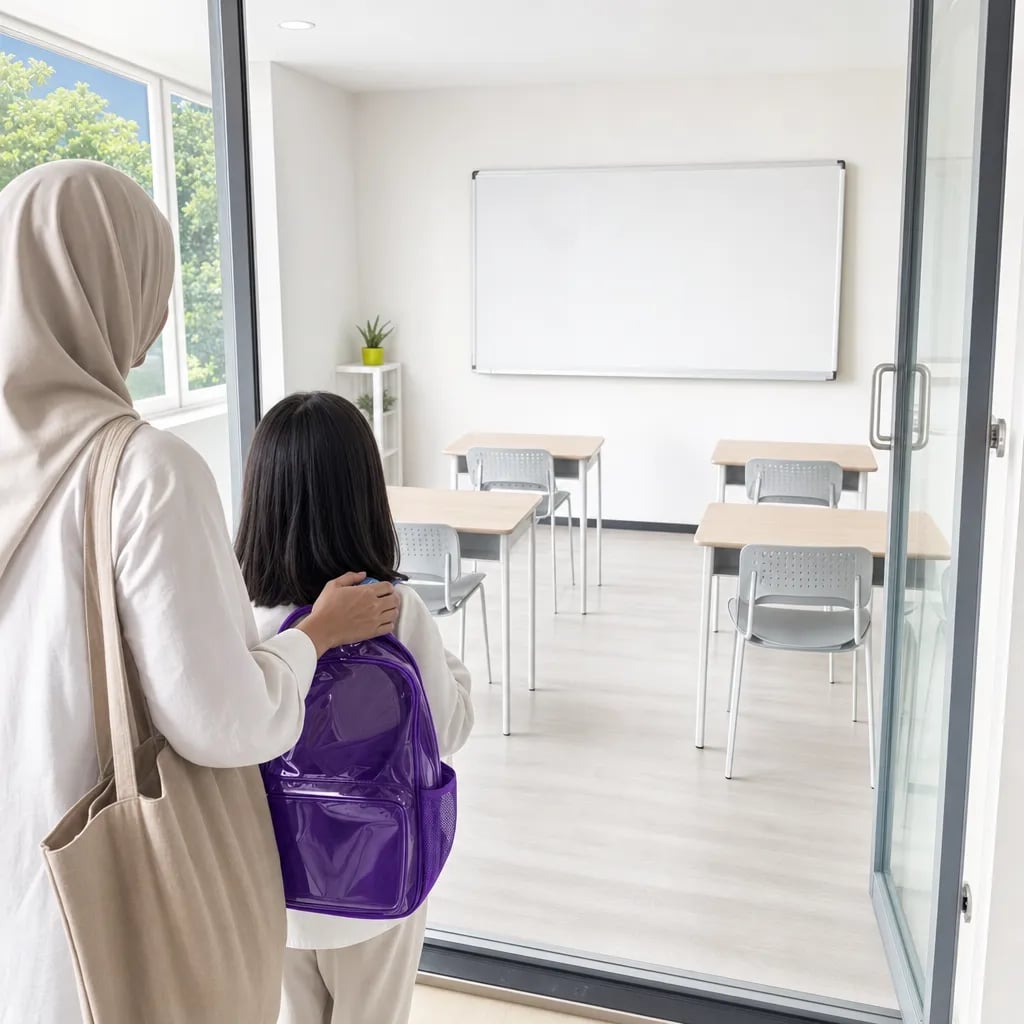
The best tuition centre near you is the one that passes 12 checks before you pay: JPN registration, a named teacher, a class of 10 or fewer, the right syllabus, a trial lesson, written fees and fair makeup rules. In Malaysia, primary group tuition costs about RM70 to RM90 per subject a month (2026), so a bad choice costs real money. This checklist is for parents of children aged 6 to 12.
A good tuition centre is registered, small enough for the teacher to hear your child, and honest about money before you sign. Location matters less than parents expect. A centre five minutes away that puts 25 children of different years in one room will do less for your child than a decent one 20 minutes away.
All 12 checks fit in one table:
| # | Check | Good answer |
|---|---|---|
| 1 | JPN registration | Certificate shown on request |
| 2 | Who teaches | A named teacher who stays all year |
| 3 | Class size | 10 or fewer in primary |
| 4 | Grouping | By school year or level, not mixed Year 2 to 6 |
| 5 | Syllabus | KSSR, PBD and UASA for Year 4 to 6 |
| 6 | Trial lesson | Offered before payment |
| 7 | Progress report | Written, at least once a term |
| 8 | Materials | Fee and content listed up front |
| 9 | Fee sheet | Registration, deposit, monthly, refund in writing |
| 10 | Makeup classes | A clear rule for missed lessons |
| 11 | Travel | Under 20 minutes each way, safe waiting area |
| 12 | Leaving | Notice period of one month or less |
You can rule out half the centres on your shortlist without leaving the house. Start with these four.
Check 1 is registration. Every private education institution in Malaysia, tuition centres included, must register under section 79 of the Education Act 1996, at the state education department (JPN). The Ministry of Education FAQ on private education says an unregistered centre can face a penalty of up to RM30,000, two years in jail, or both. Ask the centre on WhatsApp or by phone for its registration number before you visit. A registered centre answers in one message.
Check 5: ask which syllabus the class follows. For a national school child, the answer should mention KSSR and classroom assessment (PBD), plus UASA papers for Year 4 to 6. UPSR was abolished in 2021, so a centre still selling "UPSR classes" in 2026 hasn't updated its materials.
For check 9, ask for the full fee list as a PDF or photo. If they only quote a monthly figure over the phone, ask again for registration, deposit and materials.
Check 11 is travel, so do the drive at the real class time. A 30-minute trip each way, twice a week, adds up to more than 8 hours a month in the car.
The visit tells you more than the brochure. Go on a weekday afternoon when classes are running, and look at the room, not the reception desk.
If you are choosing a private tutor rather than a centre, the questions change a little. We cover them in how to choose a maths tutor in Malaysia.

A trial lesson is the only check where you see the teaching itself. Many centres offer one free or for a small fee. If a centre refuses any trial, treat that as an answer.
During or after the trial, watch for these signs:
Take Aisyah, 9, in Year 3. She joins a trial in a class of 14, answers once and spends most of the hour copying from the board. At home she says the lesson was "okay". That's a weak result, even if the centre is well reviewed. Small groups matter more than the label on the door, as we explain in group vs private tuition in Malaysia.
A trial lesson tells you more in one hour than a year of Google reviews.
Fees and rules cause most of the arguments between parents and centres, and nearly all of them start with something that was only said out loud. Ask for these four items in writing before you pay.
| Item | What to ask | Example from a published 2026 fee table (Klang Valley centre) |
|---|---|---|
| Registration | One-off or every year? | RM150 a year (RM99 before 1 February) |
| Materials | Per subject or per child? | RM25 per subject a year |
| Monthly fee | How many lessons, how long? | RM160 for 2 subjects, RM220 for 4 (4 one-hour lessons per subject a month) |
| Deposit and refund | Refunded when you leave? | Not listed: ask |
On top of fees, ask how missed lessons work (check 10). Some centres offer a makeup class in another group, some carry the lesson over, some do neither. Ask about the notice period too (check 12). One month is normal. Three months, or no refund of the deposit, is a reason to walk away.
For a full monthly budget by level, see our guide to maths tuition costs per hour in Malaysia.
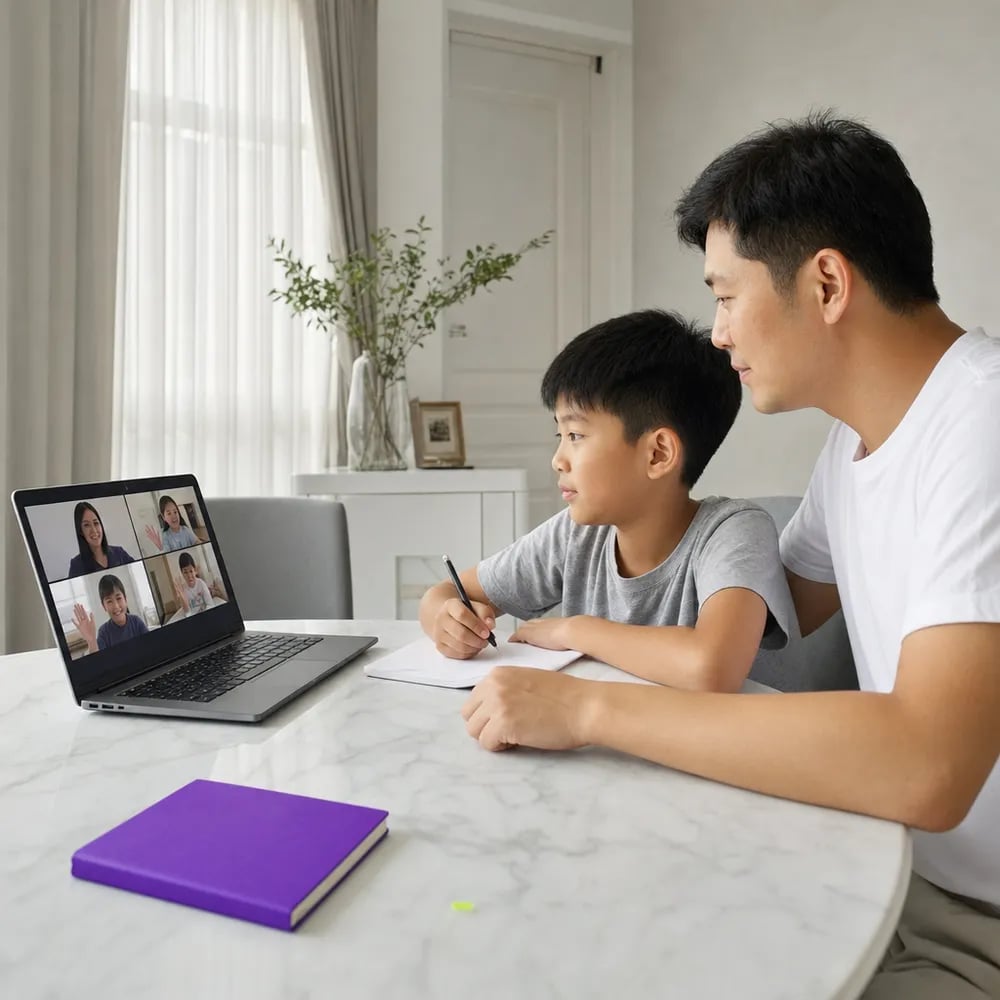
Sometimes none of the centres within 20 minutes passes the 12 checks. That happens a lot outside city centres, and in busy areas where the good centres have waiting lists. You then have three options: a home tutor, a centre further away, or a live online group class.
An online group class passes most of the checks by design. Algonova Malaysia runs live online classes in small groups of up to 10, with a fixed teacher, for maths at ages 6 to 8 on the online maths course for kids and for coding from age 8 on the coding classes page. Algonova has taught over 1,000,000 students in 97 countries. Travel time is zero, and you can watch a lesson from the next room.
Online classes do not suit every child. A child who can't sit still for 45 minutes in front of a screen may do better with a teacher in the room, at least in Year 1. If you want to compare the two formats in detail, read online maths tuition vs a tuition centre. For prices of the third option, see home tuition costs per hour.
Start with a shortlist of 3 to 5 centres within 20 minutes of home or school, then check each one against the same list: JPN registration, class size, teacher, syllabus, trial lesson and written fees. Google Maps reviews help you build the shortlist, but they mostly rate the receptionist and the parking. Ask other parents in your child's class group which centre their children have stayed at for more than a year, because long stays say more than stars. Visit the two strongest options while classes are running. Pay for nothing until your child has done a trial lesson and you have the fee sheet in writing. Most parents can finish this in two weekends. Keep a note on your phone with each centre's answers, so you compare facts and not first impressions. If two centres tie, pick the one your child liked more after the trial.
For primary school, group tuition at a centre costs about RM70 to RM90 per subject a month in the Klang Valley, according to a June 2026 fee guide on listing.my. Upper secondary classes for SPM cost more, about RM90 to RM130 per subject. On top of the monthly fee, most centres charge a yearly registration fee, often RM50 to RM150, and a materials fee. One Klang Valley centre's 2026 table lists RM160 a month for 2 primary subjects and RM220 for 4. Prices in Mont Kiara or Bangsar run higher than in Klang or Rawang. Always ask for the full fee sheet, not just the monthly figure. A centre that charges RM70 a month but RM200 for materials can cost more over a year than one at RM90 with materials included.
Yes. Every private education institution, including tuition centres, must register with the state education department (JPN) under section 79 of the Education Act 1996. The Ministry of Education's private education FAQ says operators who break the Act can face a fine of up to RM30,000, up to two years in prison, or both. Registration also requires approval of the premises by the local council, the fire department and the health office. As a parent, you can simply ask the centre for its registration number or certificate. A registered centre will show it without fuss. If the answer is vague, choose another centre, however close it is. Registration does not prove the teaching is good, but it does mean the premises and the people running the centre have been checked at least once.
For children aged 6 to 12, a group of 10 or fewer works best for most subjects. In a 60-minute lesson, a teacher with 10 children can check every exercise book at least once and still explain the main idea. With 20 or more, the lesson turns into a lecture and quiet children stop asking questions. Ask the centre for its maximum class size, not the typical number, because classes grow in exam season. Very small groups of 3 to 5 cost more but suit children who are far behind. Private one-to-one lessons help with a specific gap, though a child also learns from hearing other children's mistakes. If a centre says the class is 12 today but will cap at 10, ask what happens when the 11th child signs up mid-year.
It depends on the child and on what is near you. A centre suits a child who focuses better away from home and who needs a teacher physically checking their book, often in Year 1 and Year 2. A live online class suits families with long commutes, children who are comfortable on a laptop, and parents who want to watch the lesson. The quality checks are the same for both: a named teacher, a small group, the right syllabus and a trial lesson. A recorded video course is not the same as a live online class, because nobody corrects your child's mistakes. Try one trial of each before deciding. Watch your child during both, not only the teacher: the format where they ask more questions is usually the one that will work for the rest of the year.
Ask six questions before you pay. Is the centre registered with JPN, and can you see the certificate? Who teaches this class, and will the same teacher stay all year? What is the maximum number of children in the class? Which syllabus do you follow for my child's year? Can my child do a trial lesson first? What do registration, materials, the monthly fee and the deposit cost, and what happens to the deposit when we leave? Write the answers down while you are still at the counter. Comparing two centres side by side on paper is much easier than comparing two memories of a friendly receptionist a week later. Ask the same questions at every centre, in the same order, so that the answers line up. Five minutes of notes saves weeks of doubt.
Most primary school children need one or two lessons a week per weak subject, each about an hour. More than four tuition sessions a week on top of school usually leaves no time for rest, play and homework, and tired children learn less. For a child who is only a little behind in one subject, one lesson a week for a term is often enough to close the gap. For a child preparing for UASA in Year 6, two lessons a week in maths is a common choice. Review after 8 to 10 weeks. If the school marks haven't moved, change the class or the format rather than adding more hours. Ask the teacher for one specific topic to fix by the next school test, so that progress is easy to see.
Yes, and you should insist on it. Many tuition centres in Malaysia offer a free or low-cost trial lesson, and some let a parent sit at the back. Use the trial to see how often your child speaks, whether the work matches their school year and how the teacher handles a wrong answer. Algonova Malaysia offers a free online trial: for maths it is a diagnostic of about 60 minutes, for coding and design a 60-minute master class. After the trial, a teacher explains your child's level and what to work on next. If any provider asks for payment before a trial, it is fair to ask why. Bring two or three questions of your own to the trial, for example how the teacher will report progress and what homework looks like each week.
Blog


Start your child's tech journey
Book your free 60-minute trial class with an Algonova certified tutor. No payment, no obligation, just discover what your child can build.

Algonova worldwide
Contact us
Email: int_legal@alg.team
Visit us
Suite 8634, 1021 E Lincolnway, Cheyenne, WY, Laramie, US, 82001
Algonova online LLC International tech school for kids and teens

