
AI or coding first: which should your child learn?
Course Guides7 min read
Math Education

Aina Rashid
Coding Education Specialist at Algonova Malaysia
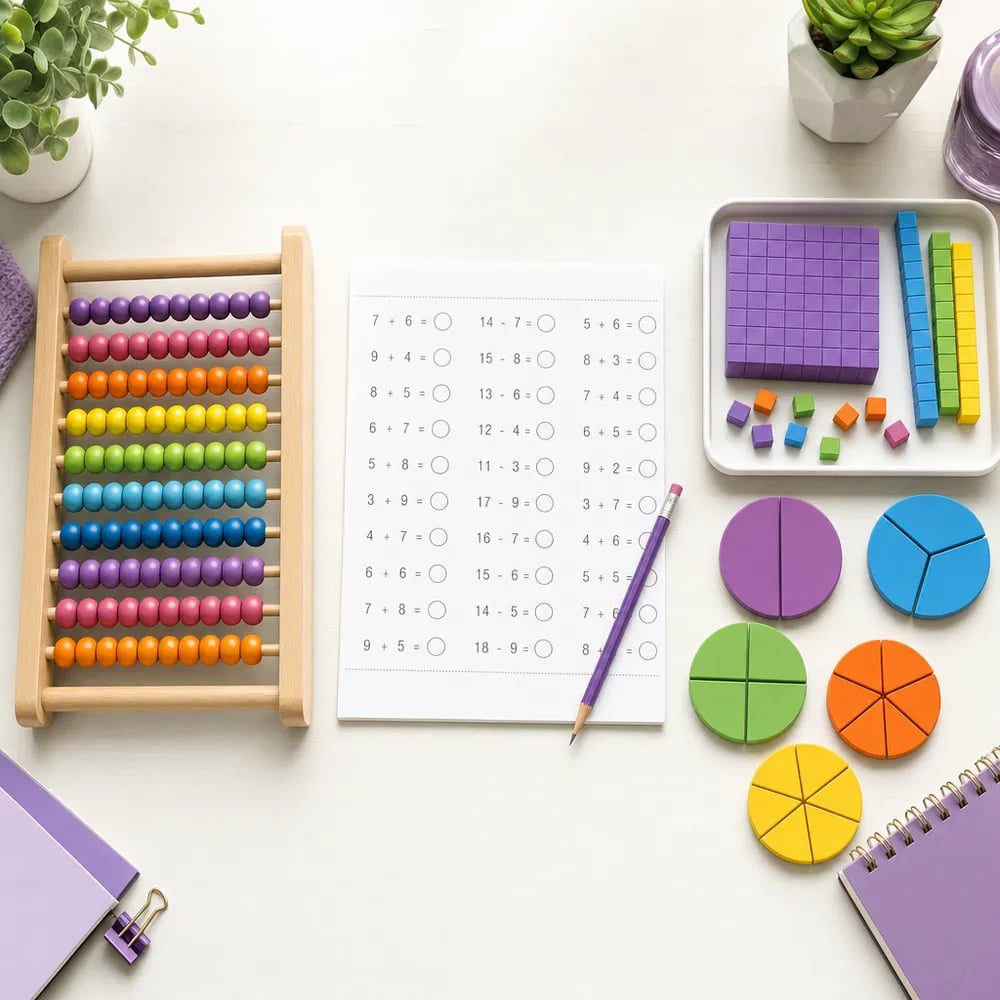
Abacus builds fast mental calculation, Kumon builds speed and accuracy through repeated worksheets, and conceptual math builds understanding of why numbers behave the way they do. None is "wrong" — they simply train different skills. For most children aged 6–8 who need to solve unfamiliar problems, the conceptual approach gives the most transferable foundation.
If you are a parent in Malaysia weighing these three options for a child in Darjah 1 or 2, this guide compares them fairly, then explains where each one fits.
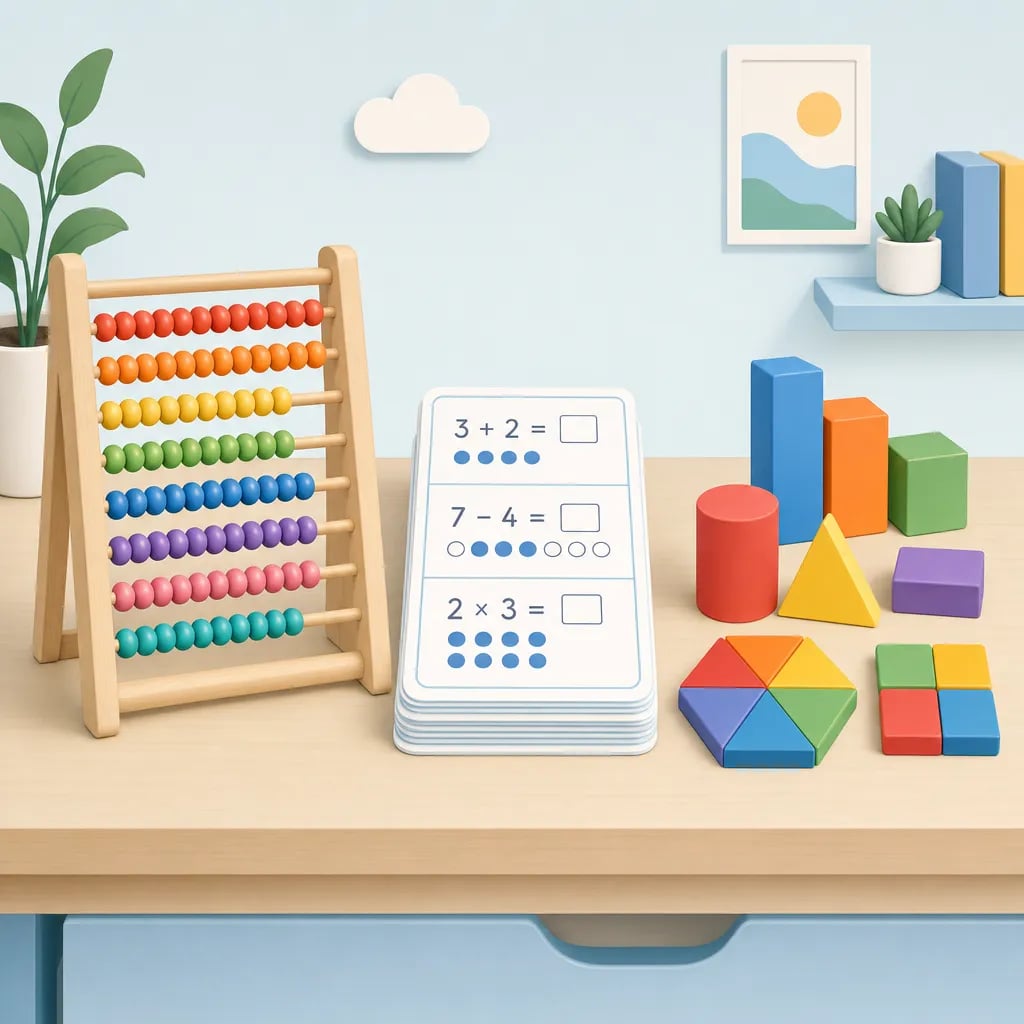
Each method has a clear philosophy. Understanding what each is designed to do helps you match it to your child rather than to a trend.
Abacus and mental arithmetic train the brain to visualise beads and compute quickly without writing. Children can become remarkably fast at addition, subtraction, and even multiplication.
Kumon-style learning uses graded worksheets that a child completes daily, advancing only after mastering each level. It builds discipline, fluency, and steady automaticity in arithmetic.
Conceptual or visual math starts with the idea behind a calculation — what "sharing 12 sweets among 3 friends" actually means — before introducing the formula. It prioritises reasoning and the ability to apply math to new situations.
| Abacus / mental arithmetic | Kumon-style worksheets | Conceptual / visual math | |
|---|---|---|---|
| What it builds | Fast mental calculation, focus, working memory | Speed, accuracy, automaticity, daily discipline | Understanding, reasoning, transfer to new problems |
| How it teaches | Bead visualisation, repeated drills | Self-paced graded worksheets | Concepts first, then formulas; visual & project-based |
| Best for | Children who enjoy speed and number games | Children who benefit from routine and repetition | Children who ask "why" and meet unfamiliar problems |
| Limits | Speed ≠ understanding word problems | Repetition can outpace comprehension | Slower to show "wow" speed gains |
In short: abacus and Kumon are excellent at building fluency — doing arithmetic quickly and correctly. Conceptual math focuses on comprehension — knowing which operation to use and why. The strongest outcomes usually come when fluency sits on top of genuine understanding, not the other way round.
Direct answer: memorisation and drills help with the mechanics of math, but research consistently shows that understanding why a procedure works predicts how well children apply it to new problems.
A child who has drilled "7 × 8 = 56" hundreds of times will recall it instantly. That is genuinely useful — automatic recall frees up mental space for harder thinking. The limit appears when the question changes shape: "A classroom has 7 rows of 8 chairs; if 5 children are absent, how many chairs are empty?" Here, speed alone does not help. The child needs to understand that multiplication models repeated groups, and that the problem has two steps.
This is why many children who score well on timed arithmetic still struggle with the word problems on Malaysian school assessments. The arithmetic was never the obstacle — interpreting the situation was. You can read more in our guide on the KSSR math syllabus for Darjah 1–2.
Not sure whether your child needs more fluency or more understanding? A free 60-minute diagnostic pinpoints exactly where the gap is. Book it here.
The KSSR (Kurikulum Standard Sekolah Rendah) curriculum used in Malaysian schools increasingly tests reasoning, not just calculation. Word problems, multi-step questions, and "explain your thinking" tasks reward children who understand the underlying logic.
Conceptual math builds exactly that. When a child first sees that division is sharing into equal groups — using counters, drawings, or real objects — the formula becomes a tool they control rather than a rule they fear. This understanding transfers: a child who grasps place value can tackle three-digit subtraction they have never been shown, because they understand what the digits mean.
It also protects confidence. Children who only memorise can hit a wall when problems get unfamiliar, and that wall often becomes anxiety. Our article on helping a child with math anxiety looks at this in more depth.
Algonova's online math course, Math Junior, is built for children aged 6–8 (Darjah 1–2) and aligned with the KSSR syllabus. Classes are live and online in small groups with certified teachers — not pre-recorded videos a child watches alone.
The method is visual and project-based: concepts come before formulas, and children build understanding through guided exploration rather than silent repetition. Because every child has different gaps, an AI diagnostic identifies what a specific child has and hasn't mastered, so lessons target real needs instead of a generic sequence. Programmes range from 10 to 64 lessons depending on goals and pace.
This does not mean fluency is ignored. Practice and accuracy still matter — they are simply built on understanding, so that speed reflects comprehension rather than replacing it.
Start with the question your child is struggling with. If they are slow with basic number facts but understand what they are doing, a drill-based approach like Kumon or abacus may close that specific gap. If they compute quickly but freeze on word problems, or ask "why does this work?", a conceptual approach will serve them better.
For most 6–8 year-olds facing the reasoning-heavy KSSR assessments, understanding first is the safer long-term bet — fluency can be layered on once the foundation is solid. The honest answer is that many children benefit from a blend, with conceptual understanding as the base.
The simplest way to know where your child actually stands is to have their real gaps diagnosed. Book a free 60-minute diagnostic with Algonova — there is no obligation, and you will leave with a clear picture of what your child needs next.
A child who understands why division is "sharing into equal groups" can solve a subtraction they were never taught. That transfer — not raw speed — is what conceptual math really buys you.
Algonova Math Team
Fluency and understanding aren't rivals. Drill the number facts if you like — but the child who knows why a method works is the one who can use it on a problem they've never seen before.
Algonova Math Team
Neither is universally "better." Abacus suits children who enjoy speed and number games; Kumon suits those who thrive on daily routine. Both build fluency well but focus less on reasoning, which KSSR assessments increasingly test.
Not in the long run. Understanding-first learning may look slower early on, but it builds a base on which speed is added through practice. The goal is fast calculation that reflects genuine comprehension, not memorisation alone.
Fast calculation and problem interpretation are different skills. Drilled children often compute well but struggle to identify which operation a situation requires. A conceptual approach focuses on reading and modelling the problem, which is usually the real obstacle.
Math Junior is designed for children aged 6–8, matching Darjah 1–2 in Malaysian primary school, and is aligned with the KSSR syllabus. Classes are live, small-group, and online with certified teachers.
Yes, and many do well with a blend. The most effective approach is usually conceptual understanding as the foundation, with targeted practice for fluency layered on top — so speed and comprehension reinforce each other.
Abacus builds fast mental calculation and focus, but it does not teach a child which operation a word problem actually needs. If word problems are the struggle, a conceptual approach that models the situation helps more directly. Abacus can still be added later to sharpen speed once the reasoning is secure.
Algonova teaches maths live online in private 1-on-1 lessons, mini groups of 2–4, or groups of up to 10 students with certified teachers, using a visual, concepts-first method aligned to the KSSR syllabus, plus a free AI diagnostic that targets each child's real gaps. Kumon and abacus classes focus mainly on repetition and speed; Algonova builds the understanding that KSSR reasoning questions reward.
Conceptual, visual math suits children from around age 6 — shortly before or as they begin Darjah 1, the point at which they first meet formal arithmetic. Starting with understanding early prevents the memorise-without-meaning habit that later makes word problems and multi-step questions much harder to crack.
Start your child's tech journey
Book your free 60-minute trial class with an Algonova certified tutor. No payment, no obligation, just discover what your child can build.

Algonova worldwide
Contact us
Email: int_legal@alg.team
Visit us
Suite 8634, 1021 E Lincolnway, Cheyenne, WY, Laramie, US, 82001
Algonova online LLC International tech school for kids and teens