Best Drawing Apps for Kids in Malaysia (Free, Phone and Tablet)

Learn Design9 min read
Which Is Better?

Arjun Menon
Education Analyst, Algonova Malaysia
The best math tuition is the one with a strong teacher your child can attend consistently — and for most Malaysian families that now means online, not the nearest tuition centre. Searching "math tuition near me" limits you to teachers within driving distance; online math tuition removes that limit while keeping live, small-group teaching. Here's how to choose by fit, not postcode.
Algonova is an international online tech and math school for children aged 6 to 17, with 10+ years of teaching experience and students in 97 countries. Lessons are live sessions with certified teachers in small groups of up to 10 students — not recorded videos. Every family starts with a free Master Class, an AI-assisted talent diagnostic that recommends the right learning path before you commit to anything.
Malaysian math tuition has quietly moved online, and the phrase "math tuition near me" no longer describes how the best learning happens. A decade ago, "near me" was the honest way to search: you booked whoever taught close to home in KL, Petaling Jaya, or Johor Bahru. Today the strongest teacher for your child's exact need might sit two states away — or teach a live class you join from your own dining table.
The syllabus your child is graded on hasn't changed, though. Primary pupils follow KSSR through Standard 1 to 6; secondary students move into KSSM across Form 1 to Form 5, building toward major assessments. Good math tuition — online or physical — has to track that syllabus tightly, reinforce the topics school moves past too quickly, and rebuild the confidence that slips when a child falls one chapter behind. Whether it's called kelas matematik at a centre or a live online class, the job is the same: fewer gaps, steadier understanding, a child who stops dreading the subject.
So the real question for parents in 2026 isn't "which centre is closest." It's "which format gets my child a teacher who fits, on a schedule we can actually keep." That reframing is where online math tuition starts to look very different from the tuition centre down the road.
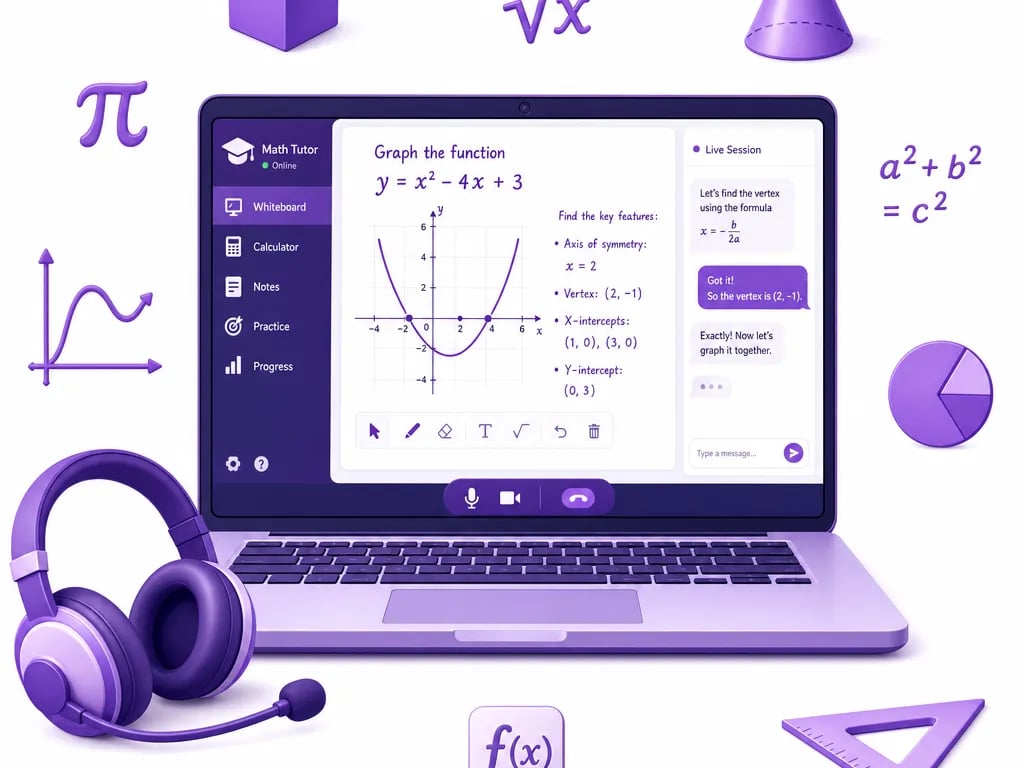
Online math tuition and a physical tuition centre solve the same problem in very different ways, and neither wins on every point. A centre gives you a room, a fixed time, and a teacher your child sees in person. Online tuition gives you access to a wider pool of teachers, a schedule that bends around family life, and tools built for a screen. The table below lays out the trade-offs on format — not price. (Money questions have their own guide; we link it at the end.)
| Factor | Online math tuition | Physical tuition centre |
|---|---|---|
| Location | Any home with internet — no travel | Fixed premises; you go to it |
| Schedule | Flexible slots, easy to reschedule around school and family | Fixed class times you fit your week around |
| Group size | Small live groups (up to 10) or one-to-one | Ranges from small to large classes, centre-dependent |
| Teacher quality | Best-fit teacher regardless of city | Limited to who teaches at that branch |
| Travel & safety | Zero commute; child stays home | Daily travel, traffic, drop-off and pick-up |
| Tools | Interactive whiteboard, screen-share, teacher notes and progress report | Physical whiteboard, printed worksheets |
Read the table by your own constraints, not by which column looks longer. A family in a KL condo with two working parents weights "travel" and "schedule" heavily. A family whose child works best with a teacher physically beside them weights "in-person" above everything. Both are valid — the point is to choose on the factor that actually moves your child's results.
We stopped losing two hours a night to the tuition run. My daughter logs in from home, and for the first time she actually looks forward to math.
Nurul, parent of a Form 2 student, Petaling Jaya
For a large share of Malaysian families, online math tuition wins on the things that quietly decide whether tuition works at all: the teacher, the group size, and the hours you get back. Here is where the online format pulls ahead.
A tuition centre can only offer the teachers on its branch roster. If the one who explains fractions in a way your child finally understands teaches in Penang and you live in Johor Bahru, geography wins and your child loses. Online math tuition breaks that link. You match your child to the teacher who fits their level, pace, and personality — whether that teacher is across town or across the country. For a shy child who needs patience, or an advanced one who needs stretch, that wider pool is often the difference between tuition that clicks and tuition that's endured.
Class size decides how much attention your child actually receives. In a small live group of up to 10 students, a teacher can see who's lost within minutes and adjust on the spot. That's the model Algonova runs online: real-time sessions with a certified teacher, small enough that no child hides at the back. Children still get peers to think alongside — a question from another student often unlocks the one your child was too unsure to ask — without the anonymity of a packed centre classroom.
Add up a tuition run honestly: fifteen minutes there, parking, waiting, fifteen minutes back, all inside KL's evening traffic. That's often more time in the car than in the lesson. Online math tuition deletes the commute. Your child logs in from home, walks to the kitchen when it's done, and the evening isn't wrecked. For families juggling two or three children's schedules, removing travel is what makes consistent weekly tuition survivable at all — and consistency, not intensity, is what raises math results.
A physical tuition centre still earns its place for some children, and pretending otherwise would be dishonest. In-person tuition can be the better fit when a child genuinely struggles to focus on a screen, when parents can't supervise a home setup during class hours, or when the family simply values a teacher physically in the room and has a good centre within easy reach.
Some children are more accountable when they've physically travelled somewhere to learn — the ritual of arriving signals "now we work." Others need a teacher who can lean over the desk and point at the exact line where the working went wrong. And a genuinely excellent local centre with small classes and a teacher your child trusts is worth keeping, wherever it is.
The honest test is simple: is the centre chosen because it's the best teaching your child can get, or because it's the closest? If it's the best, stay. If "near me" is doing the deciding, online math tuition deserves a serious look before you renew for another term.
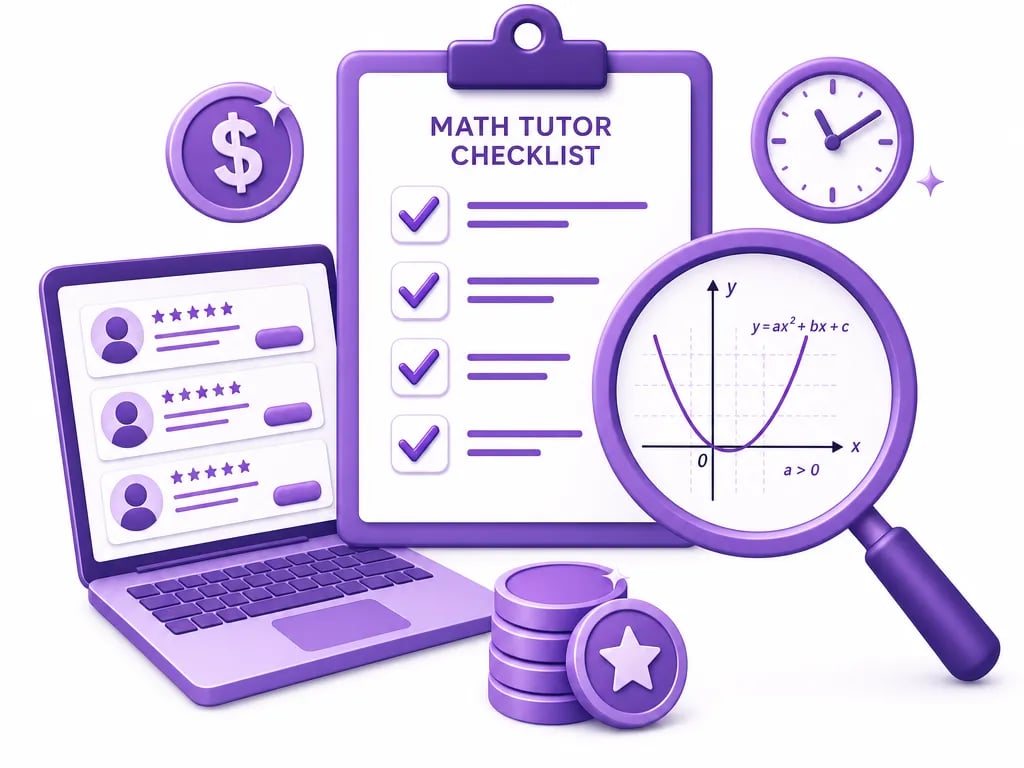
Choosing math tuition in Malaysia comes down to seven checks — apply them equally to an online class or a physical centre, and the right fit becomes obvious. Work through them before you commit to a term:
The Master Class showed us exactly where his gaps were in twenty minutes. We'd spent a year guessing.
Faizal, parent of a Standard 5 pupil, Subang Jaya
Algonova runs the online math classes the checklist above asks for: live classes, certified teachers, small groups, and a clear starting point. We're an international tech and math school for children aged 6 to 17, teaching for 10+ years with students in 97 countries. Math lessons are live sessions with a certified teacher in small groups of up to 10 students: real teaching in real time, not a library of recorded videos your child watches alone.
Every family starts with a free Master Class. It's an AI-assisted talent diagnostic: your child works through real problems while the session reads where they're strong and where the gaps sit, and you leave with a recommended learning path, often not the one you expected. There's no commitment and no cost. It's simply the honest way to see whether online math tuition fits your child before anyone signs up for a term.
Progress is tracked against that path, so you can see what improved week to week rather than guessing. The aim isn't a quick grade bump before one exam. It's steadier understanding, a child who stops dreading math, and a teacher who fits: the things that actually last past the next report card.
Keep exploring before you decide. These guides go deeper on the questions this article touched:
Yes, for most children online math tuition is as effective as a physical tuition centre, and sometimes more, because effectiveness depends on the teacher and class size, not the room. A live online class with a certified teacher and a small group of up to 10 students gives real-time questions, instant feedback, and full attention — the same things that make a good centre work. For example, a Form 2 student who fell behind in algebra can be matched to a teacher who specialises in exactly that gap, even if that teacher isn't in the same city. What matters is that the teaching is live, interactive, and consistent week to week. Watch a free trial session and judge your own child's engagement before deciding.
Choose an online math tutor the same way you'd vet any teacher: check that they are certified and experienced, confirm the class size is small enough for real attention, and make sure they track the KSSR or KSSM syllabus your child follows. Ask to see a live, interactive lesson rather than a recorded video, and take a free trial before committing to a term. During that trial, watch whether the tutor checks your child's understanding and adjusts, instead of just talking through content. A good tutor also gives clear progress feedback so you know what improved and what's still weak. Fit, consistency, and live teaching matter far more than how close the tutor lives to you.
Small-group math tuition and one-to-one each have strengths, and the better choice depends on your child. In a small live group of up to 10 students, children benefit from hearing other students' questions and thinking alongside peers, while the teacher still sees who's lost and can adjust — it often keeps children more engaged than a purely solo session. One-to-one gives maximum individual attention and suits a child with very specific gaps or one who finds any group distracting. Many families find a small group is the sweet spot: enough personal attention to progress, plus the motivation of learning with others. Try a free session in the format you're considering and see which keeps your child more focused.
Yes, online math tuition can support KSSM topics and exam preparation directly, as long as the tuition is built around your child's actual syllabus rather than generic math. A good online provider aligns lessons to KSSR or KSSM, reinforces the topics school moves past too quickly, and practises the question formats your child will face in assessments. For example, a Form 4 student can work through past-style problems live with a teacher who explains each step and corrects mistakes in real time. Ask any provider how they map their teaching to the current syllabus and how they track exam-topic progress. Live, syllabus-aligned teaching is what turns tuition into real exam readiness.
Online math tuition costs in Malaysia vary widely depending on the teacher's experience, the class size, and how many sessions your child attends each week. This guide focuses on choosing the right format rather than price, so we won't quote figures here. We've written a separate guide that breaks down what math tuition typically costs and how online compares to a physical tuition centre on value — you'll find it linked in the Related reading section above. The most useful first step, though, costs nothing: book a free Master Class, see whether the teaching fits your child, and decide from there before comparing any fees.
Start your child's tech journey
Book your free 60-minute trial class with an Algonova certified tutor. No payment, no obligation, just discover what your child can build.

Algonova worldwide
Contact us
Email: int_legal@alg.team
Visit us
Suite 8634, 1021 E Lincolnway, Cheyenne, WY, Laramie, US, 82001
Algonova online LLC International tech school for kids and teens