
Abacus vs Kumon vs Conceptual Math: Which Is Right for Your Child?
Which Is Better?6 min read
Which Is Better?

Arjun Menon
Education Analyst, Algonova Malaysia
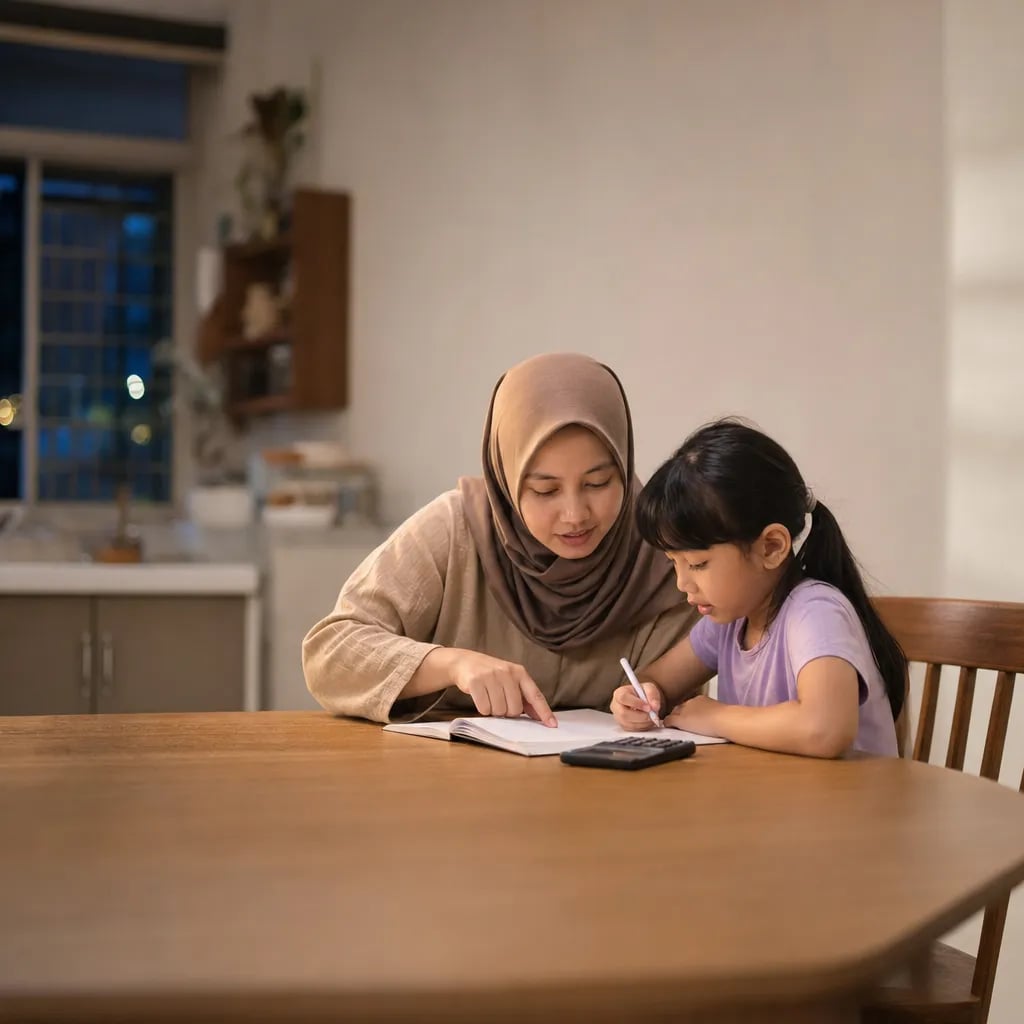
Home tuition in Malaysia costs about RM 45 to RM 50 an hour for a primary school child and RM 50 to RM 60 for Form 1 to 3, based on a rate card checked in October 2026. At 2 hours a week that is roughly RM 360 to RM 480 a month before extras. Online group classes suit steady practice, and a home tutor suits one stubborn gap.
For a face-to-face lesson, the going rate is about RM 45 to RM 50 an hour in primary school and RM 50 to RM 60 in Form 1 to 3. One tutor-matching platform, GoLearn, publishes recommended hourly rates for 2026, and the table below follows them. The figures were checked on 20 October 2026 and are a guide, not a quote.
| Level | Face-to-face (per hour) | Online one-to-one (per hour) |
|---|---|---|
| Primary, Year 1 to 6 (Standard 1 to 6) | RM 45 to RM 50 | RM 25 to RM 30 |
| Form 1 to 3 | RM 50 to RM 60 | RM 35 to RM 45 |
The card gives one range for all of primary, Year 1 to 6, so ask a tutor whether the price changes by year. Another guide, Malaysia4u, puts private one-to-one home tutors at RM 40 to RM 150 an hour in the Klang Valley, as an estimate updated in August 2026. The range is wide because a university student, a retired teacher and a full-time tutor with 10 years of results don't charge alike.
The cheapest hour on the list is not the cheapest month. Count the hours your child actually needs.
These are public guide figures, not quotes, so ask each tutor for a current price. Rates can also differ by subject and by tutor experience.
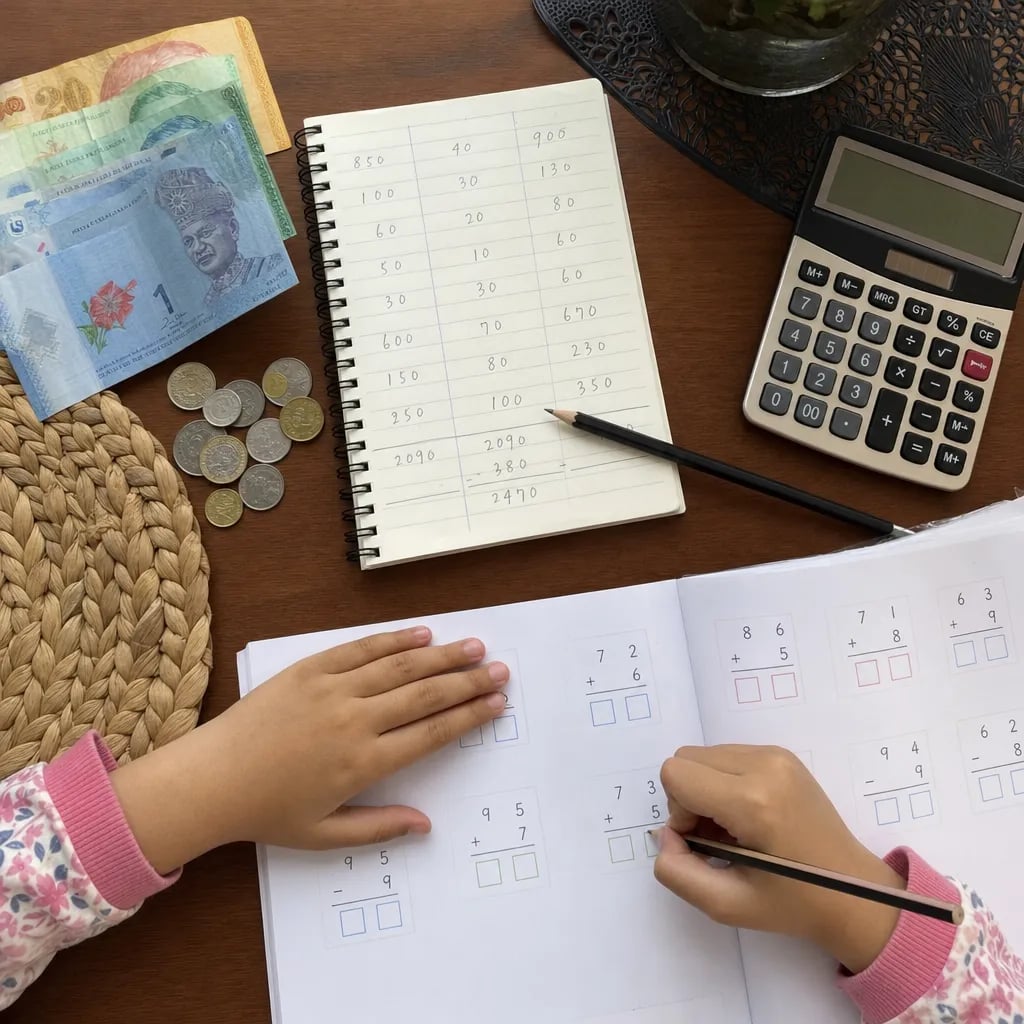
The monthly bill is hours per week times the hourly rate times 4. Most budget guides assume about 8 hours a month, which is 2 hours a week, so the table below uses that.
| Level | Rate per hour | 2 hours a week (8 hours a month) | 12 months |
|---|---|---|---|
| Primary, face-to-face | RM 45 to RM 50 | RM 360 to RM 400 | RM 4,320 to RM 4,800 |
| Form 1 to 3, face-to-face | RM 50 to RM 60 | RM 400 to RM 480 | RM 4,800 to RM 5,760 |
| Primary, online one-to-one | RM 25 to RM 30 | RM 200 to RM 240 | RM 2,400 to RM 2,880 |
A worked example: your Year 3 child needs help with maths only, 2 hours a week. At RM 48 an hour that is 2 × 4 × 48 = RM 384 a month, or RM 4,608 over 12 months. If you add a second subject at the same rate, the bill doubles to RM 768 a month. That's why many families stop at one subject.
Holidays matter too. Some tutors pause during school breaks and some do not, so 12 months does not always mean 12 full payments. Ask whether you pay per lesson or per month.
The hourly rate is only the start. Malaysia4u lists registration or deposit fees, materials charged separately and extra classes before exams as common additions. Three more are worth asking about before you book:
Add them up before you compare: a RM 45 tutor with RM 10 travel per visit costs RM 55 a visit, which is more than a RM 50 tutor who comes with no extra charge. Ask for the total per month in writing.
Usually yes. Malaysia4u says to expect roughly 20 to 30% lower rates outside the Klang Valley. Applied to the RM 45 to RM 50 primary rate, that works out to about RM 32 to RM 40 an hour. That is our own arithmetic on a guide's estimate, not a published rate for any state.
We did not find a trustworthy per-state price list for Penang, Johor, Sabah or Sarawak, so we do not publish one. A table with invented state prices would mislead you. The safer way is to collect 3 quotes from tutors near you and use the middle one. In smaller towns the bigger problem is often supply: fewer qualified tutors travel to your area, and an online class removes that limit.
An online group class is the better choice when your child needs regular practice and a fixed weekly rhythm, and when travel or tutor supply is the real obstacle. A class doesn't depend on who lives near you.
Here is where online helps most:
Algonova runs live online classes with real teachers in groups of up to 10 children. Lessons start from RM 48 each, and lesson length is 45, 60 or 90 minutes depending on the course, so compare per lesson and check the length. For a Year 1 or 2 child, Math Starters is the maths course for ages 6 to 8, and it begins with a free diagnostic of about 60 minutes. Details are on the online maths classes page, the coding classes page and our parent reviews, and the rating is 4.9 out of 5. More than 1M students in 97 countries have learned with Algonova.
For a deeper look at class size, see group vs private tuition in Malaysia.
Home tuition is the better choice when one specific, stubborn gap needs a teacher's full attention, or when a child can't cope in a group. A tutor can stop on the exact step where your child goes wrong and repeat it 5 times while nobody waits.
Home tuition fits best when:
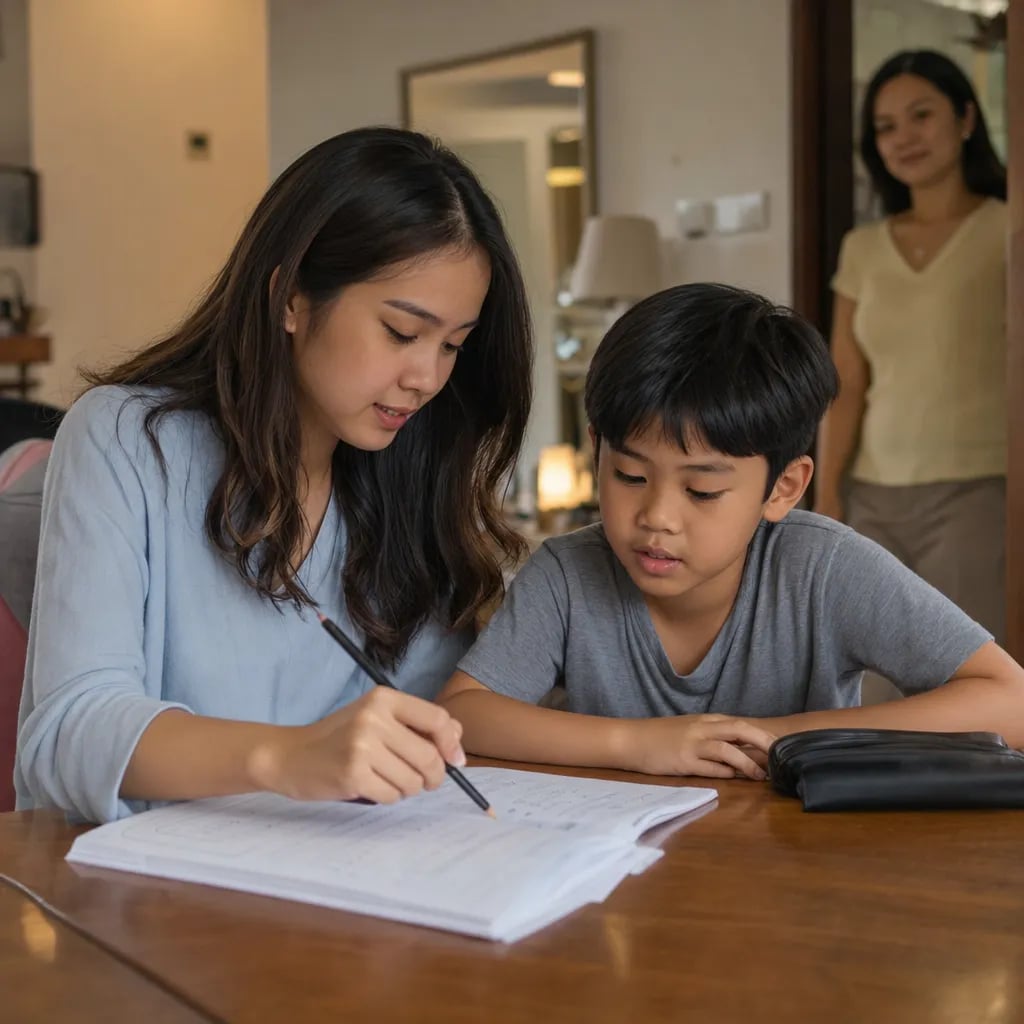
Neither format is cheaper in general. Our view: if your child has no single obvious gap, try a group class first, and move to a tutor if one gap is still there after 8 weeks. At about RM 48 a lesson in a group of up to 10, online sits close to a RM 45 to RM 50 primary home tutor on price, so the real difference is one-to-one attention versus group practice. We compare the two in online maths class vs private tutor and look at cost across formats in maths tuition cost per hour in Malaysia.
Most disappointments come from choosing on price alone. These six are the usual ones:
Not sure where the problem lies? Our guide to why a child struggles with maths lists seven common causes, and the Kumon vs tuition guide covers worksheets versus a teacher. For the topics a Year 1 or 2 child covers, see the Ministry of Education curriculum pages.
A home tutor in Malaysia usually costs about RM 45 to RM 50 an hour for primary school and RM 50 to RM 60 for Form 1 to 3. The figures come from GoLearn's 2026 rate card, which we checked on 20 October 2026. Malaysia4u gives a much wider range of RM 40 to RM 150 an hour for private one-to-one tutors in the Klang Valley, because the price depends on who teaches. A university student sits at the low end, an experienced full-time tutor at the high end. Rates also move with the subject and the area. Neither source is an official price list, so treat both as a guide. The practical step is to collect 3 quotes from tutors near you for the same subject and level, and compare the monthly total, including travel.
A primary school home tutor costs roughly RM 360 to RM 400 a month for 2 hours a week, based on RM 45 to RM 50 an hour and 8 hours a month. The sum is hours per week times 4 times the hourly rate. For one subject over 12 months that comes to RM 4,320 to RM 4,800, although some tutors pause in holidays, so the real yearly total can be lower. A second subject doubles the bill. Add travel charges or a paid trial lesson if the tutor asks for them. Before you start, ask for the monthly total in writing and ask what happens when a lesson is missed, so the number you plan for matches the number you pay. Keep a simple note of each month's lessons so you can spot any difference early.
Home tuition is usually cheaper outside the Klang Valley, by roughly 20 to 30% according to Malaysia4u's 2026 guide. Applied to the primary rate of RM 45 to RM 50 an hour, that would be about RM 32 to RM 40, but this is our own calculation and not a published price for any state. We found no reliable per-state rate list, so we do not give one. In a smaller town, the price matters less than the supply of tutors, because fewer qualified teachers may be willing to travel to your home. Ask 3 tutors for quotes and compare them. If few tutors serve your area, an online class is worth a look because it does not depend on location. Some families in smaller towns try one online trial class first and compare it with the quotes they receive.
Online tuition is often cheaper per hour for one-to-one lessons: GoLearn lists RM 25 to RM 30 an hour online against RM 45 to RM 50 face-to-face for primary level. Online group classes work differently. At Algonova, lessons start from RM 48 each in a group of up to 10 children, with lesson length of 45, 60 or 90 minutes depending on the course, so the price sits close to a primary home tutor. The difference is not a lower price. It is what you get: a fixed weekly schedule, no travel and a class setting instead of private attention. Compare the cost per lesson and the lesson length, not the label online or home. The two formats can cost about the same, so the choice should rest on how your child learns best.
There is no official rule, and the right amount depends on the child's gap. Budget guides such as Malaysia4u assume about 8 hours a month, which is 2 hours a week, and that is a common starting point for one subject. A child who is only a little behind may do well with 1 hour a week plus practice at home. A child with a large gap in maths may need 2 hours for a term. Young children tire quickly, so 2 shorter sessions often work better than 1 long one. Start with the lower number, review after 8 weeks, and increase hours only if progress is slow. Ask the tutor for a short progress note each month so the decision rests on what your child can now do. More hours do not fix a method that does not suit your child.
Some do, and it is not standard. Malaysia4u lists registration or deposit fees and separately charged materials among extra costs, and a tutor who drives across town may add a travel charge. Practice varies tutor by tutor: one may offer a free first lesson, another charges the full hour. There is no rule, so ask before you book. A simple way to avoid surprises is to send 4 questions in writing: the rate per hour, the travel charge per visit, whether the trial lesson is paid, and what happens when a lesson is cancelled at short notice. Then add the answers to the monthly total and compare tutors on that figure alone. A tutor who answers these quickly and plainly is usually easier to work with, and a vague reply is worth noting.
Yes, if the class is built for that age. A 6 or 7 year old can learn well online when lessons are live, short and interactive, and a parent sets up the laptop. Algonova's Math Starters course is for ages 6 to 8, taught by real teachers in groups of up to 10 children, and it starts with a free diagnostic of about 60 minutes so the teacher sees the child's level before the first lesson. A group can feel livelier than a single adult at the table. Some children, however, do better one to one, especially if they are very shy or find it hard to sit still. The diagnostic is a low-risk way to see how your child reacts. Afterwards, ask your child what they liked and what felt hard, because their answer tells you more than a score.
Check a home tutor with a trial lesson, a clear goal and a few simple questions. Ask what the tutor teaches in Year 1 to 6 or Form 1 to 3 and how it links to the school syllabus. Ask for a reference from another parent. Sit in or stay nearby during the first lesson and watch whether your child is asked to think or only to copy. Agree a goal for 8 weeks, such as finishing word problems alone, and review it then. Pay per lesson or per month at first, not for a whole term. Keep lessons in a shared space of the house, with the door open, for the child's safety and your peace of mind. If a tutor objects to these simple arrangements, treat that as a reason to look elsewhere.
Algonova lessons start from RM 48 each, and lesson length is 45, 60 or 90 minutes depending on the course. Classes are live and online, with real teachers, in groups of up to 10 children. Math Starters is the maths course for ages 6 to 8 (Year 1 and 2), and it begins with a free diagnostic of about 60 minutes, with a written report for parents. Coding and design courses are also available, and the page for each course shows the age range and format. Because the price is per lesson and lengths differ, check the length of the lesson on the course page before you compare it with a tutor's hourly rate. The booking form on the page shows the current options for your child. If you are unsure which course fits, the free diagnostic is the usual first step.
Blog


Start your child's tech journey
Book your free 60-minute trial class with an Algonova certified tutor. No payment, no obligation, just discover what your child can build.

Algonova worldwide
Contact us
Email: int_legal@alg.team
Visit us
Suite 8634, 1021 E Lincolnway, Cheyenne, WY, Laramie, US, 82001
Algonova online LLC International tech school for kids and teens

