Best Drawing Apps for Kids in Malaysia (Free, Phone and Tablet)

Learn Design9 min read
Which Is Better?

Arjun Menon
Education Analyst, Algonova Malaysia

Group size decides the outcome far more than the group-versus-private label does. A class of six and a class of twenty-five are both called group tuition in Malaysia, yet they work nothing alike: in one the teacher sees every child's work, in the other your child can sit unnoticed for an hour. Private tuition wins on attention, group tuition wins on motivation and peer questions, and the honest answer depends on one thing about your child that this guide helps you identify.
Algonova is an online school for maths, coding, AI, and design for children aged 5 to 17, with more than 1,000,000 students across 97 countries since 2016. Classes run live with certified teachers in small groups of up to 10 students, and the first trial class is free.
The first question for any tuition centre should be how many children are in the class, not whether it is group or private.
Attention per child falls fast as numbers rise. In a group of six, a teacher can check each child's page in a single lap of the room. Past roughly twelve, checking everyone stops being possible within a lesson, and the class becomes a lecture with exercises.
That is why the label misleads. Small-group tuition delivers most of the benefit of private teaching, while large-group tuition delivers something closer to a second school lesson.
So before comparing prices or schedules, get a number. A centre that will not tell you its class size is answering the question anyway.
Your child hears other children ask the question they were too embarrassed to ask.
That sounds minor and is not. Much of what a child learns in a good small class comes from another child's mistake being corrected out loud. It normalises being wrong, which is exactly what a nervous learner needs.
A group also gives a reference point. A child who thinks they are the only one struggling with fractions discovers that three others are too, and that discovery does more for confidence than any encouragement from a parent.
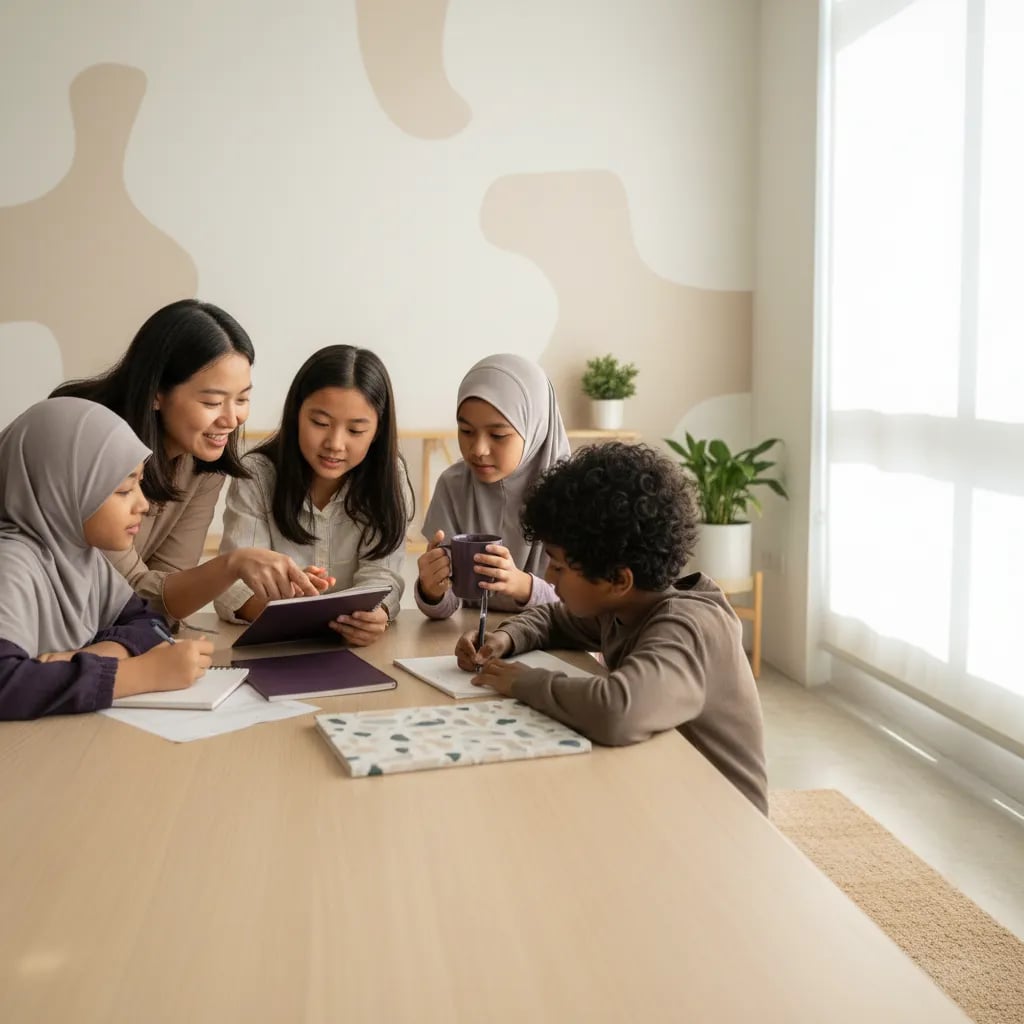
There is a motivation effect too. Children work at the pace of the people around them, and a group that is engaged pulls a wavering child along. A child alone with a tutor has no such current to ride.
The trade-off is honest: in a group your child waits sometimes. The teacher is with someone else, the pace is shared, and a topic your child already knows still gets covered.
Private teaching earns its premium in three situations, and outside them it often underperforms a good small group.
First, a specific diagnosed gap. If your child missed three weeks of school and lost fractions entirely, one-to-one closes that faster than any group, because every minute targets the hole.
Second, a child who is significantly ahead or behind the class. In a group they either wait or drown; alone they work at their real level.
Third, a genuinely anxious child who freezes in front of peers. Some children cannot think while being watched, and for them a group is not a motivator but a threat.
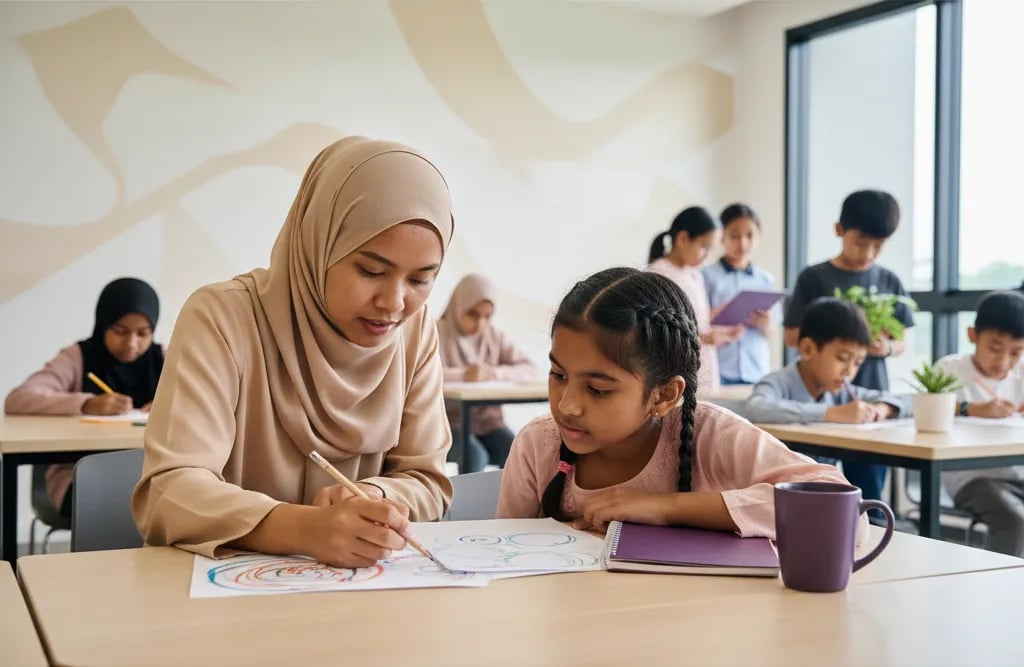
A child taught only one to one can become dependent on being prompted.
When an adult sits beside you, the natural rhythm is to pause and glance up whenever something is unclear. That is efficient in the lesson and unhelpful in an exam hall, where nobody nudges you towards the next step.
The fix is not abandoning private tuition but pairing it with independent work: after each session, a short set the child completes alone, with the tutor reviewing rather than co-piloting.
Useful pattern: private tuition in short bursts to close a specific gap, then a small group to rebuild independence and pace.
Start your child's tech journey
Book your free 60-minute trial class with an Algonova certified tutor. No payment, no obligation, just discover what your child can build.
| Aspect | Private (1 to 1) | Small group (up to about 10) | Large group (15 and above) |
|---|---|---|---|
| Teacher attention | Full | Every child seen each lesson | Whole-class only |
| Pace | Your child's exactly | Adjusted, shared | Fixed by the syllabus |
| Learning from peers | None | High | Low, little interaction |
| Risk of hiding | None | Low | High |
| Builds independence | Needs deliberate effort |
Three signals tell you more than the centre's own description, and they work for either format.
Does your child speak during the lesson? A child silent for a full hour is not participating, and in a group that silence is easy to miss. Does anyone correct them in the moment, or only mark the work afterwards? And do they want to go back?
In a group trial, add a fourth check: count how many times the teacher looks at your child's work specifically. If the answer is zero in an hour, the group is too large regardless of what the brochure says.
For related reading, see Kumon vs Eye Level, worksheets versus live classes, and why a child is weak in maths. On choosing a provider generally, see how to choose an online coding school in Malaysia.

Algonova worldwide
Contact us
Email: int_legal@alg.team
| Naturally, but unsupported |
| Best for | Closing a specific gap | Regular ongoing progress | Revision and coverage |
Answer from what you have actually seen, not from what you would prefer.
Specific gap, anxious child, or far off the class level: private, at least for a while. Steady progress, needs motivation, benefits from other people's questions: small group. Large groups make sense mainly for revision, not for learning something new.
If you are also weighing where the class happens, see online maths tuition in Malaysia and online class versus private tutor.
Group size matters more than the group-versus-private label, so ask how many children are in the class before anything else. A small group of up to about ten gives most of the attention of one-to-one teaching, plus the benefit of hearing other children's questions. A group of twenty behaves like a second school lesson, where your child can sit unnoticed for an hour. Private tuition earns its place when there is a specific missed topic, when a child is far ahead or behind the class, or when a child freezes in front of peers. For steady year-round progress, a well-run small group usually delivers more per hour of a parent's time.
Past roughly twelve, a teacher cannot check every child's work within a single lesson, and the class becomes a lecture with exercises attached. The practical test is whether the teacher can complete one lap of the room looking at each page. In a group of six that takes a few minutes. In a group of twenty it does not happen at all. During a trial lesson, count how many times the teacher looks specifically at your child's work. Zero in an hour means the group is too large. At Algonova, groups run to a maximum of 10 students for exactly this reason.
Usually yes in a small group, and often badly in a large one. A shy child benefits from hearing other children ask the question they were afraid to ask, which normalises being wrong. In a group of six a teacher also notices hesitation without the child having to announce it. The exception is a genuinely anxious child who cannot think while being watched. For them a group is a threat rather than a motivator, and private teaching is the better start. A trial lesson settles it quickly: watch whether your child speaks at all during the hour.
In three situations: a specific missed topic, a child far off the class level, or a child who freezes in front of peers. If your child missed three weeks of school and lost fractions entirely, one-to-one closes that hole faster than any group, because every minute targets it. A child significantly ahead or behind will either wait or drown in a group, and alone they can work at their real level. Outside those cases, a good small group often produces more progress, because peer questions and shared pace add something private teaching cannot.
Yes, and it is the most common hidden cost of one-to-one teaching. With an adult beside them, the natural rhythm is to pause and glance up whenever something is unclear. That is efficient during the lesson but unhelpful in an exam hall, where nobody nudges the child to the next step. The fix is not to abandon private tuition but to pair it with independent work: a short set after each session that the child completes alone, with the tutor reviewing rather than co-piloting. A useful sequence is private tuition in short bursts to close a gap, then a small group to rebuild independence.
In a large group yes, in a small group much less, because the teacher can set harder work for a child who is ahead. The question to ask a centre is what they do when one child finishes early. A real answer involves extension tasks. A vague answer means your child will wait. For a child a long way ahead of the syllabus, private teaching or a higher-level group is the honest fit, since no amount of extension work fixes a two-year gap. Self-paced worksheet programmes also suit this profile, because progression is by assessment rather than by year group.
Ask the class size, what happens when a child finishes early, and what happens when a child cannot do the work at all. Those three answers reveal whether the teaching adapts or simply proceeds. A centre with real answers has thought about the range of children in the room. Also ask how the teacher tells the difference between a child who is slow and a child who is lost. That distinction drives everything else. Then watch the trial for participation, in-the-moment correction, and whether your child wants to return.
Mainly for revision and syllabus coverage rather than for learning something new. In a revision setting the material is already familiar, so a teacher working with the whole class at once is efficient. Nobody needs individual unblocking, they need reminders and practice under time pressure. For a topic the child has never understood, a large group rarely helps, because the one thing needed is someone noticing the confusion. So the format is not bad, it is simply aimed at a different job than most parents assume when they enrol.
Yes, and switching deliberately is often better than choosing one format for years. A common effective sequence is private tuition for four to six weeks to close a specific gap, then a small group for ongoing progress and independence. What rarely works is switching every month, because each change costs a few sessions of settling in and re-assessment. Give any format at least two months before judging, and watch behaviour rather than marks: does your child start work unprompted and explain what they did?
About two months of consistent attendance, with one month usually too early to judge. What to watch is not the next test score but whether your child begins work without being chased and can explain their reasoning rather than only showing an answer. A child enthusiastic in week one who avoids it by week three is usually signalling the wrong difficulty level rather than the wrong format. If the same error keeps appearing in the same place after two months, the format is not addressing the real gap and it is time to change.
Visit us
Suite 8634, 1021 E Lincolnway, Cheyenne, WY, Laramie, US, 82001
Algonova online LLC International tech school for kids and teens