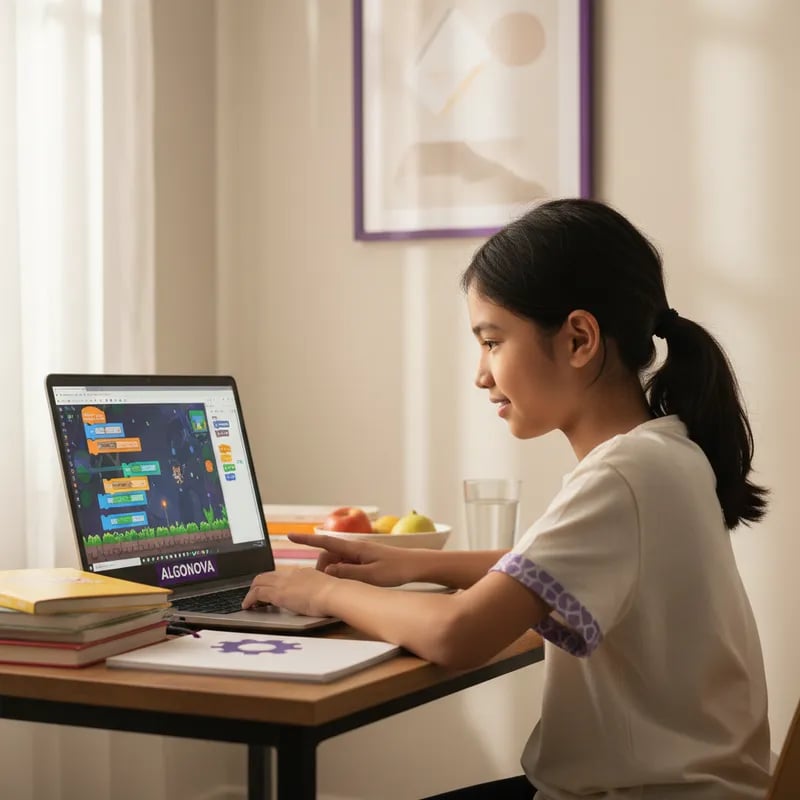
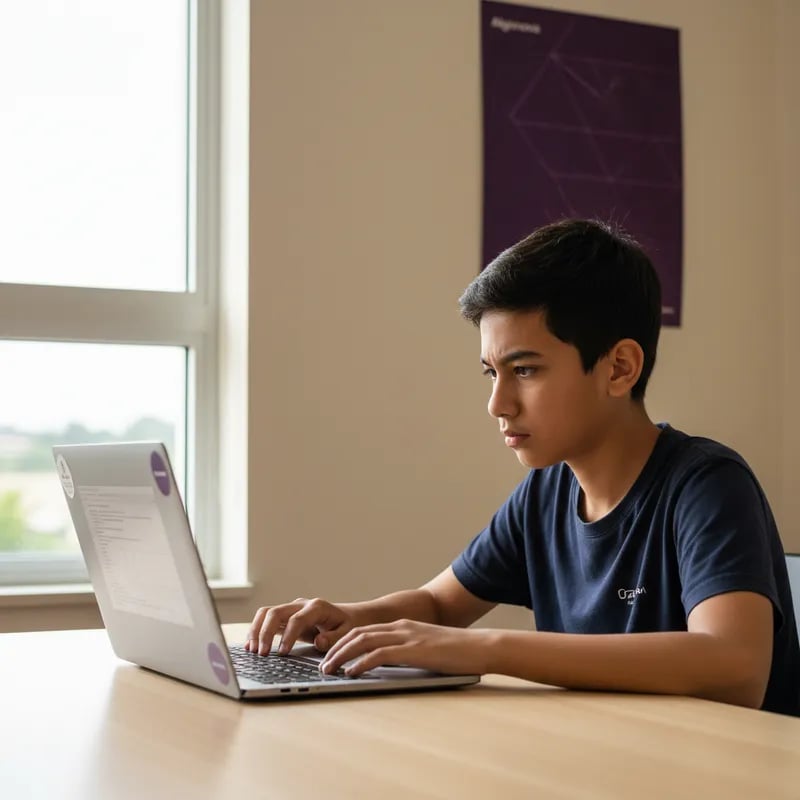


Daniel was the kid stuck on YouTube and games. Three months in Junior Coders and he's building his own Scratch game instead of just playing them. His teacher actually knows what makes him tick.

Tan Wei Ming
Father of Daniel, 10 · Subang Jaya
Coding & Programming for Kids & Teens · Ages 5-17
Online coding and programming classes for kids and teens 5-17 at Algonova Malaysia. Beginner-friendly, no experience needed. From Scratch blocks to real Python and Roblox Studio with Lua. A STEM-aligned path that builds AI foundations and digital, future-ready skills. Used by families across Kuala Lumpur, Selangor, Penang and Johor Bahru. 5 courses across 3 age groups, taught online by certified teachers. Start with a free trial class.
1,000,000+
students worldwide
97
countries
4.9★
parent rating
5-17
years old
About the field
A skill for any profession
Needed in every job within 5 years
Programming knowledge will be required in nearly every profession over the next 5 years, from medicine and finance to design. We give your child the foundation early.
What 90% of schools skip
Practical IT, not theory
Schools teach how to use software. We teach how to build it, code, games, websites, AI tools. The skill the industry actually hires for.
Real careers in Malaysia's tech scene
MyDIGITAL by 2030
Malaysia targets 25.5% of GDP from digital economy by 2030. Software developer, data analyst, game designer, careers your child can actually choose. We start with the same tools the industry uses today.
Programs by age
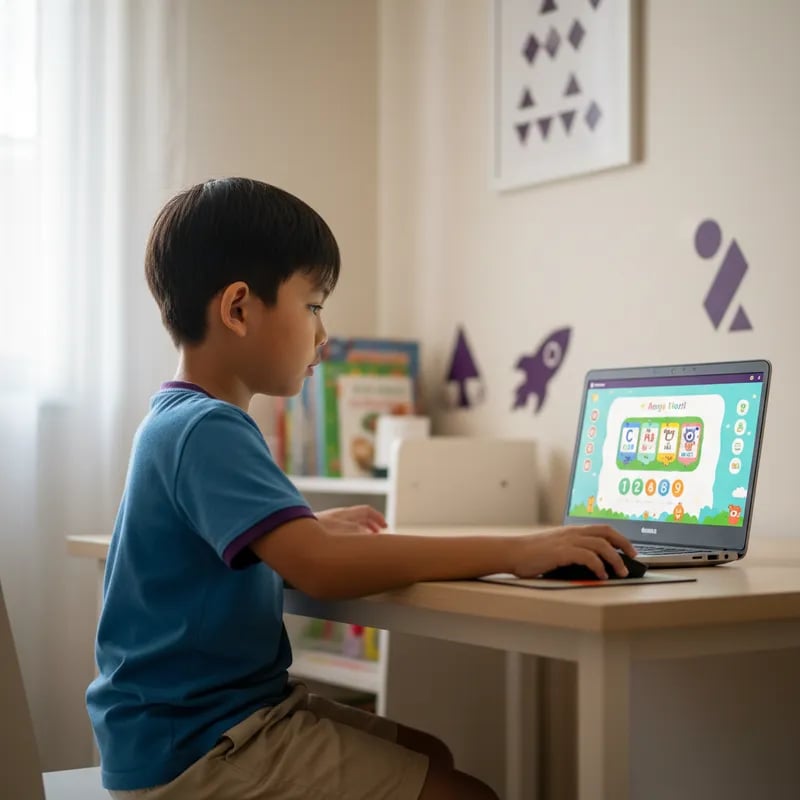
How it works
Every learner starts with a personal plan and a matched teacher, not a generic class.
01
1. Free trial class (60 min)
Your child meets a real teacher and tries a hands-on project. We see their starting level and interests. No card required.
02
2. Personal course plan
Based on the trial, we recommend the right course for your child's age, level, and interests: Digital Literacy, Scratch, Roblox, or Python.
03
3. Matched with a certified teacher
Teachers are selected carefully, with a minimum of 3 years of IT teaching experience. Lessons run in a small group, a mini group, or one to one.
04
4. Weekly lessons + real projects
Live online classes on our learning platform. Every module ends with a project your child built, and by the end of the course they have a real portfolio.
Free 60-min trial · No card required
How we compare
Curriculum
5 courses across three age groups, from first digital skills to real Python on GitHub.
Foundation · Digital Literacy + Scratch
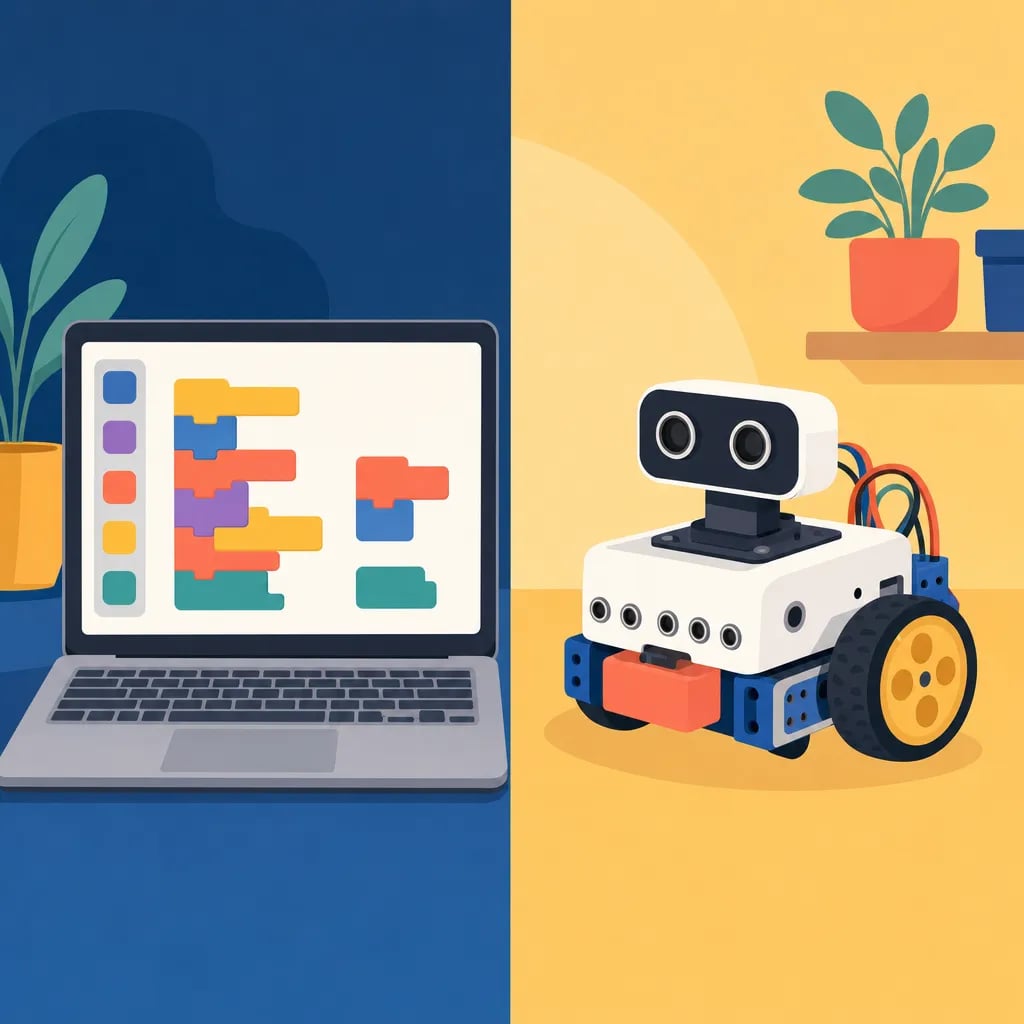
Digital Literacy (7+) builds confident mouse, keyboard, and AI-tool skills. Visual Programming with Scratch (8-11) introduces block-based coding through games and stories. Foundation for every later language.
Game Development · Roblox + Lua
Game Design (10-12) uses Roblox Studio, the same engine professional indie developers use, plus real Lua scripting. By course end, your child publishes their own Roblox game.
Real Python · Year I + Year II
Python (12-17) uses VSCode and GitHub, the same tools real developers use. Year I covers fundamentals (variables, strings, nested structures). Year II covers data structures (lists, dictionaries, exception handling). Portfolio ready for universities like Curtin, Monash, Sunway.
About the program

Reza F. · Python Teacher · 4.9★ from parents
No paid software, free professional tools
We code in Python, Scratch, and Roblox Studio, all free and industry-standard. No licenses, no monthly fees. Your child keeps building at home between classes.
A real project in every class
Every class ends with something that runs, a game, an app, or a website. By the end of Senior your child has 8-10 projects on GitHub, not just exercises.
Skills universities in Malaysia ask for
Python is the #1 language in AI, data, and web development. Starting at 9-13 means your child arrives at Curtin, Monash or Sunway already fluent in what admissions and employers ask for.
Same teacher all year
Your child works with the same coding teacher the whole year, no rotation between modules. Continuity builds real confidence and momentum.
Algonova Teaching Team
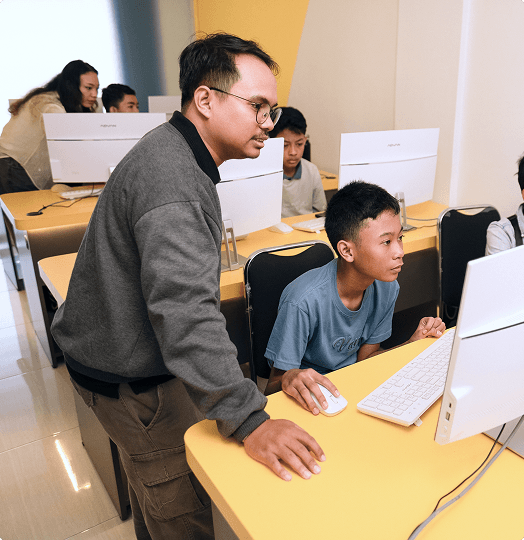
Dimas stayed with me even when I was struggling with my project. Without him, I wouldn’t have been able to finish it. I want to keep getting better with him.

Satria Wiguna
Python student

Farah A.

Reza F.

Ibnu S.

Friska M.

Muhammad S.

Esti H.

Dimas F.
Free trial class · 60 minutes · No card
Your child meets a real teacher and builds a real project in 60 minutes online. No card, no commitment. You decide afterwards.
What Malaysian parents say
Daniel was the kid stuck on YouTube and games. Three months in Junior Coders and he's building his own Scratch game instead of just playing them. His teacher actually knows what makes him tick.
Tan Wei Ming
Father of Daniel, 10 · Subang Jaya
We tried two other coding schools before. Algonova was the only one where Yusuf didn't want to skip a class. The Python track they built for him made it feel like his own thing, not homework.

Faridah Mohamed
Mother of Yusuf, 13 · Petaling Jaya
I'm a software engineer myself. I was skeptical about online classes for a 7-year-old. The methodology is solid. They actually teach computational thinking, not just drag-and-drop.

Ravi Kumar
Father of Aanya, 7 · Mont Kiara
AWARD WINNING TECH EDUCATION




FAQ
Children can start coding at Algonova Malaysia from age 7. The path is built around age. Digital Literacy (7+) introduces the mouse, keyboard, file management and everyday AI tools, so young beginners feel confident on a computer first. Visual Programming with Scratch (8-11) builds their first real coding logic through block-based projects. Game Design with Roblox Studio and Lua (10-12) moves them into genuine game development, and Python (12-17) teaches professional text-based programming with VSCode and GitHub. No prior experience is needed at any stage, because each course assumes a fresh start. For a child who is 6, we recommend beginning with Math Junior instead (see /math) and moving into coding at 7. A free trial class helps us confirm the right starting point for your child's age and interest.
No, your child does not need a special or expensive laptop. Any laptop from the last five years works well, because the whole platform runs inside a web browser and there is nothing heavy to install or download. A tablet is even enough for Digital Literacy at age 7, though a laptop with a real keyboard is better for the older courses like Python, where typing real code matters. You will also need a stable internet connection, since every class is live online with a real, certified teacher rather than a recorded video. Headphones and a quiet space help younger children focus. If you are unsure whether your device is suitable, the free trial class is the simplest way to confirm everything works before you commit to a course.
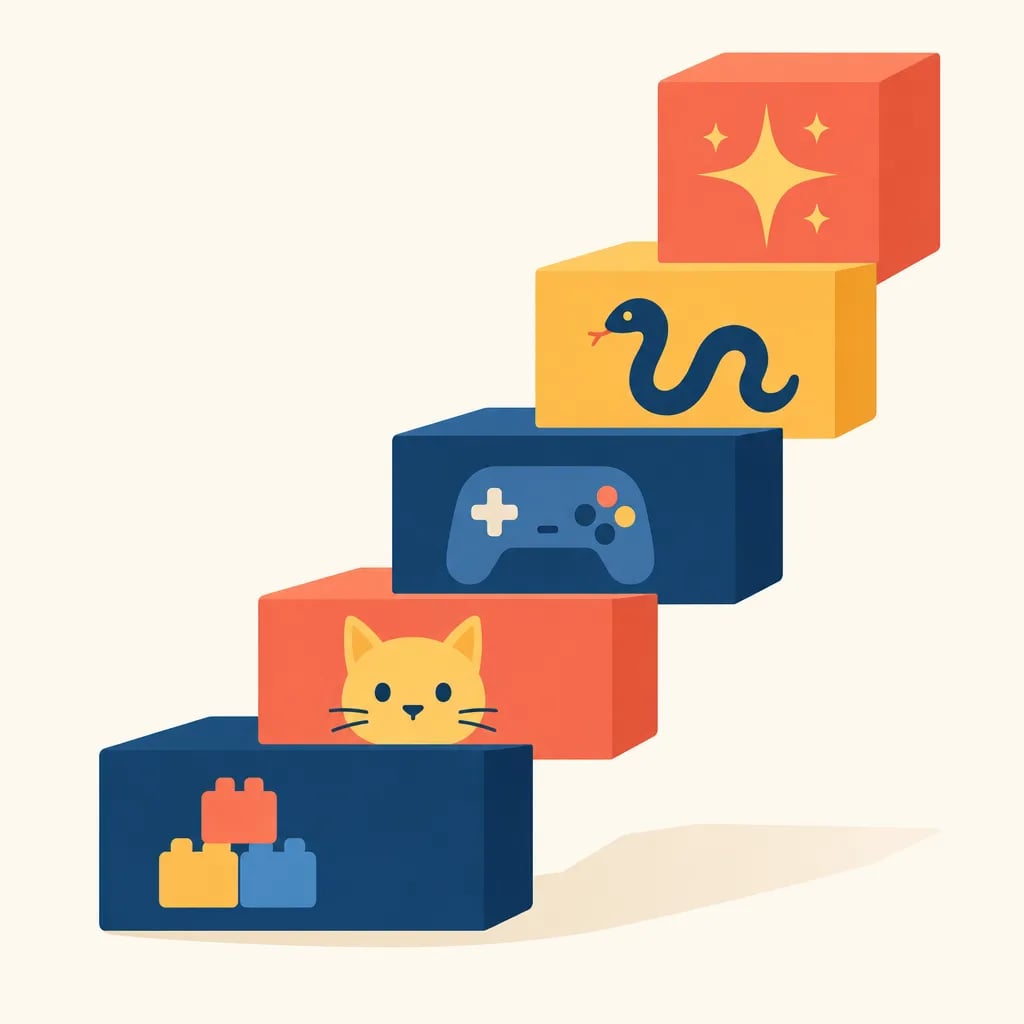
Each course runs 32-36 lessons, which is usually about 8-11 months at a once-weekly cadence. Specifically, Digital Literacy is 36 sessions, Visual Programming is 36, Game Design is 36, Python Year I is 36 and Python Year II is 32. Classes are live online with a real, certified teacher in small groups, so the pace stays steady, guided and consistent from week to week. Most children complete 2-3 courses across their age progression, moving naturally from one to the next as they grow, for example from Scratch into Roblox game design, then into Python. This step-by-step structure means learning compounds year on year rather than resetting. A free trial class helps us recommend the right starting course and map out the sequence that fits your child.
Yes. Your child receives an official Algonova certificate after completing each course level, and it can be added to school portfolios or, for older students, university applications. Because every course is project-based, the certificate is backed by real work, the apps, games and code your child has actually built and saved, not just attendance. Classes are live online with a real, certified teacher, so the progress behind each certificate is genuine and guided rather than self-paced clicking through videos. With several levels from Digital Literacy through Python, children earn certificates step by step as they advance through the age-based progression from 5 to 17. This gives families a clear, tangible record of what a child has learned at each stage, useful for schools, scholarships and future study.
Classes are 100% online and live. Sessions run on our learning platform with a real, certified teacher and are available anywhere in Malaysia, from Kuala Lumpur, Selangor, Penang, Johor Bahru and beyond, so distance is never a barrier to joining. Sessions are fully live, not pre-recorded, so your child codes alongside the teacher in real time and can ask questions as they build. Classes run one to one private, in a mini group or in a small group, with the same certified teachers and curriculum whichever you choose. Many families choose Algonova for the flexibility and the wide choice of class times. You can experience a live lesson first in a free trial class and see which schedule suits your child best.
The courses differ by age group and the tools each one teaches, forming a clear progression. Digital Literacy (7+) covers computer foundations, mouse, keyboard, file management, plus everyday AI tools, so beginners get comfortable first. Visual Programming (8-11) uses Scratch block-based coding to build early logic and first real projects without typing syntax. Game Design (10-12) steps up to Roblox Studio with genuine Lua scripting, where children build and publish playable games. Python (12-17) is professional text-based programming with VSCode and GitHub, the same tools working developers use every day. Each course assumes no prior experience and leads naturally into the next, so a child can start at Scratch and finish with a real Python portfolio. A free trial class helps us place your child at the right entry point.
Yes. The free trial class helps us recommend the best starting course for your child's age and interest, and switching afterwards is possible as their interest and progress develop. Because the courses follow a clear progression, Digital Literacy, Visual Programming with Scratch, Game Design with Roblox, then Python, moving between them feels natural rather than disruptive, and skills carry forward from one to the next. If a child discovers they love game design more than block coding, or is ready to jump ahead to Python sooner, we adjust the plan with you. Classes are live online with a real, certified teacher, so we can guide each child individually to the path that fits them best. Nothing is locked in. The sequence follows your child, not the other way around.
The price is personalised, so it reflects your child's actual plan rather than a fixed, one-size-fits-all figure. The cost depends on the course, the format you choose, one to one private, a mini group or a small group, and the length of the program, which is why we quote per child rather than publishing a single price. We share a clear, itemised quote after the free trial class, once we have seen your child's level and recommended the right starting course and format. The trial itself is completely free: no card is needed and there is no obligation to continue, so there is no risk in finding out exactly what fits your budget and goals. Group classes are more affordable per session, while private lessons offer the fastest, most personalised pace, and we help you weigh both.
Classes are taught primarily in English, which is also the language of real coding, because Python, Scratch blocks, VSCode and GitHub all use English keywords, so learning in English builds skills your child will use for years. For younger children or families who prefer it, our certified teachers can explain concepts in Bahasa Malaysia during the live online sessions, so nothing is lost in the early lessons. For example, a 7-year-old in Digital Literacy can follow instructions bilingually while still absorbing the English terms that appear on screen. This bilingual support means your child builds both coding ability and the technical English that Malaysian universities and future employers expect, without feeling left behind at the start. As they progress toward Python, lessons shift more fully into English at a comfortable, guided pace.
Yes. Algonova's curriculum is STEM-aligned and supports the direction of Malaysia's MyDIGITAL blueprint, which targets 25.5% of GDP from the digital economy by 2030. Children learn the same tools used across industry, Scratch, Python, VSCode and GitHub, rather than toy software, so their skills map directly onto real digital-economy work. For example, a teenager finishing Python Year II leaves with genuine projects hosted on GitHub, the kind of portfolio that strengthens applications to universities like Monash Malaysia or Taylor's. We are an independent education provider, not a government programme, but the competencies we teach, computational thinking, coding and AI literacy, align closely with the national skills Malaysia is investing in. That makes our courses a practical head start for children growing up in a digital economy.
Yes, wherever you are in Malaysia, there is effectively a class for you, because every class is live online. Our sessions reach Kuala Lumpur, Petaling Jaya, Penang, Johor Bahru and beyond, taught by a real certified teacher in real time, not a recording. For example, a parent in Johor Bahru can book the same Scratch course online that a Petaling Jaya family takes, with the same teacher quality and curriculum. Because online sessions are live and interactive, your distance from any city never limits the quality of teaching your child receives. A free trial class lets you experience a live lesson first and see how it fits your family's routine before committing.
Yes. Every class is live with a vetted, certified Algonova teacher in a private online room, one to one, a mini group or a small group, never an open public class with strangers. Sessions run inside a controlled learning platform built for kids, not random internet chat, and parents are welcome to sit in on the free trial to see exactly how it works. For example, a parent in Kuala Lumpur can stay nearby during the first lesson and watch how the teacher guides their child. Because progress is project-based and saved on the platform, you can review what your child built in any lesson at any time, so there are no surprises about screen time or content. We take child safety, supervision and a positive learning environment seriously at every age.
Free Class · 60 minutes · No card
Free 60-minute online trial class. Your child builds a real project. We share a personal learning plan after.

Algonova worldwide
Contact us
Email: int_legal@alg.team
Visit us
Suite 8634, 1021 E Lincolnway, Cheyenne, WY, Laramie, US, 82001
Algonova online LLC International tech school for kids and teens