How to Choose an Online Coding School for Kids in Malaysia: A Parent's Guide
Course Guides8 min read
Coding Education

Hafiz Rahman
Lead Coding Instructor at Algonova Malaysia
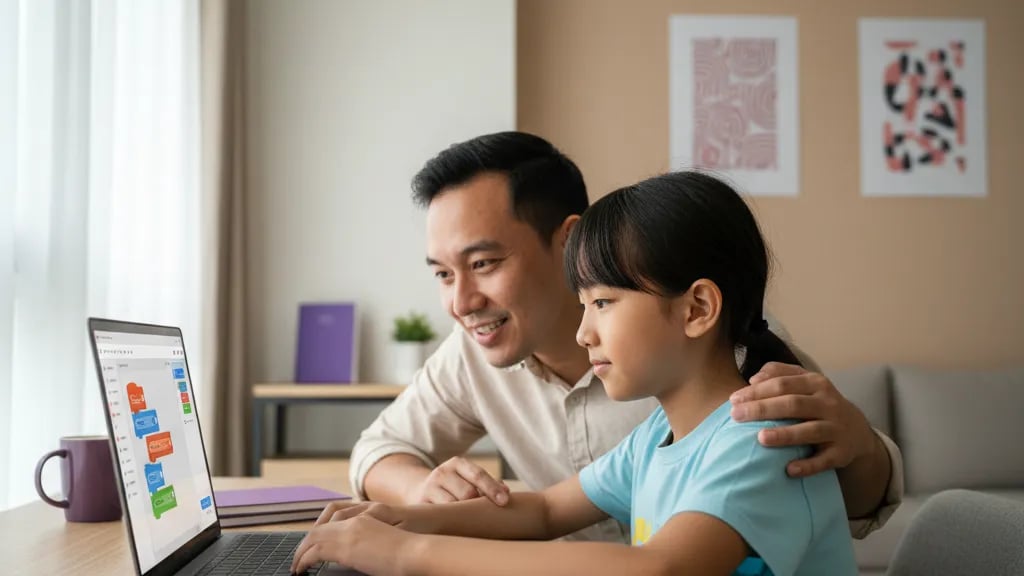
A free coding trial class for kids in Malaysia is usually a 60-minute live online session in which your child builds a small game or animation with a real teacher, and you see the teaching style before paying anything. It suits children aged 7-17, with or without coding experience. Use the hour to judge three things: how much your child builds, how the teacher explains and how honest the follow-up is.
Algonova is an online school of coding, maths, AI and design for children aged 5-17, with more than 1,000,000 students in 97 countries. Lessons run live with a teacher in groups of up to 10, and parents rate the school 4.9 out of 5. Our free coding masterclass in Malaysia lasts 60 minutes and runs online.
A trial class answers one question: will this teacher and this method work for my child? It is a sample lesson, not a talent test and not a sales meeting.
Coding schools in Malaysia run trials in a few formats. Centre-based schools invite you to a branch. Online schools, like ours, run the lesson over video, so a family in Kuching gets the same class as one in Mont Kiara. Our comparison of online vs physical coding classes in Malaysia goes through the pros and cons of each.
Whatever the format, a good trial has your child doing real coding for most of the hour. If the session is mostly slides about the school, you have learned something too.
In a well-run trial, your child spends more time building than listening. Here is how the Algonova masterclass is split:
| Time | What happens |
|---|---|
| 0-10 min | The teacher meets your child and asks what they enjoy: games, drawing, building |
| 10-35 min | Your child builds a small game or animation, with their own hands on the keyboard |
| 35-50 min | Open questions from the child and from you |
| 50-60 min | The teacher suggests which track fits and explains the next steps |
Younger children usually work in visual, block-based tools similar to Scratch from MIT. Teenagers may write their first lines of Python instead. Our guide to Scratch vs Python explains which suits which age.
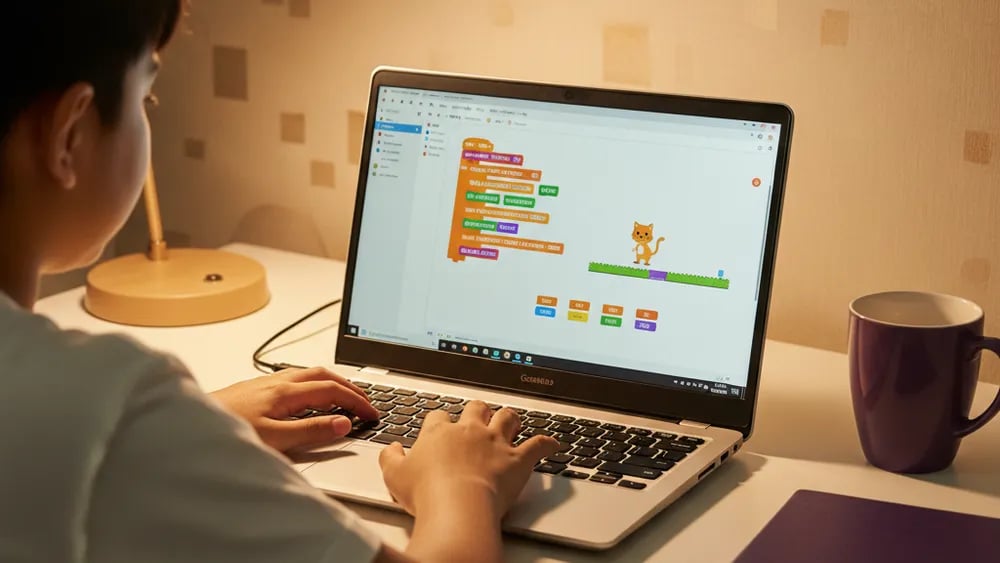
At the end your child has a finished mini-project and a certificate. Many children keep showing the project to family for days, and that reaction tells you a lot.
I tell parents to watch their child, not me. If by minute fifteen the child is suggesting what the game should do next, the trial has already done its job.
Hafiz Rahman · Lead Coding Instructor at Algonova Malaysia
Preparation takes ten minutes, and most of it is about the room, not the child. You need:
Then set expectations. Tell your child it is a fun lesson, not a test, and that nobody expects them to know coding already. Sit nearby for the first few minutes, then step back. Children often freeze when a parent is reading over their shoulder.
One more tip: let your child hold the mouse. If you take over to "help", the teacher cannot see how your child thinks, and the trial loses most of its value.
Ready to try it? Book a free 60-minute coding masterclass and see your child build a first project with a live teacher.
Watch your child more than the screen. These signs tell you whether the class works:
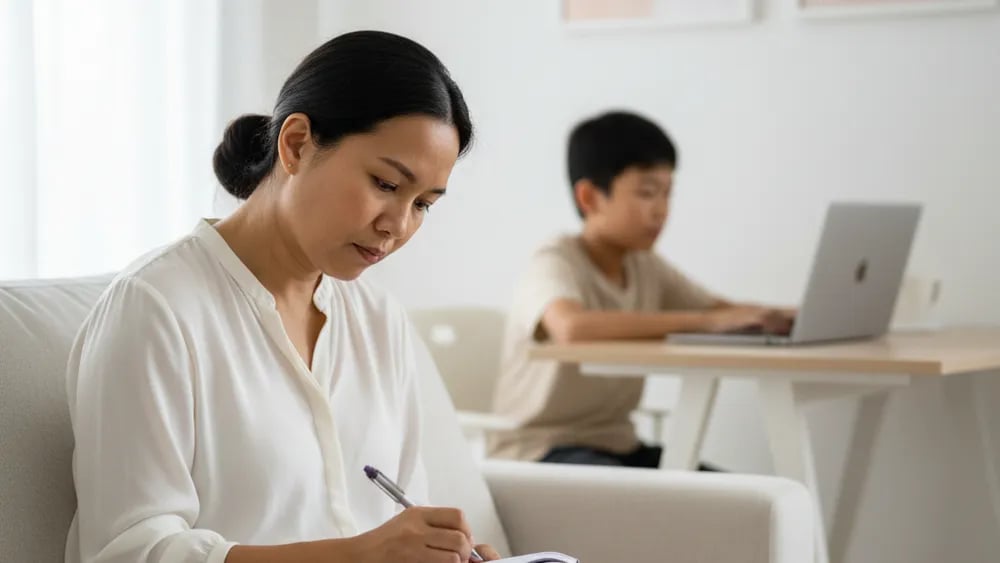
Red flags are just as clear. Be careful if there is pressure to pay before the class ends, if your child barely touches the keyboard, or if nobody can tell you who the regular teacher would be. Our article on how to choose an online coding school has a longer checklist.
The best signal comes after the call. If your child asks "When is the next one?", that interest is worth more than any brochure.
A good first lesson ends with something the child made that actually works. Pride in a small finished game keeps a child coming back far longer than a long explanation.
Hafiz Rahman · Lead Coding Instructor at Algonova Malaysia
Use the last minutes, or a follow-up call, to get clear answers in writing. Good questions:
If your child is younger or unsure about coding, our list of 8 signs coding is right for your child and the age-by-age guide to starting coding can help you decide. The national curriculum from the Ministry of Education already brings basic coding ideas into upper primary through Reka Bentuk dan Teknologi, so a trial is also a good way to see how ready your child is.
If your child is 6-8 and maths is the bigger worry, there is a separate option: a free 60-minute maths diagnostic that ends with a written report. You can see all coding tracks on our coding courses page.
Yes. A genuine free coding trial class costs nothing and should not ask for card details. At Algonova the 60-minute masterclass is fully free with no obligation to continue. Schools offer trials because coding is hard to judge from a website. Parents need to see the teacher and the method, and children need to find out whether they enjoy building things. After the class you receive a recommended track for your child, and the decision is yours. Think of it as a test drive. You would not buy a car from a brochure, and an hour with the real teacher tells you more than any website. If a school asks for payment details before the trial, ask why before you book.
Most coding trial classes suit children from about 7 to 17, and the Algonova masterclass is open to ages 5 to 17 with the project adjusted to each child. Younger children usually work with visual blocks, dragging commands to move a character. Children aged 10-12 often build a small game with scoring. Teenagers may write their first Python lines. A 14-year-old who has never coded can still start from zero; the teacher adapts the task during the lesson. An 8-year-old might make a cat chase a ball across the screen, while a 13-year-old might code a simple quiz that keeps score. Ask the school which tool your child will use so you know what to expect.
No experience is needed. A good trial class is designed for complete beginners and adjusts upward for children who have already tried Scratch or Python. The teacher spends the first few minutes finding out what your child knows and likes. A beginner might animate a character; a child with Scratch experience might add variables or a score. Basic reading in English or Malay helps, and typing speed does not matter. Children who have used Roblox or Minecraft often pick up the logic quickly, because they already think in rules such as "if this happens, do that". Telling the school about any previous coding at booking helps the teacher prepare a better task.
A laptop or tablet with a stable internet connection is enough. At Algonova everything runs in the browser, so there is no software to install before the class. A laptop with a mouse is the most comfortable for building games, but a tablet works for younger children. Headphones with a microphone help your child hear the teacher clearly and keep background noise down. Check the camera and sound 10 minutes before the start. If you only have a phone, ask the school before booking. A small screen makes dragging code blocks much harder for a child. A quiet corner matters more than an expensive device.
Stay nearby for the first few minutes, then step back so your child can talk to the teacher directly. You are welcome to join the question time near the end. Children often go quiet when a parent watches every click, and the teacher needs to see how your child thinks without help. Sitting in the same room with a notebook works well. Write down what your child enjoyed and any questions you have. Also note the moment your child first smiled or asked a question. That moment often says more than the finished project. The last part of the class is the right moment to ask about the learning path.
By the end of a good trial your child should have a small working project, such as a game or animation, and be able to explain one thing they made happen. That is the realistic goal for one hour. Nobody learns to code in a single lesson, but a child can understand that a program is a set of instructions and that they can change it. At Algonova children also receive a certificate after the masterclass. For example, a 10-year-old might make a character jump when a key is pressed and count points when it touches a star. If your child shows you the project the next day, that is a good sign.
The trial went well if your child talked with the teacher, built something that works and wants to do it again. Your own impression of the teacher counts too. Look at engagement more than talent. A shy child who opened up by the middle of the hour had a good class, even if the project is simple. A child who watched the teacher's screen the whole time did not. Write down your impressions the same evening. A week later, details such as how the teacher handled a mistake are easy to forget. Ask your child one question afterwards: what was the best part? A specific answer usually means real interest.
After the class you get a recommendation for the track that fits your child, and then you decide whether to enrol. There should be no pressure to sign up the same day. At Algonova the teacher explains the suggested path, for example from visual coding to Python, and the team follows up once to answer questions. Many families take a few days to think about schedule and budget. Take your time. A good school will still have a place for your child next week, and a decision made calmly tends to stick. Ask for the group size, the regular teacher and the full fee in writing before you commit.
For coding, an online trial shows you almost everything a centre visit would, because the work happens on a screen either way. Online trials save travel time and let families outside the Klang Valley join the same class. They also show you exactly how regular lessons will feel at home. A centre visit suits families who want to see a physical classroom or who prefer robotics kits. Check the length of the regular lessons and whether they are in a small group, since that affects attention more than the location does. Decide by format of the regular lessons, not by the trial alone.
Yes, for children aged 6-8. If maths is the bigger concern, Algonova offers a separate free 60-minute online maths diagnostic for Darjah 1-2 pupils instead of the coding masterclass. The diagnostic checks which earlier topics are missing and ends with a written report and learning plan. It suits families whose child struggles with numbers, word problems or confidence in maths. For older children, coding is often the better way to build the same logical thinking. The diagnostic is run by a maths teacher, not a coding teacher, so the questions focus on numbers, shapes and word problems from the Darjah 1-2 syllabus. Each session takes 60 minutes and is free.
Start your child's tech journey
Book your free 60-minute trial class with an Algonova certified tutor. No payment, no obligation, just discover what your child can build.

Algonova worldwide
Contact us
Email: int_legal@alg.team
Visit us
Suite 8634, 1021 E Lincolnway, Cheyenne, WY, Laramie, US, 82001
Algonova online LLC International tech school for kids and teens