
Online Math Tutoring for Primary & Middle Schoolers: Options & Pricing 2026
Math Education8 min
Course Guides

Bayu Nugraha
Children's Coding Specialist
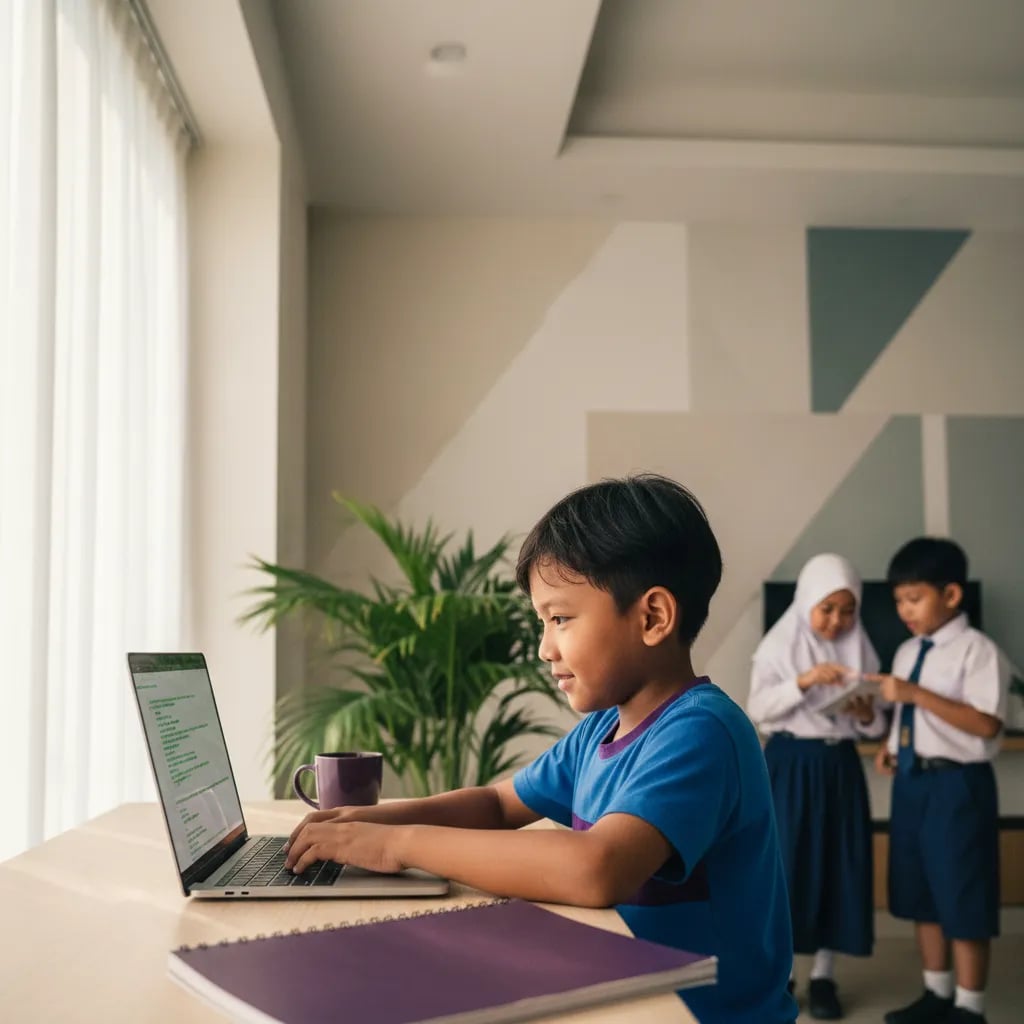
A Python course for kids is a text-based coding class that teaches real programming syntax — suited for children aged 9-17 who already have a logic foundation from Scratch or another block-based platform. A regular session runs 90 minutes. A good course uses certified teachers, small groups, and real projects like apps or bots, not just syntax drills with no context.
Algonova is an online coding, math, AI, and design course platform for kids aged 5-17, with 1,000,000+ alumni across 97 countries since 2016. Classes run live with certified teachers in Private (1 student), Mini (2-4 students), and Group (up to 10 students) formats — never recorded videos. Average parent rating: 4.9/5.
This guide answers the questions parents ask most when considering a Python course: whether their child is ready, how it differs from Scratch, and how to choose a class that actually builds skill instead of just riding the AI trend.
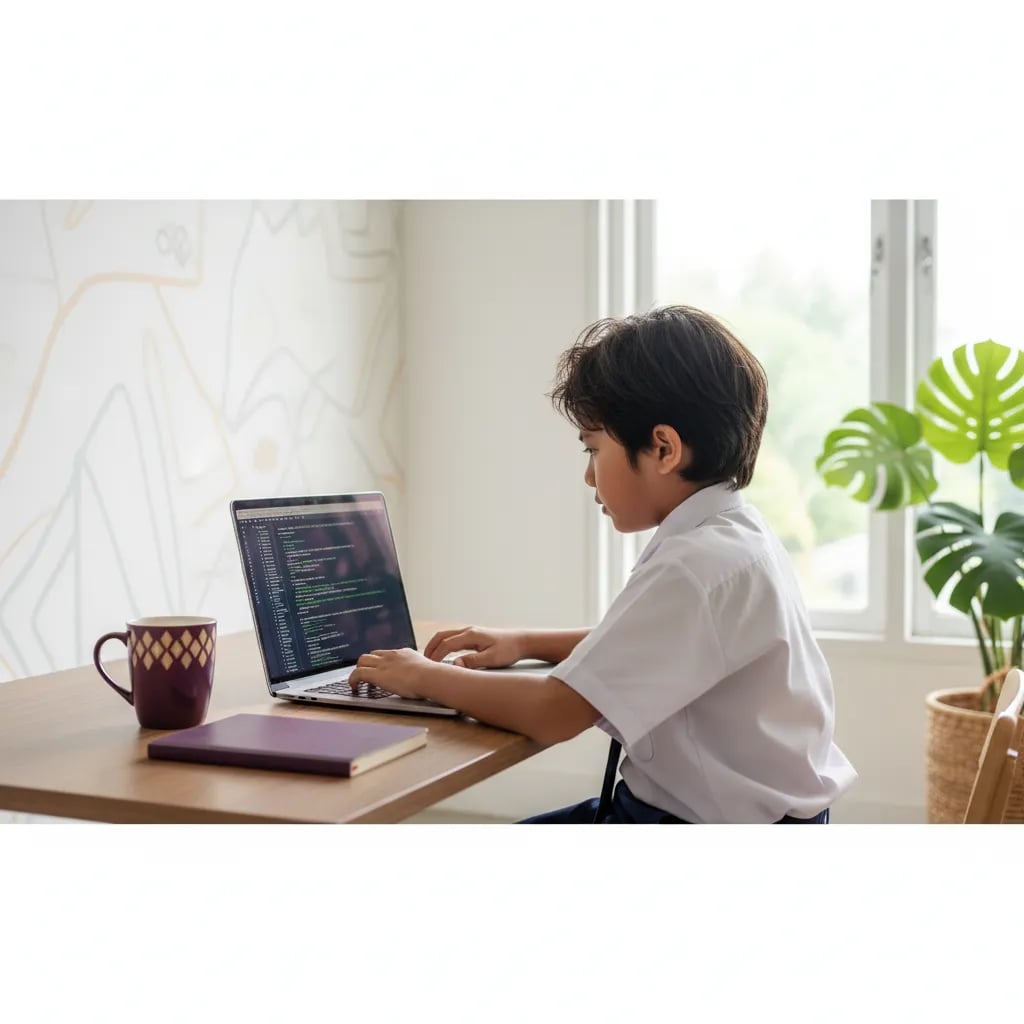
A Python course teaches kids to write real programming syntax — variables, functions, loops, and data structures — through projects they can run immediately. Unlike Scratch's visual blocks, kids type code line by line, but the underlying concepts are the same: logic, sequence, and problem-solving.
At Algonova, the Python curriculum is broken into stages that scale up with age:
| Stage | Age | What kids master |
|---|---|---|
| Basic Python | 9-12 years | Variables, print, input, simple conditions |
| Advanced Python | 13-17 years | Functions, lists, dictionaries, mini projects (text games, calculators) |
| Python + Web | 13-17 years (advanced stage) | APIs, libraries, simple web apps, portfolio |
For more on the language itself, see What Is Python? An Explainer for Parents and Kids, and our full beginner's guide at Python for Kids: A Complete Guide from Zero.
Not strictly, but it helps a lot. Kids who already have a logic foundation from Scratch — understanding loops, conditions, and variables visually — usually grasp the same concepts faster when they appear as text in Python.
Starting directly with Python without a visual-coding foundation doesn't mean a child will fail, but it usually takes extra time upfront to build basic logic BEFORE they can focus on syntax. A good teacher adjusts pace rather than forcing the same curriculum on every child.
For a full comparison of the right time to move from Scratch to Python, see Scratch or Python for Kids: Which First?. For kids who haven't started at all, see our separate guide at Scratch Course for Kids.
My son was initially scared Python would be 'too hard' because you have to type code. After two months, he's the one most excited when an error pops up — he calls it 'a puzzle to solve'.
Maya Putri, Early Childhood Education Specialist
Python is more technical than Scratch, so teacher quality matters even more. These four things separate a good course from an average one:
For primary-school kids just starting out, the path is Coding SD 8-12 (Junior Coders), where Python Start is introduced after Scratch. For teens, it continues into Coding Teen 13-17, fully focused on Python and web development.
We cover the general benefits of coding for kids in Benefits of Coding for Kids, and a grade-by-grade breakdown in Coding Curriculum for Primary School Kids.
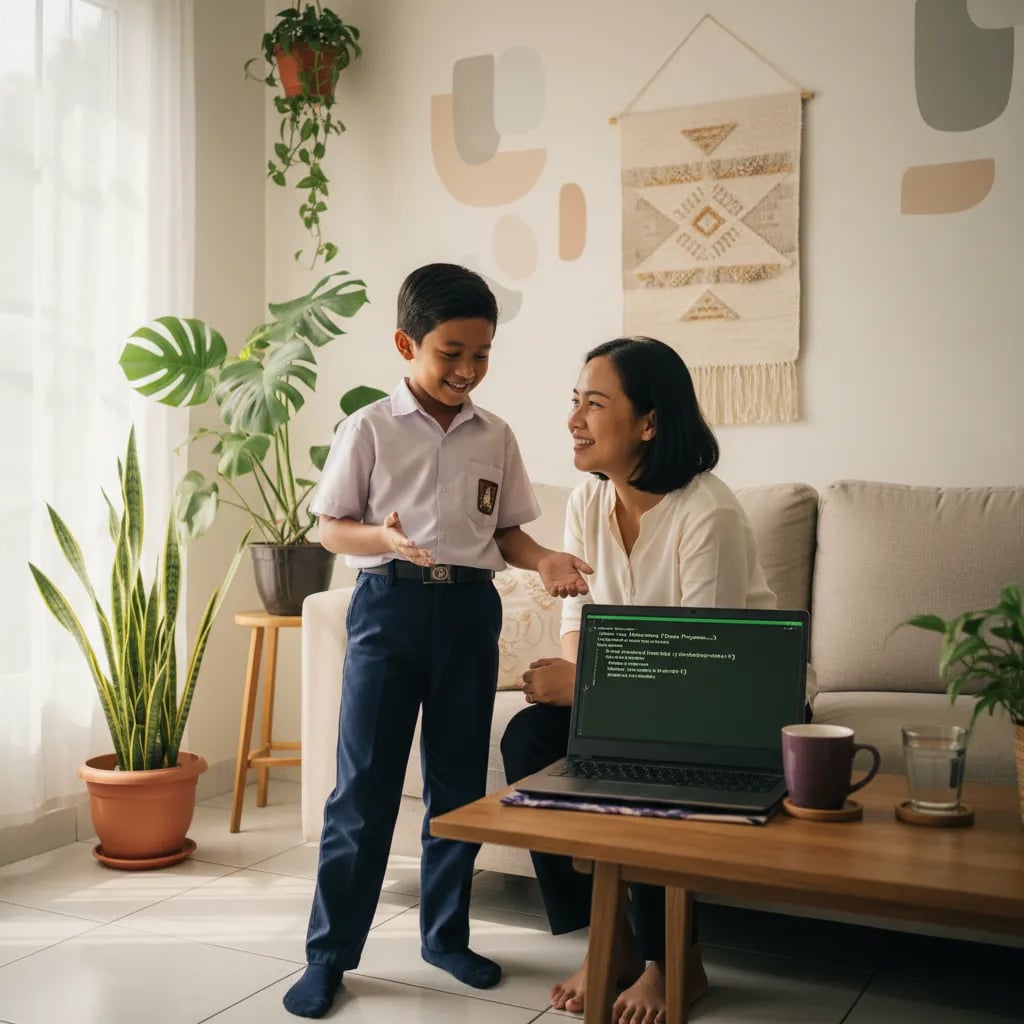
The most tangible result usually isn't just "my child can code" — it's confidence facing errors without panicking. In Python, one misplaced colon can stop an entire program — kids learn to read error messages, locate the problem, and fix it themselves before asking a teacher.
That skill carries far beyond coding: kids used to debugging tend to stay calmer when they make mistakes in other subjects, because they already understand that an error is information, not failure.
What surprised me most is that my child now says 'let me read the error first' before asking for help. She used to give up immediately whenever something went wrong.
Maya Putri, Early Childhood Education Specialist
According to the World Economic Forum Future of Jobs Report, programming and data analysis skills are among the top capabilities the 2030 job market will need — Python is one of the most widely used languages in both fields.
Algonova follows a discover, develop, master philosophy: kids start with a 60-minute free trial class with a certified teacher, then move into a personal learning path with regular checkpoints.
Kids can start a Python course from age 9, especially if they already have a logic foundation from Scratch or another visual block platform. At ages 9-12, material focuses on basic concepts like variables and simple conditions with close teacher guidance. Kids who start older, age 13 and up, can usually move straight into more complex material like functions and data structures. There's no upper limit up to age 17 — teens can still start from zero and reach an advanced level within a few months.
Not necessarily, because typing speed develops naturally as kids write more code over time. What matters more early on is precision, not speed — one misplaced colon or wrong indentation can break a program. Algonova teachers train kids to read code slowly before running it, a habit that matters more than fast typing. After a few months, a child's typing speed usually improves significantly without any separate typing practice.
A regular Python course session runs 90 minutes, enough to understand one concept and apply it in a small project. This length leaves room for concept explanation, hands-on practice, and debugging time with the teacher when code doesn't run as planned — a part that often takes longer than in Scratch because syntax mistakes happen more often. The free trial class is shorter: 60 minutes. For more complex projects at the advanced level, several consecutive sessions are typically used to finish one full project.
Yes, as long as the class is interactive with a live teacher who can see the child's code in real time, not a one-way recorded video. Debugging is a core part of learning Python, and it's nearly impossible through recorded video. Online classes with screen-sharing and certified teachers let the teacher see exactly where a code error happened and guide the child to find it themselves. At Algonova, online classes use a platform where the teacher and child can view the same code at the same time.
Algonova offers three class formats: Private (1 student), Mini (2-4 students), and Group (up to 10 students). Python syntax mistakes — semicolons, indentation, quotation marks — are easy to miss without a teacher carefully checking each child's code, so smaller formats help kids who are just starting. The Mini format balances teacher attention with peer interaction. For kids who need the most intensive attention, the Private format gives one child the teacher's full focus.
The first project is usually something simple like a calculator, a number-guessing game, or a program that greets the user by name. These projects are chosen because they only need basic concepts (variables, input, conditions) while still feeling like something "finished" that actually runs. Kids can show the result to a parent in the first or second session, which builds confidence early. Projects grow more complex gradually: from a simple calculator to a text game, then to apps with an interface or data connections at the advanced level.
Technically yes, because kids have to type exact syntax instead of snapping together blocks that are already shaped correctly. In Scratch, blocks won't connect if they're the wrong shape — mistakes are visually obvious right away. In Python, code can look "right" but still error out because of one wrong character, which takes more patience to diagnose. That difficulty is exactly what builds precision and debugging skill — an increasingly important ability as kids grow.
Yes, Python is the most commonly used language in AI and machine learning, making it a natural foundation for moving into that field. Once a child is comfortable with basic Python syntax — usually around ages 14-17 — AI concepts like training a simple model or working with data can start being introduced. This is typically an advanced stage, after a solid Python foundation, not a first step. Algonova integrates an AI introduction into the teen learning path after basic and advanced Python are mastered.
At Algonova, a Python course for kids starts from Rp 102,000 per lesson. The most accurate way to work out what your child needs is a free trial class: the teacher assesses their level first — whether they need to start with basic logic or can jump straight into syntax — before recommending the right class format, Private, Mini, or Group. The free trial class is available with no credit card as a first step.
The main sign is that the child is comfortable with loops, conditions, and variables in visual block form, and starts getting curious about "real code". Kids who have built Scratch projects with branching logic (if-else) and start asking how to build something outside Scratch are usually ready to transition. On the other hand, kids still struggling with basic step sequences should strengthen their Scratch foundation first. A Python trial class is the most honest way to measure this readiness directly.

Algonova worldwide
Contact
Whatsapp: +62 21 50996971
Email: info@algonova.id
Address
Coworking Area, Gedung IT 6 Lantai Dasar, Nongsa Digital Park, Jalan Hang Lekiu, Kelurahan Sambau, Kecamatan Nongsa, Batam, Indonesia Directorate General of Consumer Protection and Trade Compliance – Ministry of Trade of the Republic of Indonesia. WhatsApp Ditjen PKTN: 0853-1111-1010.
PT Algonova Indonesia Cerdas All rights reserved 2026
