Online vs In-Person Coding Classes for Kids: Which Fits Better? (2026)
Coding Education9 min read
AI Education

Arif Pratama
Web & AI Instructor
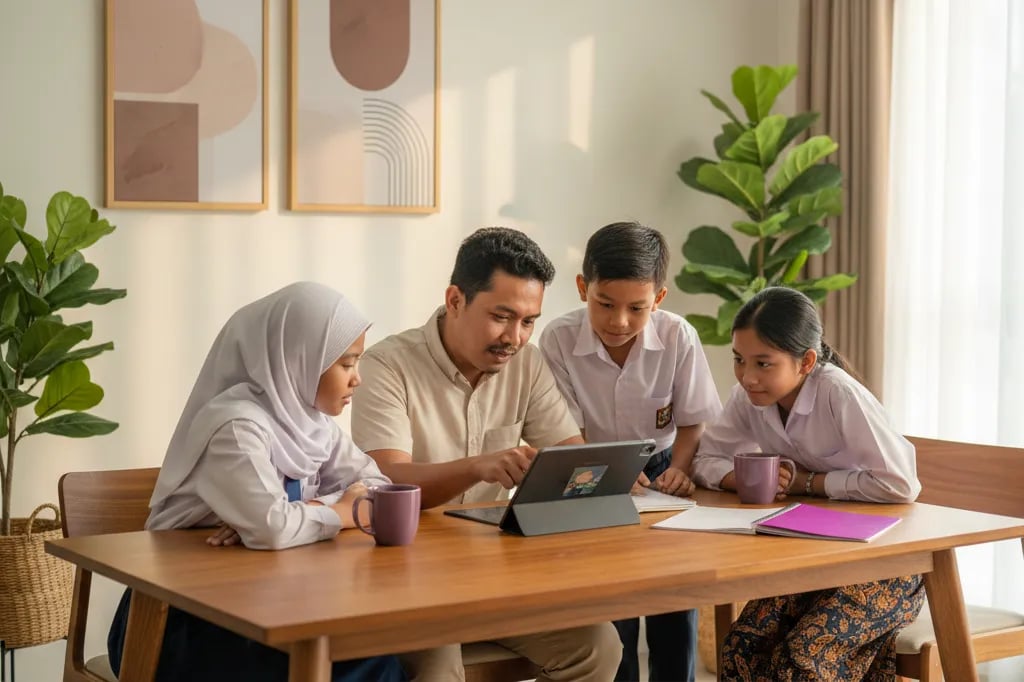
Safe AI tools for kids share five traits, and you can judge any app against them in about two minutes without installing anything. The list below covers ages 6 to 17, names what to skip, and includes the settings to change on day one. One rule matters most: if the tool needs an account and your child is under 13, it is not for them.
Run any AI app through these five points before your child touches it.
| Check | What to look for |
|---|---|
| Age limit | A stated minimum age you can find in two clicks |
| Account | Can it be used without a personal login for your child? |
| Data | Does it need photos, voice or personal details to work? |
| Open chat | Can it produce anything at all, or only within a set task? |
| Output | Does the child produce something, or only receive? |
The fourth row separates most child-friendly tools from the rest. A tool that trains a model on the child's own examples has a bounded output. An open chat window does not, and that is precisely why the main chatbots set 13 as their limit.
The pattern is bounded tasks first, open chat much later.
| Age | Suitable | Skip for now |
|---|---|---|
| 6 to 8 | Teachable Machine with a parent, drawing apps with AI features | Any chatbot, any account |
| 9 to 10 | Scratch with AI extensions, Code.org AI lessons | Personal chatbot accounts |
| 11 to 12 | Same, plus supervised chatbot use on a parent device | Using a chatbot alone |
| 13 to 15 | Own chatbot account with permission, history visible | Image generators without supervision |
| 16 to 17 | Most tools, with rules agreed in advance | Anything asking for payment details |
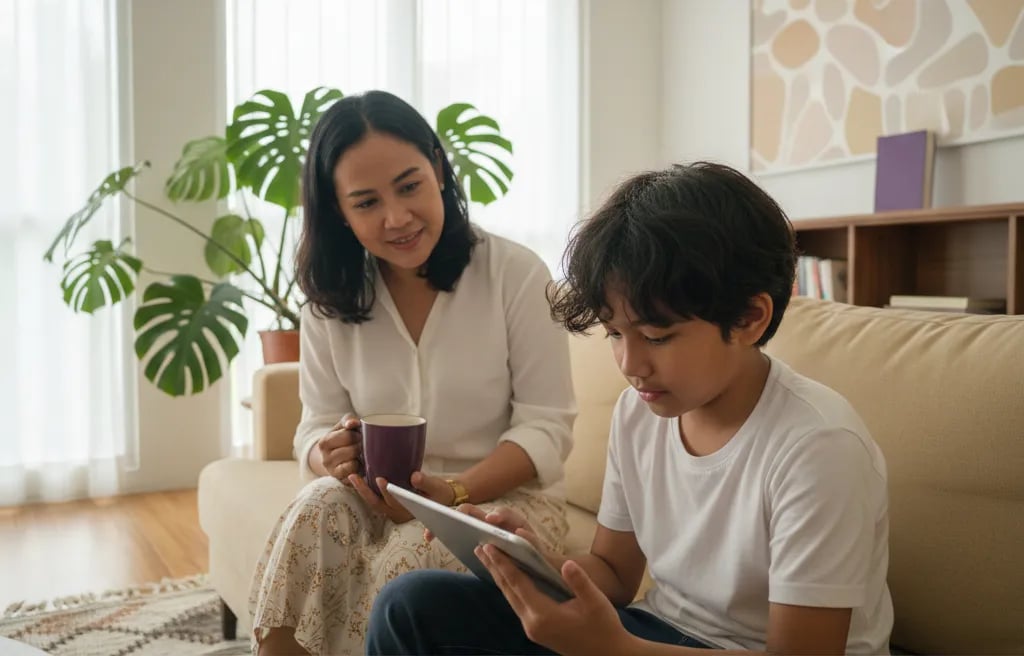
All of them are bounded in scope, ask for almost no personal data, and make the child produce something.
Start with Teachable Machine this weekend. Ten minutes training a model to tell a pencil from an eraser gives more understanding than an hour of chatting with a bot, and it runs on any laptop with a camera.
Four signals mean the tool was not designed with children in mind.
The third is the one parents underestimate most. Open image generators are the fastest route to content nobody wanted, and they are rarely needed for anything a child actually requires. For broader safety guidance, Common Sense Media rates apps by age.
Five minutes of setup removes most of the risk, and almost nobody does it.
Number five matters more than the other four combined. Rules that depend on trust collapse at ten at night; rules that depend on where the laptop physically sits do not.
Safety with AI is mostly two habits rather than a list of banned apps.
The first habit is easier to teach through one rule: retype the question, never paste the page. Children paste worksheet headers with their name and class without thinking, and that single habit removes the entire category of risk. The second matters because these tools sound equally confident when inventing, as we covered in our ChatGPT guide.
A tool can be entirely safe and teach your child nothing. The difference is whether the child produces or only receives.
| Type of tool | Safe | Teaches something |
|---|---|---|
| Model training, such as Teachable Machine | Yes | Yes, how AI learns from examples |
| Block coding with AI extensions | Yes | Yes, logic and sequencing |
| Homework answer apps | Mostly | No, the thinking is skipped |
| Open image generators | Depends | Rarely, without a task around it |
| Chatbots used to explain | With rules | Yes, when the child has to answer back |
Row three is where most families end up by accident, because answer apps are the easiest to find and the quickest to install. They are not dangerous, simply hollow, and the marks gap shows up a term later.

If your child can explain why their model got confused, the weekend worked. That single explanation covers more ground than any list of approved apps, because it means they understand AI learns from examples rather than simply knowing things.
Supervision keeps a child safe; it does not make them capable. If your child has used these tools for months and still only receives answers without building anything, the gap is not the tool. Our AI classes for kids pair prompting with coding for ages 7 to 17, with the first class free.
Worth reading next: prompt writing for kids, is AI safe for children and what parents say.
The ones that give a bounded task rather than an open chat window. Teachable Machine by Google is the strongest starting point: the child trains a model using webcam photos, no account is needed, and in about ten minutes they see how AI learns from examples. Scratch from MIT adds simple AI extensions to block coding, with an optional account. Code.org provides free structured lessons including an AI section for primary ages. All three make the child produce something, which is the difference between a safe tool and a useful one.
Five checks take about two minutes. Is there a stated age limit you can find in two clicks. Can it be used without a personal login for your child. Does it need photos, voice or personal details to function. Can it generate anything, or only work within a set task. Does the child produce something or only receive an answer. The fourth check separates most child-appropriate tools from the rest, because unbounded output is exactly why the major chatbots set an age of 13.
OpenAI sets a limit of 13 and requires parental permission under 18, so below 13 there should be no personal account. At 11 to 12, supervised use on a parent's device is manageable if you are sitting there. From 13, an own account with permission is acceptable provided the chat history stays visible for the first few months. Under 13 and curious, the better route is a tool built for children, which teaches the same underlying ideas without an open conversation.
Four are worth refusing outright. No stated age limit, or an age buried in a long document. A request for a photo of your child's face before anything works. Unlimited image generation from any text with no visible filter. A subscription pushed before the free version shows what it can do. The third is underestimated most often, because open image generators are the fastest route to content nobody wanted, and they are rarely needed for anything a child actually requires.
Five, and together they take about five minutes. Turn off training from chat history if the option exists. Use a family email, not your child's school address. Disable microphone and camera access unless the tool genuinely needs them. Turn off image generation if the setting is available. Keep the device in a shared room. The last has more effect than the other four combined, because rules that depend on trust collapse at ten at night, while rules that depend on where the laptop sits do not.
Not dangerous, more accurately hollow, which is a different problem. These apps are usually safe in data terms and teach nothing, because the child receives a finished answer and skips the thinking the exercise was designed to produce. Families end up there by accident, since such apps are the easiest to find and quickest to install. The cost appears a term later as a gap between homework marks and test marks. Exams in Indonesia are handwritten with no tool on the desk.
With supervision from about 13, and with a task around it rather than complete freedom. The risk is not only unsuitable output; it also teaches a child that pictures simply appear rather than get made. Used inside a brief, such as producing three draft backgrounds for a project then editing one properly, it becomes a sensible design tool. Treat the output as a draft, check whether the platform sets an age limit, and do not let AI images be submitted as finished work without saying where they came from.
Full name, school name, student number, address, phone number, photographs and anything identifying other children. The practical version for a child is one habit rather than a long list: retype the question, never paste the page. Children paste entire worksheets, and the header carries a name and class without anyone thinking about it. The same applies to homework photos, which often include a school stamp or a teacher's handwriting. One retyping habit removes that whole category of risk.
Short and purposeful beats long and open-ended, and that matters more than any particular number. Ten to fifteen minutes with one goal, such as training a model or finishing one prompt exercise, leaves the child with something to show. An hour of open chatting usually leaves nothing. The practical rule is that the session ends when the task is done rather than when the time runs out, because that ties the tool to a purpose.
When your child has used these tools for months and still only receives answers without building anything. Safety and capability are two different problems, and settings only solve the first. If the pattern is passive, a class changes it by putting a project in front of the child and a teacher who watches the process. Our AI classes pair prompting with coding for ages 7 to 17, and the first class is free, which is enough to see whether your child starts making things or keeps waiting for output.

Algonova worldwide
Contact
Whatsapp: +62 21 50996971
Email: info@algonova.id
Address
Coworking Area, Gedung IT 6 Lantai Dasar, Nongsa Digital Park, Jalan Hang Lekiu, Kelurahan Sambau, Kecamatan Nongsa, Batam, Indonesia Directorate General of Consumer Protection and Trade Compliance – Ministry of Trade of the Republic of Indonesia. WhatsApp Ditjen PKTN: 0853-1111-1010.
PT Algonova Indonesia Cerdas All rights reserved 2026