Child Phone Addiction: Signs, Effects and How to Cut Back Calmly
Parent Guides9 min
Parent Guides

Maya Putri
Early Childhood Education Specialist
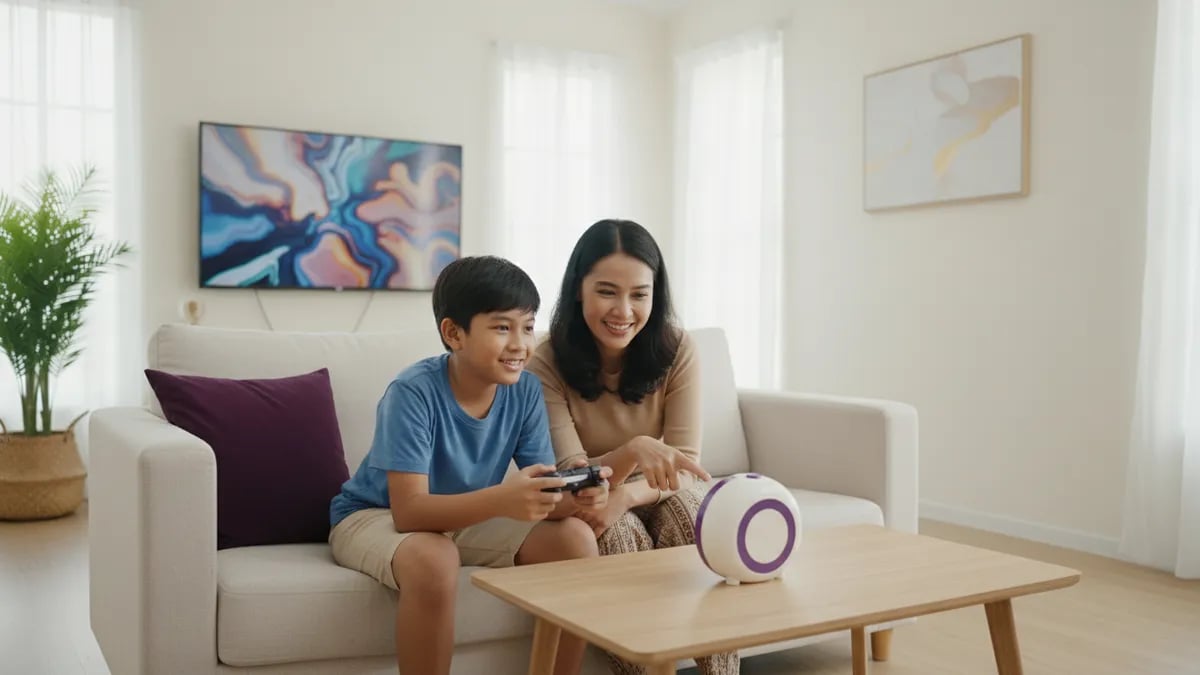
Child gaming addiction means your child can no longer control their playing time, games come before school and sleep, and they keep playing even after it causes problems. The WHO calls this pattern gaming disorder, and it is usually diagnosed only after it has lasted about 12 months. Most children who love games never get that far, and the 7 steps below can help you bring back a healthy balance.
The WHO describes three signs of gaming addiction: weaker control over playing, games taking priority over other activities, and playing on even when it is clearly doing harm.
At home, these three signs rarely look medical. They usually look like this:
One or two of these signs now and then, for example during the school holidays, do not mean much. What matters is the pattern: do the signs stay for weeks and start to disrupt your child's daily life? For a broader table on study habits and gadgets, read our article on kids who avoid studying because of gadgets and games. Here we focus on how your child plays.
A child who loves games can still stop after a reminder, while an addicted child has lost control and their day starts to revolve around the game.
The difference is not only the number of hours. It is what happens around those hours. Use the table below as a tool for observing your child, not for diagnosing them.
| Situation | Enjoys gaming (normal) | Warning sign |
|---|---|---|
| When asked to stop | Grumbles, then stops | Explodes in anger, throws things or cries for a long time |
| Time | Plays within the agreed limits | Hides the phone, wakes up at night to play |
| Money | Buys nothing or asks first | Tops up or buys items without permission, then lies |
| Friends | Still plays outside and meets friends | Only wants to see friends inside the game |
| After the game is off | Soon cheerful again, eats well | Sulky, restless or irritable for hours |
| Sleep and school | Sleeps enough, homework gets done | Sleepy in class, grades drop, homework missed |
The WHO notes that gaming disorder affects only a small share of people who play video games. A diagnosis also needs a pattern severe enough to harm school, family or social life, usually visible for at least 12 months. So if your child has only been overdoing it for the past month, you can still manage it with steps at home.
Games pull children in because every action gets an instant response: a sound, a coin or a new level.
Online games are also designed to bring players back. There are daily quests, login rewards and teammates who are waiting. For primary school children, that social pressure is strong. If classmates are playing Roblox this afternoon, the child who misses out feels left behind in tomorrow morning's chat.
In our view, a total ban rarely works. Your child still wants to join in, so they find another way: playing at a friend's house or behind your back. Understanding why games are so appealing helps you set limits instead of just saying no.
The effects of online games on children are not all bad: children learn to try again after losing and to work as a team. Problems start when games push out sleep, school and time for physical activity.
How to stop gaming addiction in a child starts with understanding what your child plays, then agreeing on rules together that you can stick to every day. The same steps work for online gaming addiction in children, including games like Roblox or Mobile Legends.
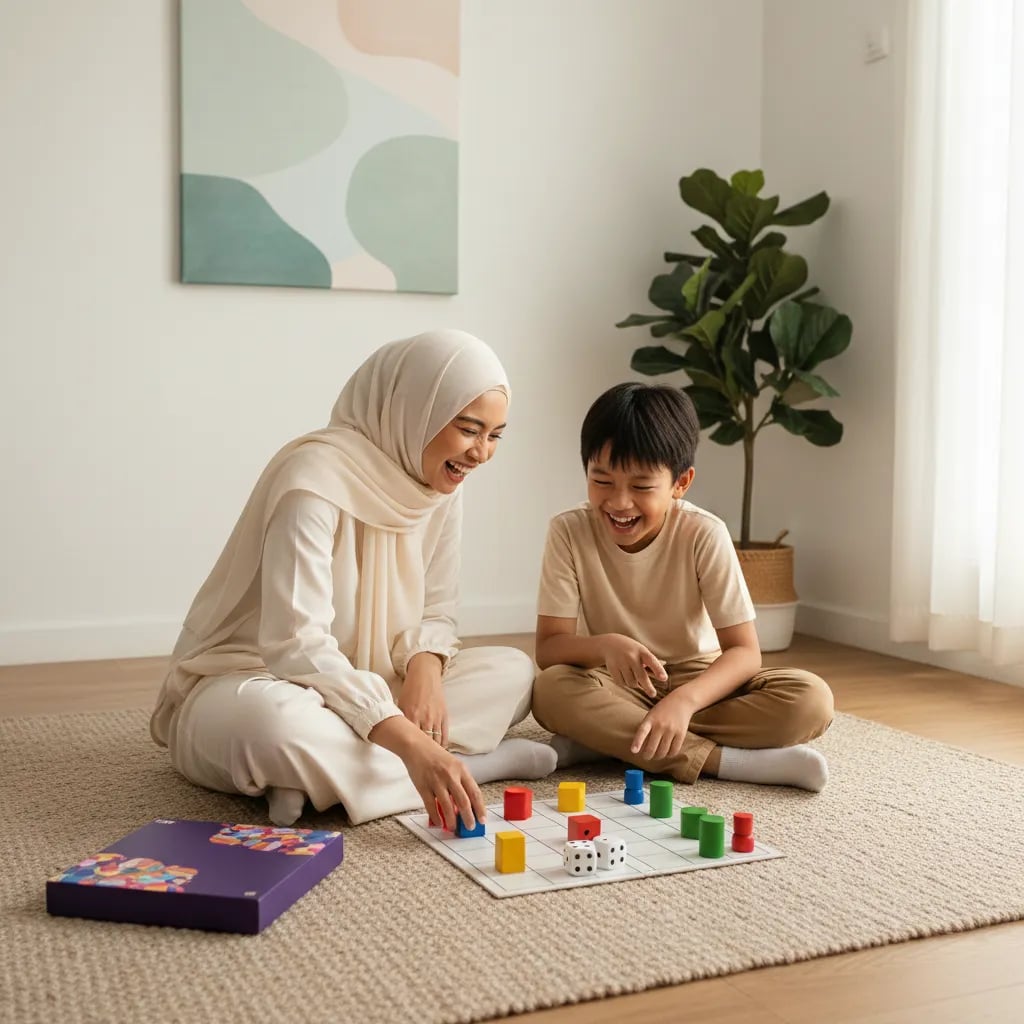
Online games carry extra risks compared with single-player games on a phone: chatting with strangers, in-game purchases and content made by other players that is not always suitable for primary school children.
Roblox addiction in kids is one of the complaints parents mention most, partly because Roblox is so popular in primary school. Whether it is safe depends a lot on account settings and on your supervision. Our full guide is in the article is Roblox safe for kids.
The Indonesian government has also set obligations for digital platforms in PP 17/2025, a regulation on electronic system governance for child protection. According to its text, providers must state the minimum user age. Children under 13 may only have accounts on low-risk services and with parental consent, and platforms must provide supervision tools for parents. Some news reports said Roblox was put on a particular list, but the regulation does not name any platform, so check the official source at JDIH Komdigi before drawing conclusions.
You do not need to wait for those rules to take effect. Set up your child's account as a child account, turn on chat limits and make sure you know the password.
A child who can play for hours usually enjoys challenges, levels and strategy, and that interest can move over to making games.
Many primary school children are curious about how games are made. In a free 60-minute coding trial class at Algonova, your child builds a simple game of their own live online with a tutor. Algonova teaches coding, AI and design for children aged 5-17 and math for ages 6-17, with 1 million+ students in 97 countries and a 4.9 rating. Classes are live with the same tutor every week, not videos, and each group has at most 10 children.
Many parents notice that the same hour feels different when a child becomes the creator, not just the player: they have to work out why their character will not move. A trial class does not replace your rules at home, but it gives your child's interest a new direction. You can find game ideas that suit children in our article on coding games for kids, and if you are not sure coding is a fit, read signs your child is ready to learn coding.
Paid classes start from Rp102,000 per session, but the first class is free, so you can see your child's reaction for yourself.
See a pediatrician or a child psychologist if the signs above stay and do not improve after 3-4 weeks of house rules.
Get professional help sooner if your child withdraws from family and friends, seems sad all the time, refuses to go to school, or has outbursts that put themselves or others at risk. A child who often has headaches, cannot sleep or loses their appetite because of gaming should also be checked.
Start with your regular pediatrician, who can refer you to a child psychologist. Gaming addiction is not a failure on your part as a parent. A course tutor is not a health professional, so diagnosis and treatment stay with the specialists.
Blog
IDAI recommends no more than 2 hours of screen time a day for children over 2, and gaming counts toward that. The limit covers all screens, not only games. So gaming time should be shorter than 2 hours, especially on school days, because children also use screens for videos and schoolwork. A Grade 3 child, for example, could play 40 minutes on school days and 1 hour at weekends. What matters more than the number is that sleep, homework and physical activity still happen. Count screen time at school and in online lessons too. If total screen time that day is already high, cut the gaming time, not sleep. Start with 1 hour a day, then adjust after 2 weeks.
Gaming disorder is listed in the WHO's ICD-11, but it is only diagnosed when the pattern is severe and has usually been visible for about 12 months. That means not every child who plays for long periods is ill. The WHO also says only a small share of players are affected. A health professional makes the diagnosis, not a parent or teacher. A child who plays 3 hours a day during the holidays and goes back to normal when school starts usually does not count. If you are unsure, keep a 2-week log: playing hours, bedtime, reactions when stopping and in-game spending. A simple log like this helps a pediatrician or child psychologist assess your child. Bring it to the appointment.
Give a 10-minute warning before time is up and let your child finish the round they are in. Stopping suddenly is the most common trigger for anger. Have the next activity ready, such as dinner together or playing football. Use a timer your child can see, so the clock tells them to stop, not you. If your child still gets angry, wait until they calm down before you talk. Simply say, "I know you're upset, but we agreed on one hour." Praise them when they stop on time, because praised behaviour is easier to repeat. Do not take the phone away while scolding them in front of friends or siblings. Stay consistent for 2-3 weeks, and the anger usually fades.
Whether Roblox is safe for an 8-year-old depends on account settings and parental supervision, not on the platform alone. The main risks are chatting with strangers, in-game purchases and content made by other players. For an 8-year-old, use an account with chat limits, no saved payment card, and play in the family room. PP 17/2025 also requires platforms to provide supervision tools for parents. Read the full guide in our article about Roblox safety on this blog. The regulation helps, but day-to-day supervision is still up to parents. Check your child's account settings tonight, and check again every time they install a new game.
Games do not automatically make children do better at school, but some games build useful habits such as trying again, planning a strategy and working in a team. These benefits appear when games are played within sensible limits and do not push out sleep and study time. This is a general observation, not a promise that grades will go up. A child who plans strategies in city-building or puzzle games can be asked to explain their plan over dinner. If your child is curious about how games are made, one free 60-minute coding trial class is enough to try it. They will build a simple game live with a tutor, so you can see for yourself whether their interest moves from playing to making. There is no obligation to continue after that session, and you still set the gaming rules at home.
Not necessarily. Deleting every game at once usually makes children look for other ways to play, while agreed rules last longer. A total ban only makes sense if a game is not suitable for your child's age or something serious has happened, such as chatting with strangers or buying without permission. You can delete one problem game and still allow others with clear time limits. Explain your reasons so your child does not feel punished, and offer a replacement game that suits their age. Review it after 2-3 weeks. If your child still finds ways to play in secret, the rules need to be discussed again, not backed up with more punishment.
Your child needs professional help if the signs of addiction stay and do not improve after 3-4 weeks of house rules, or come with changes in mood. More urgent signs: your child withdraws, seems sad all the time, refuses to go to school, cannot sleep, or has outbursts that put others at risk. A child who still wakes up at night to play after the phone has moved to the family room should be checked further. Start with your pediatrician, who can refer you to a child psychologist. Bring a 2-week log of playing time and sleep so the appointment goes faster. There is no need to wait until grades drop sharply, because an early appointment makes your steps at home more focused. Write down what you have already tried as well.

Algonova worldwide
Contact
Whatsapp: +62 21 50996971
Email: info@algonova.id
Address
Coworking Area, Gedung IT 6 Lantai Dasar, Nongsa Digital Park, Jalan Hang Lekiu, Kelurahan Sambau, Kecamatan Nongsa, Batam, Indonesia Directorate General of Consumer Protection and Trade Compliance – Ministry of Trade of the Republic of Indonesia. WhatsApp Ditjen PKTN: 0853-1111-1010.
PT Algonova Indonesia Cerdas All rights reserved 2026