
Coding Competitions for Elementary and Middle School Kids in Indonesia 2026/2027: Contests, Categories, and How to Prepare
Learn Coding7 min read
Parent Guides

Maya Putri
Early Childhood Education Specialist
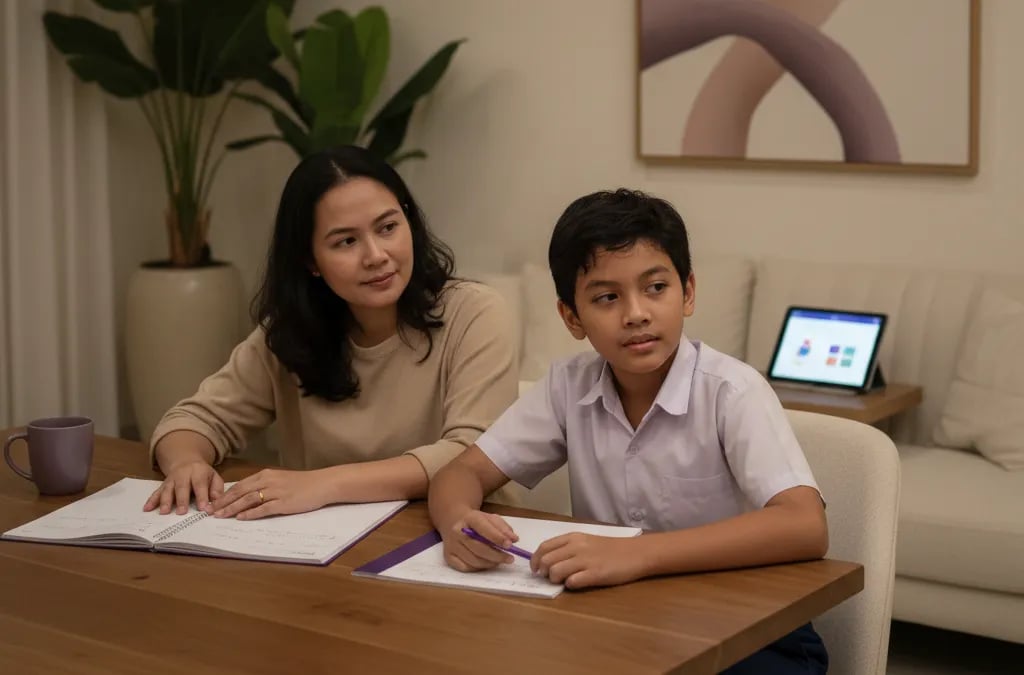
A child who is lazy to study because of gadgets usually has a simple reason: games reward effort within seconds, while studying pays off weeks later. For children aged 8-12, a total ban rarely lasts. What works more often is a set of rules agreed with the child, short study sessions with a clear target, and turning the urge to play into making games of their own.
Before limiting the phone, check whether the gadget is really the main cause. Quite often it is only the place where a child hides from a problem that nobody has noticed yet.
A child is usually lazy to study because they feel they have already fallen behind, the task looks too big and complicated, they are tired, or they fear failing, and the gadget often just makes one of these worse.
When a child refuses to open a book, the gadget is the easiest thing to blame because it is the most visible. Behind the word "lazy" there is usually one of six things, sometimes several at once.
If the main cause is falling behind on material, limiting the gadget alone will not be enough. The child needs to catch up on the basics they missed, for example through online math lessons for elementary grades 3-6 that start with a free 45-minute diagnostic test to show which topics are not yet mastered.
Children prefer games to studying because games give instant feedback, small clear targets, and progress that is visible right away.
Games are built by teams whose job is to keep players hooked. They use several mechanics that rarely exist at a study desk:
You can borrow these mechanics. A 20-minute study session with a target of "10 problems", a tick on paper for every problem finished, and permission to make mistakes without being scolded already copies most of the list above.
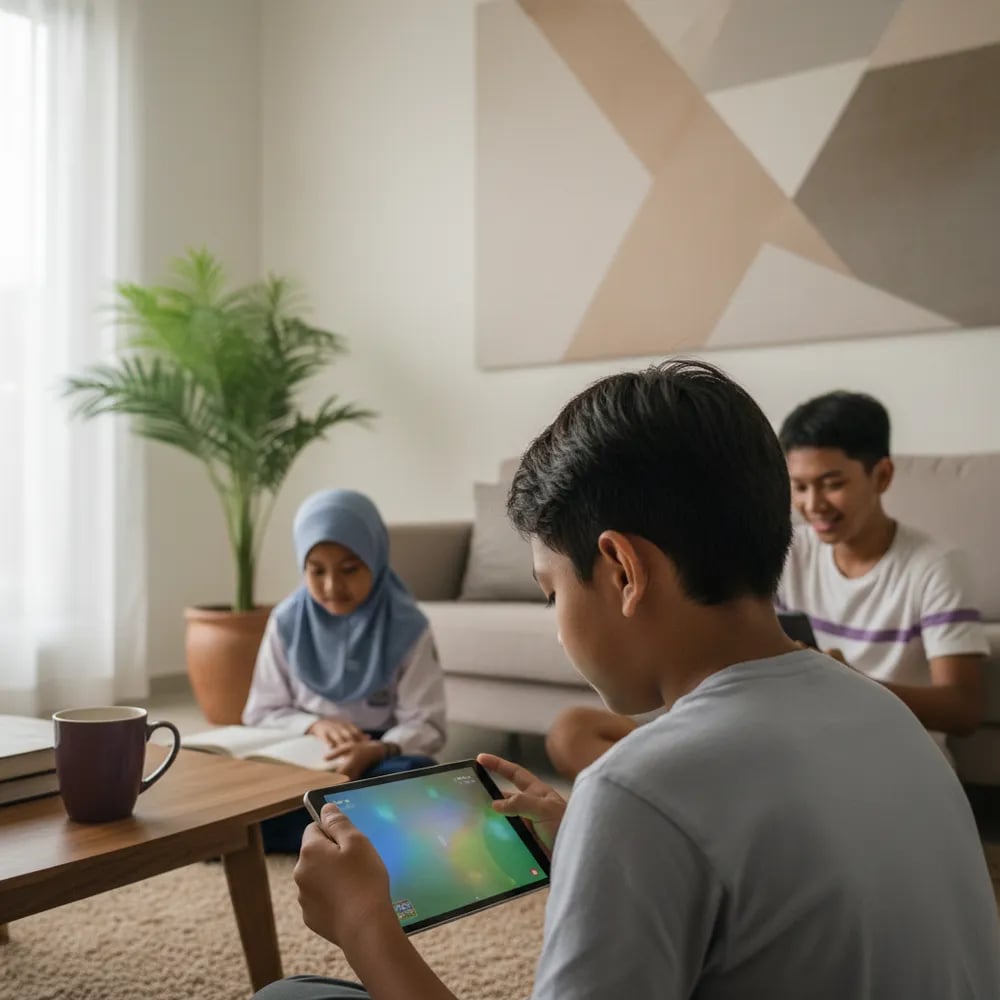
Gadgets will not disappear from a child's life either. UNICEF's report The State of the World's Children 2017: Children in a Digital World estimates that about one in three internet users worldwide is under 18. So what needs managing is how a child uses gadgets, because keeping them away forever is not realistic.
The gadget only needs to be managed, while material that was missed needs to be caught up.
Maya Putri, Early Childhood Education Specialist
According to the WHO, the signs of game addiction are weakened control over playing, putting games ahead of other activities, and continuing to play despite harm.
The word "addiction" is often used lightly. Medically, the WHO has included gaming disorder in its ICD-11 disease classification, and the WHO explanation of gaming disorder uses those three signs as the benchmark.
The pattern must be serious enough to disrupt school, family, or friendships, and is usually seen over at least 12 months. The WHO also notes that only a small share of people who play games are affected. A child who plays for 2 hours on Sunday and then whines when asked to stop is not necessarily addicted.
The table below is only an aid for observation, not a diagnostic tool.
| WHO sign | Ordinary gaming enjoyment | Warning signs of addiction |
|---|---|---|
| Control over playing | Can stop after a reminder, even if grumbling | Extreme anger or throwing things every time the gadget is taken away, secret late-night play, lying about how long they played |
| Putting games first | The child still wants to ride a bike or play with friends | Old hobbies, sports, and friends outside the game are abandoned |
| Continuing despite harm | Homework, bedtime, and mealtimes still happen | Grades drop, homework is often missed, sleep and meals fall apart because of games |
| Severity and duration | Appears occasionally, for example during school holidays | Disrupts school or family and persists, usually for at least 12 months |
If your child plays a lot of Roblox, the guide on whether Roblox is safe for kids explains the parental control settings and Robux spending limits worth checking.
Dealing with a child who is lazy to study at home starts with 3 days of observation, a written agreement, and 20-25 minute study sessions with the phone kept out of reach.
These steps are free. Do one or two steps per day.
Most emotional outbursts happen because the gadget is taken in the middle of a game. Give a 10-minute warning before time is up, let the child stop at the end of a level, and use a timer the child can see so that the clock signals the end, not you.
A child who stays happily in Roblox for hours has already shown two useful things: they keep trying again and again, and they care about the rules of play.
Maya Putri, Early Childhood Education Specialist
One way to steer a child away from games without fighting is to change their role from player to game maker, for example through Scratch, which is free to use.
A child who stays happily in Roblox for hours has already shown two useful things: they keep trying again and again, and they care about the rules of play. That ability can be moved from playing games to making them.
Start with one question at dinner: "If you made your own game, what would the story be and how would you win?" Then invite them to try Scratch, a block-based programming platform from the MIT Media Lab, to make a simple game such as a cat chasing a ball.
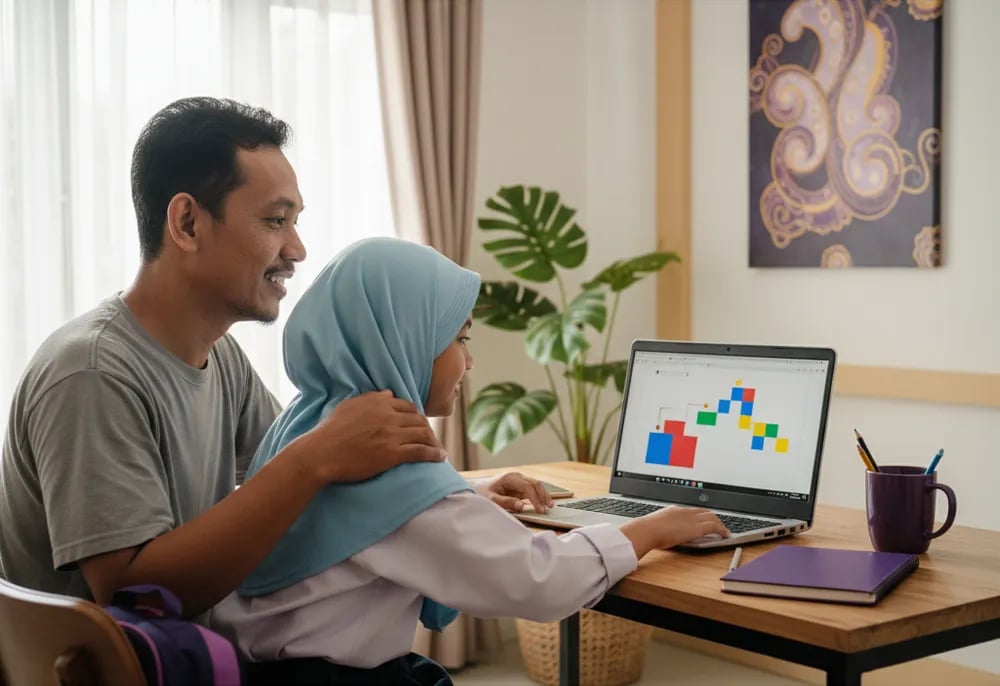
Making a game trains the very things children avoid at the study desk. A score that goes up by 10 each time the ball is caught is a variable and addition, and a character that moves right when a key is pressed is "if-then" logic.
When the game has an error, the child has to reread their steps and look for the mistake. The process is similar to checking the answer to a word problem.
Not every child will be interested, and that is normal. To see whether your child has an inclination in this direction, read about the signs a child is suited to learning coding.
If your child is enthusiastic, a teacher helps them avoid stopping at the first game. At Algonova, coding classes for elementary school children aged 8-12 progress step by step from Scratch to Roblox, then Python. Children aged 10-14 who already know every corner of Roblox can join the Roblox and game design course and build their own game in Roblox Studio.
Classes run live online with a tutor, in groups of up to 10 children, lasting 45, 60, or 90 minutes, from Rp 102,000 per session. The child needs a laptop, computer, or tablet, because classes cannot be followed from a phone. Algonova has had 1,000,000+ students in 97 countries, with a 4.9 rating from parents.
The easiest way to try it is a free 60-minute coding trial class. There the child builds a small game or animation from scratch with a teacher, and you can see for yourself how they react.
Dealing with a child's game addiction is not always solved by house rules: consider a child psychologist if laziness or the signs of addiction do not improve after 3-4 weeks of rules, or come with mood changes.
Signs that make a consultation more urgent:
Start with the homeroom teacher or school counselor, who often see sides of the child that do not show at home and can usually recommend a child psychologist nearby.
A child is lazy to study but happy to play games because games give instant rewards and small clear targets, while studying at home often feels slow and risks a scolding when they get it wrong. This does not mean the child lacks mental stamina. The same child can repeat one Roblox level 30 times without giving up. The difference is that in the game they know exactly what to achieve and see the result at once. A grade 4 child who refuses to "do the math homework" will often happily finish "10 multiplication problems, then tick them off", because the task has a clear end. Each tick gives a sense of completion, much like leveling up. Try turning one study session into a small target like this for a week, then notice whether the child sits down to study more readily. If the child still avoids it, check whether some basic material has been left behind.
According to the WHO, the main signs of gaming disorder are weakened control over playing, games put ahead of other activities, and a habit of playing that continues despite harm. At home, this can look like extreme anger every time the gadget is taken away, secret play at night, grades dropping over several months, and loss of interest in hobbies or friends outside the game. A child who begs for 10 extra minutes on a day off is not necessarily addicted. What matters is a pattern that persists and starts to disrupt school, family, or friendships, for example homework missed almost every day for a whole semester. The WHO says this pattern is usually seen for at least 12 months, and the diagnosis can only be made by a psychologist, psychiatrist, or doctor, not from a checklist on the internet.
Gadgets can make a child lazier about studying, but they are rarely the only cause. There are usually other factors, such as falling behind on material, tiredness, a task that feels too big and complicated, or fear of making mistakes. The gadget acts as a yardstick and a distraction. After an hour of a fast-paced game, a textbook feels boring, and a phone on the study desk breaks concentration through notifications. A child who has not understood fractions, for example, will reach for the phone faster every time a fraction problem appears. Confiscating the phone does not make them understand fractions. Once the phone is put away, they usually look for another distraction, like doodling in a notebook or wandering to the kitchen. So observe for 3 days first when the child reaches for the gadget and what they are working on, then deal with the main cause. The gadget only needs to be managed, while material that was missed needs to be caught up.
Make the rules together with your child, give a warning before time is up, and let them stop at a natural point such as the end of a level, so that stopping does not feel like a sudden punishment. Most tantrums happen because the gadget is taken in the middle of a game. What often works: write the rules together on paper and stick them on the fridge, give a warning 10 minutes before time is up, and let a timer the child can see act as the "referee". When the clock gives the signal, you do not need to argue with your child. In the first days there will usually still be protests, and that is normal. Stay calm and repeat the agreed rule without adding a lecture. Rules applied every day, including weekends and school holidays, are accepted faster by children than harsh rules that apply only sometimes. Both parents should use the same rules.
Games are not always bad for kids. The problem appears when games replace sleep, school, and family time, or when the content is not suitable for the child's age. Many games train planning, teamwork, and patience in trying again. Building games such as Minecraft or Roblox's creative mode even invite a child to design something. What you need to check is the age rating, chat with strangers, and in-game purchases. A 9-year-old who plays Minecraft with a cousin on weekends is very different from a child who plays alone until midnight. The easiest way to tell is to sit next to your child and ask them to show you what they are building. The WHO also notes that gaming disorder affects only a small share of people who play games, so playing within reasonable limits is no reason to panic.
The most direct way to turn an interest in games into learning is to invite your child to make their own game, because the process uses logic, math, and the ability to read instructions. Start with a simple question: "If you made your own game, how would you win?" Then try Scratch, a free block-based programming platform from the MIT Media Lab. In a few attempts, a 9-year-old can make a simple game about a character catching falling objects. They will learn variables for the score and if-then logic for movement, then learn to patiently look for mistakes when the game has an error. Ask them to show the result to grandparents or friends so they feel proud. If you want to try with a teacher, Algonova has a free 60-minute coding masterclass where the child builds a small game or animation from scratch and you can see their reaction.
Consider a child psychologist if laziness comes with mood changes, withdrawal, school refusal, or severe angry outbursts that do not improve after a few weeks of rules at home. Another sign worth checking is reading, writing, or counting that is far behind classmates even though the child has been helped. This may point to a learning difficulty that needs special support, and discipline alone will not solve it. A grade 4 child who still often mixes up the letters b and d when reading should be assessed, not scolded. Earlier assessment gives the child time to catch up before moving to higher grades. A first step can be the homeroom teacher or school counselor, who can usually recommend a child psychologist or a child development service nearby. Bring your observation notes so the consultation is more focused.
There is no official figure that applies to every elementary child, but many teachers use a rough guide of about 10 minutes per grade level, for example about 40 minutes for a grade 4 child. This time is best split into 20-25 minute sessions with a short screen-free break, not one long block. A grade 4 child can study 20 minutes after school, rest 5 minutes, then continue for 20 minutes of reading or practice problems. Twenty minutes of focus with a clear target is more useful than an hour at the desk while holding a phone. Studying at the same time every day also helps the child get used to it without being told. Adjust to the child's condition, especially if they already attend tutoring, Quran study, or other afternoon activities. Busy days can be shorter.
Rewards can help motivate a child to study at the start, as long as they are praise for effort and shared activities, not extra game time or money for every good grade. A reward of game time makes the child see studying as a price to pay in order to play, so games become even more valuable. Specific praise lasts longer, for example "You kept trying problem 8 even though it was hard." A good example of a reward: a child who completes five days of study sessions in a row gets to choose the Sunday bike route with their father. This kind of reward adds time together without adding screen time, and the child helps decide its form. Over time, reduce the rewards and let the pride of solving a hard problem become the child's main driver for studying. Specific praise can still be given any time.
Tutoring can help a child who is lazy to study if the cause is falling behind on material or a learning style that does not fit, but tutoring does not replace gadget rules and parental attention at home. Tutoring is most useful when it starts by checking what the child has not yet mastered, then filling the gaps bit by bit. For a child who likes games, a coding class can give a new reason to sit at the computer with the goal of making something. A grade 5 child who is behind on fractions, for example, can take a math diagnostic test first to see which topics need review. Once the gaps are visible, practice at home also becomes more focused. At Algonova, classes run live online with a tutor in groups of up to 10 children, from Rp 102,000 per session, and the math diagnostic test can be taken for free.
Blog


Algonova worldwide
Contact
Whatsapp: +62 21 50996971
Email: info@algonova.id
Address
Coworking Area, Gedung IT 6 Lantai Dasar, Nongsa Digital Park, Jalan Hang Lekiu, Kelurahan Sambau, Kecamatan Nongsa, Batam, Indonesia Directorate General of Consumer Protection and Trade Compliance – Ministry of Trade of the Republic of Indonesia. WhatsApp Ditjen PKTN: 0853-1111-1010.
PT Algonova Indonesia Cerdas All rights reserved 2026
