
Abacus vs Kumon vs Conceptual Math: Which Is Right for Your Child?
Which Is Better?6 min read
Learn Math

Nurul Izzati
Math Curriculum Team, Algonova Malaysia
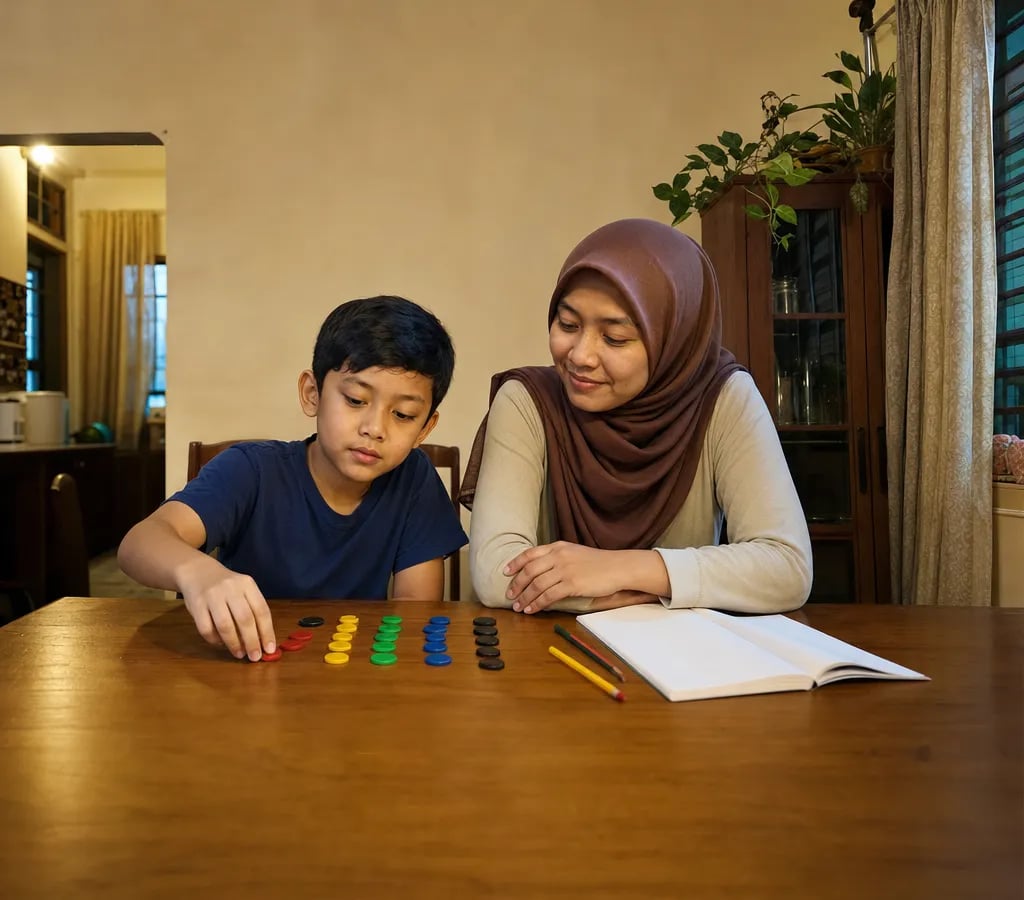
The multiplication table looks like 100 facts, but a child in Year 2 to 4 only has to learn 21 of them from scratch once the 1s, 2s, 5s and 10s are known and each fact can be flipped. This guide gives Malaysian parents the full 1 to 10 chart, 7 tricks to learn it fast and a 10-minute daily routine.
In this article:
By Year 4, a child should recall every fact from 1 × 1 to 10 × 10 without counting, because long multiplication and division build on it. In Malaysia the KSSR syllabus for Tahun 2 begins with the 2, 5, 10 and 4 times tables (sifir), and the harder ones follow in Tahun 3 and 4. Our KSSR Year 3 and 4 guide lists what the rest of the year covers.
England checks every Year 4 pupil with a timed multiplication tables check on tables up to 12.
Here is the full table from 1 to 10. To read it, find the row for one number and the column for the other, so row 7 and column 8 meet at 56.
| × | 1 | 2 | 3 | 4 | 5 | 6 | 7 | 8 | 9 | 10 |
|---|---|---|---|---|---|---|---|---|---|---|
| 1 | 1 | 2 | 3 | 4 | 5 | 6 | 7 | 8 | 9 | 10 |
| 2 | 2 | 4 | 6 | 8 | 10 | 12 | 14 | 16 | 18 | 20 |
| 3 | 3 | 6 | 9 | 12 | 15 | 18 | 21 | 24 | 27 | 30 |
| 4 | 4 | 8 | 12 | 16 | 20 | 24 | 28 | 32 | 36 | 40 |
| 5 | 5 | 10 | 15 | 20 | 25 | 30 | 35 | 40 | 45 | 50 |
| 6 | 6 | 12 | 18 | 24 | 30 | 36 | 42 | 48 | 54 | 60 |
| 7 | 7 | 14 | 21 | 28 | 35 | 42 | 49 | 56 | 63 | 70 |
| 8 | 8 | 16 | 24 | 32 | 40 | 48 | 56 | 64 | 72 | 80 |
| 9 | 9 | 18 | 27 | 36 | 45 | 54 | 63 | 72 | 81 | 90 |
| 10 | 10 | 20 | 30 | 40 | 50 | 60 | 70 | 80 | 90 | 100 |
Every fact appears twice, so 3 × 7 and 7 × 3 share the answer 21. Remove the repeats and 55 facts remain. A child who already knows the 1s, 2s, 5s and 10s has 21 left, and the tricks below shrink that number further.
Learn the easy tables first and build the harder ones from them. Three tricks do most of the work.
Trick 1: learn the 1s, 10s, 2s and 5s first. These four tables follow patterns a child can hear. Every answer in the 10s ends in 0, and every answer in the 5s ends in 0 or 5. Skip count aloud on fingers (5, 10, 15, 20) or with RM 5 notes until it feels like counting.
Trick 2: double the 2s to get the 4s, then double the 4s to get the 8s. Take 6 × 2 = 12. Doubling gives 6 × 4 = 24, and doubling again gives 6 × 8 = 48. A child who knows the 2s now holds three tables.
Trick 3: flip the fact. If your child is stuck on 8 × 3, ask for 3 × 8 instead. Skip counting in 3s eight times (3, 6, 9 and on to 24) is easier than adding 8 three times. Put 3 rows of 8 buttons on the table, then turn the rows sideways to show 8 rows of 3, and the answer stays 24.
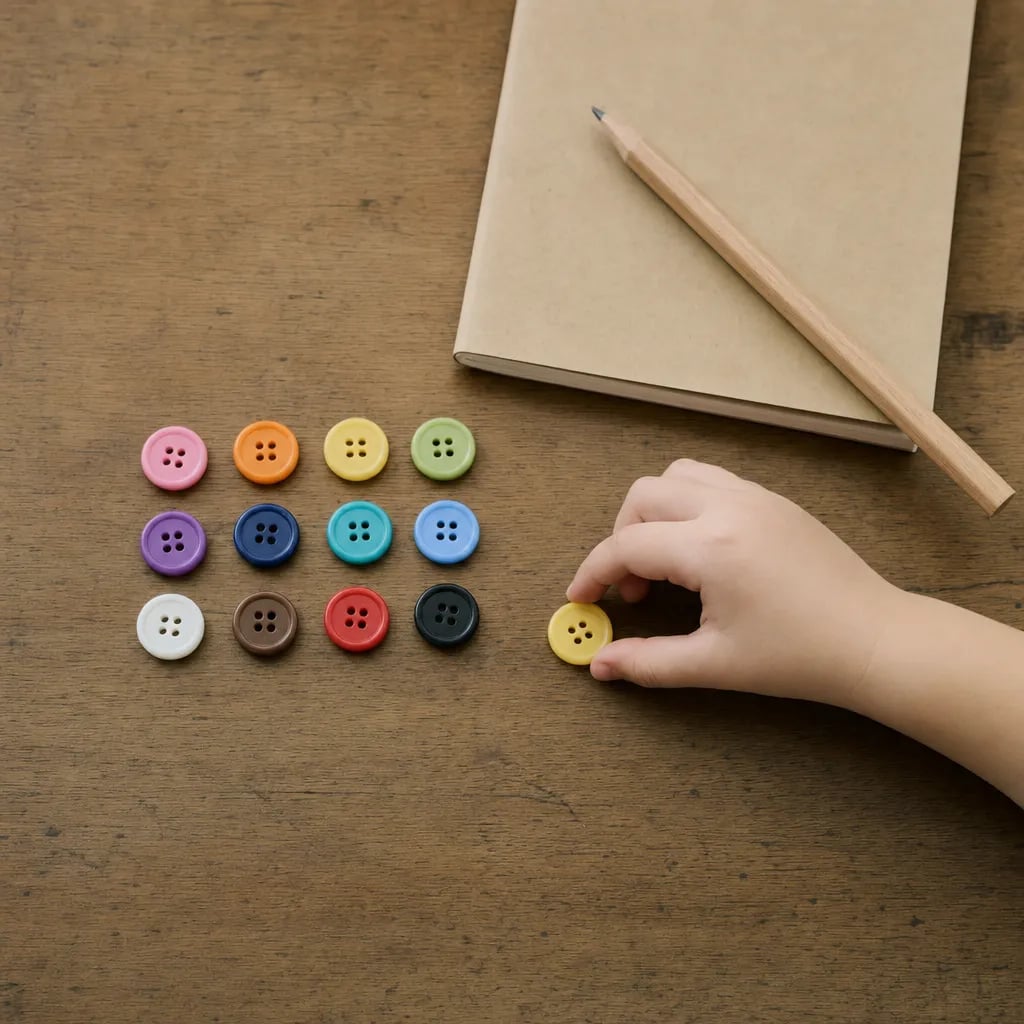
The multiplication table feels huge until a child sees that most of it is the same few facts turned around.
The 9s have the best-known shortcut, and the 6s, 7s and 8s can be split into pieces a child already knows.
Trick 4: the 9s finger trick. Hold up all 10 fingers. To work out 9 × 4, fold down your 4th finger from the left. Count the fingers to the left of the fold (3) for the tens, and the fingers to the right (6) for the ones. The answer is 36. A second check helps too: the digits in every answer in the 9s add up to 9, since 3 + 6 = 9.
Trick 5: split the hard fact into two easy ones. Take 7 × 8. Break the 7 into 5 and 2, then work out 5 × 8 = 40 and 2 × 8 = 16. Add them to get 56. For 6 × 7, use 5 × 7 = 35 and 1 × 7 = 7, which makes 42. The 5s act as an anchor, which is why they come first.
Splitting builds the same number sense that place value needs later in Tahun 3 and 4.
Children remember a pattern they found themselves, and an answer they had to pull from memory. The last two tricks use both.
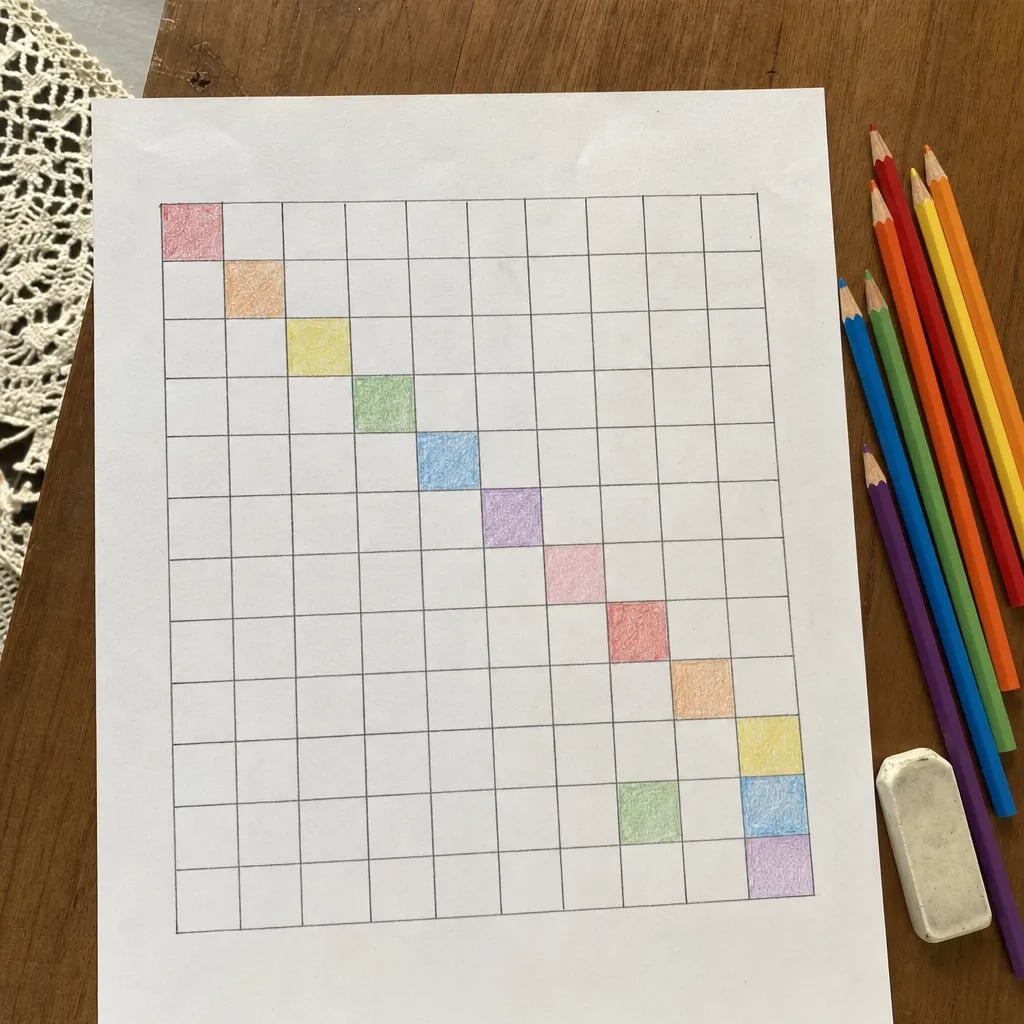
Trick 6: colour the grid and spot the patterns. Give your child a blank 10 × 10 grid and coloured pencils. Shade every answer in the 5s, then in the 9s, then the square numbers on the diagonal (1, 4, 9, 16 and on to 100). The shapes that appear make the table look smaller.
Trick 7: quiz, don't re-read. Looking at the chart again feels like learning. Answering without it works better. Ask 5 mixed questions at breakfast, such as 4 × 6, 9 × 3 and 7 × 5. Mark the ones your child misses and ask them again the next day. For a calm daily habit, see our sifir 1 to 12 routine for kids, and for more screen-free ideas see maths activities at home.
A short daily slot beats a long weekend session. This 4-week plan covers every table once, and each day has the same shape: 2 minutes warming up on last week's table, 5 minutes on the new one, then 3 minutes of mixed quiz questions.
On day 28, ask 10 random facts and note which ones your child answered within a few seconds. The slow facts become next week's quiz.
Most trouble comes from how the table is practised, not from the child. Five habits come up again and again.
If your child still counts every fact from 1 after 4 weeks, the gap is probably earlier than the table. Common causes are weak adding, shaky skip counting or poor place value, and our guide to a child who is weak in maths explains how to tell them apart.
Algonova's Math Starters course is built for ages 6 to 8 (Darjah 1 and 2), the years in which the 2s, 5s and 10s are introduced. It starts with a free diagnostic of about 60 minutes and a written report that shows which skills are missing. Lessons are live online in groups of up to 10 children, and prices start from RM 48 per lesson. Algonova has taught more than 1M students in 97 countries and holds a 4.9 parent rating. Malaysian parents explain their experience on the reviews page. Learn more about the online maths course for ages 6 to 8.
If your child is 9 or 10, start with the routine above and the Year 3 and 4 guide, and ask the class teacher which facts to focus on.
The fastest way is 10 minutes a day with the easy tables first, then tricks for the hard ones. Short and daily beats long and rare, because memory builds from repeated recall. Start with the 1s, 10s, 2s and 5s, since children already know these patterns from counting. Then double the 2s to reach the 4s and 8s, use the finger trick for the 9s, and split the 6s and 7s into pieces the child knows. End every session with 3 minutes of mixed questions answered without the chart. Mark the missed facts and ask them again the next day. The plan in this guide covers the full 1 to 10 table once in 4 weeks, and the slow facts then get extra rounds. Leave speed targets until the answers are correct.
Learn them in this order: 1s and 10s, 2s and 5s, 4s and 8s, 3s and 9s, then 6s and 7s. Each group builds on the one before it. The 4s come from doubling the 2s, and the 8s from doubling the 4s. The 9s have the finger trick, and the 3s are easier once the child has flipped facts such as 3 × 8 into 8 × 3. By the time the 6s and 7s arrive, most of their facts are already known, because 6 × 2, 6 × 5 and 7 × 4 have been covered. Only a handful are left, such as 6 × 6, 6 × 7 and 7 × 7, and splitting handles those. If a table takes longer than a week, stay with it, since a shaky 3s table makes the 6s and 9s harder.
A Tahun 2 child needs the 2, 5, 10 and 4 times tables, plus the 1s and 0s, according to the KSSR DSKP for Tahun 2. Recalling them at random, not only in order, is part of the learning standard. The harder tables (6, 7, 8 and 9) are the main work of Tahun 3, and by Tahun 4 the whole 1 to 10 grid is expected, because long multiplication and division rely on it. If your child is in Tahun 2, there is no need to rush the 7s. Spend the term making the 2s, 5s, 10s and 4s automatic, and add the 3s if your child is ready. Check the exact list with your class teacher, since schools may sequence topics a little differently. Our KSSR Year 1 and 2 guide covers the rest of the year.
Start in order to learn each table, then switch to random order within a week. Recall in order does not prove the child knows the fact. In order, a child can recite the 6s as a song: 6, 12, 18, 24 and on, using the previous answer as a stepping stone. That is useful at the start because it builds the pattern. The problem is that a child who has only ever practised in order cannot answer 6 × 7 on its own. Random order forces the brain to fetch the answer directly, which is what school tests and later maths need. A simple way is to write facts on small cards, shuffle them, and sort them into "quick", "slow" and "not yet" piles. Practise the "slow" and "not yet" piles first the next day.
No, the finger trick is a legitimate method, and it works because it follows how the 9s table is built. Folding down the 4th finger for 9 × 4 shows 3 fingers on one side and 6 on the other, which reads as 36. The trick relies on the fact that each answer in the 9s has digits that add up to 9, and the tens digit rises by 1 as the ones digit falls by 1. Many children use it for a few weeks and then stop, because they have seen the 9s so often that the answers come on their own. Keep it as a check as well. If your child gets 9 × 7 = 62, the digits add up to 8, not 9, so something is wrong. That check builds the habit of testing an answer.
Slow recall usually means the facts are known but not yet automatic. Keep the quiz short and mix the order before adding speed. Look at which facts are slow. If it is always the same 5 or 6, such as 7 × 8 and 6 × 7, put those on a "slow list" and quiz them twice a day for 2 minutes. If every fact is slow, the child may still be counting up from the start of the table, and that needs the easy-table steps again, especially skip counting and doubling. Avoid timers at first. A relaxed child answers in 3 seconds, while a nervous child answers in 8, and a timer can make the second case worse. If the problem remains after 4 to 6 weeks, a short diagnostic with a maths teacher helps find the earlier gap.
They can help as a short extra, but they work best as quiz practice, not as a replacement for the routine in this guide. Songs give a child a rhythm to hold on to, and games make practice feel less like homework. Both work like the quiz trick, because the child has to fetch the answer. A good app asks mixed questions and repeats the facts your child gets wrong. A weak one only shows the table again. Set a limit of 10 minutes so the app does not replace paper and objects, and check that your child can still answer a fact without the screen. Our screen time limits by age guide helps with the daily balance. Try an app for a week and keep it only if the quiz scores go up.
Your child may be behind if, by the middle of Tahun 3, they still count most facts one by one or cannot answer the 2s, 5s and 10s without effort. Other signs are avoiding maths homework, guessing quickly, or relying on a chart for every sum. A single bad quiz means little, so look for a pattern across 3 or 4 weeks. Try this at home: ask 10 random facts from the 2s, 5s and 10s. If more than 2 or 3 take longer than a few seconds, go back to the first week of the routine. If those tables are secure and the 6s to 9s are still shaky, you are on track and need more mixed practice. When the gap is wider, the cause is often earlier, in adding or place value, so a diagnostic is a good next step.
Blog

Start your child's tech journey
Book your free 60-minute trial class with an Algonova certified tutor. No payment, no obligation, just discover what your child can build.

Algonova worldwide
Contact us
Email: int_legal@alg.team
Visit us
Suite 8634, 1021 E Lincolnway, Cheyenne, WY, Laramie, US, 82001
Algonova online LLC International tech school for kids and teens

