
Direct and Inverse Proportion Explained for Kids + 12 Worked Examples with Answers
Math Education8 min
Coding Education

Bayu Nugraha
Children's Coding Specialist
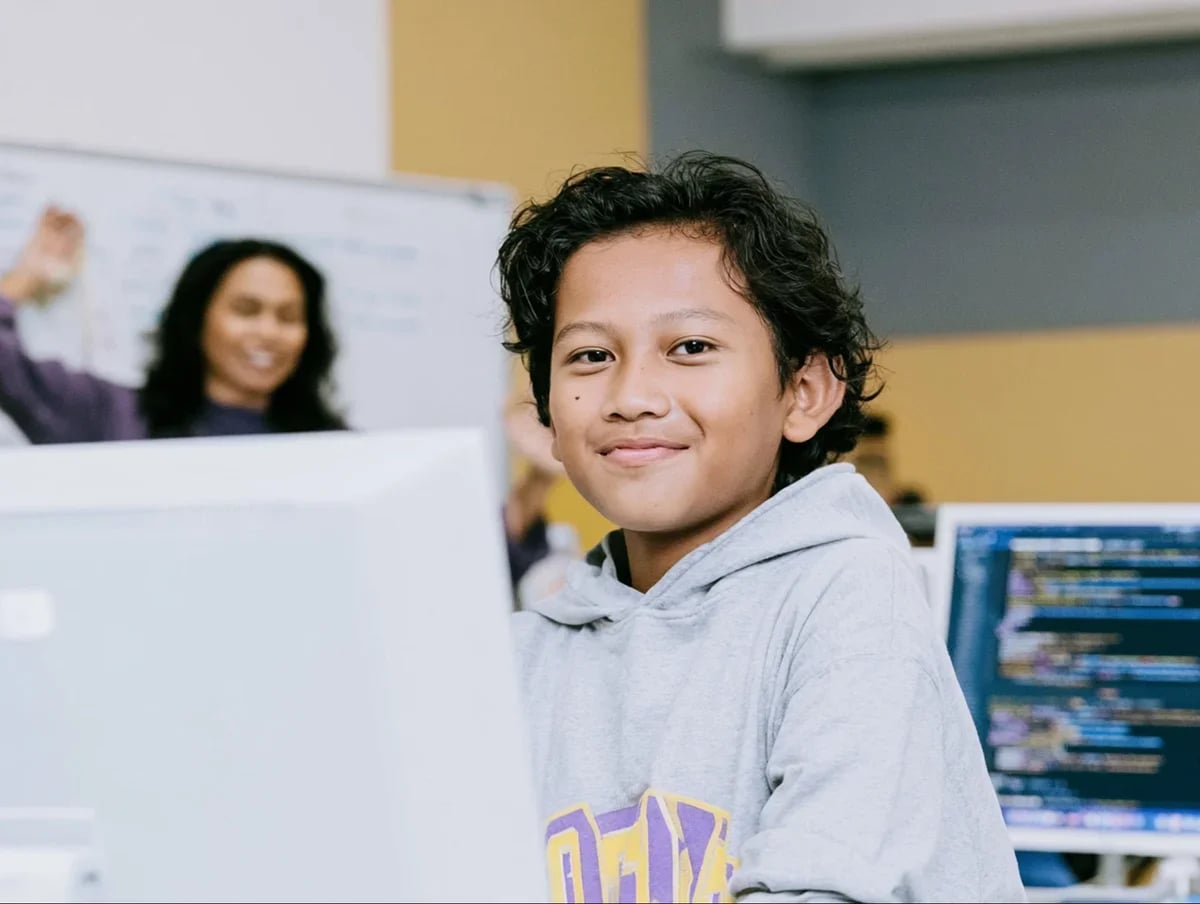
A prompt is the instruction or question you write to an AI in order to get the answer you want.
Table of Contents
The term sounds technical, but the meaning is simple: a prompt is how we speak to a machine. The quality of the question decides the quality of the answer, exactly as when asking a person.
An AI such as ChatGPT has no idea what is in our head. All it has is the sentence we typed. If the instruction is vague, it guesses, and its guess often misses what we meant.
Compare two requests. The first: explain fractions. The second: explain fractions to a fourth-grade child using a pizza-sharing example, in no more than five sentences. Both go to the same AI, but the results differ enormously - not because the AI changed, but because the instruction became far clearer.
| Part | Question it answers | Example |
|---|---|---|
| Role | Who should the AI be | You are a primary school maths teacher |
| Task | What should it do | Explain how to find the lowest common multiple |
| Context | For whom and in what situation | For a year 5 pupil meeting this for the first time |
| Format | What shape the answer should take | In three steps, with one practice problem at the end |
Not every prompt needs all four. But whenever an answer comes back off-target, one of these parts is almost always missing.
Writing good prompts trains a skill far older than AI: framing a question precisely. A child who habitually states what they need, who it is for, and in what form is practising the same structured thinking that writing code and composing an essay both demand.
There is a subtler second benefit. A child who understands that an AI's answer is shaped by their own question stops treating AI as a source of truth. They start seeing it as a tool whose output depends on how it is used - which is exactly the right attitude.
In Algonova's AI classes for children, writing and refining prompts is part of the practice from the earliest sessions. Try a free class to see the approach.
A prompt is the instruction or question you write to an AI to get the answer you want. Because the AI has only the sentence you typed and no idea what is in your head, the clarity of the prompt decides the quality of the answer.
A good prompt usually has four parts: the role the AI should play, the task to carry out, the context of who the answer is for, and the format the answer should take. Not every prompt needs all four, but when an answer comes back off-target, one part is usually missing.
A weak prompt: explain fractions. A strong prompt: explain fractions to a fourth-grade child using a pizza-sharing example, in no more than five sentences. The second states who it is for, with what example, and at what length.
Four are most common: the instruction is too short, several requests are bundled into one prompt, the prompt does not say who the answer is for, and the first answer is accepted without asking for any refinement.
Children aged 10 and up can practise writing structured prompts, since at that age they begin to be able to state specifically what they need. Note that ChatGPT's terms of service set a minimum age of 13, with parental permission required for users under 18.

Algonova worldwide
Contact
Whatsapp: +62 21 50996971
Email: info@algonova.id
Address
Coworking Area, Gedung IT 6 Lantai Dasar, Nongsa Digital Park, Jalan Hang Lekiu, Kelurahan Sambau, Kecamatan Nongsa, Batam, Indonesia Directorate General of Consumer Protection and Trade Compliance – Ministry of Trade of the Republic of Indonesia. WhatsApp Ditjen PKTN: 0853-1111-1010.
PT Algonova Indonesia Cerdas All rights reserved 2026