Direct and Inverse Proportion Explained for Kids + 12 Worked Examples with Answers
Math Education8 min
Coding Education

Bayu Nugraha
Children's Coding Specialist
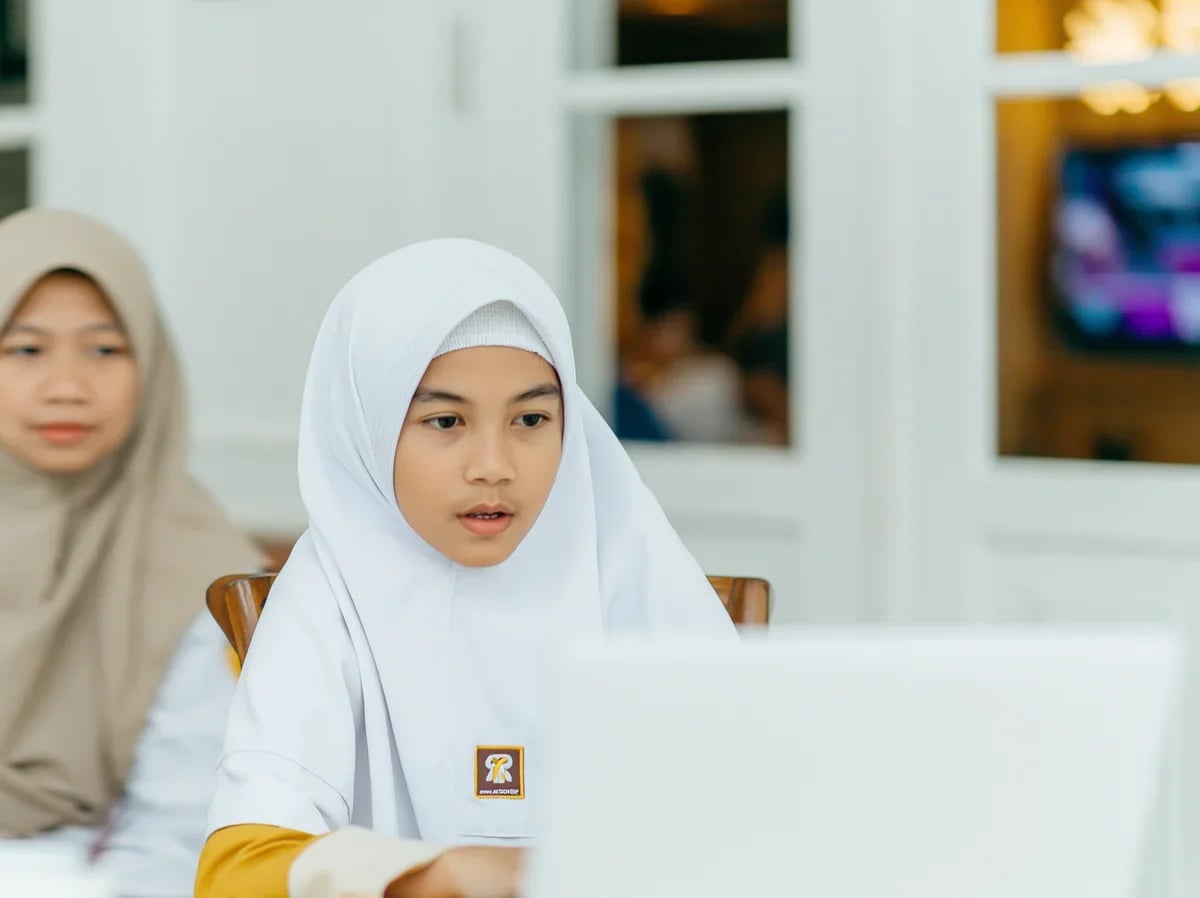
ChatGPT is an artificial-intelligence chatbot built by OpenAI that answers questions in everyday language, trained on very large amounts of text to predict the most plausible next word.
Table of Contents
ChatGPT is the best-known form of artificial intelligence, and for many families it is the first encounter with the technology.
ChatGPT does not look up answers on the internet the way a search engine does. It works in a way that is both simpler and stranger: it predicts the next word.
The model behind it was trained on very large amounts of text. During training it was repeatedly asked to guess a missing word in a sentence and then corrected. After billions of repetitions it became extremely good at producing sentences that sound natural and are often correct.
That is why ChatGPT can write a poem, explain a concept, or help fix code - all of these are problems of arranging plausible sequences of words. And it is also why it can be wrong: the most natural-sounding sentence is not always the true one.
| Reasonably reliable | Needs checking |
|---|---|
| Re-explaining a concept in simpler language | Numbers, dates, and statistics |
| Generating ideas, titles, or an outline | Quotations and source names, which can be invented |
| Tidying grammar and spelling | Recent events outside its training data |
| Spotting errors in simple code | Multi-step maths problems |
The term for an invented but convincing answer is a hallucination. It is not a malfunction but a direct consequence of predicting words.
OpenAI's terms of service set a minimum age of 13 for using ChatGPT, and users under 18 need a parent's permission. Beyond that age limit, four house rules are worth agreeing on.
For a fuller discussion of AI safety for children, see our guide Is AI Safe for Kids?.
The difference comes down to who is doing the thinking. If a child asks ChatGPT to do the homework, the machine thinks. If a child asks ChatGPT to explain the part they did not follow and then does the work themselves, the child still thinks.
Three uses that build ability: ask for the same idea explained with a different analogy, ask for extra practice problems with worked solutions, and ask it to check the child's answer by pointing out where the mistake is without giving away the correct one.
In Algonova's AI classes for children, kids learn to use tools like this as an assistant rather than a replacement for thinking. Try a free class to see the approach.
ChatGPT is an artificial-intelligence chatbot built by OpenAI that answers questions in everyday language. It does not look answers up on the internet; it composes sentences by predicting the most plausible next word, based on the very large body of text used to train it.
OpenAI's terms of service set a minimum age of 13, and users under 18 need a parent's permission. Beyond the age limit, parents should agree extra rules: no personal data, use it in an open space, and always check any fact headed for schoolwork.
Not always. ChatGPT can invent convincing answers, particularly for numbers, dates, quotations, and source names. This is called hallucination and is a direct consequence of predicting words rather than a malfunction.
The difference is who does the thinking. Asking ChatGPT to do the homework means the machine thinks. Asking it to explain the part that was unclear, generate extra practice problems, or point out where a mistake is without giving the answer - and then doing the work yourself - means the child still thinks.
Never enter a full name, home address, school name, phone number, or photos into any chatbot. None of it is needed to answer a schoolwork question, and once it is sent, control over it is gone.

Algonova worldwide
Contact
Whatsapp: +62 21 50996971
Email: info@algonova.id
Address
Coworking Area, Gedung IT 6 Lantai Dasar, Nongsa Digital Park, Jalan Hang Lekiu, Kelurahan Sambau, Kecamatan Nongsa, Batam, Indonesia Directorate General of Consumer Protection and Trade Compliance – Ministry of Trade of the Republic of Indonesia. WhatsApp Ditjen PKTN: 0853-1111-1010.
PT Algonova Indonesia Cerdas All rights reserved 2026