Child Phone Addiction: Signs, Effects and How to Cut Back Calmly

Parent Guides9 min
Learning Path · Ages 8-17
AI is already everywhere — from video recommendations to virtual assistants. This path sequences Algonova's courses so kids don't just use AI, but understand how it works and can build a simple AI project themselves. 1,000,000+ alumni · 97 countries · since 2016 · 4.9★ · Bett MEA Awards winner
1M+
students worldwide
3 courses
in this path
4.9★
parent rating
10 years
in the market
About this path
AI is already everywhere
No longer the future, it's now
Kids already use AI-powered products every day — understanding how it works is a new literacy skill, not just for future programmers.
Python as the required foundation
The main language behind AI
Almost every AI tool and model is built on Python — a child strong in Python has a head start ready to apply to AI projects.
Learning through projects, not theory
AI kids can actually try
Kids build a simple AI project they can see the results of immediately — not just hear concepts explained in class.
Programs on this path
How it works
A sequenced learning path, not disconnected one-off classes.
01
1. Free trial class (60 min)
The teacher assesses the child's level and interest — whether they need a logic foundation first or can go straight to Python.
02
2. Build a logic foundation
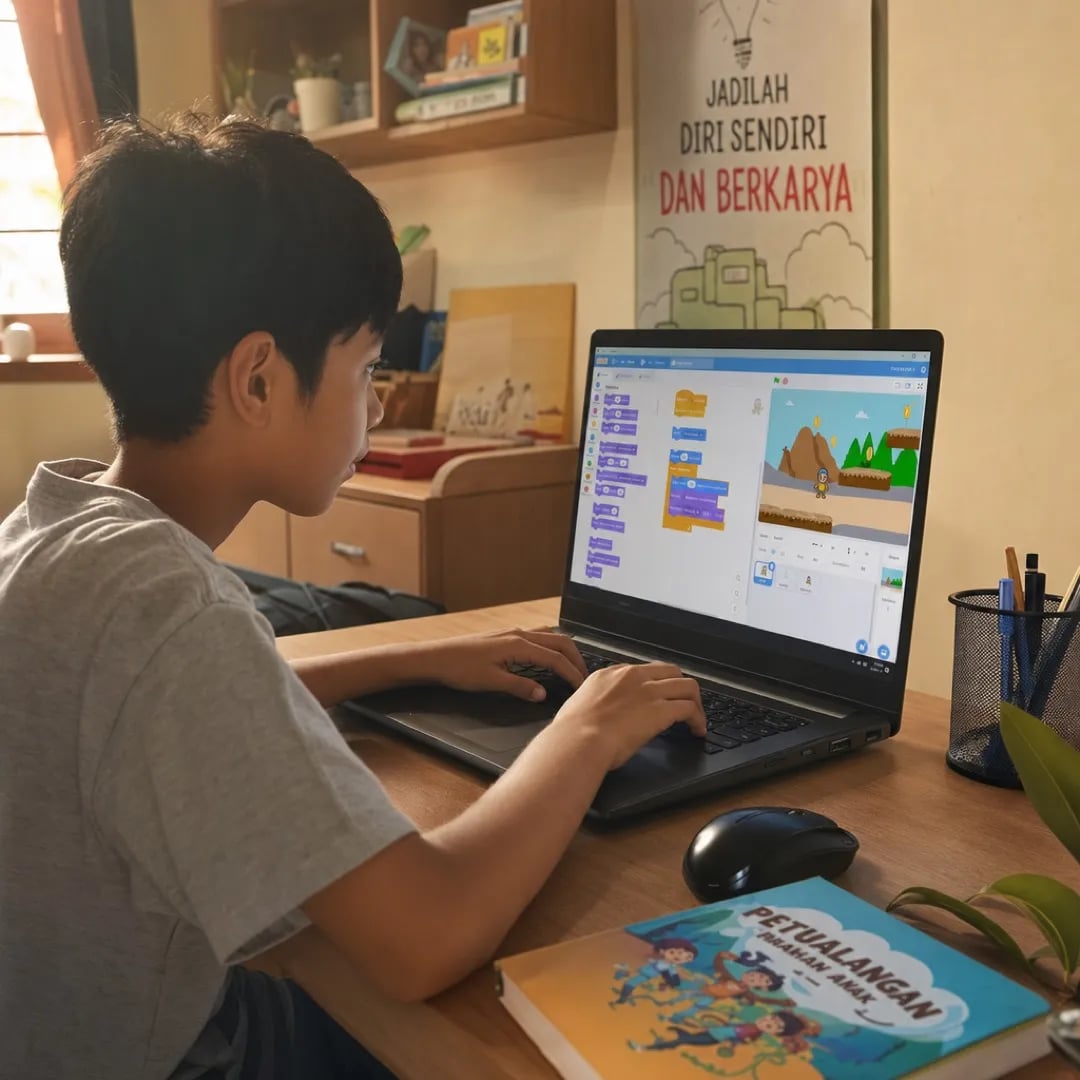
The child learns programming logic through Scratch as a base before moving into text syntax.
03
3. Master Python
The child writes real Python code — the main language behind AI.
04
4. First AI project
The child builds a simple AI project and learns to use generative AI tools.
Small-group classes from Rp 102,000/session · Free 60-min trial · No card required
Introducing AI concepts can start around age 8-9 through simple generative AI tools, but real AI projects (training a model) usually start around age 12-14 once a child is strong in Python. At a younger age, the focus is more on AI literacy — understanding how video recommendations or chatbots work, not building a model from scratch. Training a simple model only makes sense once a child understands variables, loops, and functions in Python. This path is designed in stages so kids don't jump into AI without enough logic foundation.
Strongly recommended, because almost every AI tool and model is built on Python. Kids who aren't yet strong in Python can still learn AI concepts and try generative AI tools, but for deeper projects — like training a simple classification model — understanding Python syntax becomes a practical prerequisite. That's why this path places Python as a step before the AI class, not an optional extra.
The AI Course for Kids is the specific course itself, while this page is the full path showing the steps before a child is ready to take that course. Many parents ask if they can jump straight into the AI class without realizing how much a logic foundation and Python matter for how far a child can follow the material. This page answers the right sequence, while the AI Course page has the course details itself. The two complement each other: see the AI Course for Kids page for course details.
Not entirely — AI adds a new layer of concepts on top of basic coding, like data, patterns, and predictive models. Coding teaches kids to give a computer explicit step-by-step instructions. AI teaches kids to train a system to recognize patterns from data, a different way of thinking that still needs a coding foundation (especially Python) to practice. That's why AI is usually taught after a child has enough coding foundation, not as a first step.
On average 2-3 years from logic foundation to a first AI project, depending on starting age and learning intensity. A child who starts the logic foundation at age 8-9 is usually ready for Python within a year, then a first AI project 1-2 years after that. Kids who start older with a strong logic foundation can move through these stages faster. There's no deadline — every child progresses at their own readiness, assessed through a trial class at each stage.
Start Today
A free 60-minute trial class — our teachers assess your child's level and interests, then recommend the right starting point on this path.

Algonova worldwide
Contact
Whatsapp: +62 21 50996971
Email: info@algonova.id
Address
Coworking Area, Gedung IT 6 Lantai Dasar, Nongsa Digital Park, Jalan Hang Lekiu, Kelurahan Sambau, Kecamatan Nongsa, Batam, Indonesia Directorate General of Consumer Protection and Trade Compliance – Ministry of Trade of the Republic of Indonesia. WhatsApp Ditjen PKTN: 0853-1111-1010.
PT Algonova Indonesia Cerdas All rights reserved 2026