Why Kids Struggle With Math: 7 Causes and How to Address Each
Common Mistakes12 min
Learn Math

Nadia Rahmawati
Math Curriculum Team, Algonova
Dyscalculia is a specific learning disorder affecting how a person understands numbers and quantities, much like dyslexia affects reading, and it affects a small share of school-age children. It is not a sign that a child is lazy or unintelligent, but a different way the brain processes numbers. This guide is for worried parents: the signs of dyscalculia by age, how it differs from simply "disliking math", how to help at home, and when to see a specialist.
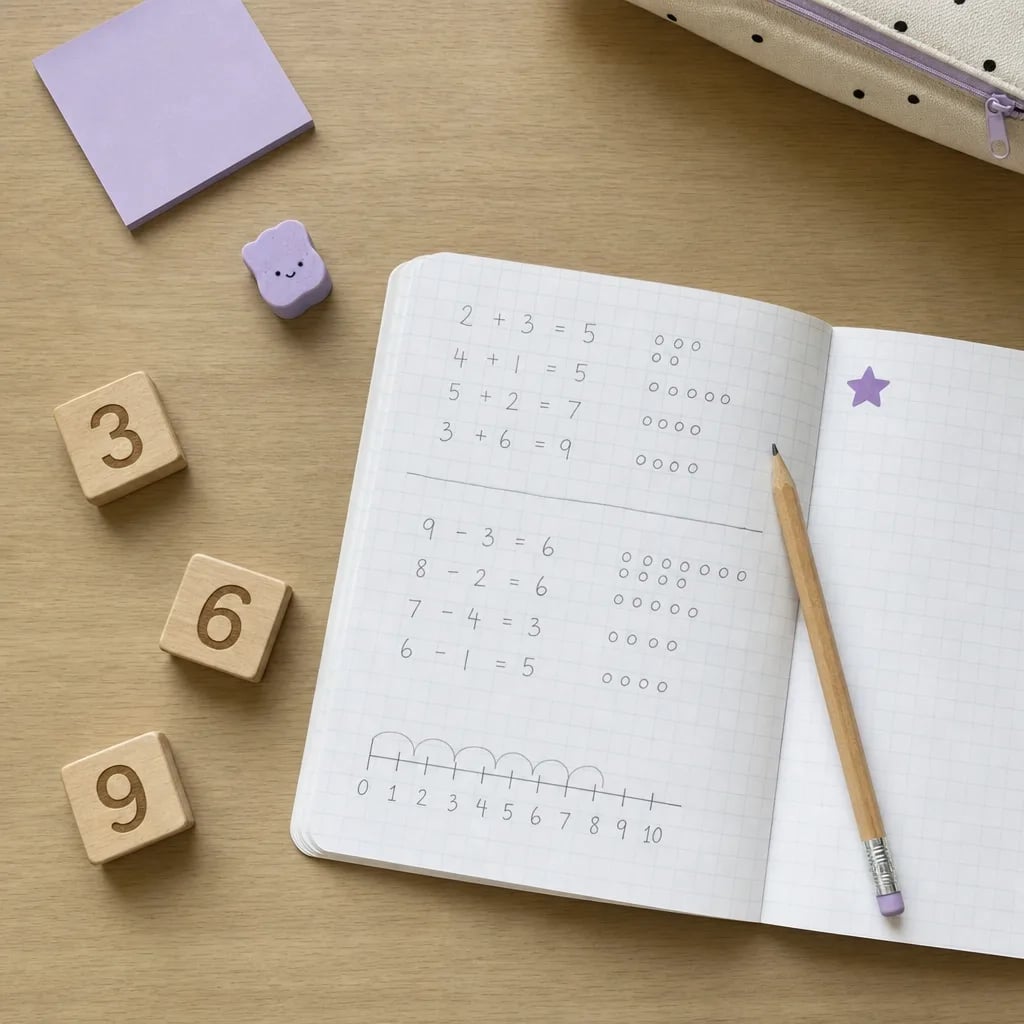
Many parents feel anxious when a child keeps struggling with numbers despite being bright in other subjects. The good news: dyscalculia is not a verdict. Children with dyscalculia can still learn math. They simply need a different approach, more time, and the right support.
Before you panic, one important point: only a small share of math struggles are truly dyscalculia. Our article Why Kids Struggle With Math explains seven other, far more common causes. This guide focuses on one specific possibility: how to recognize dyscalculia, and what to do if you suspect it.
Algonova is an international technology school for children ages 5-17: 1,000,000+ graduates across 97 countries, since 2016 (10+ years of experience), with Private (1 student), Mini (2-4 students), and Group (up to 10 students) formats, certified teachers, a 4.9-star rating. We do not diagnose dyscalculia (that is a psychologist's role), but we are often the first place parents realize something needs checking.
Not sure if it's dyscalculia or an ordinary concept gap? Take a free class with an AI diagnostic to get an initial picture.
Dyscalculia is a learning difficulty that makes it hard to understand numbers, quantities, and the relationships between them. The term literally means "difficulty with counting". Just as dyslexia affects reading, dyscalculia affects number sense - the intuitive feel for magnitude and quantity that develops naturally in most children.
Children with dyscalculia usually have normal or even above-average intelligence. They may be strong readers, storytellers, or artists, yet freeze on something as simple as comparing "which is more, 7 or 9". The difficulty is neurological: the brain processes numerical information differently, not because of a lack of practice or motivation.
Several commonly misunderstood facts:
Dyscalculia sometimes appears alongside other conditions such as dyslexia or ADHD, but it can also stand alone. The key point: recognizing the condition is the first step to helping, not to labeling.
A child with dyscalculia is not unable to learn math, they learn it through a different route, and our job is to find that route.
Dr. Sari Handayani, Child Educational Psychologist
The signs of dyscalculia change as a child grows. Here is an overview to help you recognize patterns, not to self-diagnose, but to decide whether a consultation is warranted.
Preschool age (3-5 years):
Early primary (6-9 years):
Late primary to middle school (10-14 years):
Emotional signs at any age:
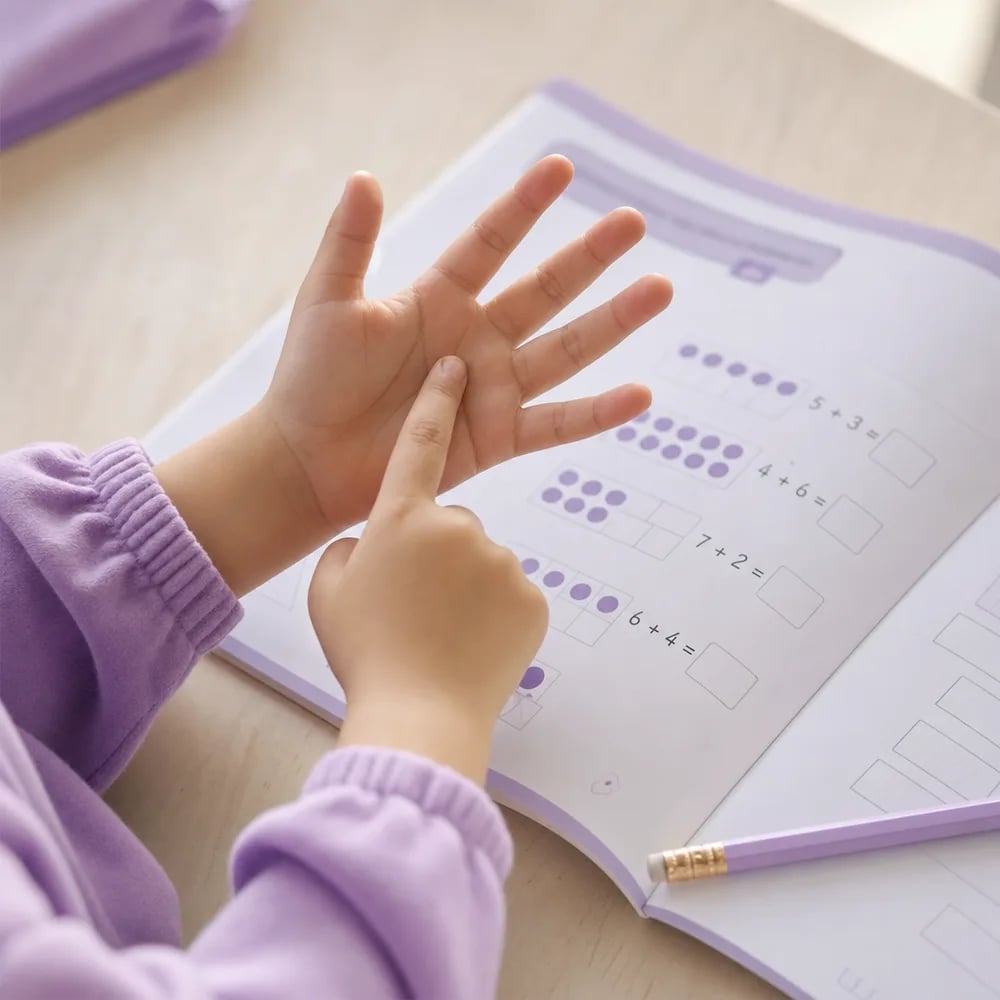
If three or more signs appear consistently over several months, especially when the child's ability in other subjects is normal, that is a signal to consult. Counting aids such as finger math can ease things temporarily, but are not a substitute for professional evaluation.
This is the most important question, because the two need very different responses. Most children who "dislike math" are actually facing a concept gap, anxiety, or a mismatched learning method, not dyscalculia.
| Aspect | Dyscalculia | Ordinary struggle / dislike |
|---|---|---|
| Nature | Neurological, consistent from early on | Situational, often after a specific event |
| Number sense | Weak even for basic concepts | Generally intact; trouble on specific topics |
| Response to tutoring | Needs specific accommodations | Improves with the right approach |
| Other subjects | Usually normal or good | Varies |
| Time pattern | Persists for years | Can disappear once the concept gap closes |
A rule of thumb: if the child improves fairly quickly once a concept gap is found and closed, it is probably not dyscalculia. If the fundamental difficulty persists despite intensive, patient support over many months, it is time for a professional evaluation. For motivation issues, How to Make Kids Love Math is more relevant; to map concept gaps, start with the Math Assessment for Kids.
The exact cause of dyscalculia is not fully understood, but research points to several factors:
What is clear: dyscalculia is not caused by poor parenting, too little tutoring, or too much screen time. Blaming yourself as a parent does not help the child. What helps is recognizing the condition and seeking the right support.
The right diagnosis turns "my child can't do math" into "my child needs a different way", and that is freeing, not limiting.
Dr. Sari Handayani, Child Educational Psychologist
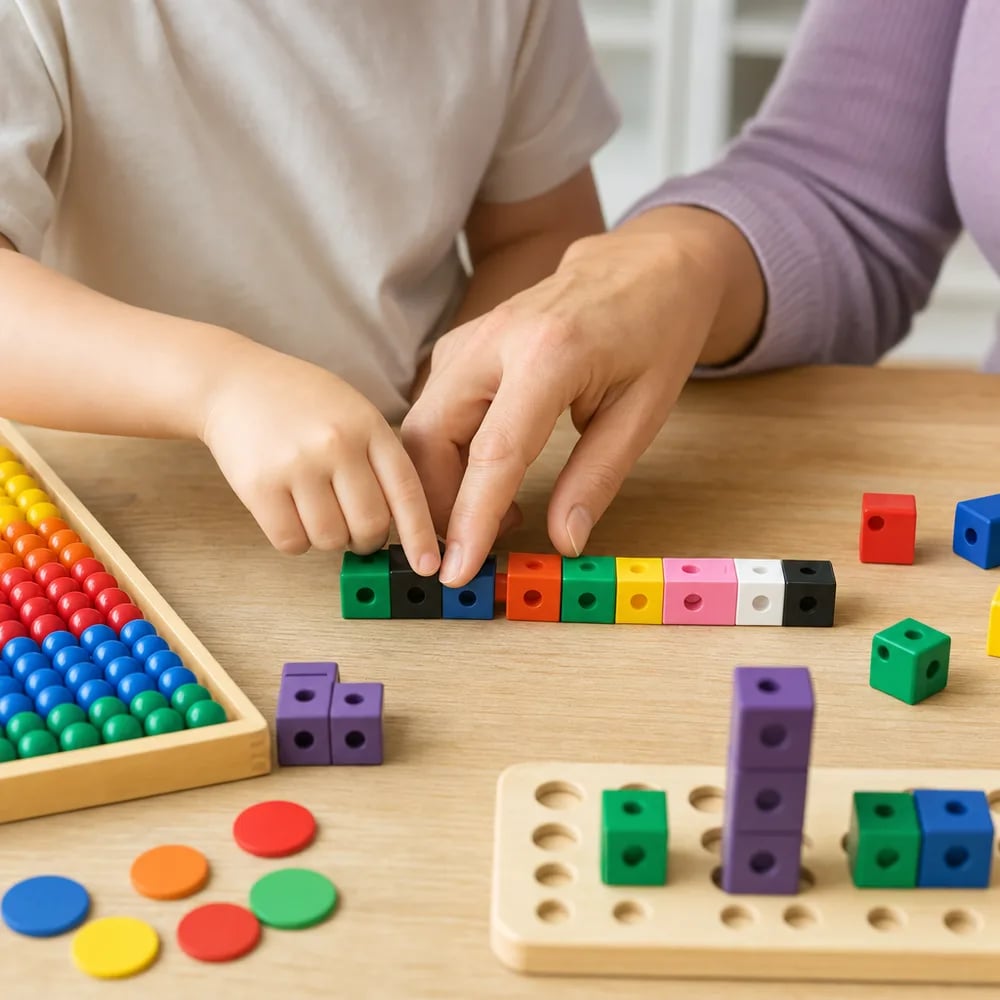
While formal diagnosis and accommodations require professionals, there is a lot you can do at home to lighten your child's load and rebuild their confidence.
Want a structured approach beyond home? Try one free class - our teachers begin with a diagnostic to match the pace to your child.
Just as important: keep your child's emotional relationship with math safe. Avoid comparisons with siblings, do not punish mistakes, and never say "I was bad at math too" - that quietly gives the child permission to give up.
Dyscalculia can only be formally diagnosed by a professional, usually a child psychologist, educational psychologist, or developmental team. Tutors, including us, cannot and should not give a diagnosis. Consider a consultation if:
What do you gain from a diagnosis? Not a label, but access. A formal diagnosis unlocks legitimate accommodations: extended exam time, permission to use a calculator, alternative problem formats, and an individualized learning plan at school. Just as importantly, a diagnosis frees the child from blaming themselves for a condition that is not their fault.
Practical steps: start with the school teacher and psychologist, ask for a referral, and document examples of the child's difficulty (photos of their work, notes on patterns). If you need a content assessment to separate a concept gap from dyscalculia, the Math Assessment for Kids can be a starting point before seeing a specialist.
Dyscalculia is a different way the brain processes numbers, experienced by a small share of school-age children, not a measure of intelligence and not anyone's fault. There are three keys: recognize the signs early, separate it from simply "disliking math", and seek a professional evaluation if the pattern is consistent. In between, patient and concrete support at home matters enormously.
If you want to map exactly where your child struggles, whether it's an ordinary concept gap or something that needs a closer look, take a free first class for 60 minutes. Our certified teachers begin with an AI diagnostic, teach in Private (1 student), Mini (2-4 students), and Group (up to 10 students) formats, and will give you an honest picture of the next step. If we suspect dyscalculia, we will encourage you to see a specialist, because your child deserves the right support, not just more tutoring.
Dyscalculia is a specific learning difficulty with numbers and mathematical concepts, not a sign that a child is lazy or less intelligent. The signs include trouble recognizing numbers, counting backwards, or understanding place value despite practice.
Can dyscalculia be cured? Not cured, but supported. With a multisensory approach and structured practice, a child can make good progress.
How can you support your child at home? Use visual and concrete aids, avoid time pressure, and celebrate small progress. Logic-based activities such as coding also help build a child's confidence with patterns and numbers. See Algonova coding classes for ages 5–17, or book a free math diagnostic session.
Dyscalculia is a specific learning disorder that makes it hard for a child to understand numbers, quantities, and the relationships between them. It is neurological and affects a small share of school-age children, much like dyslexia affects reading. Children with dyscalculia usually have normal intelligence and often excel in non-numerical subjects such as reading or art. What is affected is number sense, the intuitive feel for magnitude and quantity. Dyscalculia is not a sign of laziness or too little practice, and it will not disappear just by adding tutoring hours. But with the right approach, concrete objects, and accommodations such as calculators, a child can still master functional, everyday math. The first step is recognizing the signs, not labeling the child.
Both are specific, neurological learning disorders, but they affect different abilities. Dyslexia mainly affects reading, spelling, and processing written language, while dyscalculia affects understanding numbers, quantities, and calculation. A child may have one, both at once, or neither. Research shows dyscalculia and dyslexia fairly often occur together, but each stands as its own condition. What they share: neither is about intelligence, both need professional diagnosis, and both improve with the right accommodations rather than just extra drilling. If your child struggles with both reading and numbers, mention both when consulting a psychologist so the evaluation covers both possibilities.
Dyscalculia is not an illness, so the better word is not cured but managed. The condition is lifelong, but its impact on a child's life can be greatly reduced. With early intervention, multisensory teaching (using concrete objects and visuals), and legitimate accommodations such as calculators and extra time, children with dyscalculia can reach functional math ability for school and daily life. The key is that the earlier support arrives, the lighter the burden. Waiting until a child falls far behind only widens the gap and adds anxiety. So while dyscalculia does not go away, your child can still grow, gain confidence, and succeed with the right strategies and support from parents and teachers who understand the condition.
A formal diagnosis can only be given by a professional such as a child psychologist, educational psychologist, or developmental team, usually through standardized tests and interviews. Neither parents nor tutors can diagnose it themselves, though they can recognize the signs. The process usually starts at school: share your concerns with the teacher and school psychologist, then ask for a referral. Bring documentation such as photos of the child's work and notes on recurring difficulty patterns. Before that stage, a math content assessment can help separate an ordinary concept gap from dyscalculia. If the difficulty stays fundamental after patient, consistent support, that is a strong signal for a professional evaluation. Early diagnosis matters because it unlocks legitimate accommodations and prevents self-blame.
Yes. Dyscalculia affects how a child processes numbers, but it does not limit their overall potential. Many people with dyscalculia succeed across fields, especially those that draw on their strengths outside numbers, such as language, art, or working with people. At school, the key to success is the right accommodations: calculators, extra exam time, alternative problem formats, and an individualized learning plan. These are legal and become the child's right once a formal diagnosis exists. At home, patient support and an emphasis on effort rather than speed keep the child's confidence intact. What matters most is not the starting condition but whether the child gets the understanding, strategies, and support they need. With that, a child with dyscalculia can grow into a confident, independent person.

Algonova worldwide
Contact
Whatsapp: +62 21 50996971
Email: info@algonova.id
Address
Coworking Area, Gedung IT 6 Lantai Dasar, Nongsa Digital Park, Jalan Hang Lekiu, Kelurahan Sambau, Kecamatan Nongsa, Batam, Indonesia Directorate General of Consumer Protection and Trade Compliance – Ministry of Trade of the Republic of Indonesia. WhatsApp Ditjen PKTN: 0853-1111-1010.
PT Algonova Indonesia Cerdas All rights reserved 2026