
Abacus vs Kumon vs Conceptual Math: Which Is Right for Your Child?
Which Is Better?6 min read
Parent Guides

Aina Rashid
Parent Education Editor, Algonova Malaysia
Year 1 registration in Malaysia for the 2027 school session ran from 15 February to 31 March 2026, and Year 1 begins on 4 January 2027. From 2027, children born in 2021 may start Year 1 a year early on a voluntary basis, alongside the usual cohort born in 2020. With about 10 weeks to go, what your child can already do matters more than the birth date.
A child in Malaysia starts Year 1 in the calendar year they turn 7, and from 2027 parents may also enrol a child in the year they turn 6. Malaysians count school age by birth year, so the "7 year old" cohort is still 6 on the first day of school and the "6 year old" cohort is mostly 5.
| Cohort for the 2027 intake | Born between | Age on 4 January 2027 | Status |
|---|---|---|---|
| 7 years (6+) | 2 January 2020 and 1 January 2021 | 6 | usual entry |
| 6 years (5+) | 2 January 2021 and 31 December 2021 | mostly 5 | voluntary, no screening test |
The cohort dates come from the Ministry of Education (KPM) announcement shared by the National Security Council (MKN) in January 2026. KPM also said that early entry at 6 is a choice and needs no screening test.
Take Hana, born on 20 November 2021. She is in the voluntary cohort, so she could walk into a Year 1 classroom on 4 January 2027 at 5 years and 1 month. Her classmate born in January 2020 would be almost 7. That's nearly 2 years between children in one class, so the checklist below tells you more than the calendar does.
Registration for the 2027 Year 1 intake is already closed: it ran online from 15 February to 31 March 2026 through the MOEIS system at idme.moe.gov.my, as stated on the KPM registration page. The school year itself has fixed dates in a KPM circular dated 2 October 2026.
The dates parents ask about most:
The dates above are taken from the KPM academic calendar 2027 circular. By 25 October 2026, KPM had not yet published the registration window for the 2028 intake. If you missed registration for 2027, call the school you want or your Pejabat Pendidikan Daerah (district education office) and ask what is still possible before January.
At 5 years and 1 month or at 6 years and 11 months, a child sits the same first lesson. The birth date decides the class, but readiness decides how the first term feels.
A child is ready for Year 1 when they can manage most of the 12 tasks below without an adult stepping in. The list is our own guide from teaching children aged 5 to 7, not an official KPM test. A child who manages 9 or more tasks usually settles in quickly, and a child below 6 will need some focused practice over the holidays.
Numbers
Early reading and writing
Self-care and the school day
Hana, from the example above, got 8 out of 12: counting backwards and paying at the canteen were the gaps. Both are easy to practise in a few weeks.
A 6 year old should start Year 1 early only when the checklist is mostly done and the child is comfortable with a full morning of structured activity. Age alone doesn't answer it. A confident child born in early 2021 may cope well, and a child born in December 2021 may need another year of preschool. For a child born late in the year, our teachers lean towards waiting unless the checklist is nearly complete.
| Signs your child may be ready at 6 | Signs it may be better to wait until 7 |
|---|---|
| Manages 9 or more of the 12 checklist tasks | Manages fewer than 6 tasks |
| Sits through a 20 minute activity at preschool | Gets upset when routines change |
| Asks about letters, numbers and signs | Avoids pencils and books |
| Plays and shares in a group of 10 or more | Prefers to play only with 1 adult |
For the 2027 intake this decision was made at registration in March 2026. If the 2027 rule carries forward, a child born in 2022 would be in the voluntary group for 2028, but KPM has not confirmed this yet. Watch the KPM registration page early in 2027.
If your child is registered at 6 and scores low on the checklist, don't panic. Ten weeks of short daily practice closes most of these gaps.
The best way to prepare a child for Year 1 is 15 to 20 minutes of practice a day from now until 4 January 2027. At this age short daily sessions beat one long Saturday lesson.
For ready-made games, use our 4-week school holiday maths plan for Year 1 and 2. For tone and method, read how to teach maths to a 6 year old, which covers the 5 habits that put young children off.
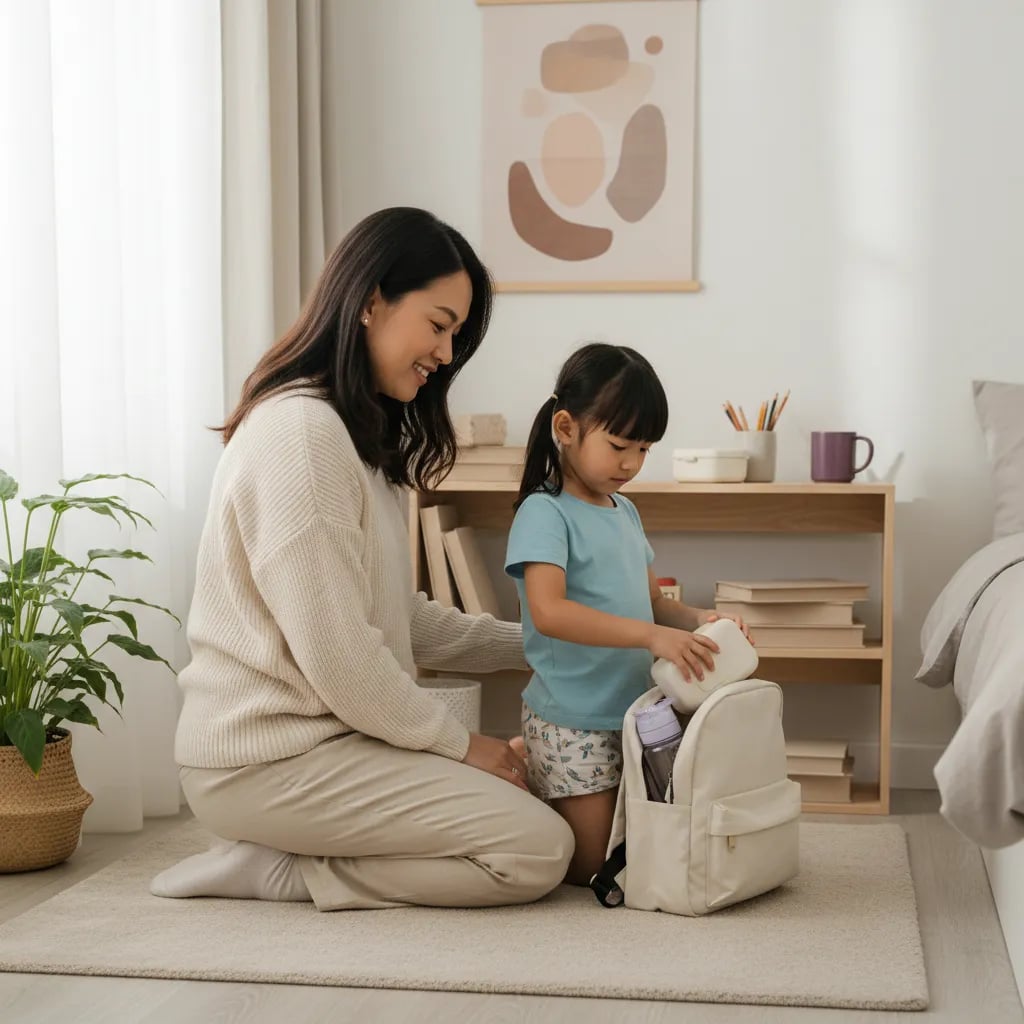
Imran, born in June 2020, could count to 30 but froze when asked to count backwards. After 2 weeks of counting down at bath time and before meals, he did it without help.
A child needs extra help before Year 1 when the same checklist gap stays open after 4 weeks of daily practice, or when numbers cause tears every time. It's rarely about ability. Usually a basic step, such as linking the number 7 to 7 objects, got skipped.
A free maths diagnostic from Algonova online maths classes takes about 60 minutes. A teacher checks counting and early sums, and you get a written report with the gaps and a plan. Groups have up to 10 children, and Algonova has taught more than 1 million students in 97 countries.
Some children are already strong with numbers and ask for more. For them, coding for kids aged 6 to 7 turns logic into short game projects, and the first masterclass is free and lasts 60 minutes. If your child is already behind in Year 1 later in the year, our guide on how to help a child catch up in maths shows typical timelines. The KSSR maths guide for Year 1 and 2 lists what children learn in each year. Children who start school on 4 January 2027 are the first to learn under the new curriculum, so it also helps to know what KP2027 changes in Year 1 maths.
For the 2027 intake, the usual Year 1 cohort is children born between 2 January 2020 and 1 January 2021, who are 6 on the first day of school. Malaysia counts school age by birth year, so this group is called the "7 year old" cohort even though most of them haven't turned 7 yet. From 2027, KPM also lets children born between 2 January and 31 December 2021 start Year 1 a year early. That option is voluntary, and parents who prefer to wait can enrol the child at the usual age the following year. The cohort dates were announced by KPM in January 2026 and shared by government agencies such as the National Security Council. Before you plan, check the birth date against both ranges. A child born on 1 January 2021, for example, belongs to the older group, not the voluntary one.
KPM hadn't announced the registration window for the 2028 Year 1 intake by 25 October 2026. For the 2027 intake, online registration ran from 15 February to 31 March 2026 through the MOEIS system at idme.moe.gov.my, and the window lasted about 6 weeks. Parents of children born in 2021 and 2022 should watch the KPM registration page at moe.gov.my from January 2027 and register as soon as the window opens, because a missed online window is hard to fix later. The 2028 school session itself is already fixed: it begins on 3 January 2028 for both Group A and Group B states, according to the KPM circular dated 2 October 2026. Put a reminder in your phone for early February 2027, so registration doesn't slip past during Chinese New Year or another busy month.
Yes, a child can start Year 1 without reading full sentences, because reading is taught in Year 1 itself. What helps more is knowing most letter sounds, writing their own name and enjoying stories. A child who recognises 15 or 20 letters and can retell a short story will usually pick up reading in the first term. If your child knows fewer than 10 letters, read together for 10 minutes each night and point to letters on road signs, shop names and food packets. Many children who start school with few letters catch up by the middle of Year 1, as long as reading at home stays relaxed and regular. Pressure at this age tends to slow things down. Let your child choose the bedtime book, even if it's the same one for the fifth night in a row, since repetition builds early reading too.
Before Year 1, a child should count objects up to 20, recognise the numbers 0 to 20 and count backwards from 10. It also helps to see at a glance which of 2 small groups is bigger and to add very small amounts with objects, such as 3 sweets and 2 more. Children don't need to write sums before school. Year 1 maths starts with counting and whole numbers, then moves on to adding and subtracting, so a solid feel for quantity is the best base. You can build it at home with buttons, coins and stairs in 10 minutes a day, without worksheets. Watch how your child counts as well as the answer: touching each object once matters more than speed. A free maths diagnostic of about 60 minutes shows which of these skills are already in place and which need work before January.
Start early only if your child manages most of the readiness checklist and enjoys structured activity, because KPM made entry at 6 voluntary. Look at the birth month too. A child born in early 2021 will be almost 6 on 4 January 2027, while a child born in December 2021 will have just turned 5. For many families the 2027 choice was already made at registration in March 2026. If your child is registered and you feel unsure, spend the next 10 weeks on short daily practice and talk to the class teacher in the first month of school. Tell the teacher which checklist tasks are still shaky, so they know where to look. Most early gaps close within one term when home and school work together, and a younger child often catches up with older classmates by the end of Year 1.
If you missed the online Year 1 registration for 2027, contact the school you want or your Pejabat Pendidikan Daerah (district education office) as soon as possible. The online window closed on 31 March 2026, and the KPM registration page doesn't list a late window, so ask the office directly what options remain before 4 January 2027. Keep your child's birth certificate at hand when you call. The earlier you call, the more choice you're likely to have, because schools plan classes and teachers well before January. Write down the name of the person you spoke to and what they told you, in case you need to follow up. For future intakes, set a reminder for February, when KPM opened the 2027 window, and check moe.gov.my for the official dates rather than relying on social media posts.
Use the December school holidays for 15 to 20 minutes of practice a day. Count objects at home, play shop with real ringgit coins and read a short book together each night. In the last 2 weeks, run a "school morning" twice a week: wake up on time, pack the bag, eat breakfast and sit at a table for 20 minutes of drawing or simple sums. This helps your child cope with the first early starts in January. Keep sessions short and stop while your child is still enjoying them, since children of this age learn best in small, regular doses. Skip days when the family is travelling or busy. Two or three missed days won't undo progress. Our 4-week school holiday maths plan for Year 1 and 2 gives a ready game for every day of the break, using things you already have at home.
Your child may need extra help if one checklist gap stays open after 4 weeks of daily practice, or if numbers or letters bring tears every time. In most cases one early step was missed, for example matching the number 7 to 7 objects. A short check by a teacher shows where the gap begins, so you practise the right thing instead of repeating worksheets that don't help. Algonova offers a free online maths diagnostic of about 60 minutes for children aged 6 and 7, with a written report and a plan you can follow at home. Classes run in groups of up to 10 children, and Algonova has taught more than 1 million students in 97 countries. If the diagnostic shows no gap, you've lost nothing: you'll start January knowing your child is ready.
Blog
Start your child's tech journey
Book your free 60-minute trial class with an Algonova certified tutor. No payment, no obligation, just discover what your child can build.

Algonova worldwide
Contact us
Email: int_legal@alg.team
Visit us
Suite 8634, 1021 E Lincolnway, Cheyenne, WY, Laramie, US, 82001
Algonova online LLC International tech school for kids and teens

