Holiday Programme for Kids: How to Choose an Online One for December 2026
Checklists & Calendar8 min read
Q&A

Aina Rashid
Parent Education Editor, Algonova Malaysia
A child can start coding from age 5 with ScratchJr, and from age 7 with full Scratch. What decides readiness is not the birth date but three things: whether your child recognises short words, holds focus for 15 to 20 minutes, and can follow a two-step instruction. This guide splits readiness into three age bands for Malaysian parents: 5-7, 8-12, and 13-17.
Algonova is an online school for coding, Mathematics, AI, and design for children aged 5 to 17, with more than 1,000,000 students across 97 countries since 2016. Classes run live with certified teachers in small groups of up to 10 students, not recorded video, and the first trial class is free.
The lower bound of 5 is about attention span and hand control, not about thinking ability.
Children aged 3 to 4 already understand sequence, which shows when they retell their day in order. What is not ready is sitting with a directed task for half an hour and dragging objects on screen with precision.
By age 5 both are usually mature enough. ScratchJr, built alongside the team behind Scratch at the MIT Media Lab, uses picture icons with no text, so a child who cannot read yet can still make a character move.
Below age 5, ordinary puzzles and pattern play deliver the same foundation with no screen at all.
In this band children learn through picture icons, with 45-minute classes because that matches the attention span.
What they learn is sequence rather than syntax: what happens first, what happens next, and how to repeat something. The first result usually arrives within the first session, for instance a character that walks and then speaks.
The readiness signs here are simple: following a two-step instruction, and being willing to try again when the result is wrong. Reading is not required at this stage.
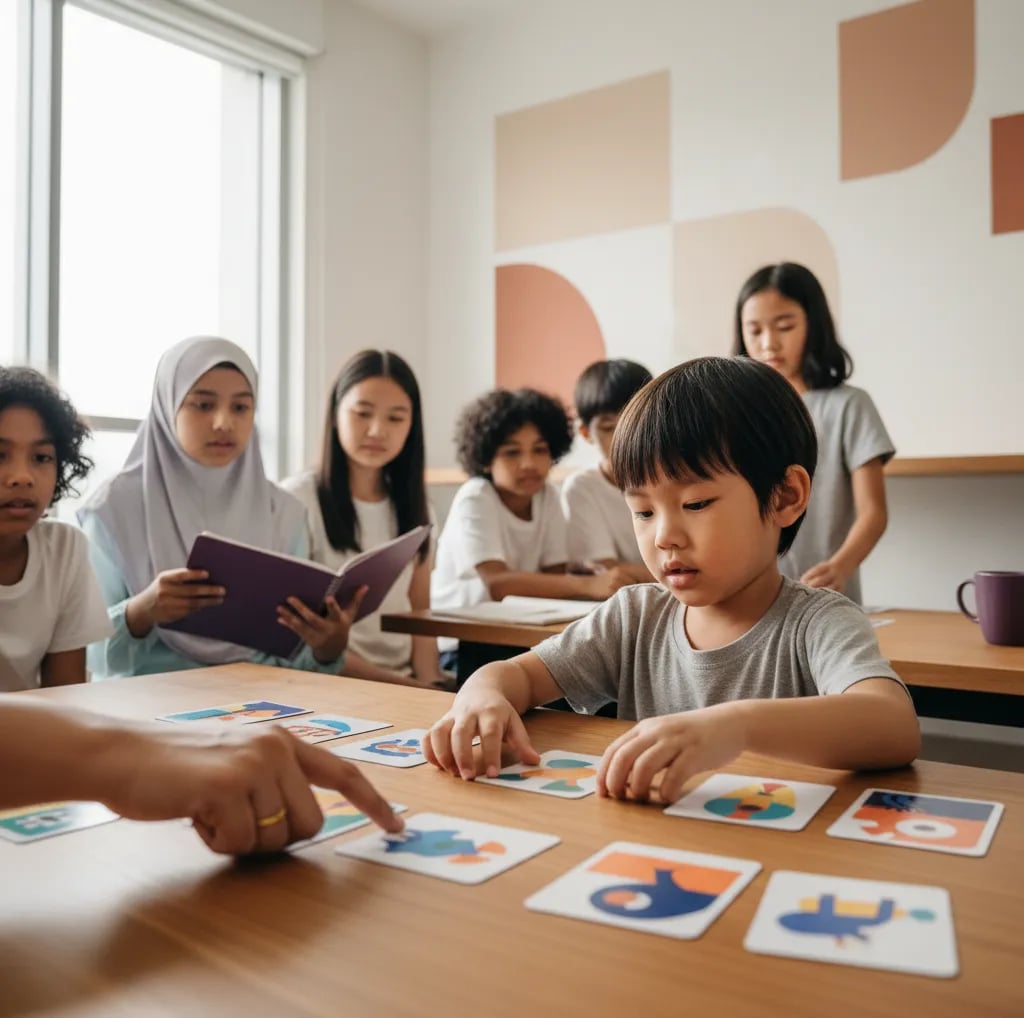
What to avoid at this age is setting outcome targets. A six-year-old asked to build a complete game will be overwhelmed; one asked to make a cat dance will ask to do it again next week.
For Standard 1 pupils just starting school, one short session a week alongside schoolwork is usually the right load. See how this looks in practice on our coding for kids aged 6-7 page, and browse every age track on the coding classes for kids hub.
Age is only the first filter. These six questions show whether your child is ready now or better off waiting a few months.
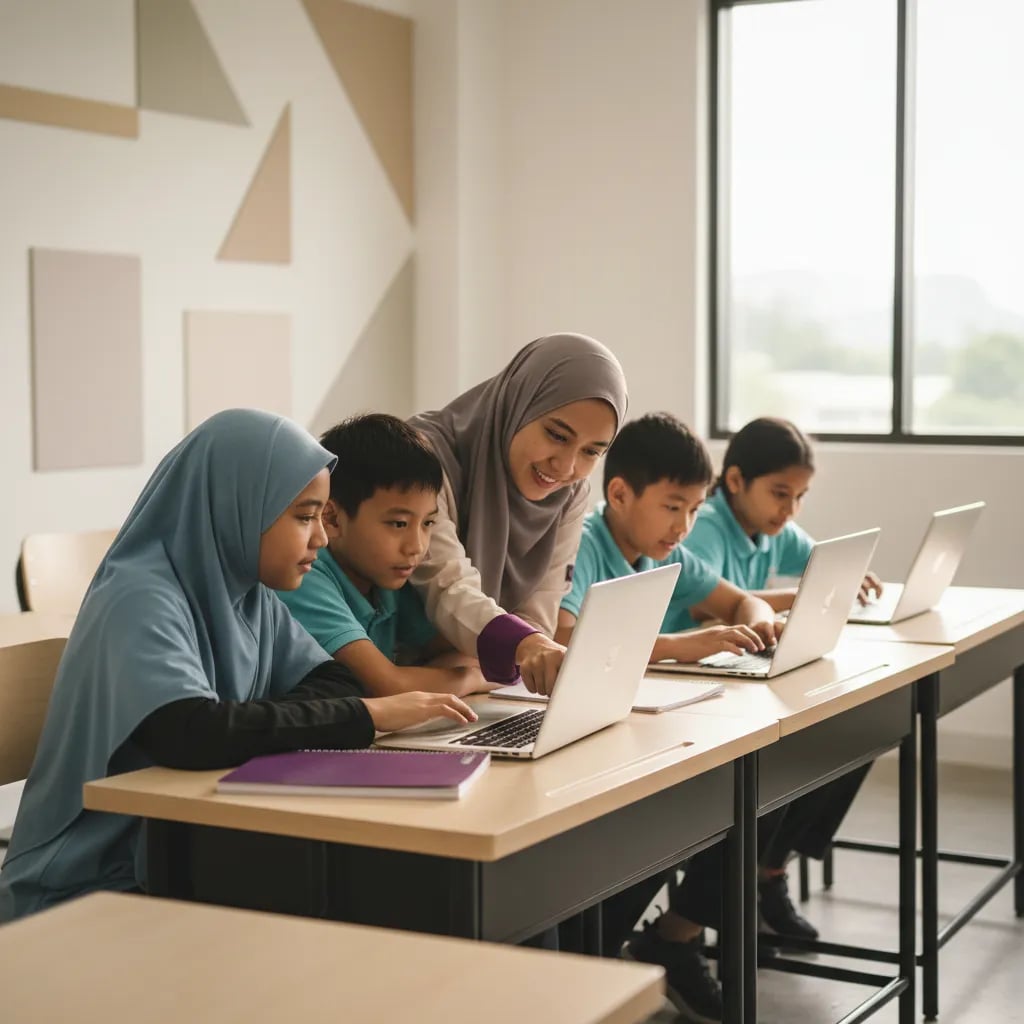
Five yeses or more means your child is ready to start now. Three or four means starting with the shortest session length in a small group. Below three, wait three to six months while playing puzzles and pattern games.
If you are still unsure whether coding suits your child at all, the behaviour signs are set out in is coding right for my child.
Start your child's tech journey
Book your free 60-minute trial class with an Algonova certified tutor. No payment, no obligation, just discover what your child can build.
Standard 2 to Standard 6 is the most comfortable window to start, because a child reads fluently but is not yet carrying exam pressure.
At this age a child can use full Scratch with word labels, build games with scores and levels, and start to understand variables. Many already play Roblox, which makes Lua in Roblox Studio a natural bridge into text-based coding. The comparison sits in Roblox vs Python for kids.
The right load is 60 minutes once a week plus 20 to 30 minutes of independent practice. More frequent is not automatically better.
Which language fits which age is set out in coding languages for kids, and Scratch vs Python for Malaysian children covers the first switch.
Teenagers can go straight to Python without passing through visual blocks, provided they are ready for the try-fail-fix cycle.
Visual blocks at this age often feel childish and reduce motivation. What works is projects with tangible output: a simple bot, a calculator, an analysis of class results, or a personal website.
It is not too late. A fourteen-year-old starting fresh often moves faster than an eight-year-old, because reading and logic are already mature.
Only the entry point differs. Teenagers should skip visual blocks and start with Python and projects that feel serious. Material that takes three years with primary pupils can compress into a few months for a Form 2 student.
What needs managing is expectation. A teenager comparing their first result to a professional app gets discouraged quickly. One small finished project builds far more confidence than a large abandoned one.
On healthy screen limits while your child studies, the age benchmarks are in screen time for kids in Malaysia. If you are weighing online against a physical tuition centre, that comparison is in online vs physical coding classes in Malaysia.
For a wider view of why coding matters here, see why Malaysian kids should learn coding and digital skills for kids.

Algonova worldwide
Contact us
Email: int_legal@alg.team
For students heading into SPM, timing matters: starting in Form 1 or Form 2 leaves room before the exam year fills up.
Standard 2 to Standard 6, roughly ages 8 to 12, is the ideal entry window, although children can start from age 5 with ScratchJr. In that band a child reads fluently, so full Scratch with word labels works, yet exam pressure has not taken over the calendar. That combination makes learning flow most easily. For example, a ten-year-old studying once a week has typically built three or four games of their own within nine months, complete with scores and levels. Starting earlier still helps, only in a different shape: ages 5 to 7 focus on sequence and pattern rather than complete programs.
No, provided the format matches. Five-year-olds learn through ScratchJr, which uses picture icons rather than text. What they learn is sequence rather than syntax: what happens first and how to repeat something. The child drags arrow icons to make a character walk, and the result appears immediately. The main requirement is not reading but sitting with a directed task for around 15 minutes and moving objects on screen with reasonable precision. Classes for the youngest group at Algonova run 45 minutes, matching the attention span at that age.
Not for ScratchJr, but yes for full Scratch and every text-based language. ScratchJr uses picture icons with no words at all, so a preschool child who cannot read can still build an animation. Full Scratch labels every block with words, so a child needs to recognise short words, generally around age 7. For Python and Lua, reading matters far more, because a child must read error messages to locate the mistake. Reading ability predicts readiness better than Mathematics marks do.
It is not too late. A student starting at 14 often progresses faster than an eight-year-old, because reading and logic are already mature. The reason is compression: material that takes three years with primary pupils can be covered in a few months with a teenager who reads well. Only the entry point differs. Teenagers should skip visual blocks and start with Python on projects that feel serious, such as a simple bot or a data analysis. For students heading into SPM, starting in Form 1 or Form 2 leaves the most room before the exam year fills up.
Ages 5 to 7 suit 45 minutes, ages 8 to 12 suit 60 minutes, and teenagers aged 13 to 17 can handle up to 90 minutes. These figures follow attention span rather than the volume of material. A six-year-old forced to sit for 90 minutes loses interest long before the session ends. For example, a family might choose a 60-minute Saturday morning class for a Standard 4 pupil, plus 20 minutes of independent practice midweek, which keeps the material fresh. Algonova offers 45, 60, and 90-minute options, agreed with the team after the free trial class.
Once a week suits most children, plus 20 to 30 minutes of short independent practice. Regularity matters more than frequency. A child studying 60 minutes every week for a year progresses much further than one doing three hours once a month. Twice a week makes sense for a child with clear interest chasing a specific project, or for a teenager preparing a competition or a portfolio. The number of sessions is agreed with the team after the trial, matched to the child's level and the family's schedule around school and tuition.
For children under 5, screen-free pattern play delivers the same benefit as early coding. Puzzles, building blocks, sequencing picture cards, and retelling the order of daily activities train exactly the same foundation, which is thinking in sequence and recognising patterns. For example, asking a child to describe the steps of making breakfast in order is algorithmic practice in its simplest form. Assessing coding readiness under age 5 is generally not useful, and waiting a year leaves a child no further behind.
No. Secondary students should go straight to Python or another text-based language without passing through Scratch. Visual blocks at this age often feel childish and actively reduce motivation. Teenagers respond to projects that feel real, such as a personal website, a simple bot, or an analysis of class results. The concepts Scratch would have taught, such as loops and conditions, are still covered, just directly in text form. Career arguments also start to land at this age, unlike with younger children who are motivated more by peer recognition.
There is no gender-based difference in readiness across ages 5 to 17. What often differs is the kind of project that sparks initial interest. Some girls engage faster through story projects, animation, and character design than through action games. That is a fully valid route, because the concepts are identical: loops, conditions, and variables. A child building a story animation uses the same logic as one building a racing game. In Algonova classes in Malaysia the balance of girls and boys is relatively even.
A laptop or computer with a camera, a stable internet connection, and a headset so the child can talk to the teacher without background noise. High specifications are not needed. Scratch runs directly in the browser with nothing to install, and beginner Python uses only a lightweight text editor. Connection stability matters more than processor speed. A tablet works for ScratchJr with children aged 5 to 6 but becomes awkward once they move to text-based coding. Before the first session the team sends a short list of what to have ready at home.
Visit us
Suite 8634, 1021 E Lincolnway, Cheyenne, WY, Laramie, US, 82001
Algonova online LLC International tech school for kids and teens