
Holiday Programme for Kids: How to Choose an Online One for December 2026

Checklists & Calendar8 min read
Checklists & Calendar

Priya Nair
Education Calendar Editor, Algonova Malaysia
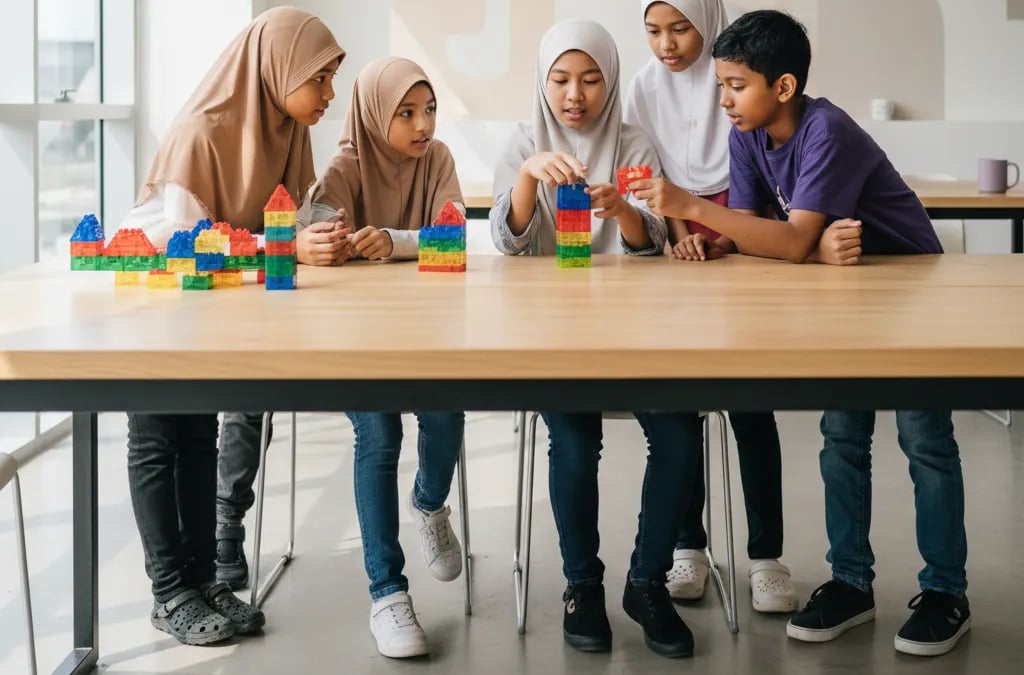
Whether coding is right for your child shows in everyday behaviour, not in Mathematics marks. A child who asks "but why does it do that", takes apart a toy, or stays 20 minutes on one build until it works already has the raw material coding uses. The eight signs below can be checked at home with any child aged 5 to 17 before you pay for a single class.
Algonova is an online school for coding, Mathematics, AI, and design for children aged 5 to 17, with more than 1,000,000 students across 97 countries since 2016. Classes run live with certified teachers in small groups of up to 10 students, not recorded video, and the first trial class is free.
Marks measure the final answer, while coding demands a way of working: try, fail, fix, try again.
In a school test, being wrong lowers the grade. In coding, being wrong is a normal step. A program that fails five times and then runs does not indicate a weak child but a child working the way programmers actually work.
That is why children with average Mathematics results often do very well in coding, while children used to always being right can get frustrated the first time an error appears in red.
What early coding really uses is the ability to break a problem into small steps, explained in what coding for kids actually is.
If the marks themselves are the real worry, our online math classes for kids work on understanding before speed. If the signs below point to coding, the coding classes for kids page shows where each age starts.
These four appear while your child plays, not while they study.
1. They ask "why" and are not satisfied by short answers. They want the mechanism, not just the outcome. That curiosity is what keeps a child hunting for an error instead of giving up.
2. They take things apart to see inside. Toys, remote controls, an old clock. It is the same instinct as reading someone else's code to work out how it functions.
3. They stay with one activity for at least 15 to 20 minutes. Building with blocks, finishing one drawing, organising a collection. Coding needs that attention span rather than a special talent.
4. They do not quit at the first failure. They try a second and a third way. A child who always stops at the first attempt is not unsuited, they simply need projects that show results faster.
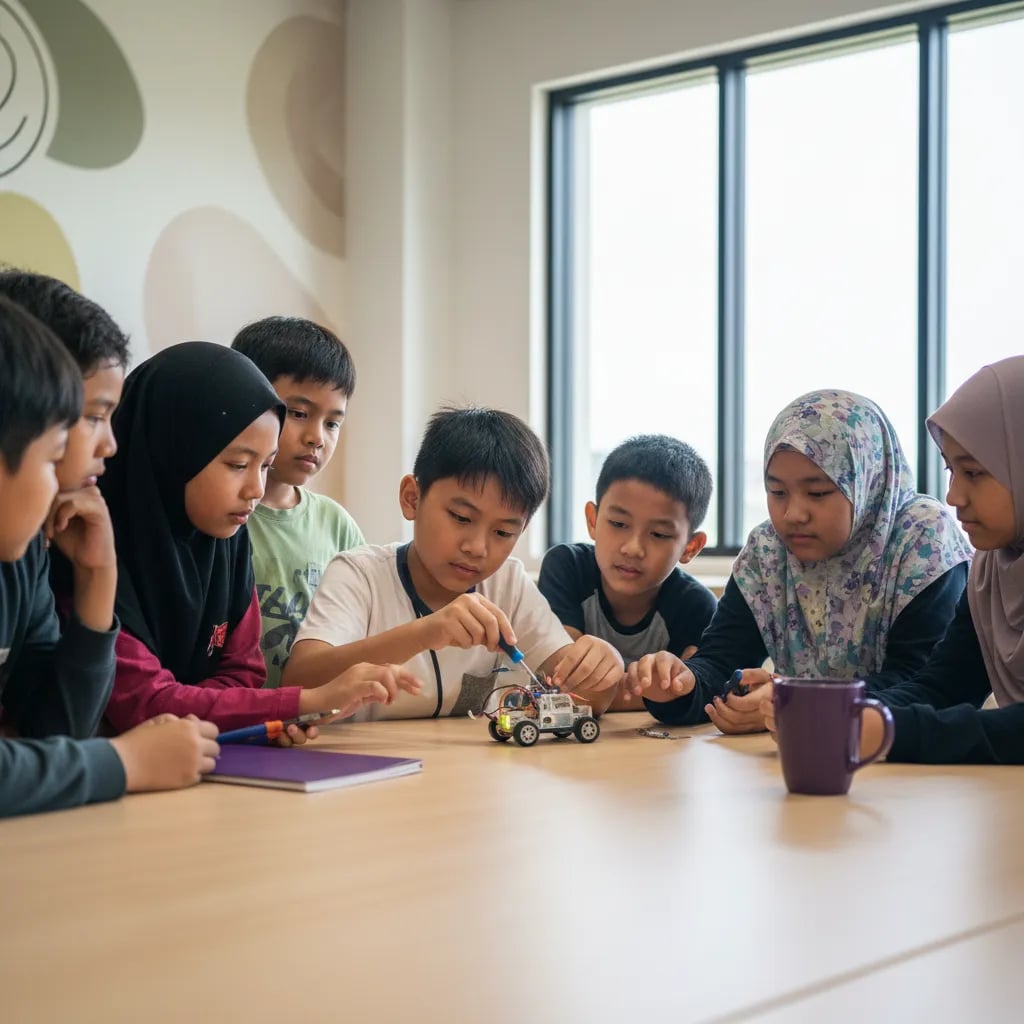
All four describe how a child meets something they do not yet understand. None of them requires any computer skill beforehand.
Signs five to eight show up in how your child uses devices and relates to other people.
5. They make things on a device rather than only watching. Building game levels, customising avatars, editing short videos. A child who has shifted from consumer to maker is one step from coding. If Roblox is the daily habit, the natural route is described in Roblox vs Python for kids.
6. They like explaining rules to other people. Explaining a game to a younger sibling means they can already build ordered instructions, which is exactly what a programmer does.
7. Untidy or inconsistent things bother them. Sorting toys by colour, protesting when a story runs out of order. Sensitivity to patterns is the raw material of logic.
8. They light up when their work is seen. That motivation carries a project to completion instead of abandoning it halfway.
A child who games for hours is not automatically suited to coding, and a quiet child is not ruled out.
Long gaming shows tolerance for screens, not an interest in making things. One question settles it: has your child ever wanted to change something inside that game, such as building their own level? If yes, that is a strong sign. If they only want to keep winning, it is not.
Quiet children often do very well in coding because they are used to working patiently alone. What needs adjusting is the class format, not the aptitude, and that comparison sits in how to choose an online coding school in Malaysia.
Tick only what you actually saw in the past month, not what you hope to see.

Four ticks or more means your child is ready to try a class now. Two or three means starting with a format that shows results quickly, such as Scratch or design. Below two usually means waiting a few months while playing pattern games and puzzles.
This checklist measures readiness today, not permanent aptitude. A child with two ticks this month can have five in six months, which is why re-checking after a school holiday is worthwhile.
If your child shows none of these signs, the faster route is not forcing a coding class but offering activities that build patterns and persistence.
For children aged 4 to 6, puzzles, construction play, and retelling a story in order build the same foundation with no screen at all. Those months are not lost time.
For a child drawn to the visual rather than the logical, design is often the door that opens first. Options are covered in graphic design classes for kids in Malaysia.
And if your child is clearly ready but you are unsure where to begin, the language order by age is set out in coding languages for kids, while what age to start covers the timing question directly.
On healthy screen limits while your child studies, the benchmarks by age are in screen time for kids in Malaysia.
Check eight everyday behaviours: asking why, taking things apart, holding 15 to 20 minutes of attention, retrying after failure, making things on a device, explaining rules, noticing patterns, and enjoying an audience for their work. Four or more means your child is ready to try a class now. These signs describe how a child meets something they do not yet understand, not their skill with computers. For example, an eight-year-old who reworks a game's rules for a younger sibling is building a sequence of instructions without realising it. The most direct test is still watching them in one real 60-minute class with a teacher.
No. Mathematics marks are not a requirement, because early coding uses sequential logic rather than complex calculation. In Scratch or Roblox, the Mathematics involved reaches addition, subtraction, and x and y coordinates for moving a character. All of that is lower primary content. Many parents report the opposite happening: their child becomes interested in numbers after starting coding, because numbers there produce a visible result on screen. Mathematics only becomes genuinely necessary later, in data or simulation projects with Python, generally from around age 13.
Not by itself. Long play shows tolerance for screens rather than an interest in building things. One question separates them: has your child ever wanted to change something inside that game, such as making their own map or obby? If yes, that is a strong sign. If they only want to keep winning, it is not. A child already building maps in Roblox Studio has moved from player to maker, which is one step before coding proper. If they remain purely a player, starting with fast-result projects like Scratch usually works better than jumping into text-based code.
Yes, provided the group is small. Quiet children often do very well in coding because they are used to working patiently on their own. What needs adjusting is the format rather than the aptitude. A small group leaves safe room to ask questions without competing for airtime with twenty classmates. For example, a ten-year-old who never raises a hand at school usually starts asking questions when the class holds only a few students. At Algonova classes run in groups of up to 10 students, and the format is agreed after the free trial class.
From around age 5, although each sign takes a different shape at different ages. Between 5 and 7 the signs appear through play: building patterned block towers, retelling a story in order, asking how a toy works. Between 8 and 12 they show up more clearly on devices and in self-directed projects. For children under 5, checking coding readiness is not yet useful. Ordinary pattern play and puzzles serve better at that stage. Algonova programmes start at age 5, with shorter 45-minute classes for the youngest group.
There is no difference in readiness between girls and boys aged 5 to 17. What often differs is the kind of project that sparks early interest. Some girls engage faster through story projects, animation, and character design than through action games. That is an equally valid route, because the concepts are identical: loops, conditions, and variables. A child building a story animation uses the same logic as one building a racing game. In Algonova classes in Malaysia the balance of girls and boys is relatively even.
No. Giving up quickly is usually about the gap between effort and reward rather than about aptitude. A child who stops at the first attempt has typically never felt the satisfaction of succeeding after failing. The fix is projects that show a result within minutes, such as making a character move in Scratch. After a few cycles of failing and then succeeding, persistence tends to grow on its own without any lecture from a parent. A teacher trained to work with children matters a great deal here, because they know when to offer a hint and when to let the child keep trying.
One to two months of regular classes is usually enough to see the pattern clearly. A single trial class shows the first reaction but not persistence. What tells you more is whether, after four to eight classes, your child still opens the laptop without being reminded. For example, a child who is enthusiastic in week one and avoids it by week three is usually signalling that the difficulty level is wrong, not that coding is unsuitable. If the curiosity is still alive at the two-month mark, the interest is most likely genuine.
Not for ages 5 to 9, because Scratch uses drag-and-drop blocks with no typing at all. Typing starts to matter when a child moves to text-based languages such as Python or Lua, generally from age 10. Even then, slow typing is not a barrier, only slightly slower progress. For example, an eleven-year-old typing with two fingers usually gains speed on their own within a few months simply through use. Reading ability matters far more, because a child needs to read error messages to work out where the mistake sits.
Offer activities that build patterns and persistence first, and postpone the coding class by a few months. Puzzles, construction play, simple board games, and retelling a story in order build the same foundation with no screen. For children aged 4 to 6 this works better than forcing a class. Another route that often succeeds is design and digital drawing, particularly for children drawn to the visual rather than the logical. The checklist measures readiness today, not permanent aptitude: a child with zero ticks now can have four or five within six months.
Blog
Start your child's tech journey
Book your free 60-minute trial class with an Algonova certified tutor. No payment, no obligation, just discover what your child can build.

Algonova worldwide
Contact us
Email: int_legal@alg.team
Visit us
Suite 8634, 1021 E Lincolnway, Cheyenne, WY, Laramie, US, 82001
Algonova online LLC International tech school for kids and teens

