Scratch Online for Kids in Malaysia: How to Open It, Download It and Start a First Project
Learn Coding13 min read
Parent Guides

Aina Rashid
Parent Education Editor, Algonova Malaysia
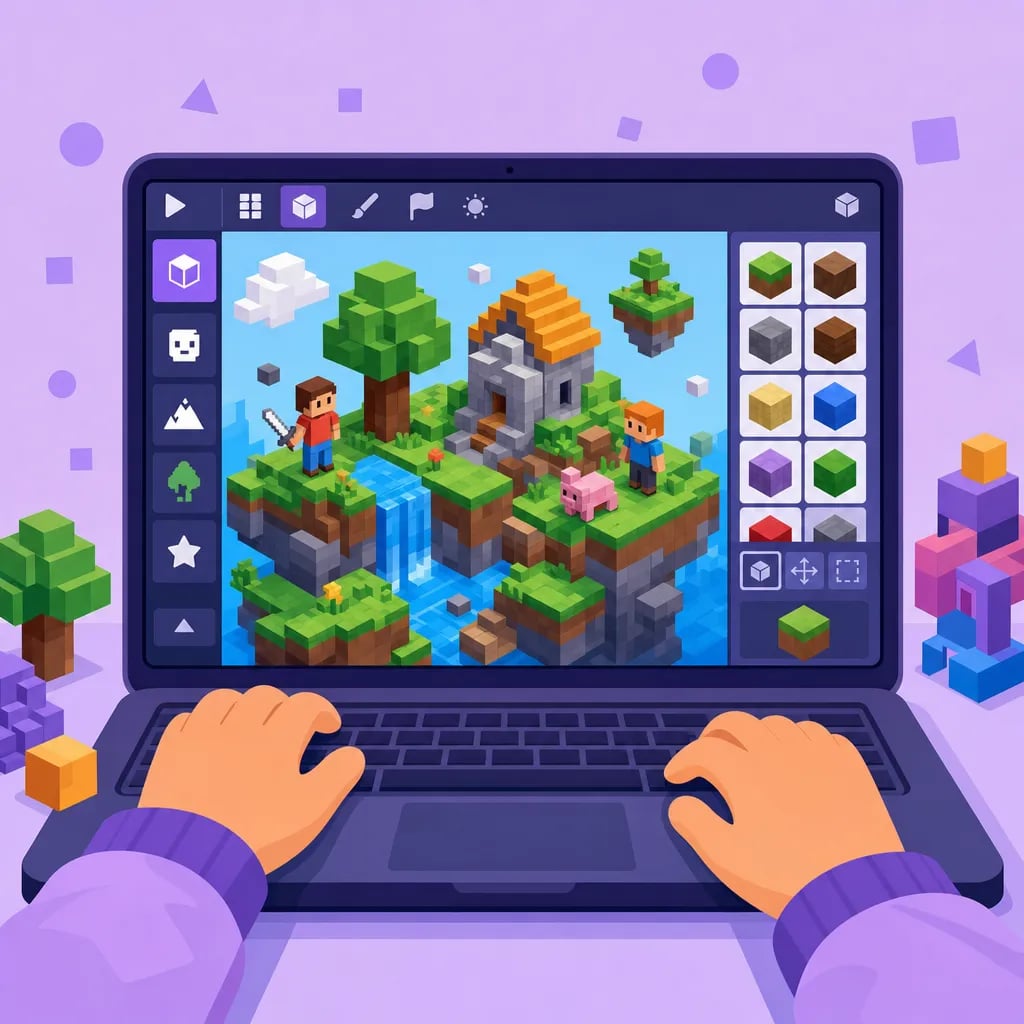
Roblox coding classes for kids in Malaysia teach children ages 8–16 to design and script their own games inside Roblox Studio using Lua — the free tool behind a platform played by over 380 million people every month. This guide is for Malaysian parents who want to turn their child's Roblox screen time into a genuine coding skill, covering what kids actually build, the right age to start, and how a free trial class works.
Algonova is a global coding, math, AI and design school for ages 6–17, with 1,000,000+ students across 97 countries and a 4.9★ parent rating over more than 10 years. Our Roblox track meets children inside a world they already love and hands them the same tools professional studios use: Roblox Studio and the Lua scripting language. Every lesson is live with a certified tutor in a small group or 1-on-1, never a recorded video. Over the next few sections we look at why Roblox works so well as a first coding platform, what your child will build, which skills suit which age, and how to tell a real coding class apart from a school-holiday game camp.
Kids arrive thinking they are just going to play Roblox. They leave having written their first real lines of Lua — and once a child sees their own code make something move on screen, you rarely have to ask them to practise again.
Hafiz Rahman · Lead Coding Instructor at Algonova Malaysia
Roblox is the doorway; Lua is the first real language. A child who scripts a working game at eleven has already learned the habit that matters most — build something, watch it break, fix it, and try again.
Hafiz Rahman · Lead Coding Instructor at Algonova Malaysia
Start your child's tech journey
Book your free 60-minute trial class with an Algonova certified tutor. No payment, no obligation, just discover what your child can build.
Roblox works as a first coding platform because it removes the two things that usually stop children learning to program: boredom and abstraction. A child is not writing code to pass an exam; they are building a game they and their friends will actually play.
Most kids in Malaysia already know Roblox as players. A coding class flips that relationship. Instead of consuming games other people made, your child opens Roblox Studio — the free game-building software from Roblox — and starts making their own. That shift from player to maker is the single biggest motivator we see, and it keeps children practising the hours that real skill requires.
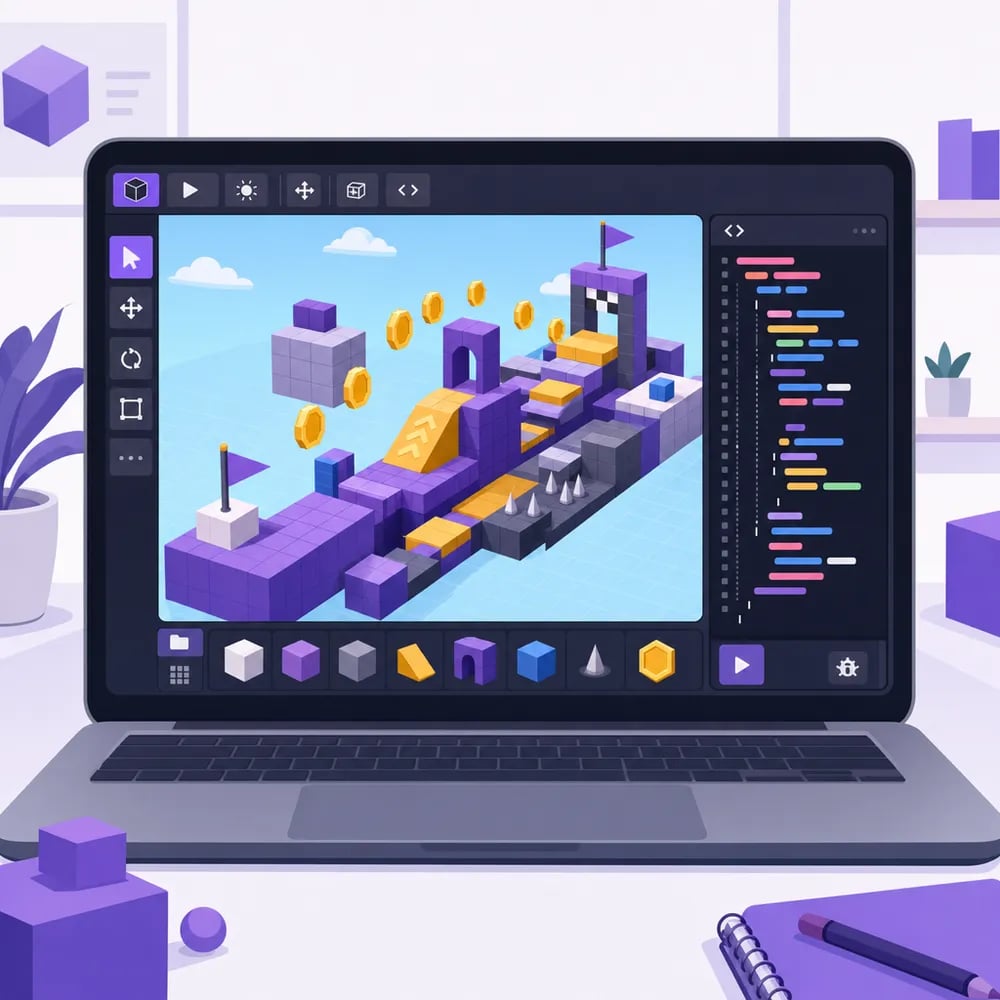
Under the fun, the learning is real. Roblox games are scripted in Lua, a genuine text-based programming language used in professional software and other games. That makes Roblox a natural bridge for a Malaysian child who has outgrown block-based Scratch but is not yet ready for the strictness of Python. They type real code — variables, functions, if-statements, loops — but see the result as a character that jumps, a door that opens, or a score that ticks up.
There is also a publishing loop few other activities offer. A finished Roblox game can be published to the platform and played by friends and family, so the child gets feedback, iterates, and improves. That build-test-share cycle is exactly the habit that later powers good essays, science projects and, eventually, real work.
In a structured Roblox class, children learn Roblox Studio and Lua by building complete, playable games — usually starting with an obby (obstacle course) and progressing to tycoons, simulators and multiplayer worlds. Each project teaches a specific coding concept wrapped inside something the child wants to finish.
A typical progression looks like this:
| Project | What it teaches | Coding concepts |
|---|---|---|
| Obby (obstacle course) | Level design, checkpoints | Coordinates, properties, touch events |
| Tycoon / clicker | Systems and rewards | Variables, functions, loops |
| Simulator | Progression and balancing | Data values, conditionals, maths |
| Roleplay / world | Interaction and multiplayer |
Most children are ready for a Roblox coding class from around age 8, with ages 9–13 the sweet spot, while younger children build the groundwork in Scratch first and teenagers push into advanced Lua and Python. Roblox rewards children who can already read comfortably, because Lua is typed, not dragged.
Ages 6–7 — groundwork, not Roblox yet. At this stage children build confidence with a mouse and keyboard and meet coding logic through ScratchJr and simple block tools. Roblox Studio is usually too text-heavy here; the goal is to fall in love with making things.
Ages 8–10 — Scratch into first Roblox steps. Children reading fluently can start guided Roblox projects, often alongside Scratch. They build simple obbies, learn what a script is, and change small pieces of Lua with support. This is where many Malaysian kids move from player to maker.
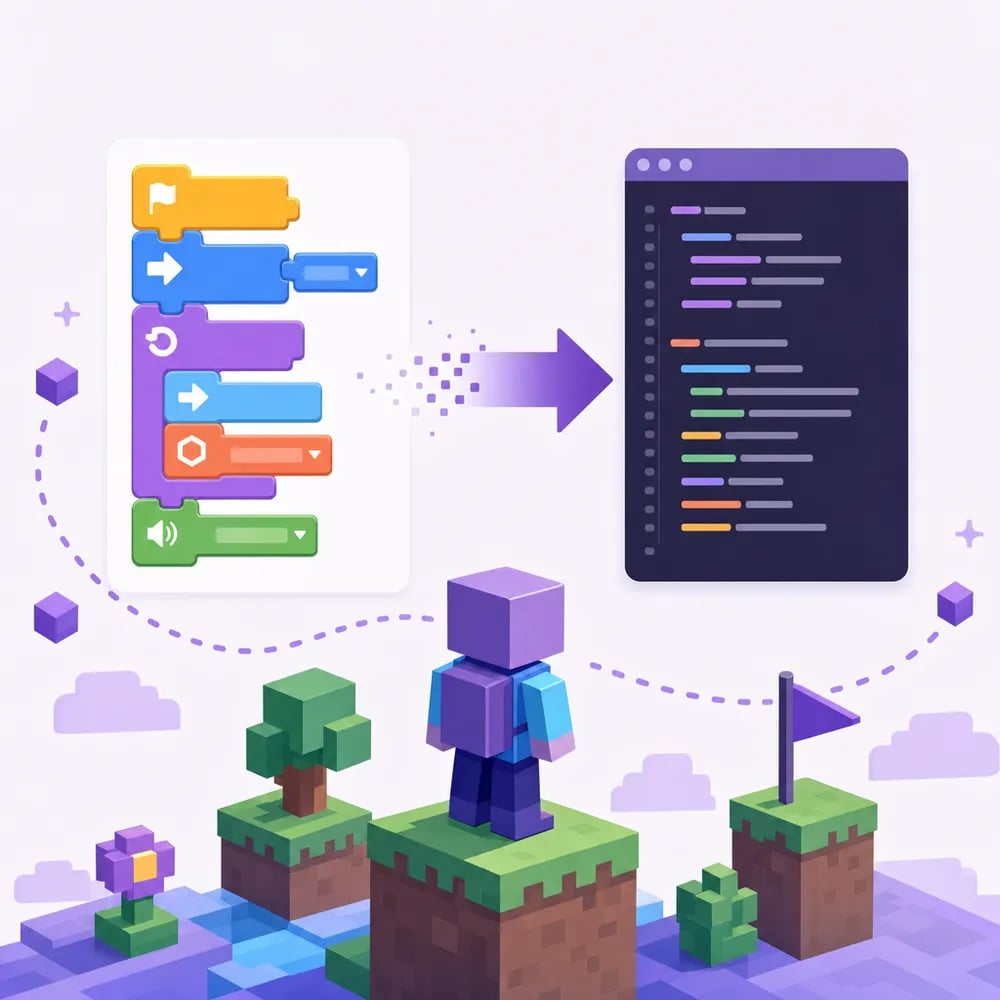
Ages 11–13 — the Roblox and Lua sweet spot. This is the ideal window. Children write real Lua scripts, design multi-stage games, handle variables and functions confidently, and publish games their friends can play. Computational thinking clicks here, and school Matematik often benefits alongside.
Ages 14–16 — advanced Lua, then Python. Teenagers take on data storage (saving player progress), multiplayer systems, and the basics of in-game economies, before branching into Python and broader computer science for scholarship and university portfolios.
A strong Roblox class in Malaysia shows four signs: live certified teachers, small groups or 1-on-1, a structured path beyond Roblox, and real published games — not a room of children playing unsupervised. These separate a coding class from a holiday game camp.
Live certified teachers, not recorded video. A tutor who watches your child code can catch a misconception the moment it appears and adjust the explanation. Ask directly: who teaches, what is their qualification, and is the class live?
Small groups or 1-on-1. In a large drop-in room most children drift into just playing. Groups of two to four, or 1-on-1, keep every child building and scripting for the whole session.
A structured path beyond Roblox. Roblox should be a stage, not the whole journey. A serious school shows a route from Scratch to Roblox and Lua to Python and AI, so your child keeps growing after they master game scripting.
Real projects your child can name. After a few months your child should have published a game they can open and show you. If the honest summary is "we played a lot," the class is not teaching.
At Algonova Malaysia these four signs are simply how the school is built: live certified tutors, small groups or 1-on-1, an age-based curriculum from 6 to 17 that runs Scratch → Roblox/Lua → Python → AI, and every student finishing with real projects, across 1,000,000+ learners in 97 countries. You can see the full age-based path on our kids coding classes hub. The simplest way to check the fit for your own child is to watch one lesson.

Algonova worldwide
Contact us
Email: int_legal@alg.team
Curious whether your child would enjoy it? Book a free Roblox trial class and watch them build their first game in 60 minutes.
Along the way children work with the real parts of Roblox Studio: the 3D workspace where they place and shape parts, the Explorer and Properties panels, and the Script editor where Lua code lives. They learn to attach a script to an object, respond to an event such as a player touching a block, store information in a variable, and reuse logic with a function. These are the same building blocks used in any programming language, just made visible through a game.
Crucially, your child finishes with something they can name and show. After a term of classes a student can say, "I built a maze obby where the floor disappears," or "I made a pet simulator that saves your progress." That named, playable project is a real portfolio — the kind of concrete proof of skill a worksheet of exercises never produces. It is also the clearest sign the class is working.
If you are unsure where your child fits, our age-by-age breakdown in At What Age Should a Malaysian Child Start Coding? goes deeper, and Scratch vs Python: Which Should a Malaysian Child Learn First? explains where Roblox and Lua sit between the two. The honest rule is simple: if your child reads well and loves Roblox, they are ready.
A Roblox coding class teaches children to build and script their own games inside Roblox Studio, the free game-development software made by Roblox. Rather than playing games other people created, your child designs levels, places 3D objects, and writes real code in Lua, the text-based programming language Roblox runs on. In a structured class they progress from simple obstacle courses to tycoons, simulators and multiplayer worlds, learning variables, functions, loops, events and debugging along the way. The skills are genuinely transferable: the same logic underpins Python, JavaScript and every other language. At Algonova Malaysia, classes are live with a certified tutor in small groups or 1-on-1, and every student finishes with a real, playable game they can name and show.
Most children are ready for Roblox coding from around age 8, and ages 9 to 13 are the sweet spot. Because Lua is typed rather than dragged, a child needs to read comfortably first. Younger children aged 6 to 7 are usually better starting in ScratchJr or Scratch to build coding logic and keyboard confidence, then moving into Roblox once reading is fluent. Teenagers aged 14 to 16 can go further into data storage, multiplayer systems and in-game economies, then branch into Python for university and scholarship portfolios. There is no upper limit and no missed window: a 15-year-old who loves Roblox but has never coded can start comfortably and catch up fast. The simplest test is this: if your child reads well and enjoys Roblox, they are ready to begin.
It is real programming. Roblox games are built in Roblox Studio and scripted in Lua, a genuine text-based programming language used in professional software, not a toy or a drag-and-drop block system. When your child codes in a Roblox class they write actual variables, functions, conditionals, loops and event handlers, the same core concepts found in Python, JavaScript and C++. The difference from a typical class is motivation: the code produces a game the child cares about, so abstract ideas like a loop or a function become visible and concrete. Many children who start with Roblox and Lua move smoothly into Python afterwards, because the thinking transfers directly. Playing Roblox is entertainment; coding in Roblox Studio is building software.
No. Roblox Studio, the software your child codes in, is completely free to download, and a Roblox account is free to create. The only real requirements are a laptop or desktop computer that most Malaysian families already own, and a stable internet connection for live lessons. A basic laptop is fine; you do not need a gaming rig, and tablets are limiting because coding is a keyboard skill. A good coding class supplies the curriculum, the certified tutor and the structure, so the family only needs a working computer. Roblox does have an optional in-game currency called Robux, but it is not required to learn coding, build games, or complete any part of a proper Roblox coding course.
Playing Roblox means using games other people built; a coding class teaches your child to build their own. In class, a child opens Roblox Studio instead of the player app, and a certified tutor guides them through designing a level, placing objects, and writing Lua scripts that make things happen. The output is a game your child created and can publish, not a high score in someone else's world. The skills, computational thinking, problem-solving, debugging and iteration, transfer to school and future work, which pure play does not. Think of it as the difference between watching football and being coached to play: both involve the same game, but only one builds a lasting ability. Structure, a live teacher and a real project are what turn screen time into skill.
Visit us
Suite 8634, 1021 E Lincolnway, Cheyenne, WY, Laramie, US, 82001
Algonova online LLC International tech school for kids and teens